Where Ubud's Cultural Pulse Meets Boutique Seclusion
Inside a new Pengosekan sanctuary that weaves Balinese shadow-puppet art, open-flame Latin cooking, and age-old wellness rituals into the fabric of contemporary luxury.
A Neighbourhood That Breathes Culture
Pengosekan unfolds like a living gallery. Along Jalan Raya, art studios shoulder yoga shalas, fashion ateliers share walls with coffee roasters, and the hum of scooters braids with gamelan practice drifting from open doorways. It is here, in the cultural heart of Ubud, that Alaya Suites Ubud opened its doors in July 2026, staking a claim on a paradox the best boutique hotels manage to hold: proximity without intrusion.
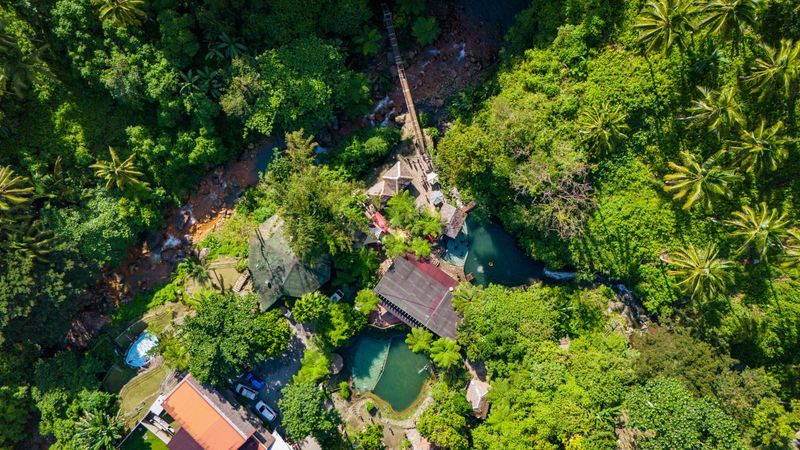
The Sacred Monkey Forest Sanctuary lies five minutes away by scooter; Ubud Palace and the traditional market, less than ten. Yet step through the property's threshold and the neighbourhood's energy recedes into a murmur. Forty-five suites, each measuring sixty-five square metres, and six one-bedroom villas with private plunge pools occupy a footprint designed for seclusion. Some villa terraces gaze into Ubud's signature green canopy, a tangle of palms and ferns that buffers the property from the road.
Interiors Rooted in Shadow and Philosophy
The design vocabulary draws from Wayang Bali, the island's centuries-old shadow-puppet theatre, and Catus Patha, the Balinese cosmological principle that governs the intersection of cardinal directions and elemental balance. Each floor interprets one of the five natural elements, earth through ether, in collaboration with Balinese artist I Kadek Septa Adi. His works punctuate corridors and common spaces, figurative pieces that layer mythological motifs over contemporary abstraction.
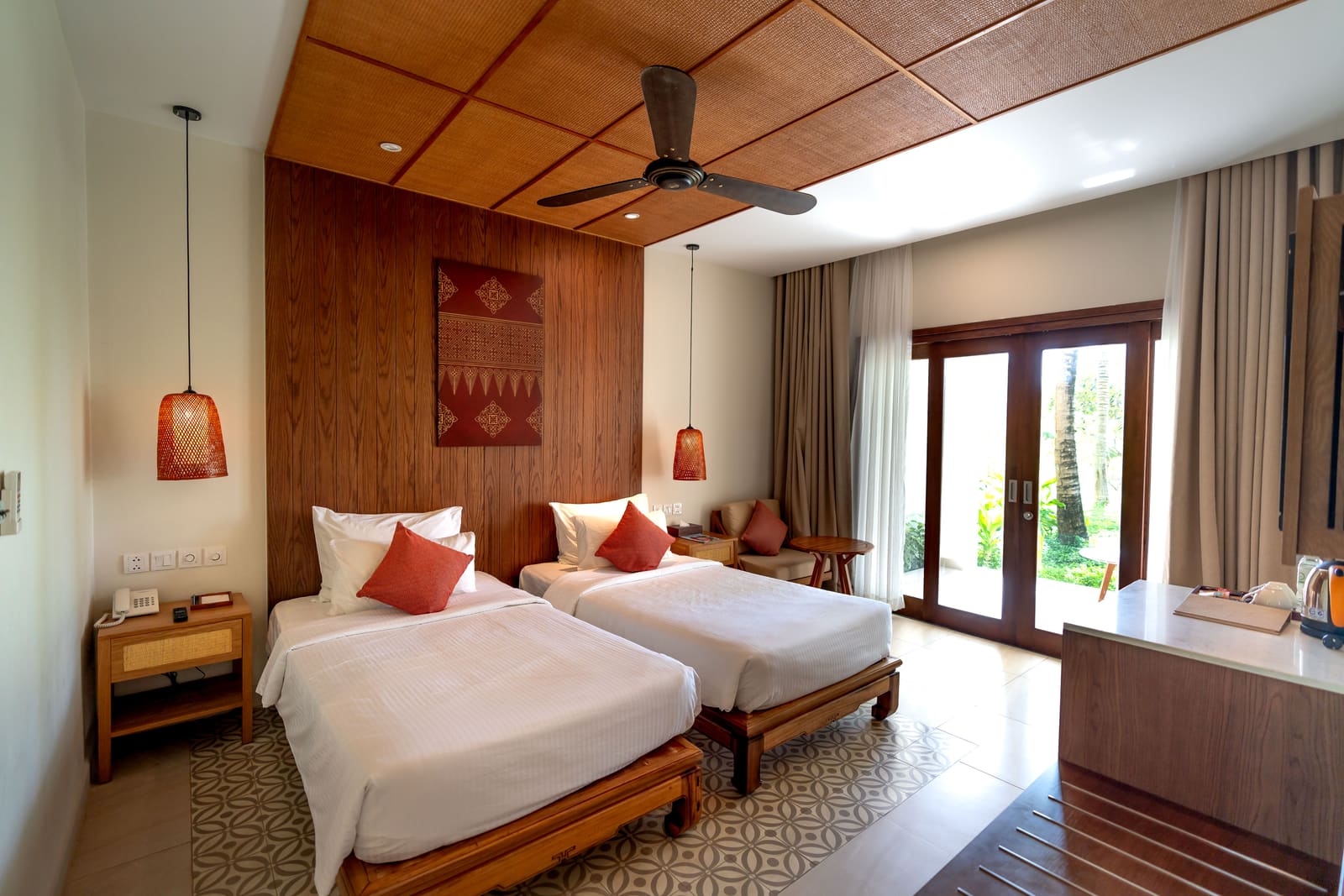
Natural materials dominate: teak joinery, terrazzo floors, rattan screens, linen upholstery in tones of sand and charcoal. The effect is neither museum-austere nor resort-generic. Handcrafted details, a carved door panel here, a woven lampshade there, anchor the interiors in place. The suites themselves offer private balconies, freestanding bathtubs, and separate rain showers. Interconnecting configurations accommodate families; twin-bed layouts suit friends travelling together.
The private-pool villas extend the language outdoors. Each includes a plunge pool, sunbeds, and an alfresco dining area shaded by a pergola. The design gestures towards Bali's courtyard compounds without pastiche, prioritising function and light over decorative excess.
Latin Fire Meets Balinese Ingredient
Carbón occupies the ground floor, an open-air dining room where the scent of wood smoke and charred citrus announces itself before you round the corner. The menu mines the culinary seams of Mexico and Peru, refracted through Indonesian terroir. Pork taco al pastor is built on Balinese heritage black pig, slow-roasted and carved thin. Flan arrives with a base of tape, fermented cassava that lends a faint tang and chew.
The Carbón Agave & Cigar Lounge sits one floor above, a low-lit room stocked with more than forty expressions of tequila and mezcal, from blanco workhorses to aged single-estate bottlings. Classic cocktails, margaritas, palomas, old-fashioneds riffed with agave, share the list with a selection of hand-rolled cigars. It functions as a pre-dinner ritual space, somewhere to linger over a drink while the kitchen stokes its fires below.
For those inclined towards a less theatrical pace, Baker Butcher Barista, known in shorthand as B3, operates all day. The concept splits its identity between café and steakhouse. Mornings lean into barista-crafted coffee, espresso and filter both, alongside pastries baked in-house: croissants, pain au chocolat, sourdough loaves. By evening, the butcher counter takes precedence. Guests select cuts from a curated range of beef, dry-aged and grass-fed options included, which the kitchen grills to specification. The result is a hybrid space that refuses to settle into a single category, café or steakhouse, and succeeds because it commits fully to both.
Rituals Drawn from Coast and Highland
DaLa Spa anchors the wellness offering, a collection of treatment rooms dedicated to Indonesian healing traditions. The signature Sagara Ritual takes its cues from Bali's northern coastline, employing sea salt harvested from those waters, coconut-based exfoliation, and massage techniques that mimic tidal flow. The Bhumi Essence Ritual, by contrast, channels the island's highland terroir: traditional Balinese massage layered with a body wrap incorporating white ginger, mung beans, and volcanic clay.
The spa's design mirrors its philosophy. Treatment rooms open onto private courtyards planted with frangipani and bamboo. Lighting remains subdued; sound is managed through layered thresholds rather than technology. The effect is immersive without being precious, a space that encourages slowness.
Beyond the spa, a swimming pool stretches beneath a canopy of banyan branches. The adjacent gym, outfitted with Technogym equipment, draws early risers and post-exploration guests in equal measure. The Bale, an open-air pavilion, hosts morning yoga and meditation sessions, as well as cultural workshops. Jamu-making classes, taught by a local herbalist, walk participants through the preparation of Indonesia's traditional tonic, blending turmeric, tamarind, and palm sugar into a drink that balances bitter, sweet, and astringent.
The Calculus of Staying In
Ubud's dining scene has deepened in recent years, a proliferation of plant-forward cafés, omakase counters, and natural-wine bars that reward exploration. Yet Alaya Suites Ubud makes a persuasive case for remaining on-site. The combination of Carbón's flame-driven cooking, B3's dual café-steakhouse identity, and DaLa Spa's restorative rituals creates a self-contained ecosystem, one that eliminates the logistical friction of coordinating restaurant reservations, spa bookings, and transport across town.
This is not to suggest the property encourages insularity. Pengosekan's galleries, studios, and markets lie within a five-minute radius. The Sacred Monkey Forest Sanctuary, Ubud Palace, and the traditional art market all fall within a ten-minute scooter ride. The hotel's concierge can arrange drivers, guided cultural tours, and reservations at neighbouring establishments. But the architecture of the stay, spacious suites, multiple dining venues, a full-service spa, positions the property as a base camp rather than a waystation.
A Question of Belonging
What distinguishes Alaya Suites Ubud from the cluster of boutique properties that have proliferated across the island in the past decade is its insistence on grounding luxury in local narrative. The Wayang Bali motifs, the collaboration with I Kadek Septa Adi, the jamu workshops, these are not decorative gestures. They function as connective tissue, linking the property to the cultural landscape it inhabits.
The interiors avoid the trap of over-curation, the sterile perfection that can make high-end hotels feel like showrooms. Natural materials age visibly; handcrafted elements bear the irregularities of human hands. The dining concepts, while imported from Jakarta, adapt their menus to Balinese ingredients and local palates. Even the spa treatments, rooted in Indonesian tradition, resist the homogenising influence of international wellness trends.
For travellers seeking a foothold in Ubud that balances access with retreat, design with authenticity, and contemporary comfort with cultural depth, Alaya Suites Ubud presents a compelling proposition. The neighbourhood pulses beyond the walls; within them, time moves at a different cadence. The choice to step out or stay in becomes less a logistical calculation and more a matter of mood, and that flexibility, more than any single amenity, defines the property's quiet success.