Where Art Meets Hospitality in a Reimagined Roman Landmark
The Thompson Rome opens its doors inside a restored 1940s building, offering sixty-nine rooms steeped in warm tones and contemporary Italian design.
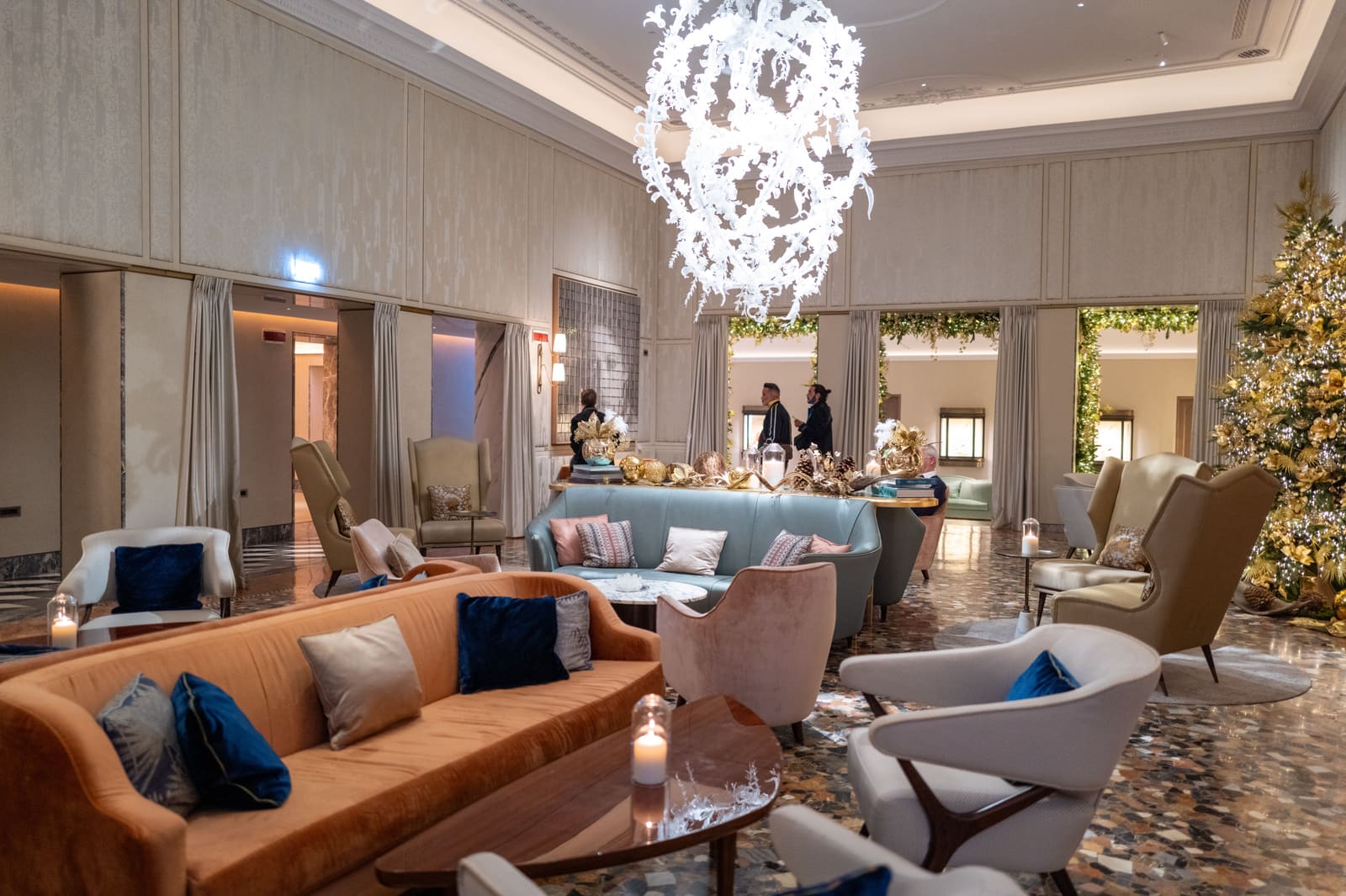
A Building Reborn
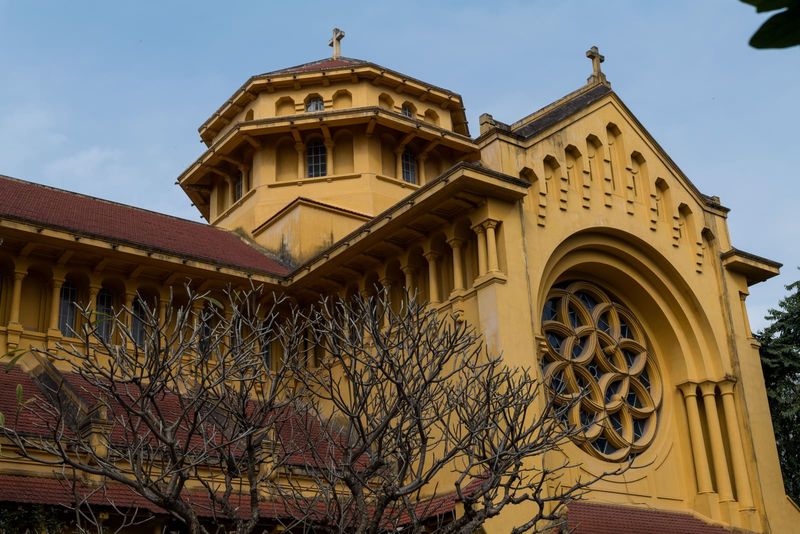
The façade still carries the weight of its mid-century origins. Built in the 1940s, the structure that now houses the Thompson Rome has witnessed Rome's transformation from post-war reconstruction to modern metropolis. Where bureaucrats once shuffled papers and diplomats conducted hushed conversations, guests now drift through lobbies warmed by ochre and terracotta, their footsteps echoing on stone that remembers a different era.
Thompson Hotels has opened its first Roman property inside this restored landmark, a decision that speaks to the brand's affinity for buildings with stories already written into their bones. The restoration preserves the architectural language of the original structure while introducing a contemporary vocabulary of colour, texture, and light. Sixty-nine rooms occupy the upper floors, each one a meditation on the balance between historical reverence and modern comfort.
The Language of Colour
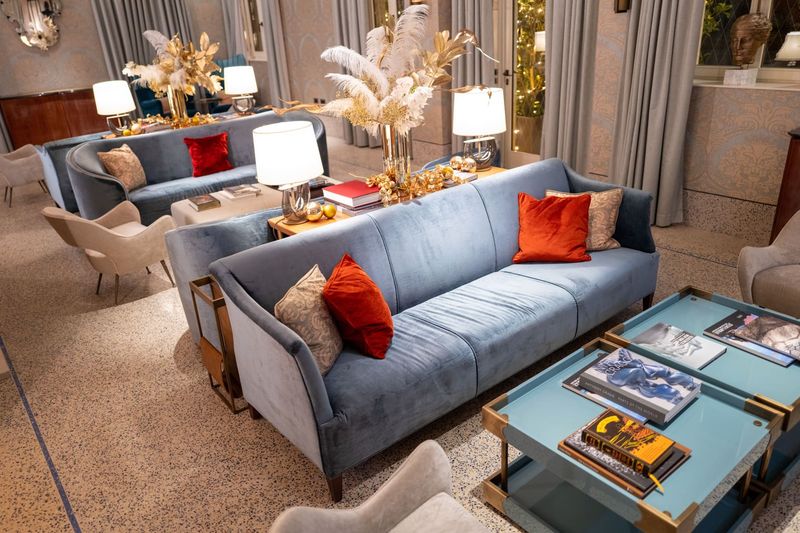
Warm oranges and deep browns dominate the interiors, a palette drawn from Rome itself: the burnt sienna of ancient brick, the amber glow of late-afternoon sun on travertine, the rich umber of espresso in a porcelain cup. These are not colours chosen arbitrarily but colours that root the hotel firmly in its geography, even as the design gestures towards a more global aesthetic.
The rooms themselves unfold with a quiet confidence. Furnishings are minimal but considered, each piece selected for its ability to hold space without overwhelming it. Bathrooms feature clean lines and natural materials, a counterpoint to the ornate excess that defines so much of Rome's historic hotel landscape. Here, luxury announces itself through restraint rather than abundance.
Art as Architecture
Art functions not as decoration but as structural element throughout the Thompson Rome. Curated pieces occupy walls, corners, and transitional spaces, transforming corridors into informal galleries. The collection favours contemporary Italian and international artists, works that engage in dialogue with the building's mid-century bones rather than attempting to disguise them.
This approach reflects a broader philosophy: that art can serve as connective tissue between past and present, between the building's institutional origins and its new life as a space of hospitality. Guests encounter works at unexpected moments, a painting glimpsed through a doorway, a sculpture positioned to catch morning light. The effect is cumulative, a gradual immersion into an aesthetic sensibility that values contemplation over spectacle.
Three Tables, Three Perspectives
The hotel houses three restaurants, each offering a distinct interpretation of contemporary Italian dining. The programming resists the temptation to position itself as a comprehensive tour of regional cuisines, opting instead for focused explorations of technique, seasonality, and the particular alchemy that occurs when tradition meets experimentation.
Details remain closely held, but the concept suggests an understanding that dining in Rome in 2026 means navigating a city where centuries-old trattorias coexist with chef-driven establishments pushing the boundaries of what Italian food can be. The Thompson Rome's restaurants position themselves somewhere in that conversation, neither slavishly traditional nor aggressively avant-garde.
The Geometry of Location
Rome's centro storico operates according to its own logic, a maze of cobbled lanes and sudden piazzas where linear navigation proves futile. The Thompson Rome occupies a position that offers both access and remove, close enough to the city's iconic sites to make exploration feasible, distant enough to provide respite from the relentless churn of tourism.
This balance matters. Rome can overwhelm, its density of history and beauty sometimes more burden than gift. A hotel that understands the need for pause, for spaces where the city's intensity can be metabolised and processed, offers something more valuable than mere proximity to monuments. The Thompson Rome's interiors provide that counterweight, rooms where warm tones and deliberate design create an atmosphere of calm.
A Question of Scale
With sixty-nine rooms, the Thompson Rome operates at a scale that allows for intimacy without sacrificing the amenities and services that define contemporary luxury hospitality. This is not a palazzo hotel with hundreds of keys, nor is it a boutique property so small that anonymity becomes impossible. The middle ground permits a certain flexibility, space for guests to shape their own experience without the weight of institutional expectation.
The restoration of the 1940s landmark represents a particular strain of adaptive reuse, one that acknowledges historical significance without being imprisoned by it. The building's original function has been erased, but its architectural character remains legible. In a city where every stone carries memory, this approach feels appropriate: respectful of the past, oriented towards the future, fully inhabiting the present.
The Ritual of Return
Hotels, at their best, become places one returns to not out of habit but out of genuine affinity. The Thompson Rome positions itself for that kind of relationship, a property designed for guests who value atmosphere as much as amenities, who understand that luxury can reside in restraint as readily as in excess.
Rome will continue to evolve, as it has for millennia. New hotels will open, old ones will close, the city's relationship with tourism will shift and recalibrate. The Thompson Rome enters this landscape with a clear point of view: that contemporary hospitality can honour history without being bound by it, that art and design can create spaces of genuine respite, and that a hotel can be both of its place and open to the world beyond its doors.