Where to Stay in Hanoi When the Past Is Only Part of the Story
Vietnam's capital offers more than colonial nostalgia. The city's most compelling hotels reveal a place caught between memory and ambition, where maximalist theatricality meets Scandinavian restraint and every check-in is a choice about which version of Hanoi you want to know.
A City That Refuses a Single Story
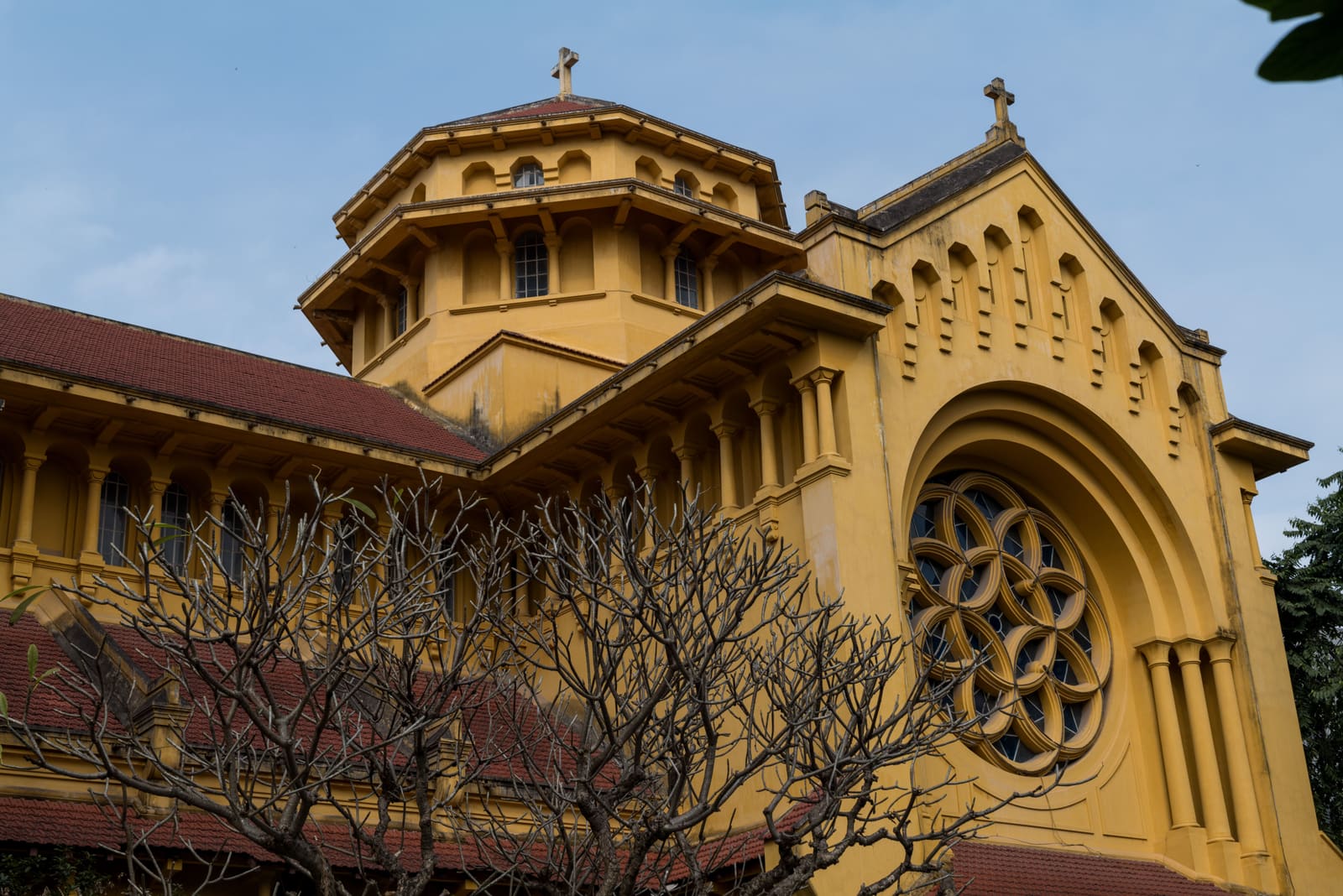
Stand at the edge of Hoàn Kiếm Lake on any given morning and you will see several versions of Hanoi layered atop one another. Elderly men practise tai chi beneath French plane trees. Teenagers in streetwear photograph the Ngọc Sơn Temple. Motorbikes weave past colonial-era shophouses whose ground floors now hold speciality coffee bars and vintage clothing boutiques. Two thousand years of history have left their mark, but the city has never been content to simply preserve what came before.
This tension between continuity and reinvention shapes Hanoi's hospitality landscape in ways that go far beyond décor. The hotels that matter here are not simply places to sleep. They are interpretive acts, each one proposing a different answer to the question of what Hanoi is and what it might become. Some lean into the romance of the Indochine era. Others embrace a contemporary Vietnamese aesthetic that owes little to colonial memory. A few manage to hold both impulses in balance, creating spaces where history and modernity coexist without one drowning out the other.
Choosing where to stay in Hanoi, then, is less about star ratings or amenities than it is about deciding which story you want to inhabit.
The Grande Dame That Never Stopped Moving
The Sofitel Legend Metropole Hanoi opened in 1901, and more than a century later it remains the city's most storied address. But the property has never functioned as a museum. Charlie Chaplin stayed here. So did Graham Greene, whose novel The Quiet American captured a very different Hanoi. Diplomats and heads of state have passed through its doors, and during the war years, guests sheltered in the hotel's basement when air-raid sirens sounded. That bomb shelter, preserved and open to visitors on the complimentary Path of History tour, is one of the most sobering experiences a hotel can offer.
Yet the Metropole does not trade solely on its past. The Heritage Wing retains the atmosphere of the original three-storey building, with hardwood floors, ceiling fans, and a sense of unhurried elegance. But the hotel also functions as a living part of the city, with six restaurants and bars that draw locals as much as guests. Le Club Bar fills most evenings. The Bamboo Bar, with its rattan fittings, serves cocktails beneath a canopy of greenery. Le Beaulieu, the hotel's fine-dining anchor, continues to set a standard for French cuisine in Hanoi.
What makes the Metropole exceptional is not that it has survived, but that it has remained relevant. It is grand without being frozen, historic without being precious.
Maximalism as a Form of Argument
If the Metropole represents continuity, Capella Hanoi represents disruption. Designed by Bill Bensley, the 47-room property takes inspiration from the nearby Hanoi Opera House and reimagines each room and suite as the private residence of an opera legend. The result is a riot of vintage memorabilia, hand-painted portraits, Art Deco flourishes, and more than a thousand pieces of curated ephemera layered into one gloriously excessive fantasy.
It is not subtle. It is not meant to be. Bensley's design philosophy has always favoured abundance over restraint, and Capella Hanoi pushes that approach to its logical extreme. Yet beneath the spectacle lies a boutique hotel that functions exceptionally well. The service, delivered by staff the hotel calls Capella Culturists, is warm and intuitive. La Grotta, the indoor pool, is one of the most visually arresting hotel pools in Southeast Asia. The cocktail bar ranks among the best in the city, and the Michelin-starred dining is serious enough to draw non-guests.
Capella Hanoi is not for everyone. But for those who want their hotels to take a position, to argue for a particular vision of luxury rather than defaulting to consensus, it is one of the most compelling addresses in the city.
Contemporary Luxury Without the Colonial Lens
Fairmont Hanoi opened in 2026, and its arrival marked a shift in how the city's luxury segment presents itself. Rather than mining the colonial past for aesthetic cues, the property embraces a contemporary expression of Vietnamese design. The rooms and suites are spacious, almost apartment-like in scale. The Cirua Spa sprawls across multiple treatment rooms and offers a level of wellness programming uncommon in the city. Dining is led by celebrity chef Luke Nguyen and Michelin-recognised chef Nicolas Isnard, both of whom bring serious culinary credentials to the table.
What Fairmont offers is luxury unencumbered by nostalgia. There are no rattan ceiling fans, no sepia-toned photographs of colonial-era Hanoi, no design gestures that look backward for validation. Instead, the hotel proposes that Vietnamese luxury can stand on its own terms, rooted in local craft and contemporary aesthetics rather than borrowed European grandeur.
It is a quieter statement than Capella's maximalism, but no less deliberate.
The Boutique Hotel as Urban Anchor
La Siesta Premium Lakeside occupies 52 rooms overlooking Hoàn Kiếm Lake, and its location alone would be enough to recommend it. Step outside and you are immediately at the symbolic heart of Hanoi, with the Old Quarter, French Quarter, St. Joseph's Cathedral, and dozens of the city's best cafés and street-food vendors within easy walking distance. But the hotel also functions as a destination in its own right, with a rooftop wellness deck, a boutique spa specialising in traditional Vietnamese treatments, and Link Bistro, a ground-floor restaurant that opens onto the boulevard and serves as a pleasant vantage point for watching the city unfold.
La Siesta Premium Lakeside is the flagship property of one of Vietnam's most respected boutique hotel groups, and it shows in the details. Service is deeply personal. Rooms are thoughtfully designed without veering into showiness. The hotel understands that its role is not to compete with the city for attention, but to provide a comfortable base from which to explore it.
Scandinavian Restraint Meets Vietnamese Craft
Hotel de Lagom sits near the Hanoi Train Street, a neighbourhood that has become something of a pilgrimage site for visitors drawn to the surreal sight of trains passing inches from residential doorways. The hotel itself takes a different approach. Across 68 rooms, Scandinavian-accented interiors are softened with Vietnamese craftsmanship. Soundproofing is excellent, a rare luxury in a city where street noise is a constant. The rooftop infinity pool offers a calm retreat just beyond the Old Quarter's busiest streets.
What distinguishes Hotel de Lagom is its restraint. In a city where many boutique hotels lean heavily on ornamentation, this property opts for simplicity. Rooms start under 200 US dollars, making it one of the better-value stays in the city. The balcony rooms, in particular, transform the experience, offering a peaceful perch above the city that is especially rewarding in the early morning or around sunset.
It is a hotel that understands the value of quietness, both literal and aesthetic.
Theatricality as Hospitality
Hotel de l'Opéra embraces the drama of its location near the Hanoi Opera House. The property features 107 velvet-clad rooms and suites, opera-inspired interiors, and Lautrec, one of the city's most striking hotel restaurants, set beneath a soaring glass atrium. While the Metropole is steeped in colonial history, Hotel de l'Opéra offers a more contemporary interpretation of French elegance, complemented by a standout afternoon tea and a classic absinthe bar.
The hotel has become something of a backdrop for Hanoi's young people, who frequently gather outside to photograph its distinctly European façade. It is an interesting reversal: a hotel designed to evoke a certain vision of Europe becomes, in the hands of local residents, a stage for their own performances of identity and aspiration.
The Business Hotel That Earns Its Place
The JW Marriott Hotel Hanoi, designed by architect Carlos Zapata, draws inspiration from Vietnam's coastline and is meant to evoke a dragon rising beside the water. With 450 rooms, it is one of the capital's largest hotels, and it functions primarily as a business address. But it does so with a level of polish that makes it more than a default corporate choice.
The rooms are generous. The eighth-floor indoor lap pool is enormous. Service is warm and intuitive, and the dining options range from the upscale French Grill to one of Hanoi's most expansive breakfast buffets. For travellers who value space, comfort, and a quieter setting away from the city's frenetic centre, it is an easy recommendation.
What the Hotels Reveal
Taken together, these properties map a city that refuses to be reduced to a single narrative. The Metropole and Hotel de l'Opéra engage with the colonial past, but in different registers. Capella Hanoi and Fairmont Hanoi both represent contemporary luxury, but one does so through maximalist spectacle and the other through restrained modernism. La Siesta Premium Lakeside and Hotel de Lagom offer boutique hospitality, but one is rooted in Vietnamese tradition and the other in Scandinavian simplicity. The JW Marriott serves business travellers, but does so with enough grace to transcend its category.
What unites them is an understanding that hospitality in Hanoi is not just about comfort or service. It is about offering a lens through which to see the city. Every check-in is an interpretive choice. Every hotel proposes a different version of what Hanoi is and what it means to be there.
The question is not which hotel is best. The question is which Hanoi you want to know.