Where the Ayung River Becomes the Room: A Stay in Ubud's Canopy
At Impiana Private Villas, the boundary between villa and valley dissolves into birdsong, bougainvillea, and the steady murmur of water below.
The Geography of Stillness
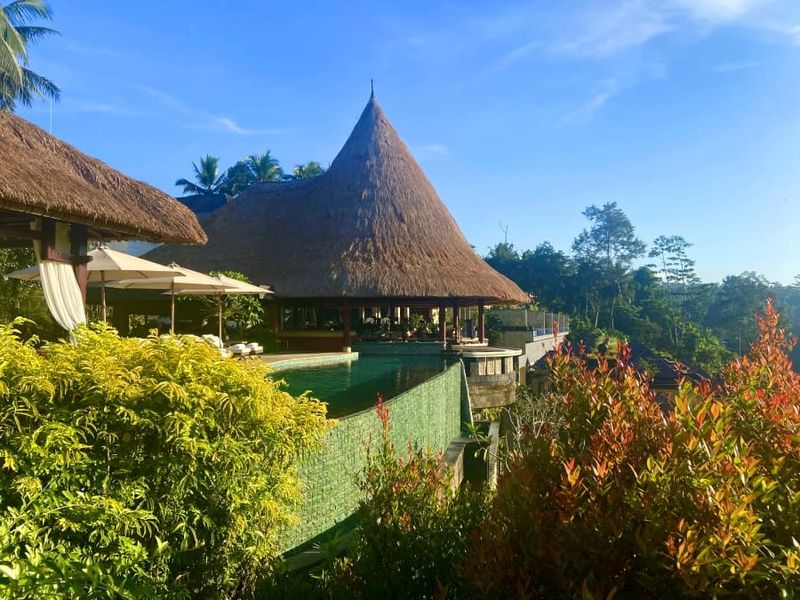
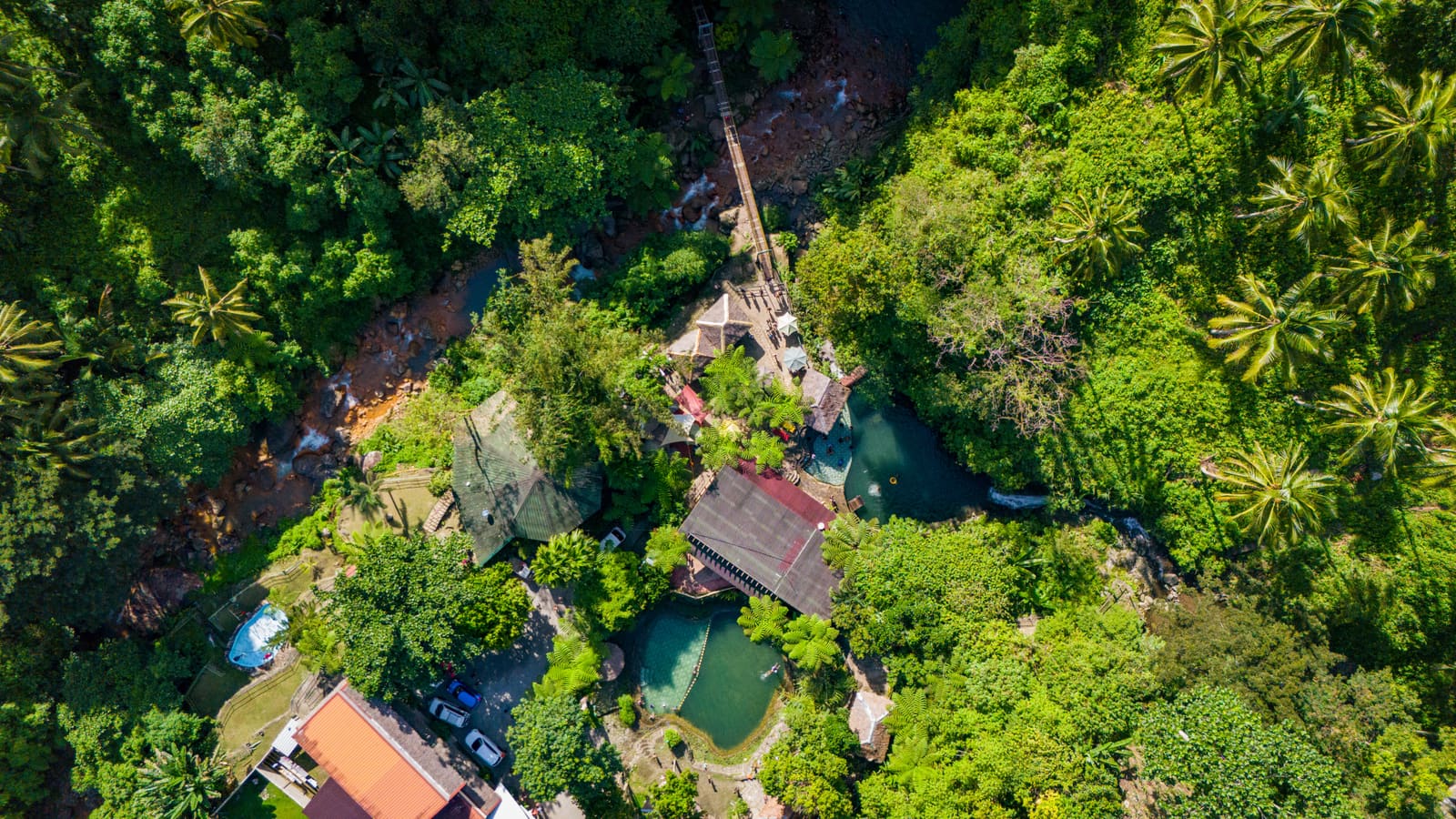
There is a particular quality to mornings in Ubud's river valleys, a softness that belongs neither to the mist nor the light but to the way they move together through the canopy. At Impiana Private Villas Ubud, this quality seeps through woven timber panels and settles across high ceilings, pooling in corners where traditional Indonesian architecture meets the deliberate slowness of a well-designed retreat. The resort sits on a slope above the Ayung River in Sayan, where 69 suites and villas are distributed across five enclaves, each positioned to capture the sound of water running over stone.
The Riverside Pool Villa makes good on its name. Floor-to-ceiling glass doors slide open to reveal a private pool that faces the river directly, close enough that the stream becomes ambient sound rather than distant scenery. Bougainvillea spills over one edge; palm fronds fill the sightline. A daybed under a pergola anchors the patio, the kind of spot that redefines how you measure an afternoon. The architecture borrows generously from vernacular forms: timber beams cross overhead, klambu drapes the bed in gauzy layers, and dark wood floors lend warmth to a space designed to feel like a traditional home rather than a hotel room.
Inside, the layout offers choices. A grey sofa at the foot of the bed faces both the television and the view beyond. A marble coffee table holds a bowl of fresh fruit. A walk-in wardrobe and minibar are tucked discreetly to one side. The design vocabulary is restrained, allowing the landscape to do the decorating. This is not a villa that announces itself; it recedes, making room for what lies outside its walls.
A Tray Adrift, A Morning Defined
Floating breakfasts have become visual shorthand for a certain kind of tropical indulgence, but context matters. Here, the ritual arrives with the sound of the Ayung River as accompaniment, the tray drifting across the pool scattered with petals, laden with pastries, fruit, and juice. It is not novelty for its own sake but a gesture that aligns with the setting. You eat slowly because there is no reason to do otherwise. The birds provide the soundtrack; the water below sets the tempo.
This is where the resort's geography asserts itself. Impiana Private Villas Ubud sprawls across a hillside, and the team navigates guests between enclaves by buggy. The incline is steep enough that walking becomes impractical, but the rides themselves become moments of encounter, brief exchanges with staff who know the terrain and the rhythms of the property. The buggies are not an inconvenience but a cadence, a way of moving through the landscape that reinforces the sense of remove.
Two Tables, Two Moods
The resort offers two restaurants, each with its own orientation. Bijan Restaurant sits above rice terraces, its menu an exercise in range: Indonesian, Indian, Chinese, Italian, and Western dishes occupy the same list. It functions as the all-day dining anchor, serving breakfast buffets and evening meals with equal facility. The pan-seared Atlantic salmon arrives with crispy skin and a lemon butter sauce that keeps the dish light rather than rich. But it is dessert that shifts the register.
Es Cendol 2.0 arrives as a smooth panna cotta dome infused with pandan and coconut, the traditional green cendol noodles served alongside rather than submerged. The flavours remain faithful to the Indonesian iced dessert, but the form has been reimagined. You scoop rather than sip, and the nostalgia of the street-cart version meets the precision of a plated course. It is playful without being frivolous, a dessert that understands its reference material.
Bijan's sunken bar operates daily from 11am to 10.30pm, pouring Balinese craft beers and signature cocktails. The space tilts towards evening, when the rice terraces fade into shadow and candlelight takes over.
By the Pool, Facing the Current
Ayung Riverside occupies a different register. The restaurant sits poolside, oriented towards the river, and specialises in Asian barbecue and grills. The atmosphere skews casual, the kind of place where a frozen drink in a tall glass and beef carpaccio feel like the right opening move. The sambal matah prawn linguine follows, a zesty collision of lemon butter and the fresh, tangy heat of Balinese sambal matah. The pasta format is borrowed, but the flavour profile is firmly rooted in place. A warm chocolate fondant closes the meal.
Ayung Riverside also hosts the complimentary afternoon tea, served daily from 4pm to 5pm. Canapés, fresh fruit, and a selection of teas arrive by the pool, a ritual that can be extended with a mixology class. The resort offers a hands-on session centred on arak, the Balinese spirit distilled from palm sap or rice. Guests mix their own arak cocktails under guidance, the river providing the backdrop. It is an activity that feels less like programming and more like an invitation to engage with local ingredients on their own terms.
The Spa That Listens
Prana Spa occupies a quieter corner of the property, positioned to face the Ayung River. Treatments begin with a choice of scent and a cup of hot herbal tea, small gestures that frame the experience as participatory rather than prescriptive. The therapists work with a light touch, attuned to the kind of traveller who has come to Ubud not to be fixed but to be held.
The spa menu draws from Balinese traditions, but the real offering is the setting itself. The sound of the river filters through, and the treatments unfold at a pace that mirrors the landscape. There is no rush, no hard sell for additional services. You leave feeling less like a client and more like someone who has been granted a few hours of reprieve.
The Slope, the Buggy, the Return
Impiana Private Villas Ubud does not ask much of its guests. The resort's hillside topography means that movement between villa, restaurant, and spa is mediated by the buggy service, but this becomes part of the rhythm rather than an obstacle. The drivers know the paths, the shortcuts, the best times to catch the light on the river. Conversations happen in transit, brief exchanges that accumulate into a sense of familiarity.
The property itself is large enough to feel private but not so sprawling that it loses coherence. The five enclaves are distinct without being isolated, and the design ensures that views of the Ayung River are never far from reach. It is a resort built around a single proposition: that proximity to water, to greenery, to the particular stillness of Ubud's river valleys, is worth organising a stay around.
Two nights pass quickly. The floating breakfast, the candlelit dinner at Bijan, the afternoon tea by the pool, the mixology class, the spa treatment facing the river: these are not grand gestures but small, repeatable pleasures. They accumulate into something larger, a sense that time in Ubud operates on a different scale. The villa becomes less a place to stay and more a vantage point from which to observe the valley, the river, the way light moves through leaves.
The Measure of Return
What Impiana Private Villas Ubud offers is not novelty but consistency, the kind of retreat that rewards return visits because the pleasures it provides are not easily exhausted. The klambu draped over the bed, the sound of the Ayung River from the pool, the deconstructed cendol at Bijan, the arak cocktail by the water: these are elements that work because they are rooted in place rather than imported from elsewhere.
The resort understands that travellers who choose Ubud are often seeking a particular kind of slowness, a reprieve from the coastal energy of Seminyak or the bustle of Canggu. It delivers on that premise without overstating the case. The villas are private but not isolating, the service attentive but not intrusive, the dining varied but not scattershot. It is a balance that holds.
For those who measure a stay not by what they do but by what they are able to let go of, Impiana Private Villas Ubud makes a compelling argument. The Ayung River runs below, the canopy spreads above, and somewhere between the two, time stretches just enough to remember what it feels like to move slowly.