A Palazzo in Canareggio Becomes Venice's Quietest New Retreat
Designer Cristina Celestino transforms a 17th-century building into a 14-room hotel where lagoon green walls meet seminato veneziano floors and the ghetto's ancient streets lie just beyond the door.
The Sestiere That Artists Never Forgot
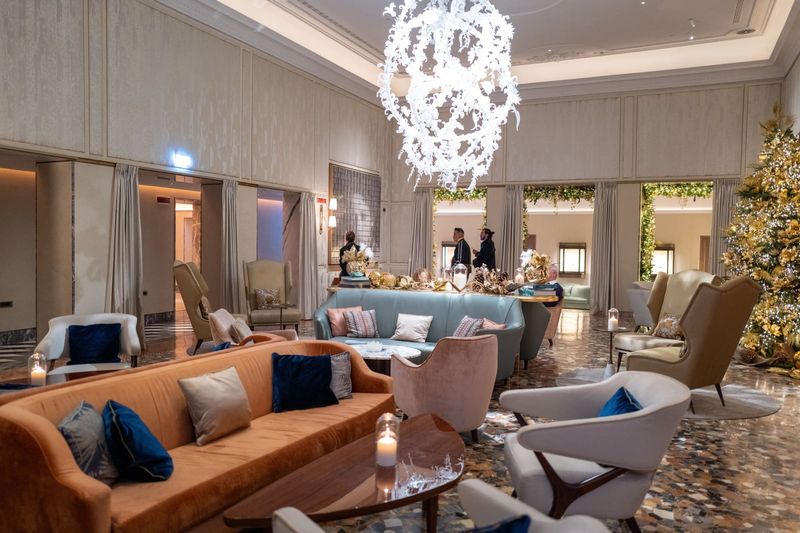
Tintoretto kept his studio here, in Canareggio, where the light off the water has a particular slant and the narrow fondamente carry fewer tourists than the routes to San Marco. Luca Nichetto, artistic director at Barovier and Toso, has spoken of the district's pull. This summer, Elizabeth Unique Venice chose the same sestiere for its 14-room hotel, occupying a 17th-century palazzo whose timber ceilings and high arched windows have survived centuries of alteration. The interiors, designed by Milan-based architect Cristina Celestino, draw on the city's palette: lagoon greens, soft ambers, dado-height crimson panelling that shifts tone depending on the hour.
Canareggio sits ten minutes from the Grand Canal on foot, twenty from the Scuola Grande di San Rocco and Piazza San Marco. But the neighbourhood's real geography is smaller and older. Europe's first ghetto lies directly behind the hotel, its campo and synagogues forming a quieter counterpoint to the main tourist corridors. On Saturday mornings, stalls selling fresh fish appear along the canal. In the evenings, wine bars serve spritz and cichetti, the small bites that Venetians take standing at the bar.
A Graduate's Return
Cristina Celestino studied at IUAV School of Architecture in Venice before establishing her Milan studio in 2013. She has since collaborated with Fendi and Diptyque, but this project marks her second commission in the city where she trained. Designing a boutique hotel, she has said, meant designing an experience, one that reinterprets Venetian opulence through contemporary restraint.
The palazzo had been altered multiple times over its four centuries. Celestino's first task was removal: stripping back additions that obscured the building's original proportions whilst retaining the elements that carried historical weight. The timber ceilings and beams remained, establishing what she describes as continuity with the building's past and providing a framework for new interventions. The floors, however, required complete replacement. Celestino chose seminato veneziano, the traditional Venetian terrazzo, for its deep connection to the city's architectural heritage and for the freedom it offers in pattern and colour combination. In the bathrooms, large-format ceramic panels by Cedit reduce grout lines, creating smoother surfaces that contrast with the terrazzo's speckled texture.
Suites Designed for Repose
The hotel holds 14 keys, split evenly between suites and bedrooms. The Canal Suite, on the first floor, is one of two rooms equipped with a sauna. Celestino has used a pale lagoon green throughout, a shade that complements the view of water through the suite's tall arched windows. The colour runs from the living area into the bedroom, where the original beams carry a floral pattern distinct from the neutral hue applied to beams elsewhere in the building.
The suites are laid out with deliberate gaps between the walnut wardrobes and the oversized headboards, creating narrow corridors that make the rooms feel larger than their footprint suggests. Art Ceram basins and sanitary ware in the bathrooms hint at traditional forms whilst offering modern function. Dado-height crimson wood panelling creates tone-on-tone contrast with pink doors and architraves. Low-pile Besana rugs soften the floors. Lighting comes from a mix of Celestino's own designs and pieces by other designers, including Michele de Lucchi's Dioscuri globe light, offering guests multiple options for illumination.
Da grandMa and the Nonna's Logic
The hotel's restaurant, Da grandMa, is accessed through plush velvet curtains. The menu ranges across Italian regional cooking, allowing guests to explore both local and national dishes in an intimate setting that seats 20 inside, with additional seating outside. Venetian creamed salt cod appears alongside cuttlefish and pea risotto, the dish known as risi e bisi. Nuts are served at the end of the meal, following the logic of an Italian nonna. The banquette seats feature timber armrests; Philippe Tabet's Orchestra chairs for Pianca provide style without sacrificing comfort. Booking is advised.
Spaces for Switching Off
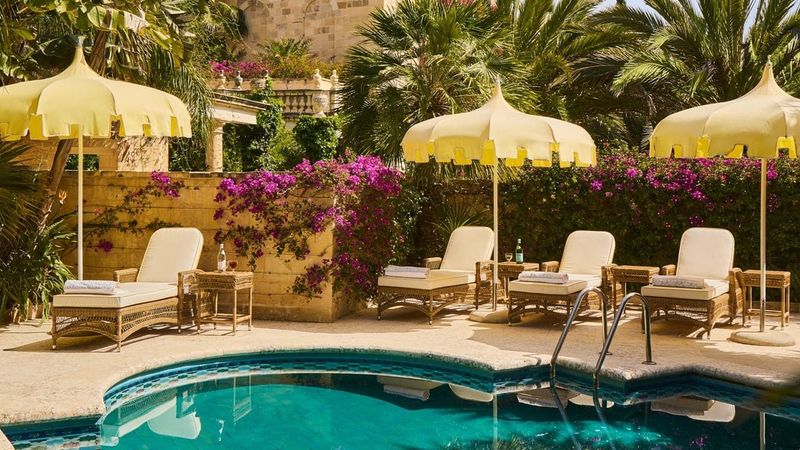
In the reception area, illuminated glass-encased pilasters by Venice-based firm Incalmi cast a soft amber glow. Backlit glass also lines the bar, inviting guests to pull up a stool and admire art pieces curated by Galleria Russo. The welcome area opens directly onto an enclosed garden, where aperitivi can be taken on warm evenings beneath a starlit sky.
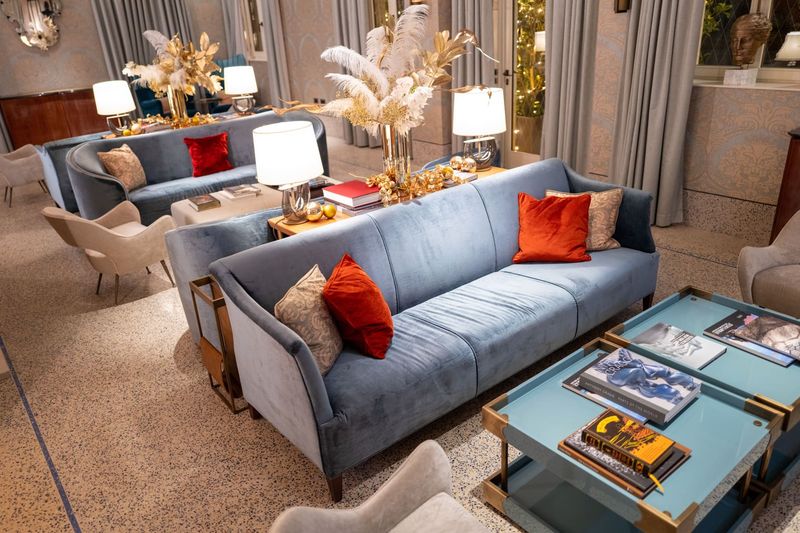
Each of the two upper floors includes a communal area furnished with Celestino's Peonia sofas and armchairs, positioned for reading or quiet conversation. These shared spaces extend the hotel's logic: that a stay might feel less like a transaction and more like temporary residence in a private home.
The Details That Accumulate
Elizabeth Unique Venice operates as a Design Hotel, a designation that here translates into attention to small, functional elements. Brass door handles by Manital and Olivari grant access to the rooms. Hotel slippers and bathrobe trims are colour-coded, helping guests distinguish their own during their stay. Throughout the building, fabrics feature small patterns and delicate textures, maintaining what Celestino describes as a quiet, measured harmony across the spaces.
The suites have a separate street entrance, reinforcing the impression of walking into a private residence rather than a hotel corridor. For the few nights of a stay, the palazzo feels less like shared accommodation and more like a borrowed home, one where the light off the canal still falls the way it did when Tintoretto worked a few streets over, and where the city's colours shift from lagoon green at dawn to soft amber by evening.