Thompson Rome Opens in a Postwar Palazzo Steps From the Pantheon
A 69-room hotel weaves 1940s marble and Gio Pomodoro artworks into a contemporary Mediterranean retreat on Via delle Botteghe Oscure.
A Postwar Shell Finds New Life
The marble staircase rises in broad, confident sweeps, its veining undisturbed since the building went up in the 1940s. Workers uncovered it during demolition, along with inlaid floors and a sculptural wall signed by Gio Pomodoro, the Italian artist whose bronze and stone abstractions defined postwar Italian design. Thompson Rome has opened in that shell, a 69-room hotel on Via delle Botteghe Oscure that keeps the bones visible whilst furnishing the interiors in warm timber, pale stone, and bespoke pieces that refuse to compete with the architecture.
The Hyatt-owned brand chose the location for its proximity to both the Pantheon, a ten-minute walk north, and the Crypta Balbi museum, which documents two millennia of Roman layering. The neighbourhood has drawn scholars, painters, and expatriate writers since the 1950s, and the hotel's art programme acknowledges that lineage. Canvases from the Scuola Romana and the Scuola di Piazza del Popolo hang in the public spaces, early- and mid-twentieth-century movements that favoured tonal restraint and urban subject matter. Contemporary pieces punctuate the corridors, a deliberate oscillation between eras that mirrors the building itself.
Rooms That Read as Residential
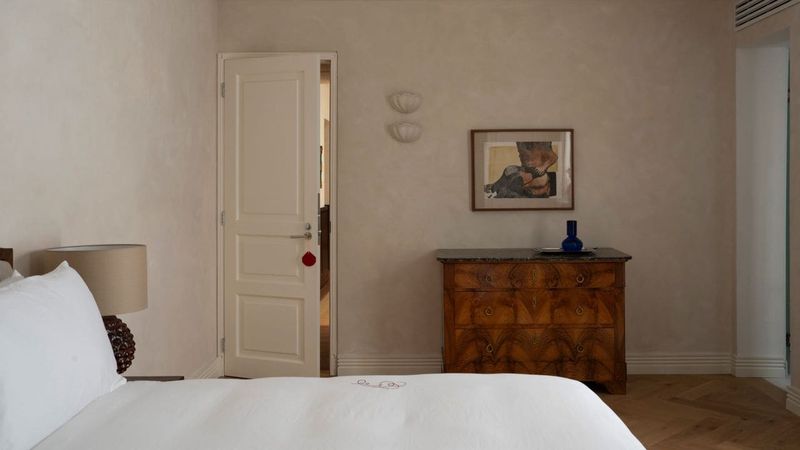
Guest accommodation leans modern rather than nostalgic. Walls are dressed in neutral plaster, floors in herringbone oak, and upholstery in ochre and terracotta that recall the Tiber at dusk. Twenty of the 69 rooms are suites. The entry-level Junior Suite offers a separate sitting area; step up and you gain a private terrace or patio, some opening directly onto the street's worn cobbles. The Thompson Suite spans more than 1,000 square feet, with floor-to-ceiling windows that frame rooftops and the occasional campanile.
The design avoids the trap of theme-park antiquity. There are no faux frescoes, no reproduction busts. Instead, the materials do the work: Carrara in the bathrooms, linen on the beds, brass fixtures that will patina over the next decade. The effect is less "Roman holiday" and more private apartment in a quarter where tourists rarely linger.
Three Dining Venues, One Culinary Thread
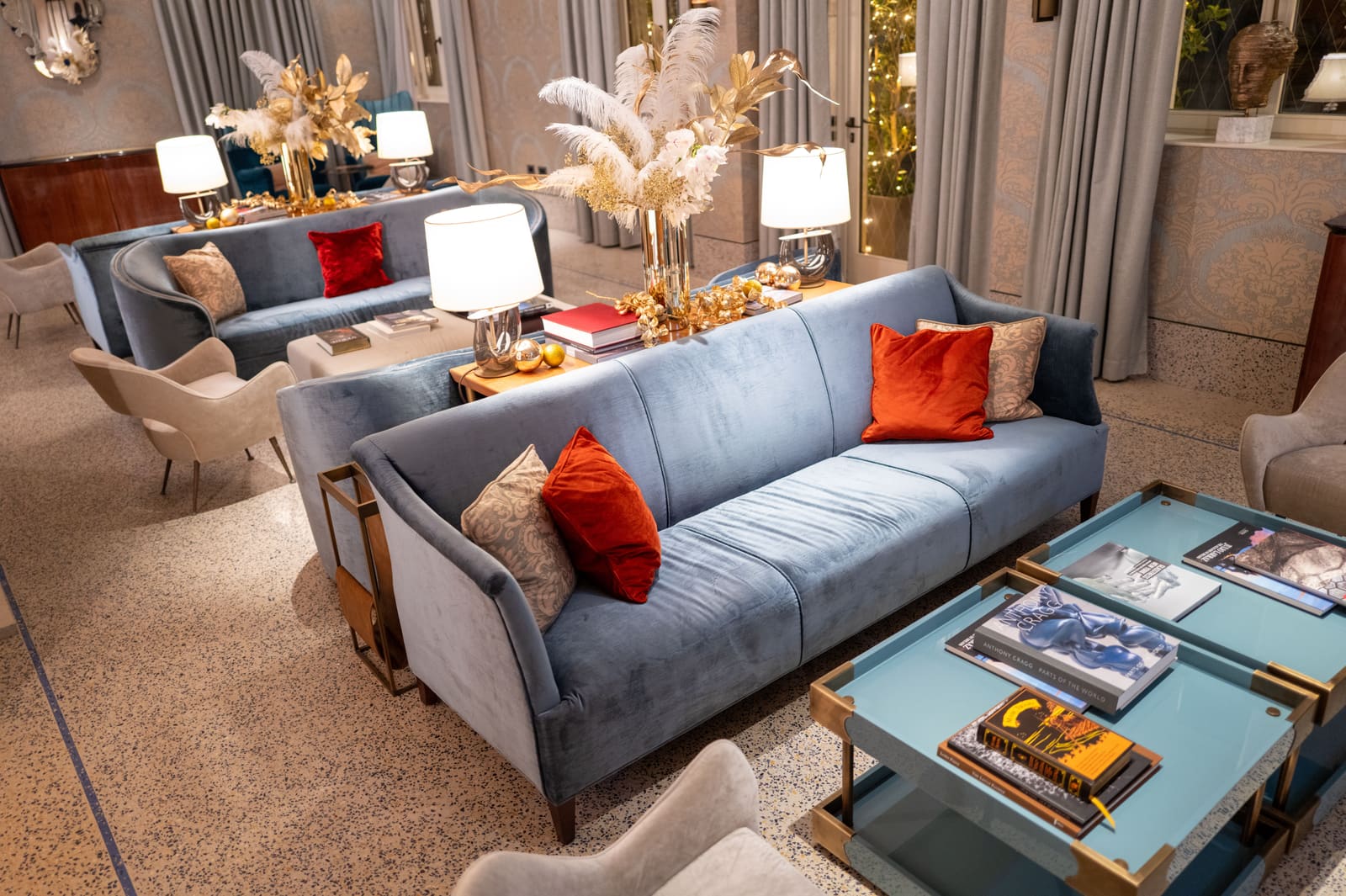
Dining unfolds across three venues, all operated under the hotel's direction. The Lobby Lounge anchors the ground floor, serving espresso at breakfast and Negronis during aperitivo hour. Seating spills across the restored Pomodoro floor, where the inlaid stone catches afternoon light through tall windows.
Lyve Restaurant occupies the main dining room, helmed by Fabio Fioravanti, whose résumé includes time at Le Louis XV - Alain Ducasse in Paris, a three-Michelin-star institution. Fioravanti's menu here draws from the Italian coastline: octopus with bouillabaisse reduction, swordfish carpaccio, ricciola crudo with citrus and fennel. The wine list skews domestic, with labels from Campania, Sicily, and the Lazio hills.
The Lyve Rooftop, open in the evening, offers sight lines across terracotta rooftops towards the Victor Emmanuel II Monument and, on clear nights, the dome of St Peter's in the distance. The menu is lighter: small plates, spritzes, and a handful of pasta dishes for those who arrive hungry after a day navigating the city's cobblestones.
A Neighbourhood With Depth
Via delle Botteghe Oscure translates roughly as "Street of the Dark Shops," a reference to the medieval workshops that once lined the route. Today the street connects Piazza Venezia to the Campo de' Fiori, threading through a district where Renaissance palazzi stand shoulder to shoulder with postwar apartment blocks. The Crypta Balbi, part of the National Roman Museum, occupies the site of an ancient theatre; its permanent exhibition traces the neighbourhood's evolution from imperial Rome through the Middle Ages to the present.
Thompson Rome sits within this palimpsest, and the design team appears to have understood the assignment. According to Amar Lalvani, chief commercial officer of Hyatt Hotels Corporation and creative director of the company's Lifestyle Group, the brief began with the city itself: the building's history, the quarter's character, the rhythms of Roman daily life. The result is a hotel that does not announce itself loudly but settles into its context, a trait rarer than it should be in a city where new openings often mistake spectacle for substance.
Why Now, and What It Signals
Rome has seen a cluster of hotel openings in recent months, part of a broader European trend as travellers return to cities they avoided during the pandemic. Thompson's entry, the brand's first in Italy, suggests confidence in sustained demand for accommodation that bridges heritage and contemporary comfort. The choice to restore rather than gut the 1940s structure also reflects a shift in luxury hospitality, where provenance and material honesty increasingly matter more than thread counts or amenity lists.
The 69-room scale keeps the property intimate. There is no grand ballroom, no sprawling spa, no attempt to be all things. Instead, the hotel offers a curated slice of a specific Roman neighbourhood, one where you are more likely to encounter a local architect than a tour group. Whether that resonates will depend on the traveller: those seeking a five-star cocoon may find it spare, whilst those drawn to a city's grain rather than its monuments will appreciate the restraint.
Thompson Rome is now accepting reservations. Details and booking are available through the property's direct channels.