
Zurich in Winter: Where Fondue Meets Festive Markets Along the Limmat
Switzerland's largest city trades its banking reputation for something warmer when December arrives - candlelit squares, molten cheese, and the kind of luxury that never announces itself.
The City That Softens in December
Stand on the Quaibrücke at dusk in mid-December and watch the city rearrange itself. The bankers have retreated; in their place, wooden chalets appear along Sechseläutenplatz, each one strung with Edison bulbs and exhaling cinnamon. Zurich - a city that spends eleven months projecting efficiency - spends the twelfth remembering how to linger.
The Limmat River bisects the old town, its grey-green water reflecting both the guildhalls of Niederdorf and the glass towers of Europaallee. In summer, this duality feels like a compromise. In winter, it resolves into something more coherent. The medieval quarter warms under fairy lights; the modern districts recede into early darkness. What emerges is a city that has made peace with pleasure.
Markets That Resist Kitsch
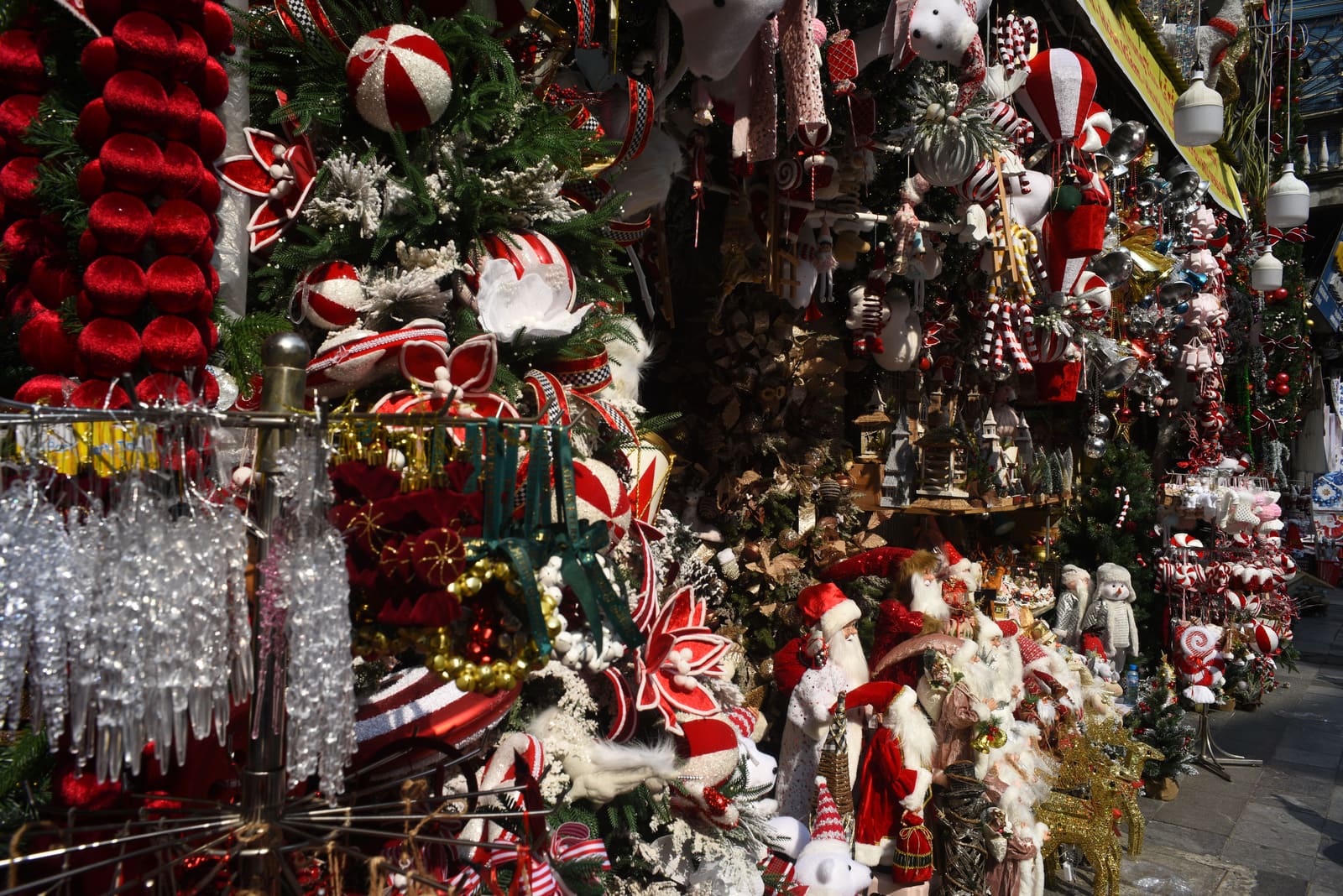
Zurich's Christmas markets occupy a spectrum. At one end sits the Christkindlimarkt in Hauptbahnhof, Europe's largest indoor festive market, where 160 stalls fill the railway station's vaulted hall. The acoustics are cathedral-like; the merchandise ranges from hand-turned wooden toys to cashmere scarves that cost more than a flight home. It is commerce, certainly, but commerce conducted with a respect for craft that borders on reverence.
The Wienachtsdorf at Sechseläutenplatz takes a different approach. Here, the chalets are larger, the crowds thicker, the offerings more democratic - raclette served on paper plates, mulled wine in ceramic mugs you can keep. Children queue for the carousel; adults queue for Glühwein spiked with Pflümli, the local plum schnapps that turns every conversation slightly philosophical.
Smaller markets dot Niederdorf and Münsterhof, each anchored by a different guild or neighbourhood association. These are where locals go when they want fondue without tourists, where the stall-holders know regulars by name, where the wooden ornaments are genuinely old rather than distressed to look that way.
Fondue as Winter Architecture
To understand fondue in Zurich is to understand that cheese here is not an ingredient but a structural material. The city's traditional recipes call for Gruyère and Emmentaler in equal measure, white wine from the Zürichsee, a thread of kirsch, and nothing else. The result is a liquid that coats the tongue without weighing it down, savoury enough to anchor a meal but subtle enough to let the bread - always day-old, always dense - do its work.
Zunfthaus zur Zimmerleuten, a guildhall dating to 1336, serves its fondue in copper caquelon pots over open flame. The dining room overlooks the Limmat; the beams overhead are original. Order the moitié-moitié and watch the waiters swirl the pot with a confidence that suggests they have been doing this since the guilds still controlled the grain trade.
For a less formal encounter, Swiss Chuchi in Niederdorf offers fondue alongside rösti and älplermagronen - Alpine macaroni baked with cheese, cream, and onions, then topped with applesauce in a combination that should not work but does. The room is small, the tables close, the atmosphere thick with steam and conversation in four languages.
Hotels That Understand Silence
Luxury in Zurich does not shout. The Baur au Lac, set in its own park at the end of Bahnhofstrasse, has been hosting royalty and industrialists since 1844. The building is Belle Époque; the interiors are not. Recent renovations have stripped away the gilt in favour of pale oak, linen, and light. Rooms overlook either the lake or the Alps, depending on which kind of silence you prefer.
The Widder Hotel occupies eight medieval townhouses in the old town, each one gutted and reassembled around a courtyard. The walls are stone; the art is contemporary; the effect is of sleeping inside a very expensive contradiction. The restaurant, housed in a former wine cellar, serves dishes that reference Swiss tradition without being bound by it - venison with spätzle and juniper, Arctic char with sorrel and brown butter.
For those who prefer their luxury vertical, The Dolder Grand sits on a forested hill above the city, its original 1899 castle now flanked by Norman Foster-designed wings. The spa spans 4,000 square metres and includes a pool that seems to spill into the treetops. In winter, guests return from the Christmas markets below, take the funicular back up the hill, and disappear into steam rooms scented with Swiss pine.
What the Cold Reveals
Zurich in winter is a city of interiors. Not in the sense of retreat, but in the sense of what becomes visible when the surface activity dies down. The cafés along Limmatquai fill with readers rather than tourists. The Kunsthaus mounts exhibitions that assume you have time to look slowly. The opera house, rebuilt after a fire in the 1890s, programmes Wagner and Strauss for audiences who arrive on foot through the snow.
The lake, too, changes character. In summer, it is a recreational surface - swimmers, sailors, paddleboarders treating it as a amenity. In winter, it becomes a horizon, something to walk beside rather than into. The promenade from Bellevue to Tiefenbrunnen stretches for three kilometres, lined with plane trees and punctuated by small parks where the benches face the water. On clear days, the Alps rise in the distance, close enough to name - Säntis, Glärnisch, the serrated ridge of the Churfirsten.
The Mechanics of Arrival
Zurich Airport sits 13 kilometres north of the city centre; trains depart every ten minutes and reach Hauptbahnhof in twelve. The Swiss Travel Pass covers not only trains but trams, buses, and boats, though Zurich itself is compact enough to walk. The old town, hemmed in by the river and the Lindenhof hill, can be crossed in twenty minutes.
The Christmas markets typically open in late November and run through Christmas Eve. Hauptbahnhof's Christkindlimarkt operates daily until 22:00; Sechseläutenplatz stays open until 23:00 on weekends. Most stalls accept cards, though smaller vendors prefer cash. Glühwein costs between 6 and 10 francs; fondue at a market stall starts at 15 francs for a portion meant to share.
December temperatures hover between -1°C and 5°C. Snow is possible but not guaranteed; what is guaranteed is that the Swiss will have cleared it by dawn if it falls. Pack accordingly - wool rather than down, boots that can handle cobblestones slick with melt.
A City That Earns Its Warmth
Zurich does not hand you enchantment. It makes you work for it, makes you walk the cold promenades and climb the Lindenhof stairs and sit through the first course before the fondue arrives. But the effort is the point. This is a city that has spent centuries turning precision into an art form, and in winter, that precision turns inward. The markets are not chaotic but choreographed. The fondue is not indulgent but exact. The hotels do not seduce but persuade.
What you take away is not a list of sights but a series of sensations - the weight of melted Gruyère on bread, the particular quality of light reflected off snow and water, the satisfaction of a city that refuses to perform and therefore has nothing to prove. Zurich in December is not cheerful in the sense of exuberance. It is cheerful in the sense of a fire that has been burning long enough to produce only heat, no smoke.
- DESTINATIONSMunich's Quiet Elegance: Beyond the Beer Halls
- DESTINATIONSBetween Tradition and Reinvention: How Lake Como Negotiates a Younger Luxury
- DESTINATIONSWhere to Stay in Rwanda for Gorillas, Giraffes, and Chimpanzees
- DESTINATIONSThe Maldives Beyond the Postcard: Planning a Journey to the Indian Ocean's Most Elusive Archipelago