Between Tradition and Reinvention: How Lake Como Negotiates a Younger Luxury
Italy's storied lakeside retreat is attracting a different generation - but the question is whether its soul will survive the shift.
The Landscape Is Changing, Quietly at First
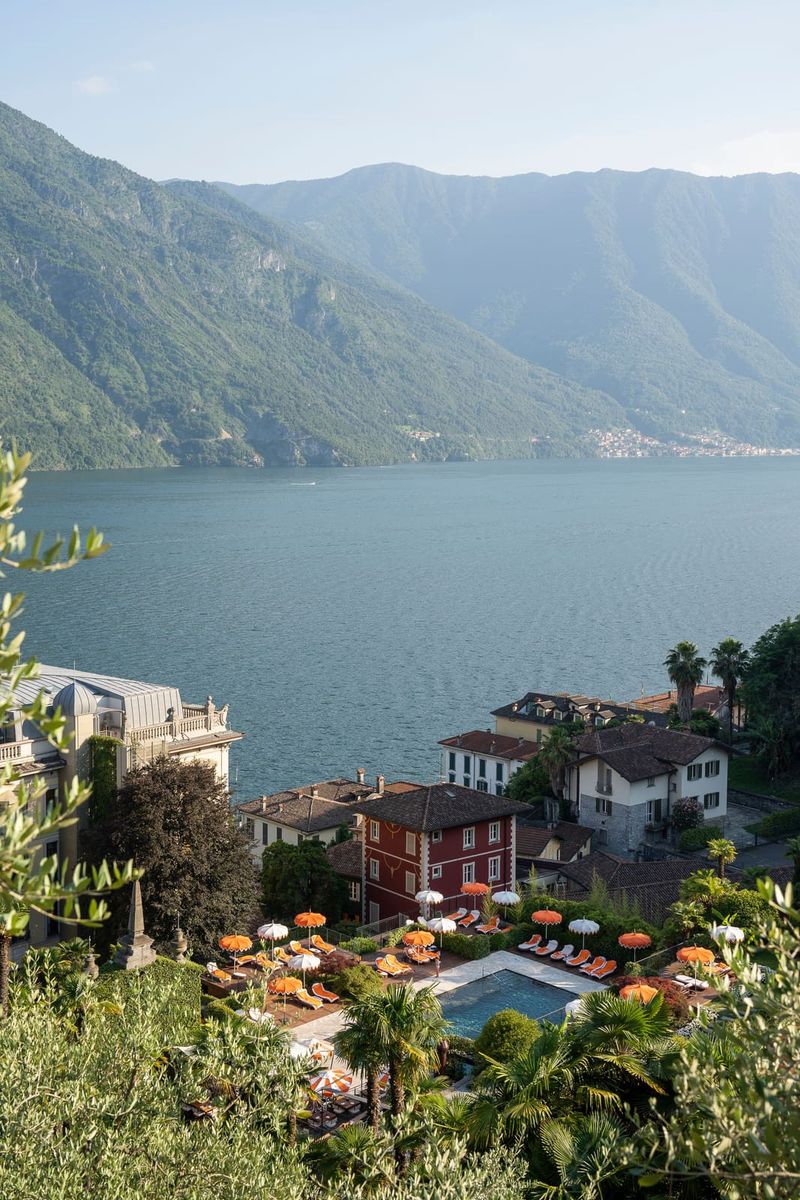
Stand on the western shore in late afternoon and you might catch a flash of unexpected colour against the stone and cypress: sculptural forms that belong more to a Basel art fair than to the restrained palette northern Italy has worn for generations. The Edition property, which opened in 2025 under Ian Schrager's direction, introduced Sabine Marcelis's inflatable Jelly Floats to its pool deck - later swapped for pink flamingo buoys - and in doing so telegraphed a shift that locals had already begun to feel. The lake, long synonymous with discreet wealth and a certain kind of patrician ease, is recalibrating.
Overnight stays across the wider Como area reached 6.8 million in 2025, a ten per cent rise on the previous year, and early figures for 2026 suggest the total will approach seven million. Behind those numbers lies a demographic pivot: the average age of visitors has dropped noticeably, and with it the expectations of what a lakeside sojourn should offer. Where once the emphasis lay on heritage properties and unhurried afternoons, today's arrivals - many in their thirties and forties, carrying considerable disposable income - seek contemporary interiors, restaurants that experiment, and outdoor pursuits that feel less like contemplation and more like participation.
What Appetite Looks Like Now
Francesco Capece, who co-owns Confine in Milan, observes that Lake Como retains its prestige among affluent younger Italians, yet admiration does not always translate into choice. "There is a difference," he notes, "between considering a place elegant and deciding to spend your holiday there." The remark hints at a tension: Como's image remains potent, but its lived reality must now satisfy travellers who value experience over lineage.
Daniel Stoico, co-founder of Congusto Institute, a culinary school in Milan, frames the evolution in terms of preference rather than economics. "The shift is not about affordability," he explains. "It is about a different expression of luxury - one that prizes design, wellness, and a less formal atmosphere alongside excellent service." The destination is growing younger in character without necessarily broadening access; the new hospitality offering targets an international clientele whose wealth is as substantial as that of previous generations, but whose tastes diverge.
The Property Pipeline and the Question of Scale
A wave of branded openings is reshaping the lake's accommodation landscape. Raffles will debut in 2027 within the renovated 1920s Grand Hotel Imperiale; Ritz-Carlton is preparing its first Italian property inside the former Hotel Grande Bretagne, a 177,000-square-foot estate in Bellagio; Corinthia will arrive in Menaggio by late 2028; and Six Senses plans to restore the 19th-century Grand Hotel Cadenabbia as a wellness-focused retreat on the western shore, also in 2028. Villa d'Este, which opened Palazzo Venezia this year, has announced plans to convert the 19th-century Regina Olga into another luxury address.
The pace is notable. International groups - Marriott, Accor, and their peers - are claiming historic buildings and reinterpreting them for a market that expects both provenance and novelty. Jason Squatriglia, a luxury travel adviser, observes that demand for established properties remains robust, yet the steady influx of guests has created space for newcomers to compete. "The market can absorb both," he suggests, though the question of saturation hovers at the margins of every conversation about Como's future.
Heritage Properties Recalibrate
Villa d'Este and Grand Hotel Tremezzo, each with centuries of history, have begun to modernise without discarding their identity. Earlier this year Villa d'Este invested in sustainability infrastructure and upgraded its golf course, introducing lessons and open-play days designed to lower the threshold for a new generation of players. Guiseppe Fontana, president of the board of directors, describes the initiative as a way to offer "a welcoming and contemporary entry point into a place rooted in a century of tradition," allowing younger visitors to feel they belong to the club's future as much as its past.
The strategy reflects a broader calculation: heritage alone will not secure loyalty if the experience feels inaccessible or static. Yet the risk of dilution is real. When a lido designed by Herzog & de Meuron competes with one by Neri&Hu, and Michelin-starred chefs arrive to out-perform one another, the romantic quietude that once defined Como can begin to feel like a casualty of ambition.
The Local Perspective and the Risk of Displacement
Stoico voices a concern shared by many who live and work around the lake. "I hope the lake keeps its local character," he says. "Beyond the beautiful hotels and Instagram pictures, there are real communities and a way of life that should not be lost." The fear is not abstract: social media has already transformed Como into a backdrop for content creation, and the steady arrival of visitors whose engagement with the place is largely visual raises questions about what remains when the cameras turn off.
Few destinations can claim two centuries as a tourism magnet. Bad Gastein in Austria is attempting a slow revival of its 12th-century elite status; St Moritz, fashionable since the early 19th century, has seen renewed interest in the past two decades, aided in part by a curated aesthetic that appeals to digital audiences. Como's longevity is both an asset and a vulnerability: the infrastructure is mature, but the pressure to perform for an ever-expanding audience risks eroding the authenticity that drew people in the first place.
What Is Being Traded
The transformation under way at Lake Como is not a straightforward story of decline or progress. The influx of younger, design-conscious travellers brings energy, spending, and a willingness to engage with the destination in ways that extend beyond passive admiration. The new hotels, restaurants, and wellness offerings reflect genuine shifts in what constitutes luxury - less about formality, more about experience and aesthetic coherence.
Yet the question of balance remains unresolved. As international brands multiply and social media amplifies the lake's visibility, the communities that have shaped Como for generations find themselves navigating a landscape in which their presence is increasingly incidental to the narrative. Whether the destination can accommodate both its new audience and its enduring character will depend on choices made not by visitors, but by those who control how the lake is developed, marketed, and ultimately understood.
The Edition's pink buoys may have replaced Marcelis's original floats, but the gesture they represent - a willingness to interrupt tradition with something unexpected - has already taken root. What grows from that interruption, and what is displaced in the process, will define Lake Como for the next chapter of its long history.