The Maldives Beyond the Postcard: Planning a Journey to the Indian Ocean's Most Elusive Archipelago
Where coral atolls scatter across turquoise vastness and overwater architecture becomes the grammar of escape.
A Geography of Fragments
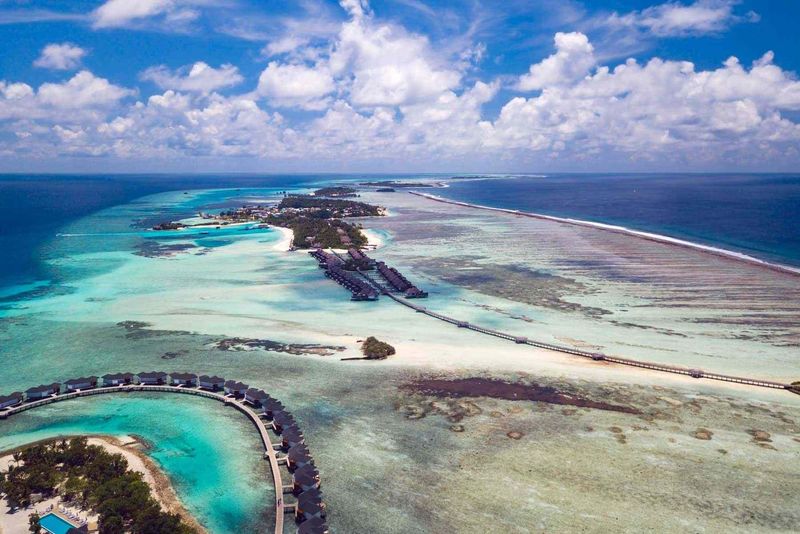
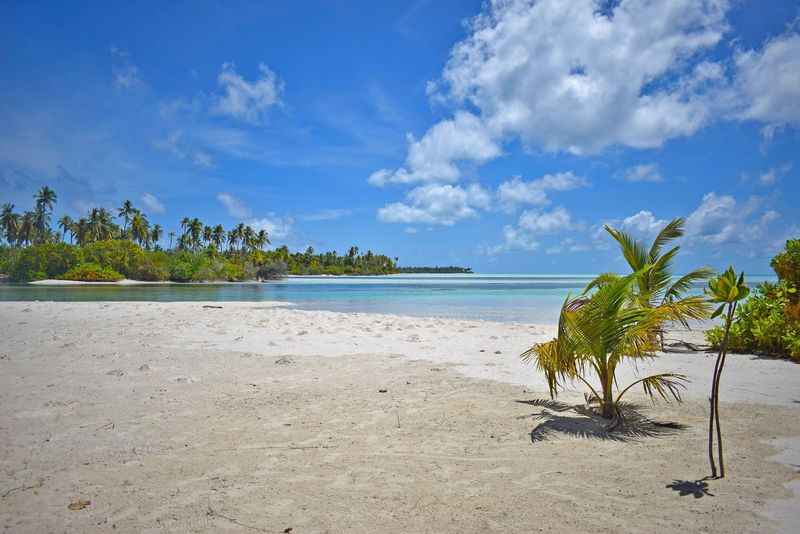
The Republic of Maldives stretches across 26 ring-shaped atolls in the Indian Ocean, southwest of the Indian subcontinent. It is not one place but 1,192 islands, of which fewer than 200 are inhabited and roughly 150 host resort properties. The distance from the northernmost atoll to the southernmost spans nearly 900 kilometres - farther than London to Berlin - yet the entire landmass, if gathered, would fit inside a mid-sized city park.
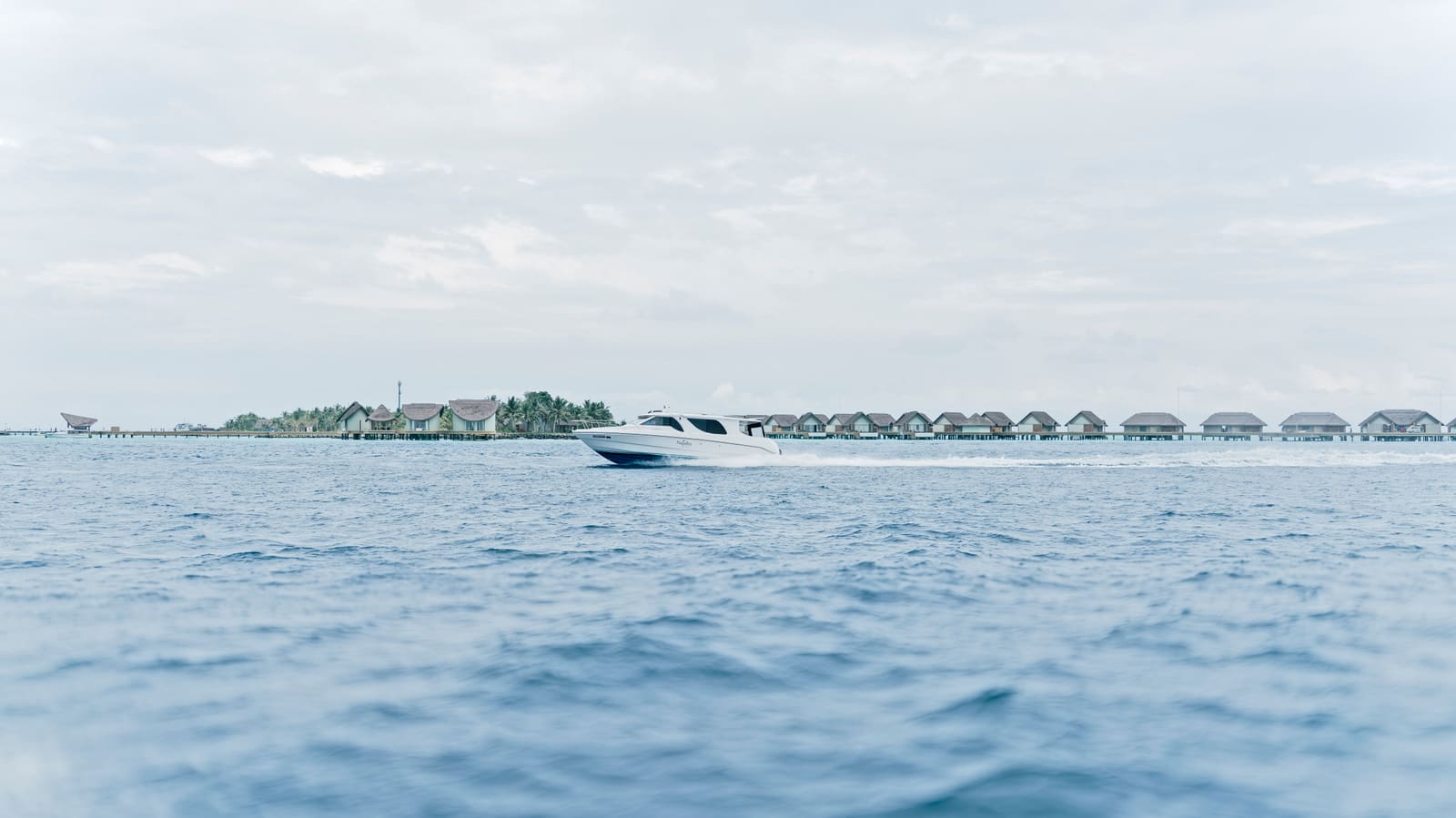
This fragmentation shapes everything. Inter-island travel happens by seaplane, speedboat, or increasingly, domestic puddle-jumper aircraft. The capital, Malé, sits on an island barely two square kilometres in area, its high-rises pressed shoulder to shoulder. Most international arrivals touch down at Velana International Airport on adjacent Hulhulé Island, then disperse outward to their chosen atoll, often within the hour.
The question of which atoll matters more than many travellers realise. North Malé and South Malé atolls lie closest to the capital and offer shorter, cheaper transfers - typically 20 to 45 minutes by speedboat. Ari Atoll, farther west, rewards the longer journey with larger marine protected areas and year-round manta ray aggregations. Baa Atoll, a UNESCO Biosphere Reserve, draws divers to Hanifaru Bay, where mantas and whale sharks gather in astonishing numbers between May and November. The deep south - Addu Atoll and Huvadhoo - remains less developed, harder to reach, and consequently quieter.
The Architecture of Seclusion
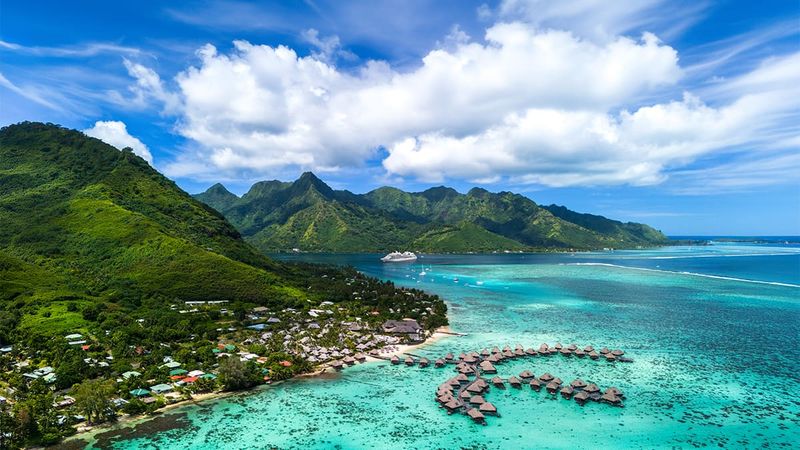
The Maldivian resort model turns isolation into luxury. Most properties occupy entire islands, accessible only by private transfer and insulated from the rest of the archipelago by lagoon and reef. Overwater villas, now synonymous with the destination, first appeared here in the 1990s and have since proliferated into a vernacular of their own: teak walkways stretching over coral gardens, glass floor panels framing the seabed, steps descending directly into bath-warm shallows.
Yet the form has evolved. Contemporary properties layer in open-air pavilions, infinity pools cantilevered above the reef edge, and interiors that borrow from Scandinavian minimalism as much as from regional craft. At the higher end, villas span 300 square metres or more, with dedicated butlers, private wine cellars, and in some cases, slides that plunge from the bedroom deck into the lagoon below.
The one-island, one-resort model also means dining happens almost entirely on-site. Most resorts operate multiple restaurants - Japanese, Italian, Mediterranean, occasionally Maldivian - alongside bars built into the reef or perched on stilts above the water. All-inclusive packages have become the norm, though their scope varies widely. Some cover only breakfast and dinner; others include premium spirits, excursions, and spa treatments. Reading the fine print before booking saves later disappointment.
Seasons, Monsoons, and the Rhythm of Rain
The Maldives lies just north of the equator, which grants it year-round warmth - air temperatures rarely stray outside 26 to 31 degrees Celsius - but does not spare it from monsoon cycles. The northeast monsoon, or iruvai, runs from December through March and brings the driest, calmest weather. Seas flatten, visibility underwater stretches past 30 metres, and resorts fill accordingly. This is high season, with corresponding rates.
The southwest monsoon, or hulhangu, dominates from May to October. Rain arrives in sudden, theatrical downpours, often in the late afternoon or evening, then clears. The sea roughens; waves pick up on the western edges of atolls. But this period also coincides with manta and whale shark season in Baa Atoll, and prices drop by 30 to 50 per cent. For travellers willing to gamble on weather, the shoulder months of April and November offer a middle path: fewer crowds, moderate pricing, and skies that shift between sun and storm with little warning.
Beneath the Surface
The Maldives exists as much below the waterline as above it. Coral reefs fringe nearly every island, and the house reef - the coral formation encircling a resort - often determines the quality of a stay as much as the villa itself. Some reefs slope gently into sandy channels; others drop vertically into blue water where pelagics cruise. Snorkelling directly from the beach or villa deck remains one of the destination's defining pleasures.
Diving here spans the spectrum. Beginner-friendly sites offer shallow coral gardens thick with butterflyfish, parrotfish, and anemones hosting clownfish. Advanced divers seek out thilas - submerged pinnacles that rise from deep water - and kandus, the channels between atolls where strong currents funnel nutrients and attract larger species. Grey reef sharks, whitetip reef sharks, eagle rays, and sea turtles appear with regularity. In the right season and location, whale sharks and mantas become near-guaranteed sightings.
Certification courses, night dives, and liveaboard expeditions extend the possibilities. The latter option, in particular, allows access to remote atolls and dive sites unreachable from fixed resorts. A week aboard a liveaboard vessel can deliver 20 or more dives, with the boat repositioning overnight to maximise range.
The Local Dimension
Tourism in the Maldives long operated in parallel to local life, with resorts occupying uninhabited islands and Maldivian communities living separately on their own. That began shifting in 2009, when the government opened inhabited islands to guesthouse development. Today, islands such as Maafushi, Thulusdhoo, and Dhigurah host budget and mid-range guesthouses, offering a ground-level alternative to the resort experience.
Staying on a local island means smaller rooms, shared beaches, and dining in village cafés rather than resort restaurants. Alcohol is prohibited outside resort islands, and dress codes skew conservative. But the trade-off includes genuine interaction with Maldivian communities, lower costs - often a tenth of resort rates - and the ability to island-hop with relative ease.
Traditional Maldivian culture, shaped by centuries of Indian Ocean trade, blends South Asian, Arab, and African influences. The language, Dhivehi, uses its own script; the cuisine relies heavily on tuna, coconut, and rice. Mas huni, a breakfast dish of shredded smoked tuna mixed with grated coconut, lime, and chilli, appears on most local menus. Garudhiya, a clear fish broth served with rice and lime, functions as comfort food. Resorts occasionally offer Maldivian nights, but the real versions live in village homes and small island eateries.
The Practical Frame
Visas are issued on arrival for most nationalities and valid for 30 days. The Maldivian rufiyaa is the official currency, though US dollars circulate widely and resorts typically quote prices in dollars. Credit cards work across most properties; cash becomes necessary only in local guesthouses and village shops.
Inter-island transport divides into three tiers. Speedboats serve islands within roughly 90 minutes of the capital; seaplanes cover distances up to 300 kilometres but operate only in daylight; domestic flights reach the far atolls. Seaplane transfers, while scenic, add significantly to trip costs - often 400 to 800 US dollars per person return - and schedules depend on weather and light. For southern atolls, domestic flights prove more reliable and sometimes cheaper.
Environmental considerations weigh heavier here than in many destinations. The Maldives is among the nations most vulnerable to sea-level rise; its highest natural point sits 2.4 metres above the ocean. Coral bleaching, driven by warming waters, has damaged reefs across the archipelago, though recovery efforts and marine protected areas show promise. Choosing resorts with active conservation programmes, avoiding single-use plastics, and practising responsible snorkelling and diving - never touching coral, maintaining buoyancy control - become small but meaningful gestures.
Departure and Return
The Maldives does not lend itself to hurried itineraries. Most meaningful visits span at least five nights, allowing time to settle into the slower cadence the islands demand. A week permits exploration beyond a single resort, perhaps pairing a resort stay with a liveaboard or adding a few nights on a local island for contrast.
The risk, often remarked upon, is that the experience becomes too hermetic - days blurring into an unchanging loop of sun, water, meals, repeat. Breaking that rhythm requires intention: booking a sunset fishing trip, learning to freedive, charting the reef's topography, or simply reading the light as it shifts across the lagoon at different hours.
The islands do not transform those who visit, but they do offer a particular kind of stillness, the sort that comes from being surrounded by water in every direction and from knowing that the nearest landmass of any significance lies hundreds of kilometres away. It is a destination that rewards not conquest but surrender - to heat, to colour, to the patient unfolding of days measured by tide rather than clock.