Where Silk Damask Meets Lagoon Light: Venice's Five Finest Retreats
From palazzo terraces to island sanctuaries, the city that floats reveals its most cherished addresses through the voices of those who know.
A City That Demands Its Own Vocabulary
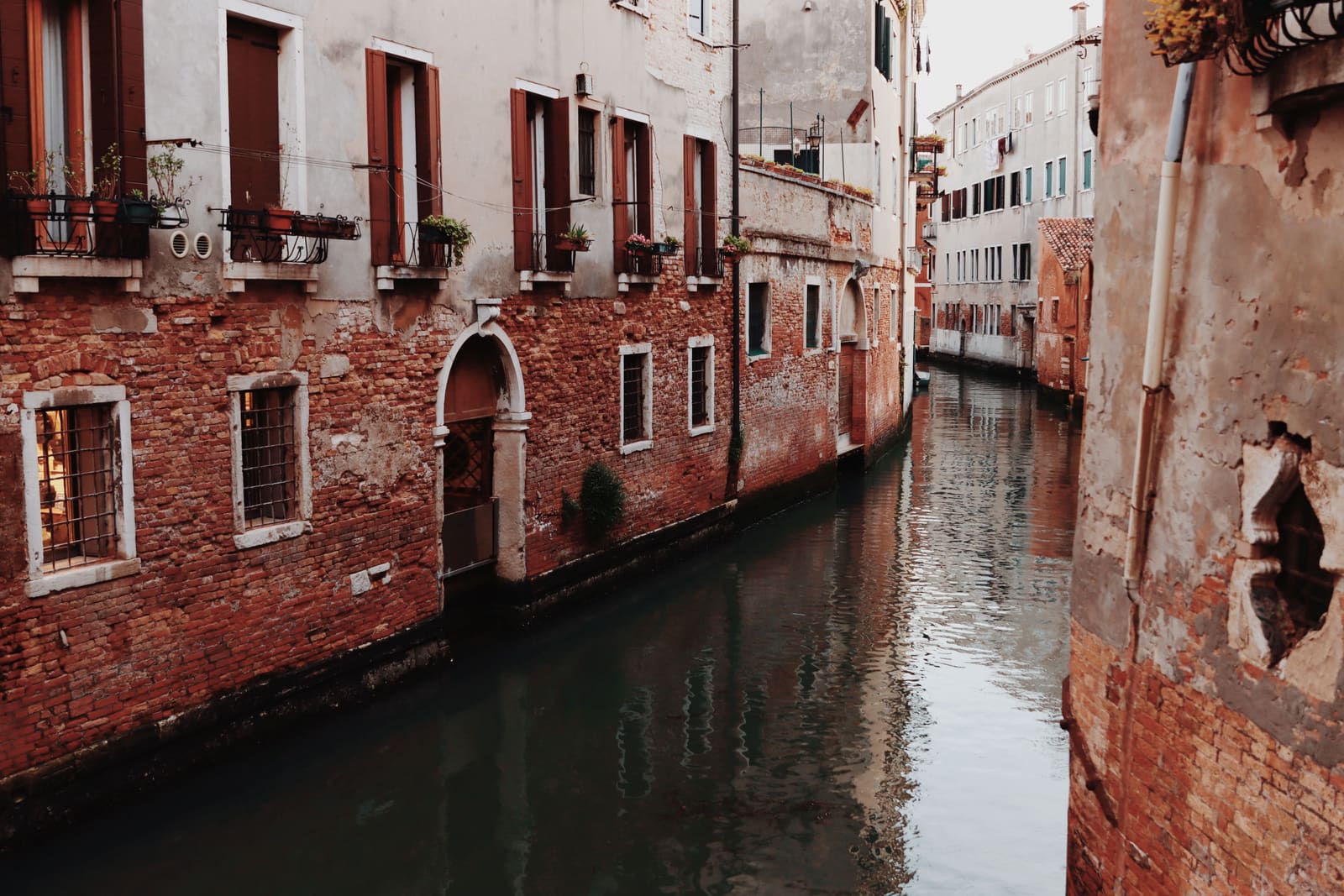
There is a particular quality of light that arrives in Venice around four in the afternoon, when the sun angles low across the lagoon and turns every façade into something between memory and mirage. It is the hour when the city's finest hotels cease to feel like accommodations and begin to resemble what they truly are: thresholds between the quotidian world and a place where marble, water, and human ambition have conspired for a millennium.
The 2026 Readers' Choice Awards have surfaced five properties that understand this alchemy. These are not simply places to sleep in Venice. They are the city's interpreters, its translators, its custodians of a very particular kind of beauty that refuses to age because it never pretended to be modern in the first place.
The Palazzo That Perfected Stillness
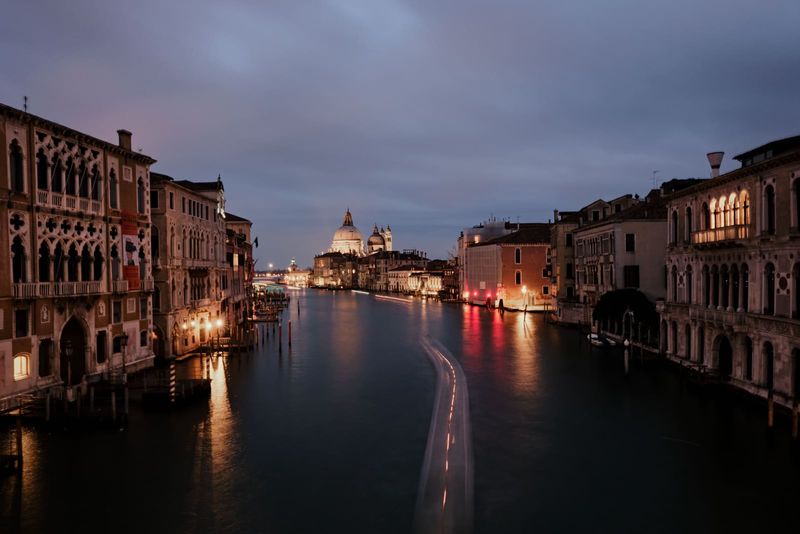
Aman Venice, occupying the 16th-century Palazzo Papadopoli on the Grand Canal, earned the highest distinction this year. The property scored 98 points in reader ballots, a figure that suggests not mere satisfaction but something closer to devotion.
What Aman has accomplished here is a study in restraint. Where other luxury conversions might have imposed marble and gilt, the brand instead leaned into the palazzo's bone structure: frescoed ceilings by Tiepolo, terrazzo floors that have known five centuries of footsteps, gardens that feel less designed than discovered. The effect is not of a hotel at all, but of a private residence whose owner happens to possess impeccable taste and an inexhaustible budget.
The eight suites occupy spaces that once served as salons and libraries. Ceilings soar. Light pools. The Grand Canal slides past windows like a film reel of Venetian life, gondolas and vaporetti and delivery boats threading the same water that carried merchants and courtesans when this palazzo was young.
The Grand Dame and the Island Recluse
Close behind, with a score of 97.58, The St. Regis Venice represents another approach entirely. Where Aman whispers, St. Regis announces. The property inhabits a 19th-century palazzo near the Piazza San Marco, and it wears its opulence without apology: Murano chandeliers, Rubelli fabrics, a colour palette drawn from Tiepolo's clouds and Veronese's gowns.
It is unabashedly theatrical, which in Venice is not a criticism but a recognition of context. This is a city built on spectacle, where even the grocers arrange their vegetables like still lifes. St. Regis understands that understatement, in such a setting, can feel like a failure of nerve.
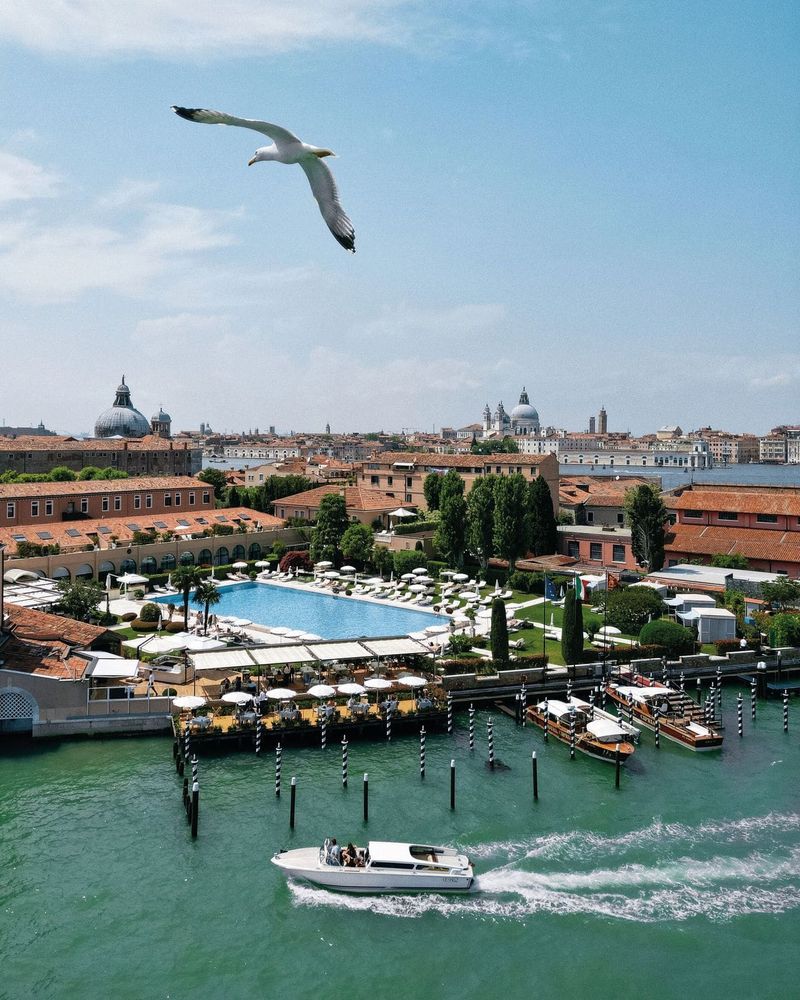
Hotel Cipriani, A Belmond Hotel, scored 97.56 and occupies a category of its own. Positioned on the island of Giudecca, it is the only property in this quintet that requires a boat to reach. That journey across the Giudecca Canal - brief, inevitable, transformative - becomes part of the experience. You leave Venice to arrive at Venice, or at least at a version of it where terraced gardens sprawl across three acres and a swimming pool (Venice's only Olympic-sized pool) catches the sky.
The Cipriani has been hosting the sort of guests who travel with steamer trunks since 1958. It knows how to manage privacy, how to serve breakfast on a terrace overlooking San Marco without making theatre of it. The property feels less like a hotel and more like a very accomplished villa whose owners happen to be away for the season.
Palazzi With Their Own Histories
The Gritti Palace, a Luxury Collection Hotel, earned 96 points and brings its own provenance. The 15th-century residence of Doge Andrea Gritti, it sits directly on the Grand Canal with views that encompass Santa Maria della Salute. Here, history is not décor but structure. The building has been hosting travellers since it became a hotel in 1895 - Hemingway stayed, as did Ruskin, as did nearly anyone passing through Venice with a name worth recording.
Recent restoration has returned much of the interior to what it might have looked like in the Gritti family's tenure: Fortuny fabrics, Venetian stucco, antiques that are not reproductions because the originals were already here. The effect is immersive without being suffocating, a delicate balance in a city where every surface wants to tell you a story.
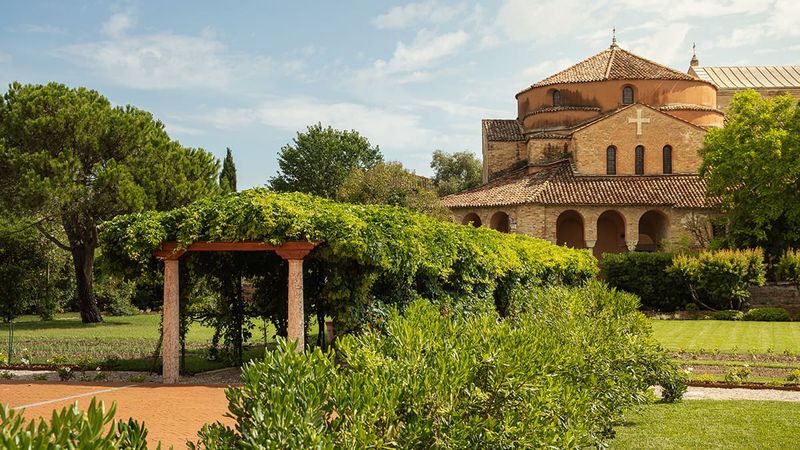
San Clemente Palace Kempinski, with a score of 95.89, takes the island concept even further than the Cipriani. Located on its own 17-acre island in the Venetian lagoon, the property occupies a complex that has been, at various points in its 800-year history, a monastery, a hospice, and a military garrison. The conversion into a hotel has retained much of the monastic architecture - cloisters, courtyards, a chapel - while adding the infrastructure of contemporary luxury: three pools, a golf course, a spa built into the former monks' refectory.
The isolation is the point. San Clemente is for travellers who want Venice at a remove, who prefer to visit the city on their own terms and then retreat to a place where the crowds are an abstraction and the lagoon is a moat.
What the Scores Reveal
Reader-driven rankings, particularly those that attract thousands of ballots, function as a form of distributed expertise. They aggregate not just satisfaction but alignment between expectation and delivery, between promise and experience. The tight clustering of scores - less than three points separate first from fifth - suggests a tier of properties that have achieved something rare: consistent excellence across wildly different models of luxury.
Aman's monastic calm, St. Regis's theatrical glamour, Cipriani's garden refuge, Gritti's storied elegance, San Clemente's island autonomy - these are not variations on a theme but entirely different philosophies of what it means to host guests in a city that has been doing so for a thousand years.
The rankings also illuminate a shift in how travellers conceive of luxury in Venice. It is no longer enough to offer proximity to San Marco or a terrace on the Grand Canal. The properties that earn devotion are those that offer a coherent point of view, a legible relationship to the city's history and aesthetics. They are curators as much as hoteliers, mediating between the overwhelming richness of Venice and the guest who has perhaps three days to make sense of it.
The Alchemy of Place
Venice has never been an easy city. It floods. It sinks. It is crowded beyond reason in summer and eerily empty in winter. Its beauty is so relentless that it can become numbing, and its history so dense that every campo and calle seems to demand a footnote.
The hotels that thrive here are those that offer not just shelter but interpretation. They provide a lens, a vantage point, a way of seeing that makes the city legible without diminishing its mystery. Whether that lens is Aman's minimalist restraint or St. Regis's maximalist embrace, whether it involves crossing water to reach an island or stepping directly from a palazzo onto the Grand Canal, the best properties understand that Venice is not a destination but a sensory experience that requires mediation.
These five addresses, validated by thousands of travellers who have tested their claims, represent the current apex of that mediation. They are not perfect - no hotel is - but they are serious, considered, and deeply attuned to the particular demands of a city that has been seducing and exhausting visitors since before the printing press.
To stay in any of them is to participate in a very old conversation about beauty, craft, and the ways in which architecture and hospitality can conspire to make a place feel, however briefly, like the centre of the world. Venice has always believed it was the centre of the world. These hotels make you believe it too.