The Danieli Finds Lightness After Centuries of Velvet
Venice's storied palazzo hotel trades baroque weight for lagoon blues, and a new generation discovers what the water has always known.
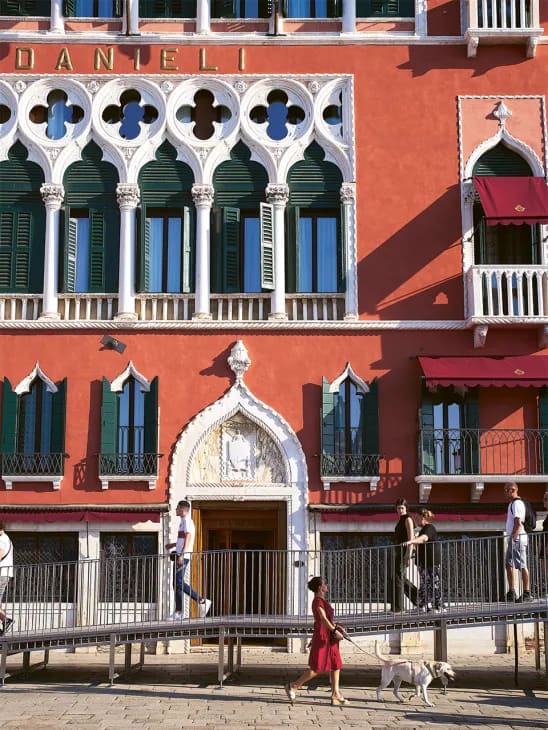
A Palazzo Learns to Breathe
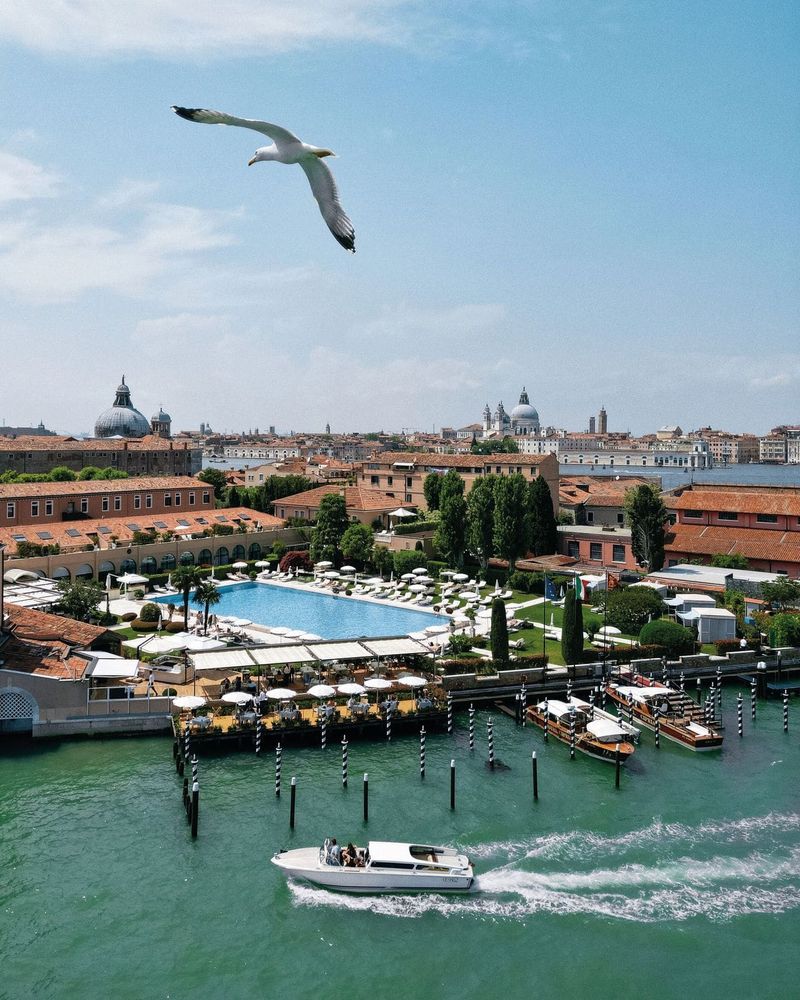
Stand on the rooftop of a fifteenth-century palazzo near Piazza San Marco at dusk and you will see two things: the lagoon turning silver, and the sky above it bleeding gold. Pierre-Yves Rochon, the architect charged with reimagining the Danieli, spent time up there before he touched a single wall. What he brought down with him was not a brief but a palette - one borrowed from the horizon rather than the history books.
For decades, the Danieli had leaned into its own grandeur. Burgundy velvet, shadowed salons, the kind of baroque drama that photographs well but breathes poorly. When Four Seasons announced its takeover in 2022, anxiety rippled through preservation circles. The Palazzo Dandolo, after all, had been standing since the late 1400s, home to a family that gave Venice multiple doges. Giuseppe Dal Niel turned it into a hotel in 1822, and it became a magnet for Goethe, Byron, Proust, Garbo, Kelly - the sort of guest list that doubles as a literary syllabus. By the time the keys changed hands, though, the lustre had dulled.
Pastel Where There Was Once Plush
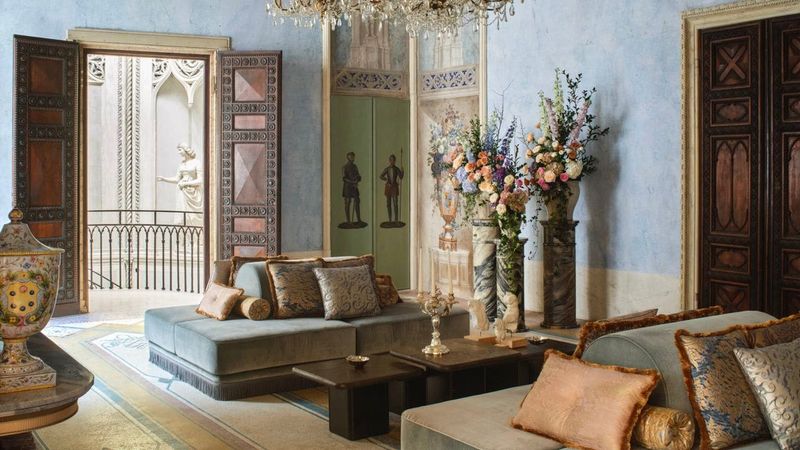
Rochon, whose portfolio includes Four Seasons properties in Florence, Paris, and Milan, approached the project not as restoration but as recalibration. The gothic facade remains untouched. Inside, however, the transformation is wholesale. Guest rooms now wear soft satins in shades you might find in a Canaletto painting - watery blues, pale timber, the kind of pastels that suggest dawn rather than dusk. Damask wall coverings come from Rubelli, a Venetian textile house that has been weaving since the nineteenth century. The effect is classical without being funereal, Venetian without feeling like a stage set.
Christian Zandonella, the hotel's general manager, frames the brief simply: honour the past without embalming it. Guests arrive with expectations shaped by decades of imagery. The challenge was to meet those expectations while offering something lighter, something that felt less like a museum and more like a place where you might actually want to spend a week.
The Logistics of Water
Renovation in Venice is a floating proposition. Every piece of furniture, every air-conditioning duct, every mattress destined for the Danieli had to arrive by boat. A floating crane lifted items through the palazzo's gothic windows. The canals dictated the schedule as much as any architect's drawing. Three years passed between the first scaffold and the final sheet of gold leaf applied to the quatrefoil ceiling in Bar Dandolo, the palatial lounge that opens off the waterfront lobby.
That lobby today feels like a threshold between eras. A brass key wall behind the concierge's desk. Stained-glass windows filtering lagoon light into rainbow refractions. Murano chandeliers catching the glow. Corinthian columns holding up a ceiling that workers were still gilding when the space opened for preview. The elevators, still under construction during early visits, feature etched antique mirrors set in gilded frames - details that required artisans specialising in terrazzo, marble, glass, each trade its own small universe.
Rochon has said he loves working in Italy for precisely this reason: the depth of craft available. The Danieli's central atrium, with its glass ceiling and thick-carpeted stairway, becomes a sundial as the day progresses, light shifting across portraits of stern-faced doges that now hang in the suites upstairs.
A Dining Room Joins the Skyline
The most dramatic shift happens five storeys up. Terrazza Danieli, once a sombre space heavy with tradition, has been opened to the sky. Soft blues replace dark wood. Large mirrors amplify the view. Picture windows frame Piazza San Marco, the Grand Canal, the Bacino di San Marco, Punta della Dogana, and the islands of San Giorgio and Giudecca beyond. Zandonella describes the new room as part of the skyline itself, no longer separate from the view it commands.
Adriano Rausa, a Rome-born chef who trained under Sicilian master Ciccio Sultano, leads the kitchen. His research involved eating his way through trattorias favoured by locals - a diplomatic way of saying he spent months tasting his way to authenticity. His menu bridges southern Italian technique with Venetian ingredients: tuna belly prepared in the local style, crab tortelli, Adriatic seafood stew built on relationships with the city's fishermen and the farms of Sant'Erasmo, the vegetable island in the northern lagoon.
Rausa speaks of Venice as a place where culinary traditions have always collided and recombined, a city built on trade routes and the mingling of flavours. His cooking reflects that fluidity, drawing on cross-currents rather than dogma.
What Comes Next, and What Lies Beyond
The Danieli is not yet finished. Later this year, a spa will open with a canal-facing sauna and an indoor pool - the first in Venice's historic centre, a detail that speaks to both ambition and the logistical gymnastics required to build below sea level. In 2027, the hotel's 1950 Excelsior palazzo will reopen with garden suites and additional guest rooms, bringing the total to 168.
But the most revealing detail is not architectural. It is Zandonella's insistence that the hotel's true purpose lies outside its walls. Four Seasons is assembling a fleet: a traditional fishermen's dinghy, a restored houseboat, an electric gondola. New itineraries will take guests to Torcello, Pellestrina, and other islands that most visitors never see. Stops include generations-old trattorias, mornings spent with fishermen, afternoons on sandbars with ecologists studying the lagoon's bird life and tidal ecosystems.
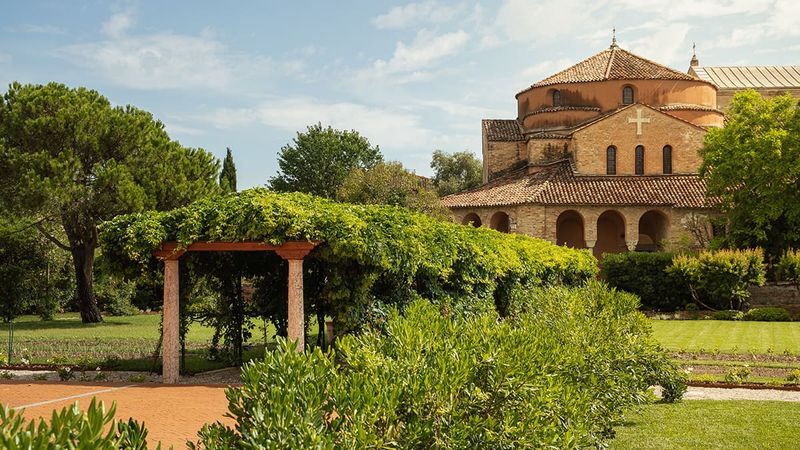
The salt marshes - le barene - form a network of tidal pools rich with aquatic species. Pellestrina, the slender barrier island separating Venice from the Adriatic, retains fishing villages where lace-making persists. Torcello, remote and quiet, recently reopened its Locanda Cipriani hotel after a restyling. Giudecca, the most residential of the central islands, offers seafood restaurants like Altanella that remain defiantly local. On Burano, Associazione Remiera Vogaepara teaches visitors to row standing up, the Venetian way, paddling in unison.
A City That Lives on Its Surface
Buildings matter in Venice, but they matter less than elsewhere. The city's true architecture is horizontal - a lattice of water and light that shifts by the hour. The Danieli, for all its gilded ceilings and Canaletto hues, seems to understand this. Rochon brought the blues and golds of the lagoon inside. Zandonella is now working to send guests back out onto it, beyond the crush of San Marco, into the tidal margins where the city still lives as it always has.
The renovation is meticulous, the interiors considered, the craft undeniable. But the real test of the new Danieli will be whether it can pull guests away from its own beauty and back onto the water, where Venice has always made the most sense.