Where the Canals Keep Time: A Guide to Venice's Most Refined Stays
In a city built on water and memory, the right palazzo transforms a visit into a private mythology.
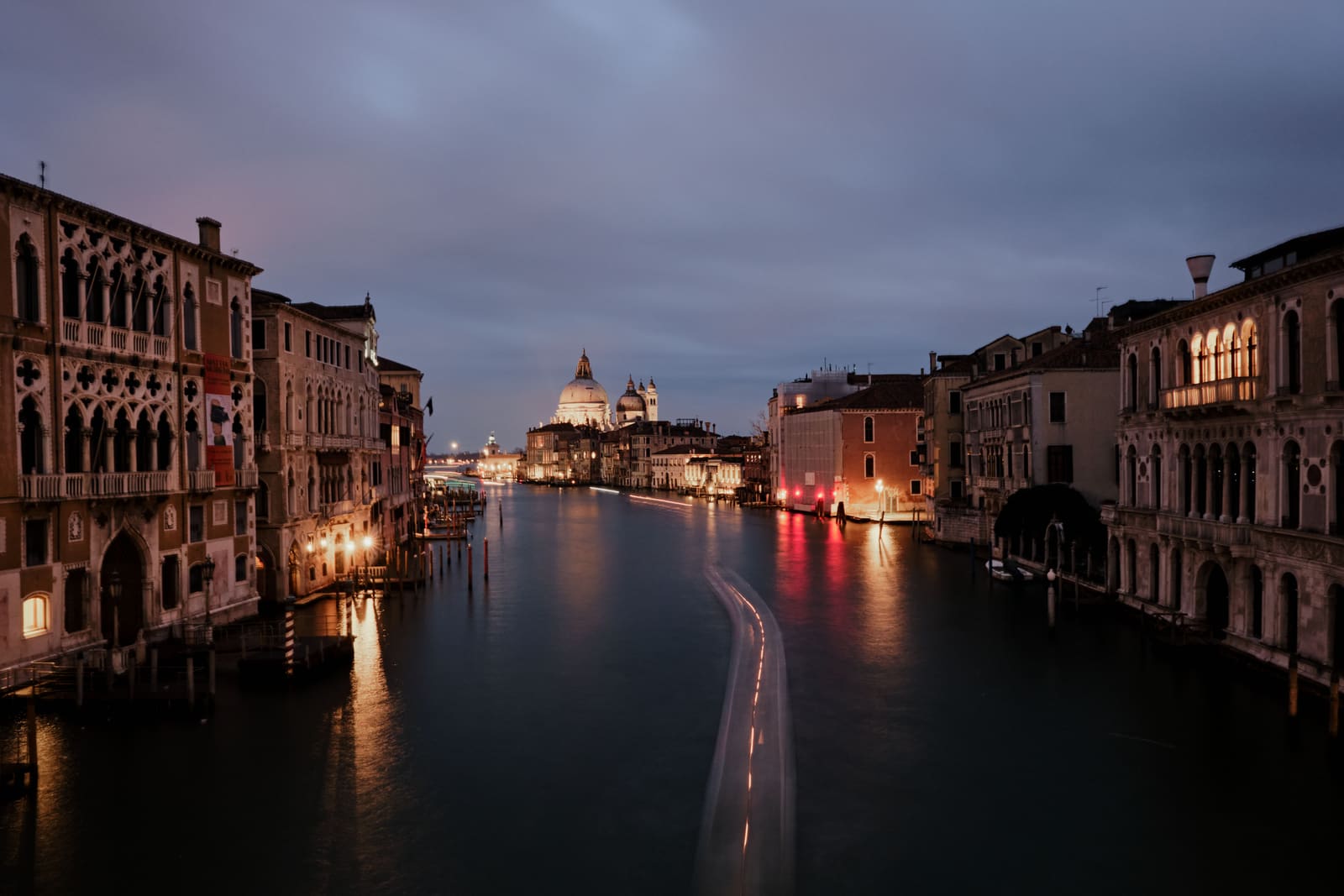
The Threshold Between Water and Dream
Stand on any bridge at dawn in Venice and you will notice something peculiar: the city does not wake so much as it resurfaces. The canals set the tempo. Delivery boats thud softly against stone quays. Footsteps reverberate through passageways so narrow that two strangers must turn sideways to pass. This is a place where more than 150 canals thread through islands connected by over 400 bridges, and where the absence of cars creates a sonic vacuum filled instead by water, voices, and the occasional groan of a moored gondola.
For better or worse, this otherworldly atmosphere draws over twenty million visitors annually. By midday, the magic can feel crushingly diluted. But at night, La Serenissima reclaims its serenity. The question, then, is not whether to stay in Venice but where to anchor yourself when the crowds dissolve and the city becomes tender again.
Palazzos That Refuse to Fade
The Venice Venice Hotel occupies a category of its own. Opened by Alessandro Gallo and Francesca Rinaldo, the couple behind the Golden Goose sneaker empire, this is their first foray into hospitality, and it reads like a manifesto. Hand-painted wallpaper wraps certain corridors. Mosaic floors catch the light in unexpected ways. A bar tucked into one corner resembles the interior of a spaceship, all curves and metallic gleam. Forty-three bedrooms range from suites overlooking internal courtyards to those with sightlines toward the Rialto Bridge, where the Grand Canal bends and the vaporetti churn past in steady procession. One suite includes a panoramic terrace, a rare commodity in a city this dense.
Nothing here feels mass-produced. The Gallos approached the project as collectors and designers, not hoteliers, and the result is a space that privileges craft and idiosyncrasy over formula. It is luxury, yes, but luxury with a point of view.
The Grand Canal's Enduring Monument
If Venice has a hotel that functions as both landmark and legend, it is The Gritti Palace. The fifteenth-century palazzo has welcomed guests since 1895, though a fifteen-month renovation completed in 2013 ensured it would not calcify into a museum. The investment exceeded USD 200 million, yet the most modern interventions remain cleverly concealed. What endures is grace.
Rich Rubelli fabrics line the walls. Priceless art hangs in the salons. Chef Daniele Turco works wonders with castraure, the prized Venetian baby artichokes that appear only briefly each spring. A martini trolley circulates through the bar. The spa offers restorative facials. Guests can book a spin in the hotel's Riva Aquariva boat or enrol in the culinary school for full immersion in local food traditions. But the real draw is the view: the Grand Canal unfolds outside the windows like a living painting, fragile and impossibly beautiful.
The Gritti manages to be both exquisite and affable, a rare combination in a city where luxury often tilts toward the austere.
Minimalism Meets Futurism in a Sixteenth-Century Shell
Ca' Pisani Boutique Design Hotel occupies a palazzo built in the late 1500s, but the interiors nod to a different century entirely. The twenty-nine rooms draw inspiration from 1920s Futurist painters and Art Deco design, with metallic-silver desks, leather armchairs, and beds sourced from various periods. The effect is eclectic without veering into chaos.
Just off the sleek lobby, La Rivista serves as both bar and restaurant, attracting a fashionable crowd of locals who treat it as a neighbourhood anchor rather than a tourist curiosity. In a city where so much is preserved in amber, Ca' Pisani offers a counterpoint: history refracted through the cool graphics of the interwar years.
Asian Restraint on the Grand Canal
Aman Venice arrived in 2013, slotting into the sixteenth-century Palazzo Papadopoli in the quieter San Polo district. The property is owned by an Italian count and princess, but the aesthetic belongs to Aman, the revered Asian brand known for its spare elegance. Murano chandeliers hang in rooms furnished with minimalist pieces by B&B Italia. Jean-Michel Gathy, the designer, ensured that opulence would not compete with restraint.
Twenty-four guest rooms occupy the palazzo's original spaces, so no two are identical. Rabbit cappelletti is served in a side garden. Guests arrive via glossy Riva boat, gliding under the Rialto Bridge to the palazzo's jetty flanked by cerulean bricole. In a city crowded with legends, Aman has carved out a reputation for reserve, a quality that feels increasingly rare.
An Island Unto Itself
The JW Marriott Venice Resort & Spa sits on Isola delle Rose, a private island reached by water taxi. With 266 rooms and suites, it casts a wide net: contemporary options in the main building, child-free quiet zones, suites with plunge pools and private gardens, and a villa with a private pool that accommodates up to seven guests.
The scale is unusual for Venice, where intimacy is often the default. But for travellers seeking international style without the crush of Piazza San Marco, the island offers a kind of buffer zone. You are still in Venice, technically, but you are also apart from it.
The Eastern Tip of Giudecca
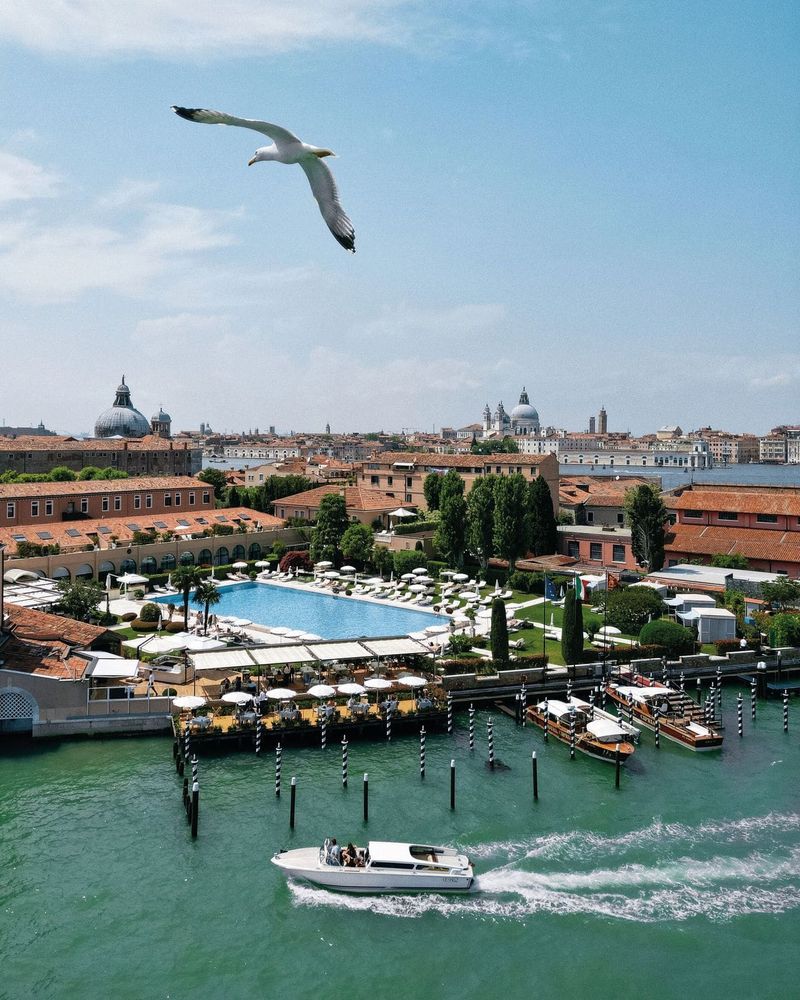
Hotel Cipriani occupies the eastern tip of Giudecca Island, exuding an air of la dolce vita glamour. Every room offers garden or water views. Guests preferring older architecture can book the annex, set inside a fifteenth-century palace. The hotel operates central Venice's only swimming pool, an Olympic-sized affair surrounded by manicured greenery. The list of amenities is staggering: a sumptuous spa, children's activities, cooking classes, tailored tours, boat trips, art classes, tennis courts.
You can arrive directly at the private dock or take the hotel launch from Piazza San Marco, crossing the lagoon in a matter of minutes. Either way, the effect is one of entering a pampered world, spacious and self-contained, where super-attentive service is the baseline expectation.
Layers of Paint Peeled Back
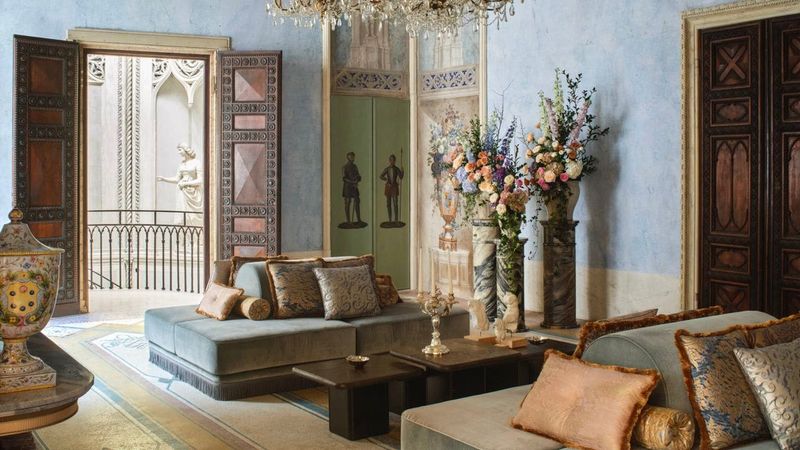
Orient Express Venezia, formerly Palazzo Donà Giovannelli, emerged from an eight-year restoration led by architect and interior designer Aline Asmar d'Amman. Stones were removed one by one, restored, and returned to their original positions. Layers of paint were peeled back to reveal frescoes hidden for decades.
The result is a property that feels warm rather than haunted, a notable achievement in a city where many palaces skew cold and dusty. The palm court-style lobby, known as the Corte del Conte, features soaring beams, Murano chandeliers, and plush velvet seating. Forty-seven rooms and suites each carry a unique layout. Heinz Beck, the three-Michelin-starred German chef, oversees the dining programme, with his namesake restaurant set to open in 2027. The Wagon Bar, a pocket-sized Art Deco speakeasy, evokes the original Orient Express railcars.
Terra-Cotta and Resilience
Hotel Gabrielli sprawls across seven palazzos, three of which face the canal directly. The terra-cotta façade is lined with Moorish-style quadrifora windows, a four-lobed design that recurs throughout the interiors designed by Andrea Auletta. In 2019, acqua alta flooded the property. The subsequent five-year renovation reduced the room count from 105 to 66, redistributing space and salvaging original features.
The renovation was not merely cosmetic. It reflected something essential about Venice itself: resilient, enduring, regenerative. The prestige rooms are compact, suitable for weekend stays. Guests planning longer visits should opt for a suite, where the additional square metres make a tangible difference.
The Rhythm That Refuses to Modernise
Venice does not lend itself to modernity in the way other cities do. The canals set limits. Cars cannot enter. The pace is dictated by water and foot traffic. At night, when the day-trippers have retreated to the mainland, the city becomes what it has always been: a realm whose fluid boundaries preserve a rhythm that feels distinctly of another time.
The palazzos and hotels are not merely places to sleep. They are part of the city's fabric, woven into its mythology. To choose one is to choose how you want Venice to reveal itself to you, whether through the lens of minimalist restraint, Futurist exuberance, or the kind of old-world glamour that has survived centuries of acqua alta and over-tourism alike. The canals will still be there in the morning, lapping softly against stone, marking time in a city that has never been in a hurry.