Where Venetian Grandeur Meets Railway Romance
A palazzo in Cannaregio offers a quieter stage for la dolce vita, far from the waterfront crush.
A Palazzo Reborn
Stand at the threshold of Palazzo Donà Giovannelli and the city reveals a different face. Here, in Cannaregio, the canals run quieter, the foot traffic thins, and the blush-pink facade of a fifteenth-century noble residence rises with a kind of unassuming grandeur. It took eight years to transform the building into a hotel, and the result is a layered meditation on Venetian opulence, one that refuses to choose between restraint and abundance.
Designer Aline Asmar d'Amman, whose portfolio includes the Crillon in Paris, approached the palazzo not as a blank slate but as a living archive. The bones were already extraordinary: double frontage onto two canals, frescoed ceilings that have survived centuries, mosaics embedded in the floors like forgotten jewels. The challenge was not to erase history but to fold it into something contemporary, something that could hold both the weight of the past and the demands of modern luxury.
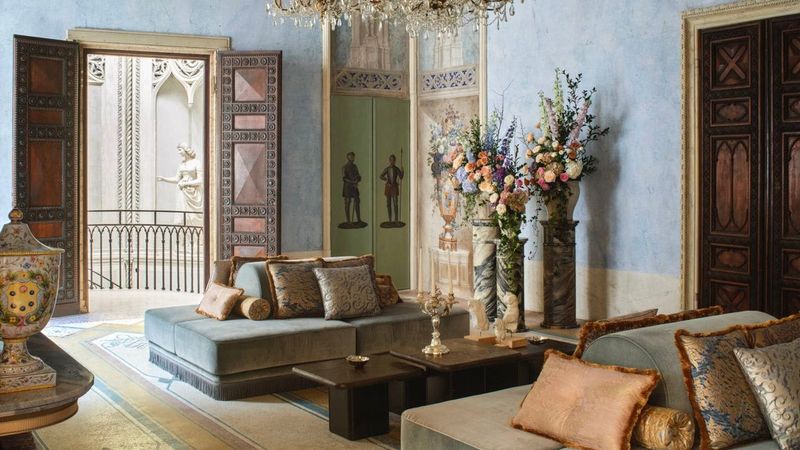
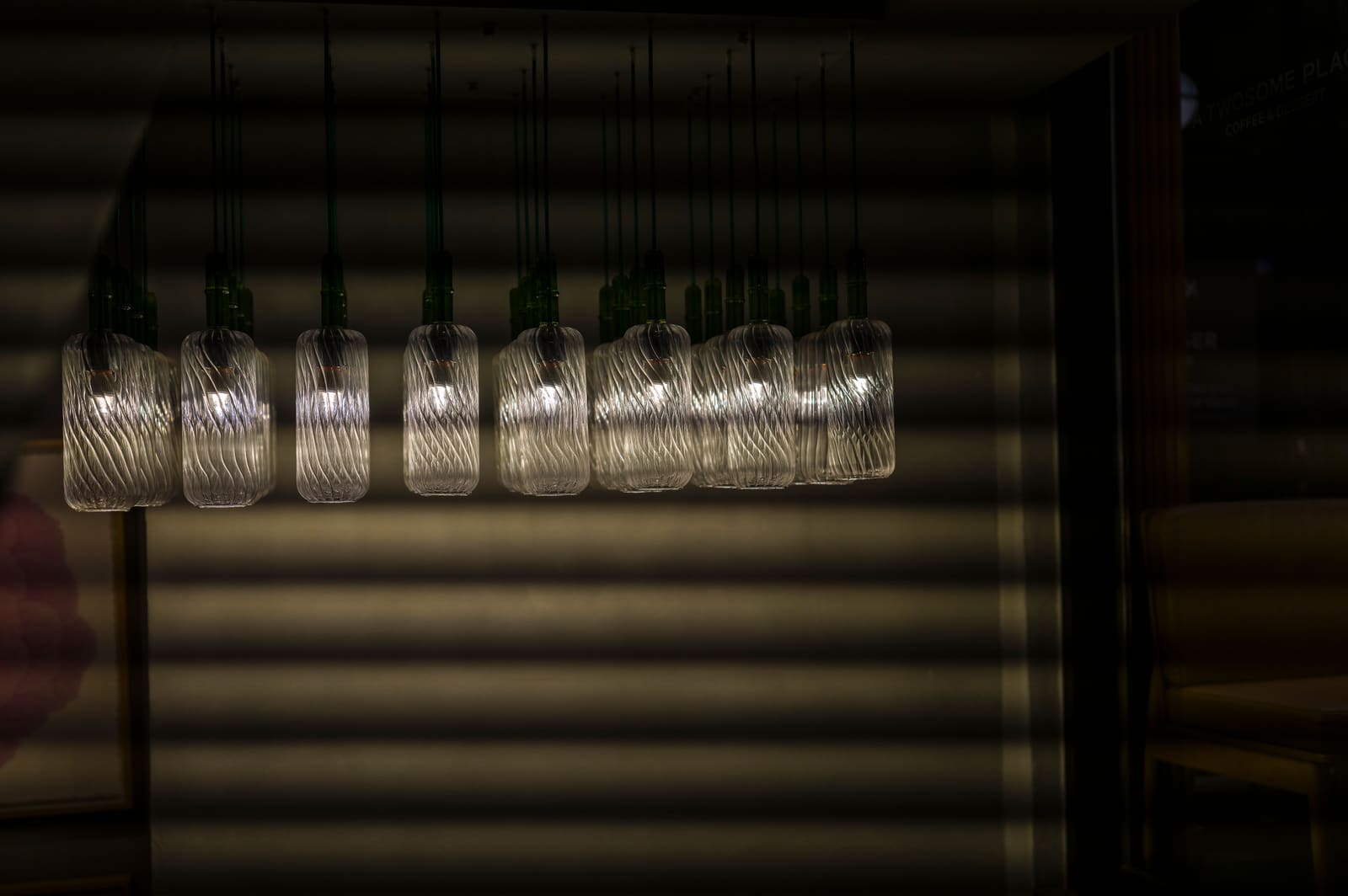
The interiors read like a love letter composed in silk and glass. Custom fabrics from Bevilacqua, the Venetian textile house that has woven for royalty and opera houses, drape the windows and upholster the furniture. Hundreds of Murano chandeliers hang throughout the property, each one a small explosion of light and colour. The effect is not minimalist, nor is it meant to be. This is Venice as it has always understood itself: ornate, theatrical, deeply proud of its craft traditions.
The Architecture of Excess
Wandering the common areas feels less like moving through a hotel and more like stepping into a stage set mid-performance. An octagonal staircase spirals upward, its proportions so generous that it seems designed for grand entrances. The ballroom is gilded in the manner of the eighteenth century, when gold leaf was not a luxury but a given. Frescoes sprawl across ceilings, depicting mythological scenes that have faded just enough to suggest age without decay.
The piano nobile, the principal floor of the palazzo, houses six signature suites, each occupying up to 1,560 square feet. The Colori Persi suite takes its name from the faded palette that defines so much of Venice, those ochres and dusty pinks that look as though they have been sun-bleached over centuries. The Cherubini Suite centres on an original Sebastiano Santi frieze, a delicate rendering of cherubic figures, and is anchored by a 1950s chandelier designed by Carlo Scarpa, the Venetian architect whose work continues to shape the city's aesthetic identity.
These are not rooms designed for anonymity. They are spaces that demand attention, that insist on being noticed. Yet they also manage a certain intimacy, a sense that the palazzo has absorbed the lives lived within its walls and is now offering them back, refracted through glass and fabric.
Beyond the Waterfront
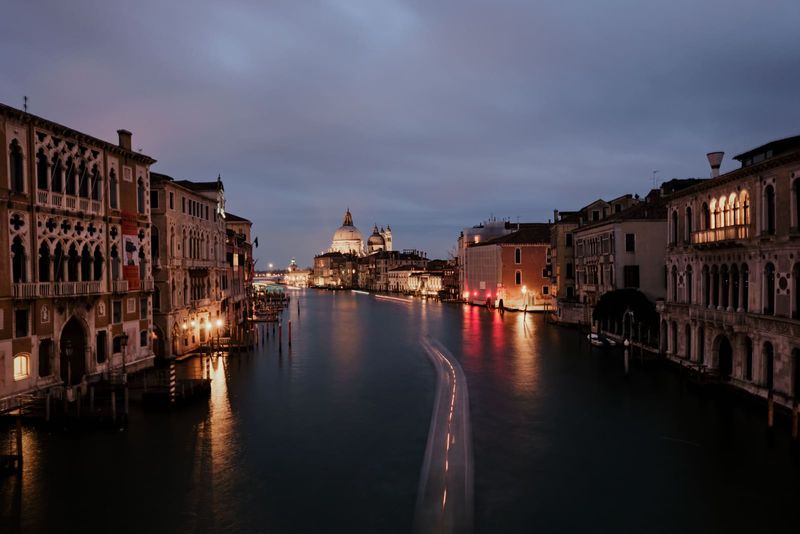
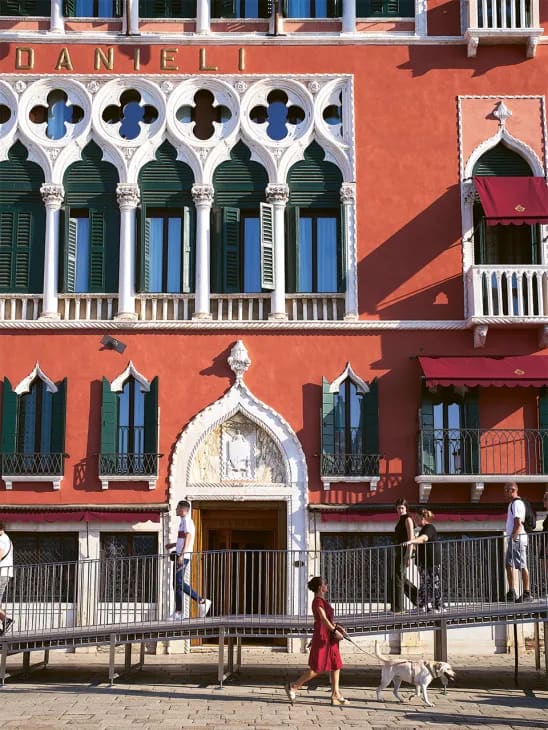
Venice has long suffered from its own success. The waterfront hotels, those grand dames clustered along the Riva degli Schiavoni, offer proximity to the Piazza San Marco but also the relentless press of tourists. Some travellers flee to Giudecca, seeking refuge in quieter enclaves across the lagoon. The Orient Express Venezia offers a third option: proximity without chaos.
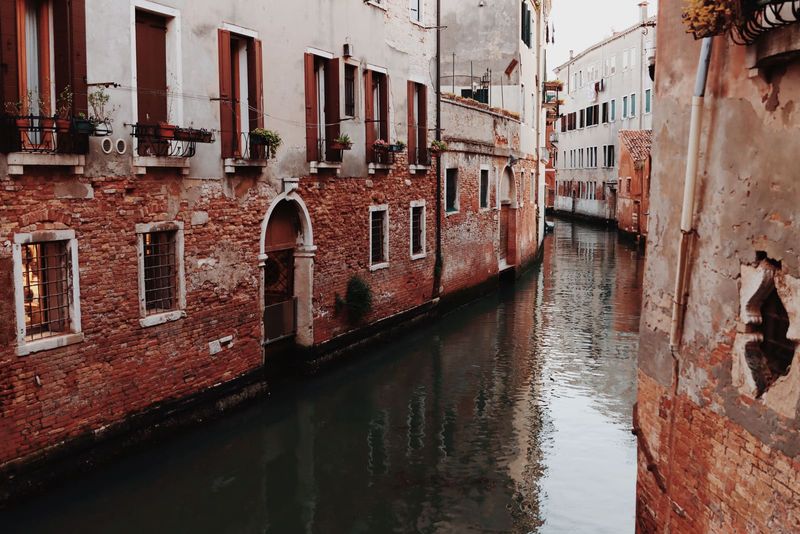
Cannaregio, the northernmost sestiere, remains largely residential. It is a neighbourhood of narrow calli and local markets, where laundry still hangs from iron balconies and the scent of fresh bread drifts from corner bakeries. The palazzo sits within walking distance of every major attraction, yet it remains tucked away, known primarily to those who seek it out. A short water taxi ride connects the hotel to the train station, where a new fleet of Orient Express trains is set to begin service, linking Venice to other European capitals in the manner of the original routes.
This geographic discretion is part of the appeal. The hotel does not announce itself with fanfare. It simply exists, a quiet counterpoint to the city's more bombastic offerings.
Dining and Ritual
The culinary programme reflects a similar balance between tradition and invention. Chef Heinz Beck, whose work has earned accolades across Europe, oversees the formal dining space, where Venetian ingredients are treated with the precision of haute cuisine. The all-day restaurant, La Casati, takes its name from Luisa Casati, the eccentric Italian aristocrat who once owned the building that now houses the Peggy Guggenheim Collection. Casati was known for her extravagant lifestyle, her pet cheetahs, and her refusal to conform to societal expectations. The restaurant honours that spirit, offering a menu that is generous without being fussy, accessible without sacrificing quality.
The Wagon Bar, with its art deco flourishes, nods to the railway heritage that gives the hotel its name. The Orient Express was never merely a train; it was a symbol of elegance in motion, a space where strangers became intimates over cocktails and conversation. The bar attempts to recreate that atmosphere, with velvet banquettes, polished brass fixtures, and a cocktail list that leans into classic preparations.
The Question of Authenticity
There is always a tension in projects like this, a question of whether such lavish restoration crosses into pastiche. Venice has been copied, imitated, and commodified so many times that the line between homage and kitsch can blur. What keeps this palazzo on the right side of that line is its commitment to local craft. The Bevilacqua fabrics are not imported approximations; they are woven in Venice, using techniques that date back centuries. The Murano chandeliers are not mass-produced replicas; they are commissioned pieces, each one shaped by hand in the furnaces of the island.
This is not a theme park version of Venice. It is an argument for what Venice can still be when craft, capital, and vision align. The palazzo does not pretend to be something it is not. It acknowledges its own theatricality, its own excess, and in doing so, it becomes something more honest than many of its peers.
A City in Flux
Venice is a city in constant negotiation with its own identity. It is both a living community and a museum, both a UNESCO World Heritage site and a place where rents have soared beyond the reach of most residents. The opening of high-end hotels like this one raises familiar questions about who Venice is for, and whether luxury tourism can coexist with the needs of a functioning city.
There are no easy answers. What is clear is that the Orient Express Venezia has chosen a different path than many of its competitors. By situating itself in Cannaregio rather than along the waterfront, by emphasising local craft over imported luxury, it makes a case for a form of tourism that is rooted in place rather than imposed upon it.
Whether that case is persuasive will depend on the traveller. For those who seek spectacle without the crush of crowds, who value craft over convenience, who want to experience Venice as something more than a backdrop for photographs, the palazzo offers a compelling option. It is not a hotel for everyone. But then, Venice has never been a city for everyone.