Where the World Drops Away: Following the Outer Islands Route by Superyacht
Between the Seychelles' coral atolls and Tanzania's Swahili coast, a refitted polar vessel charts a path through territories most luxury travellers will never see.
The Arithmetic of Disappearance
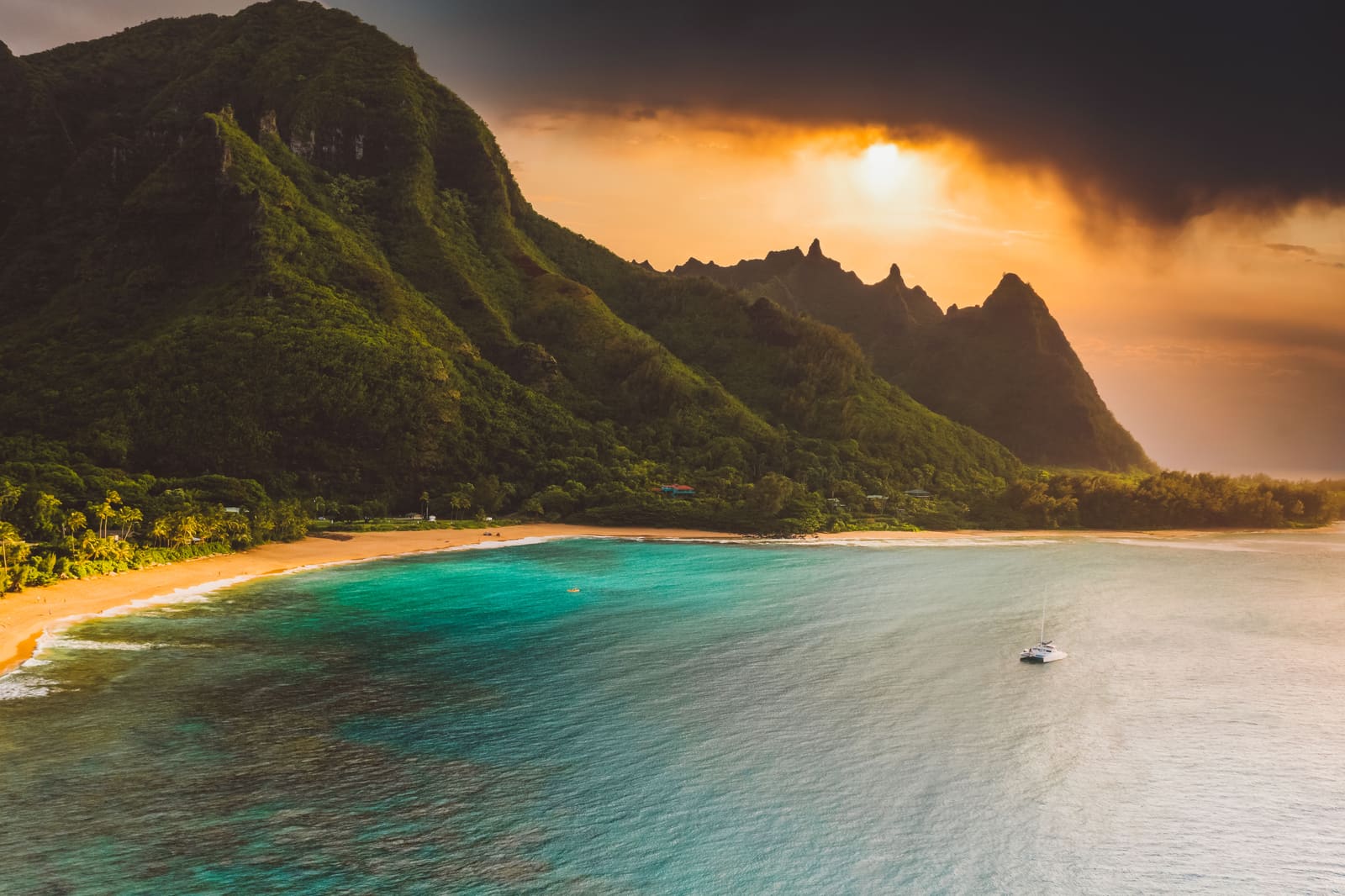
The tide falls twelve centimetres every seven minutes. You can watch a sandbar materialise from nothing, watch a lagoon you could wade across become impassable in the span of lunch. The crew of Aqua Lares track these rhythms the way a concierge in Paris tracks reservation windows, because out here timing is everything. A pop-up bar appears in water barely deep enough to cover your ankles, chilled wine poured while blacktip reef sharks thread between guests' shins. An hour later the same spot is a mud flat, and every trace of the gathering has vanished.
This is expedition luxury at its most fugitive. No permanent structures, no moorings, no suggestion that anyone will return tomorrow. The 55-metre yacht slips through the western Indian Ocean like a rumour, pausing at atolls where researchers outnumber tourists by orders of magnitude, then continuing west toward coastlines that have seen dhows for centuries and superyachts almost never.
Aqua Expeditions acquired the vessel in 2025, converting what had been a polar workhorse since 1974 into a dual-season operation. Half the year she works Arctic waters around Svalbard; the other half she spends threading the gap between the Seychelles' outer islands and Tanzania's Swahili shore. The refit added fifteen suites, a plunge pool, and enough deck space to host sunset aperitifs where a helipad once sat, but the hull still carries the ballast tanks and reinforced plating of her earlier life.
Aldabra and the Protocol of Intrusion
Landing on Aldabra Atoll involves a level of scrutiny usually reserved for quarantine zones. Researchers inspect every bag with tweezers, removing grains of sand from shoe treads, turning pockets inside out. The atoll is a UNESCO World Heritage Site, one of the largest raised coral formations on Earth, and the scientists stationed here spend months at a time monitoring an ecosystem that has remained largely unchanged for millennia.
Giant tortoises move through the interior in numbers that make the Galápagos look modest. Frigatebirds nest in the scrub. Coconut crabs, some as large as small dogs, patrol the undergrowth. Fewer than a thousand visitors receive permits each year, and most of those are researchers. The logistical challenges alone, distances measured in days rather than hours, keep casual traffic away.
Meeting the scientists who live at the research station adds weight to the visit. Their work is governed by weather patterns, tidal schedules, and the movements of species that have occupied this atoll longer than any human settlement. There are no hotels, no restaurants, no infrastructure beyond what the research team requires. Access here is not a matter of wealth but of coordination, permits negotiated months in advance and contingent on conditions that can shift overnight.
A Dhow, a Whale Shark, and the Currency of Local Knowledge
Off Mafia Island, the expedition team arranges a departure from the yacht itself. Guests board weathered wooden dhows operated by fishermen whose families have worked these waters across generations. The boats move under sail, guided by knowledge passed down in increments too subtle to codify, reading currents and weather in ways that no chart can replicate.
The destination is a bay where whale sharks appear year-round, drawn by plankton blooms that follow predictable tidal cycles. Within an hour, a female nearly ten metres long appears, moving along the sandy bottom with the unhurried momentum of something that has no predators. Guests slip into the water ahead of her path, fins and masks hastily adjusted, and watch her pass underneath, indifferent to the audience.
One guest, a woman who had never snorkelled before this voyage and confessed to apprehension around sharks, is the first to leap from the dhow. Later, back aboard the yacht, she describes the moment with the kind of incredulity that suggests the experience exceeded not just expectation but category. For the fishermen, though, the encounter is routine, a feature of the seascape they navigate daily.
The dhow excursion underscores a principle that runs through the entire itinerary: the yacht provides the platform, but local expertise unlocks the territory. Conservationists, marine biologists, naturalists, and guides contribute layers of interpretation that no onboard team, however skilled, could replicate. The relationship between Aqua Expeditions and these communities is transactional in the best sense, knowledge and access exchanged in ways that benefit both sides without requiring permanence.
The Outer Islands and the Limits of Infrastructure
The Seychelles most travellers know, Mahé and Praslin and La Digue, occupy a different register entirely. Those islands have airports, resorts, beach clubs. The outer atolls, by contrast, exist at the edge of logistical feasibility. Some are inhabited only by research teams. Others receive a handful of visitors annually under tightly controlled permits. The distances alone deter most yachts; even vessels with the range to reach them often lack the will to navigate the regulatory and environmental constraints that govern access.
Aqua Lares spends the majority of its Seychelles season in these territories. Days unfold around tidal windows, weather patterns, and the availability of permits that cannot be secured in advance with any certainty. Flexibility is not an amenity here but a structural requirement. The published itinerary functions more as a framework than a promise, adjusted in real time according to conditions that can shift overnight.
Diving forms a significant part of the programme. The yacht carries full equipment, and the expedition team leads up to two dives daily across reefs, walls, and coral gardens that see almost no traffic. One morning might involve drifting along Astove Island's vertical drop-off, reef sharks patrolling the thermocline below. Another could bring a slower traverse through coral formations dense with turtles, rays, and schools of surgeonfish that move in formations so tight they resemble a single organism.
Tanzania and the Swahili Corridor
Crossing into Tanzanian waters introduces a different kind of remoteness. The coastline here lacks the superyacht infrastructure found in the Mediterranean or Caribbean. Marinas are sparse, provisioning requires advance coordination, and much of the navigation relies on local pilots familiar with channels that shift with seasonal storms.
This absence of infrastructure is precisely what drew Aqua Expeditions to the route. The yacht is helping to establish what amounts to a new cruising corridor through East Africa, connecting the Seychelles' outer atolls with Tanzania's Swahili heritage sites and Zanzibar's trading history.
Pemba Island offers clove plantations and forested highlands, the scent of drying spices thick enough to taste. Kilwa Kisiwani reveals the ruins of a medieval Swahili port, mosques and palaces that once connected East Africa with Arabia, India, and beyond. The architecture speaks to wealth accumulated through trade, a cosmopolitan network that predates European contact by centuries.
These sites receive limited tourism, not because they lack significance but because they sit outside the established circuits. Visiting them requires patience, local coordination, and a willingness to accept that plans may change. One afternoon, weather forces a change of anchorage. Another day, a planned landing is delayed by hours while permits are reconfirmed. These adjustments are not setbacks but the cost of operating in territories where infrastructure is minimal and oversight is taken seriously.
The Mechanics of Improvisation
Back aboard the yacht, the crew demonstrate a facility for improvisation that feels less like service and more like collaboration. A tiny island, circumnavigable in three minutes, becomes a beach club for an afternoon, complete with loungers, cocktails, and a sound system. A sandbar that will exist for only two hours at low tide becomes the venue for an impromptu gathering, guests dancing barefoot as the Indian Ocean begins to reclaim the sand beneath them.
These moments are not scripted in the traditional sense. They emerge from the crew's attentiveness to the group's mood, the weather, and the opportunities presented by each location. The result is a voyage that feels responsive rather than programmed, shaped by the interplay between itinerary and circumstance.
Service aboard Aqua Lares operates at a scale that allows for genuine personalisation. With just thirty guests, preferences are noted and remembered. Conversations begun on the tenders continue over dinner. The crew, drawn from multiple countries, adjust their approach according to the rhythm of the group, whether that means setting up water sports off a sheltered beach or arranging a quiet afternoon on deck.
Dining reflects the same adaptability. Menus are developed by consulting chefs and adjusted to reflect the regions being traversed. Ingredients are sourced locally when possible, fish purchased from the same fishermen who pilot the dhows, spices drawn from Pemba's plantations. The food does not attempt to replicate European fine dining but instead responds to place, a philosophy that extends across the entire operation.
The Question of Access
Aqua Lares occupies an unusual position within the superyacht sector. Unlike most vessels of comparable size, she can be booked by the cabin, making the experience accessible to travellers who lack the resources or inclination to charter an entire yacht. Rates for an eleven-night voyage start at approximately £15,000 per person; full charters begin around £580,000.
This model changes the social dynamic aboard. Guests are strangers at embarkation, drawn together by a shared interest in remote territories and expedition travel. The nightly cocktail hour, held on the upper deck before dinner, becomes a fixture that accelerates acquaintance. By the third day, the group has developed the easy camaraderie of a private charter, conversations flowing across tables and tenders with the unselfconscious ease of people who have found common ground.
The demographic skews toward couples, primarily from the United Kingdom and the United States, with an age range that suggests both disposable income and the time required for an extended voyage. Most have travelled extensively, but few have visited the outer Seychelles or coastal Tanzania, territories that remain outside the standard luxury circuits.
What Luxury Means Here
Luxury aboard Aqua Lares is not measured by thread count or the provenance of champagne, though both are present. It is measured instead by access: to protected atolls, to whale shark encounters guided by fishermen whose knowledge spans generations, to ruins that receive fewer visitors in a year than the Louvre sees in an hour.
The yacht provides the infrastructure, the platform from which these experiences become possible. But the experiences themselves depend on relationships that cannot be purchased outright, only negotiated over time through partnerships with researchers, conservationists, and local communities. This is expedition travel at its most considered, carefully planned yet never entirely predictable, shaped as much by weather and tides as by itinerary.
The voyage from the Seychelles to Zanzibar is not a circuit but a traversal, a route that connects territories most superyachts will never reach. What makes it work is not the vessel's pedigree, though that helps, but the willingness to operate at the edge of infrastructure, in places where the tide sets the schedule and permits arrive only after months of coordination. For travellers willing to accept that level of contingency, the rewards are access to corners of the Indian Ocean that have changed remarkably little, places where the world, for a few hours at least, drops away entirely.