Where Privacy Meets Grandeur: Morocco's Most Enchanting Villas
From the Atlas foothills to the Atlantic shore, these estates redefine the art of gathering in North Africa's most seductive country.
The Pull of Seclusion
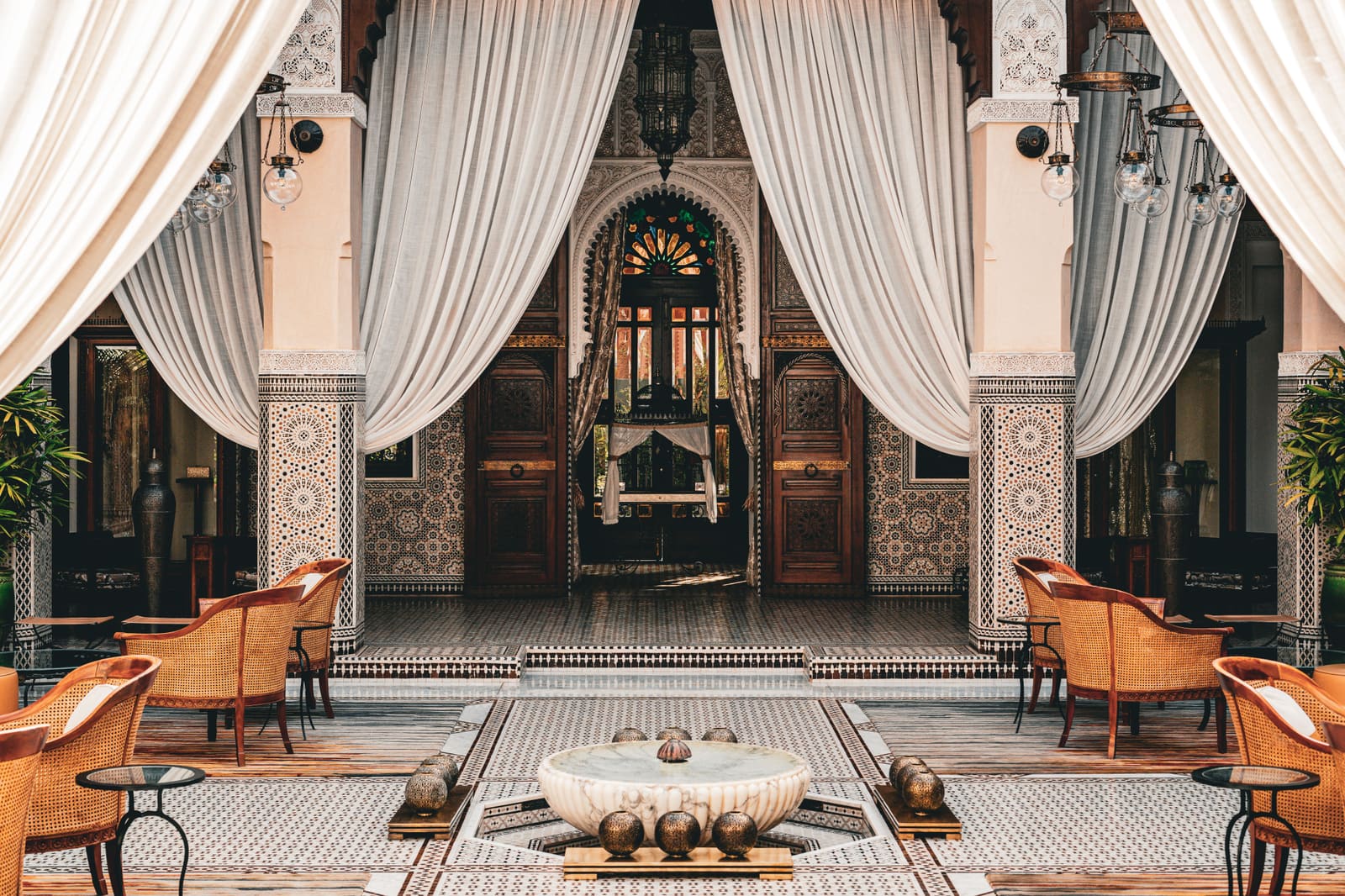
There is a particular pleasure in waking in a Moroccan villa, barefoot on cool zellige tile, with no corridor noise, no breakfast schedule, no strangers in the hallway. Outside, the Atlas peaks catch the first light. Inside, the house is yours alone.
Morocco has long been synonymous with riads and grand hotels, but the villa has emerged as the territory's most compelling form of hospitality. Not for the solo wanderer, certainly, but for families, for reunions, for the kind of travel where togetherness is the point. Here, privacy does not mean isolation. Most properties come with housekeepers, breakfast chefs, night guards, even in-house spa therapists. The infrastructure of luxury, minus the lobby.
The Marrakech Radius
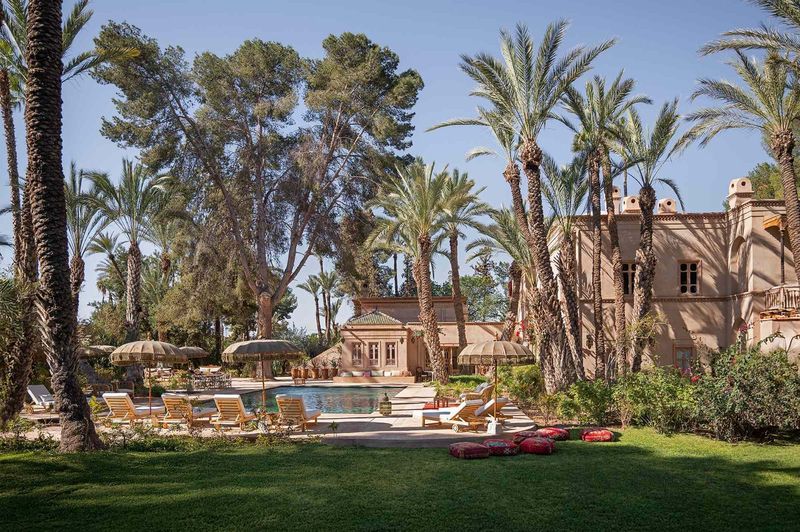
The majority of Morocco's most compelling villas cluster within a half-hour drive of Marrakech, close enough to the medina's energy but far enough to hear silence. Along the Route de l'Ourika and into the Ourika Valley itself, estates sit on multi-acre plots framed by olive groves, cacti, and the serrated line of the High Atlas.
One property in the Ourika Valley occupies 8,000 square metres of terraced gardens, with six en suite bedrooms, a hammam, and an organic kitchen garden that supplies the table. The main house holds five rooms; a sixth sits in an annex alongside a wellness area and a playroom. Dawn here is theatrical. Light pours through floor-to-ceiling windows, turning plaster walls gold.
Another villa, set along the same road, stretches across more than two acres. Six bedrooms, all with private terraces and en suite baths, one housed in a separate guest cottage. The layout is hotel-like in its amenities: hot tub, hammam, fitness room, spa treatments available on request, breakfast included. It functions as a private guesthouse, bridging the gap between villa seclusion and full-service comfort.
Just north of the city, an eight-bedroom estate offers a heated pool, pétanque and pickleball courts, and a hammam. Two of the bedrooms sit in an annex and share a bathroom, a configuration that works for larger groups willing to trade a bit of ensuite convenience for sheer space. The property's rhythm is leisurely: long mornings by the pool, afternoons in the massage room, evenings in the garden.
Inside the Medina Walls
For those who want to be inside rather than outside the action, a handful of riads and converted fondouks offer villa-scale accommodation within Marrakech itself. One five-bedroom riad near the medina is a study in bohemian maximalism: vibrant tiles, layered textiles, a plunge pool in the courtyard, and a rooftop terrace with views that stretch from the medina to the mountains. Daily housekeeping, a breakfast chef, and a night guard are standard. There are no lifts, and parking requires a short walk, but the trade-off is proximity. Hammams, restaurants, and souks are all within a few minutes on foot.
A nine-bedroom villa closer to the Palmeraie leans palatial. Plaster pink walls, turquoise pool, chandeliers, patterned rugs, ornate art. It is designed for large gatherings: bachelor parties, milestone birthdays, multi-family holidays. A rooftop terrace captures sunset over the Atlas. A meeting room with a bar anchors the ground floor. Spa and hammam treatments can be arranged in-house.
Another address, a six-suite property surrounded by gardens, balances grandeur with restraint. Interiors are pared back, architecture classical. All suites feature king-size beds, bathtubs, and showers. The villa sits 15 minutes by car from Jardin Majorelle, Bahia Palace, and the Koutoubia, and 20 minutes from the airport. Breakfast is available for an additional charge.
Beyond Marrakech
Morocco's villa landscape extends well beyond the capital's orbit. In Taroudant, an eight-bedroom fondouk from the 19th century has been reimagined as a contemporary retreat. Four courtyards, each planted with lemon trees and prickly pear cacti, organise the layout. Clay walls, locally sourced, keep interiors cool. A pool offers midday relief. The location is strategic for hikers: both the High Atlas and Anti-Atlas routes are easily accessible from the walled city.
On the coast near Essaouira, a two-bedroom villa occupies a hilltop site with direct views of the Atlantic. An outdoor bathtub sits at the beachfront edge. Floor-to-ceiling windows frame the ocean. Private chefs prepare meals to be taken on the terrace beside the heated pool. The hosts arrange activities, from surfing to horseback riding along the shore.
One four-bedroom villa in the medina takes a quieter approach. Interiors are muted, with a statement staircase and breezy, understated furnishings. A glass roof floods the space with natural light, an uncommon feature that transforms the atmosphere. The housekeeper, Fatima, is also a skilled cook; given a day's notice, she will prepare a meal for the house. A fireplace nook offers warmth in winter. The villa is set over three levels, allowing pockets of solitude within a shared space.
The Villa Advantage
What distinguishes these properties is not simply size or luxury, though both are abundant. It is the freedom they afford. To eat when you choose, to swim without an audience, to let children run without apology, to occupy a place on your own terms. Many come with staff who know the rhythms of Moroccan hospitality: mint tea at arrival, tagine simmering by evening, hammam heated on request.
The best estates balance beauty with function. Heated pools for cooler months. Hammams and massage rooms for post-hike recovery. Outdoor kitchens and covered dining areas. Pétanque courts, pickleball, home cinemas, fitness centres. These are not decorative additions but tools for a certain kind of holiday, one where the house itself becomes the destination.
Practical Considerations
Most villas require advance booking, particularly during peak season from March through May and September through November. Many operate through villa rental agencies or boutique platforms rather than traditional hotel booking sites. Housekeeping, breakfast chefs, and security are often included; spa treatments, private chefs for lunch and dinner, and airport transfers typically incur additional fees.
Transport is essential. While a handful of riads within the medina are walkable to key sites, the majority of properties sit outside city centres and require a car. Some villas arrange drivers; others expect guests to hire independently. Parking at medina properties can be limited, requiring drop-off and collection rather than on-site spaces.
Group composition matters. Villas with bedrooms in annexes or separate cottages suit multi-generational families or groups comfortable with slight separation. Those with all bedrooms in the main house work better for tighter-knit parties. Shared bathrooms, where they exist, are clearly noted in listings and best suited to siblings or close friends.
The Ritual of Return
Morocco rewards repeat visits. The light changes with the season. The souks shift inventory. The mountains wear different colours. A villa, unlike a hotel, allows you to return to the same place and find it familiar. To know which terrace catches the afternoon sun, which room stays coolest, where the best mint grows in the garden.
This is the quiet luxury the territory offers: not spectacle, but intimacy. Not newness, but depth. A place to gather, to rest, to let the days unfold without a script. In a country as visually overwhelming as Morocco, that kind of stillness is its own form of opulence.