Where the Desert Meets the Sea of Cortez
On Baja California's remote East Cape, a new 18-casita sanctuary translates the ancient language of sand, salt and silence into contemporary form.
A Landscape That Speaks First
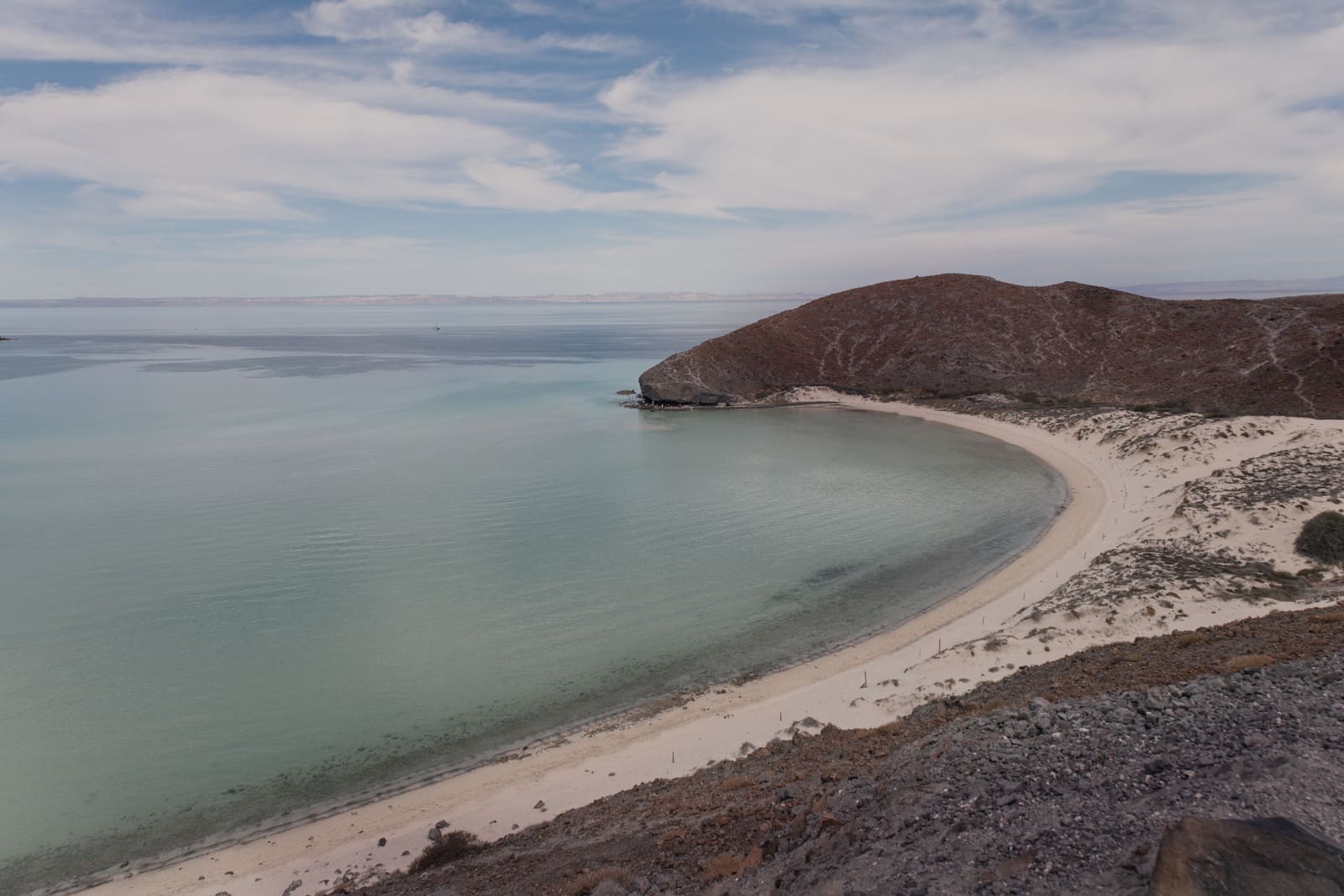
The approach is deliberate: a gravel drive that slows the pulse before you arrive. On either side, cardón cacti stand like sentinels, their arms tracing the sky. Beyond them, the Sea of Cortez stretches in gradations of blue - turquoise where it meets the sand, indigo where it touches the horizon. This is Baja California's East Cape, a stretch of coast that has long resisted the sprawl of its western neighbour, Cabo San Lucas. Here, within the gated enclave of Costa Palmas, Amanvari occupies 18 stilted casitas and a central pavilion, each structure calibrated to the cadence of wind, tide and light.
The name itself - a portmanteau of Sanskrit words for peace and water - signals intent. This is not a resort engineered for distraction. It is a place designed to amplify what is already present: the rustle of palm fronds, the call of seabirds, the way afternoon sun turns the Sierra de la Laguna mountains amber.
Architecture as Listening
Elastic Architects, the firm responsible for Amanvari's built form, approached the site not as blank canvas but as conversation partner. The result is a vocabulary of restraint: white concrete, natural limestone, tropical hardwoods. Interiors dissolve into terraces; terraces dissolve into landscape. In the casitas, floor-to-ceiling glass frames the estuary or the open sea, depending on orientation. Beds are positioned not for symmetry but for sightlines. A television retracts at the press of a button, a small acknowledgement that the best entertainment is the view.
At the heart of the property stands Casa Grande, an open-plan atrium where the sky becomes architecture. The ceiling is punctuated by a sculptural dome - a textured spiral inspired by the chambers of an extinct marine microfossil - crafted by artists Abi and Luisa Calvete of Extra Neutro over more than 1,000 hours. The piece functions as both artwork and metaphor: a reminder that beauty often emerges from what has been compressed, layered, transformed by time.
Descending the spiral staircase, one arrives at the main pool, carved from Caledonia Black granite. The stone, cool underfoot, reflects the sky in fragments. Around it, three dining venues unfold, each guided by the same principle of material honesty. Local elements - sand-hued textiles, ceramics by Tomás Díaz of Disciplina Studio, mixed-media works by Arozarena de la Fuente - anchor the interiors without announcing themselves.
The Casitas: Sanctuaries Within a Sanctuary
Amanvari's 18 accommodations are elevated on stilts, a design choice that allows them to hover above the native vegetation without disturbing it. Each casita is accessed by a private path, a short walk that functions as threshold between communal and solitary.
Inside, the palette is monastic: white walls, wood floors, limestone in the bathrooms. The furnishings are bespoke, the lines clean. But the real luxury is spatial. Terraces stretch generously, furnished with seating for morning coffee or evening contemplation. Below, a heated pool and outdoor shower create a private courtyard, sheltered from view. In the estuary-facing casitas, the water is close enough that you can hear fish breaking the surface at dusk.
The bathrooms are studies in symmetry: dual limestone vanities flanking a spacious shower, Vermont Beige marble underfoot, a soaking tub positioned to catch the last light of day. It is the kind of space that invites lingering, where the boundary between bathing and meditation blurs.
Culinary Geographies
Amanvari's three dining venues operate as distinct essays on place. Sesui, the Japanese concept, centres on a 10-seat wood counter illuminated by loofah lanterns shaped like sea urchins. Chef Masao Matsubara's omakase unfolds as a dialogue between Japan and Baja California: raw oyster layered with uni and caviar, dashi broth enriched with local shrimp, tempura that shatters at the touch of chopsticks.
Arva, the Italian restaurant, offers a different register. The dining room is anchored by a full-wall, temperature-controlled wine display; the terrace, warmed by fire, sits beneath a canopy of stars. The menu moves through seasons: heirloom tomato and burrata, yellowtail crisped and dressed with caviar and orange, linguine tangled with clams pulled from nearby waters.
For something less formal, Luma pairs coastal Mexican cuisine with a beachfront setting. The dishes are uncomplicated but precise, the kind of food that tastes better with sand between your toes.
Before dinner, the curved lounge bar - open to the sea on one side, the Sierra de la Laguna on the other - serves cocktails designed to cool and clarify. The Bartolo, a mix of raicilla, mango and habanero, arrives translucent, the heat tempered by sweetness. A saxophonist plays as the waves roll in.
Wellness as Restoration, Not Performance
The 600-square-metre Aman Spa draws from two healing traditions: the ancestral practices of Mexico and the rituals that originated with the Aman brand in Phuket, Thailand. Facilities include a white temazcal, a sweat lodge reinterpreted in contemporary materials, and hydrotherapy houses designed for alternating hot and cold immersion.
Treatments range from purifying facials to the signature Desert Damiana, a two-hour journey that combines reflexology, stretching and aromatic oil massage. The scent of damiana - a plant native to Baja California, long used for its calming properties - lingers on the skin for hours.
There is also a 24-hour fitness centre equipped with Technogym machines, a movement studio and a yoga pavilion. But the most compelling practice may be the sunrise sessions held poolside, where the soundtrack is not curated but composed by the morning: birdsong, the rustle of palms, the distant hum of the sea.
The Choreography of Service
Service at Amanvari operates at the level of anticipation. Cold water and Starlink Wi-Fi in the airport transfer. An umbrella materialising as you step from the car into midday sun. Pre-breakfast coffee delivered to your terrace without request. A glass of ice-cold water and a tray of sun care essentials waiting beside your lounger after a morning of paddleboarding.
Dietary restrictions are noted once and remembered across all outlets. Additional requests are managed via a personalised WhatsApp group. The effect is seamless, the kind of hospitality that feels less like choreography and more like clairvoyance.
The Wider Canvas
Beyond the property, the East Cape offers its own forms of immersion. Cabo Pulmo National Marine Park, a 20-minute drive north, protects one of the oldest coral reefs in the Pacific. Snorkelling there is to move through water teeming with angelfish, rays, sea turtles - life in such abundance it feels primordial. Further inland, the Sierra de la Laguna rises in folds of rock and scrub, accessible by off-road vehicle or on foot.
But these excursions feel optional. Amanvari is designed to hold you, not propel you outward. The rhythm it proposes is slower: mornings by the pool, afternoons in the spa, evenings that stretch across multiple courses and several bottles of wine.
A Place That Rewards Stillness
There is a particular kind of traveller for whom Amanvari will feel inevitable: the one who has grown weary of itineraries, who seeks not stimulation but recalibration. This is not a property for those who measure holidays in sights ticked off or miles covered. It is for those who understand that luxury, at its most refined, is the freedom to do less.
The desert and the sea meet here not in conflict but in conversation. The architecture listens. The service anticipates. The food nourishes without fanfare. And the landscape - always the landscape - reminds you that the best things are not built but revealed.