Canvas and Conscience: The New Tented Camps Redefining Luxury in Southeast Asia
Two remote lodges in Vietnam and Cambodia are proving that wilderness immersion and environmental stewardship need not come at the expense of comfort.
A Return to the Wild, Without Leaving Comfort Behind
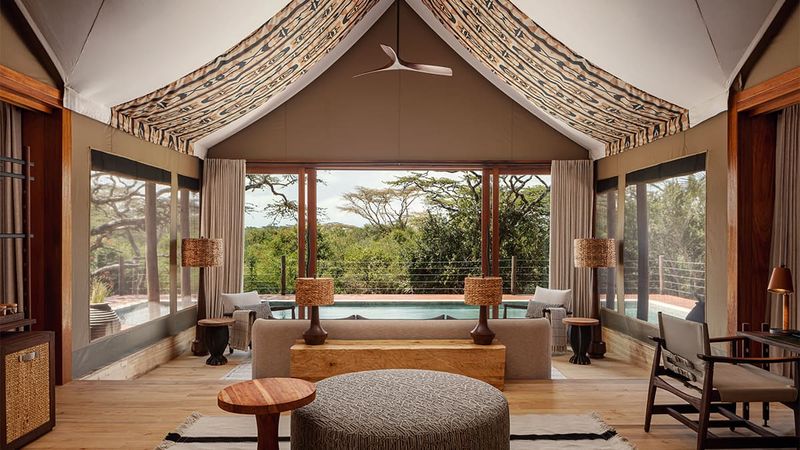
The karst peaks of Phong Nha-Ké Bàng National Park rise like ancient sentinels above central Vietnam, their camel-hump silhouettes softened by mist and the dense green of primary forest. Beneath that canopy, where the world's largest cave system carves its silent corridors through limestone, a different kind of shelter has taken root. Auko Eco Wellness Lodges opened recently with 30 canvas suites, each one a study in the tension between wildness and refinement: air-conditioning hums quietly beside open-air bathtubs, and walls of bamboo and timber reclaimed from fishing boats frame views of unbroken jungle.
The structures cluster lightly on their plots, leaving most of the native plant cover undisturbed. It is an architecture of restraint, one that acknowledges the forest was here first. Between mud-splattered hikes into the cave system, guests return to riverside yoga sessions, hydrotherapy, and sound-healing rituals held inside a meditation cave on site. The effect is less escape than recalibration, a chance to let the body recover what a day in the wild demands.
Where Birdsong Becomes the Itinerary
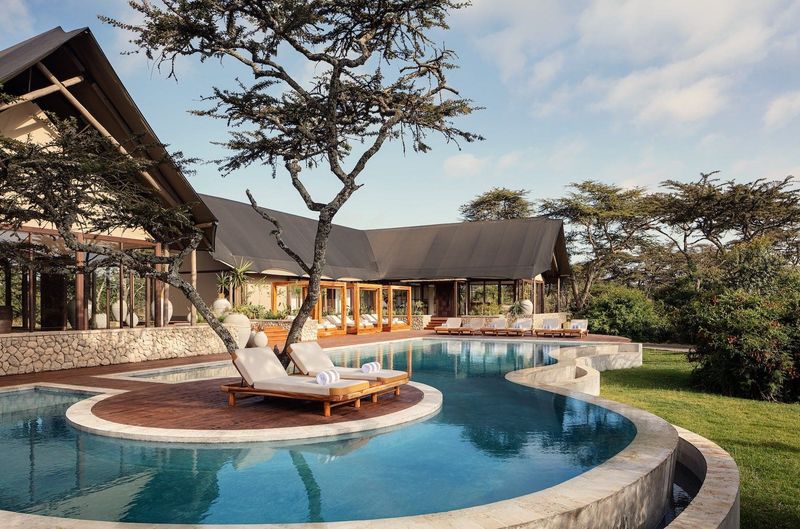
Five hundred kilometres west, in the heart of Cambodia's Siempang Forest Lodge wildlife sanctuary, a different chorus fills the air. The sanctuary spans 330,577 acres, and within it, 15 safari-style tents perch on stilted decks, each one positioned to catch the calls of some of the country's rarest birds. Siempang Forest Lodge opened last autumn, and while it offers a pool, a modest spa, and a bar stocked for evening drinks, the real draw lies beyond the camp's perimeter.
Guests join local rangers on forest walks and birding excursions, tracking species that exist nowhere else in such numbers: wild bantengs, a cattle species teetering on the edge of extinction; Siamese crocodiles, whose populations have collapsed across the region; and the giant ibis, a bird so critically endangered that every sighting carries weight. The rangers speak plainly about what tourism means here. Revenue from the lodge funds patrols, habitat restoration, and community programmes that offer alternatives to logging and poaching. It is conservation as a lived practice, not a talking point, and guests become witnesses to the unglamorous, essential work of keeping a wilderness intact.
The Calculus of Impact
Both camps operate within a framework that luxury hospitality has been slow to embrace: the idea that a property's value might be measured not only by what it offers guests, but by what it leaves behind. At Auko Eco, building materials came from the immediate surroundings or from salvage, a choice that reduced the carbon cost of construction and kept money circulating locally. The layout preserves existing vegetation rather than clearing for symmetry or sightlines, a decision that protects soil stability and the species that depend on it.
At Siempang, the conservation model is more explicit. The lodge exists because the sanctuary exists, and the sanctuary survives in part because the lodge generates income that makes protection economically viable. It is a compact that asks guests to see themselves not as consumers of a landscape, but as participants in its continuity. The trade-off is clear: fewer amenities, more purpose. The reward is equally clear: the knowledge that a stay here funds something larger than itself.
What the Forest Teaches
There is a particular quality to time spent in places like these, a slowing that has less to do with leisure than with attention. At Auko Eco, the meditation cave offers a space for sound healing, a practice that uses resonance to shift the nervous system out of its habitual patterns. At Siempang, the forest walks with rangers become lessons in observation, in learning to distinguish the call of one ibis from another, in understanding how the presence of a single species signals the health of an entire ecosystem.
These are not the sort of lessons that translate easily into Instagram captions or dinner-party anecdotes. They are quieter, more incremental, and they require a willingness to sit with discomfort: the heat, the mud, the knowledge that the wilderness you are visiting is under constant threat. But they are also the lessons that linger. Long after the memory of an open-air bathtub fades, the sight of a giant ibis in flight, or the sound of a ranger explaining how a community shifted from poaching to guarding, remains.
The Measure of a Stay
What distinguishes these camps from the wave of greenwashed resorts that have proliferated across Southeast Asia in recent years is specificity. Auko Eco names its materials and their origins. Siempang quantifies its sanctuary and invites guests into the mechanics of its protection. There is no vague talk of sustainability, no abstract commitment to the environment. There is bamboo from a particular grove, timber from decommissioned boats, a 330,577-acre sanctuary with rangers who know every trail.
This specificity matters because it allows scrutiny. It turns a marketing claim into a verifiable fact, and it gives guests the information they need to make informed choices. It also sets a standard. If a tented camp in the middle of a Cambodian forest can articulate exactly how it contributes to conservation, then there is no excuse for a beach resort with ten times the budget to speak only in platitudes.
The canvas walls of these lodges are thin, and the jungle presses close. That proximity is the point. It reminds you, with every rustle and birdcall, that the wild is not a backdrop. It is the substance of the experience, and the reason these places exist at all.