Where Pilgrimage Meets Luxury in the Indian Himalayas
Shakti Prana opens a rare passage into Uttarakhand's sacred high country, threading comfort through terrain once reserved for devotees and mountaineers.
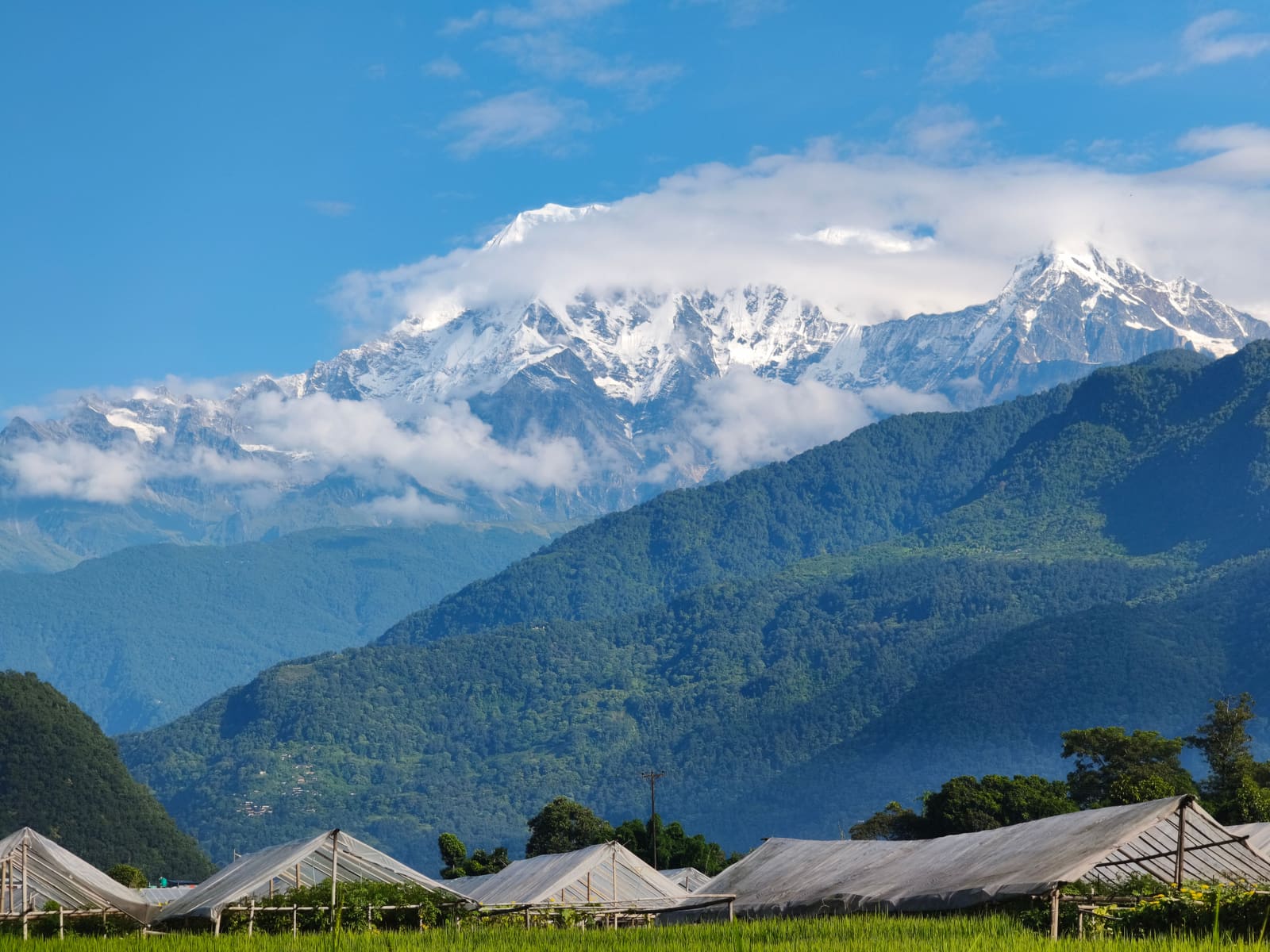
A Threshold in the Mountains
There is a particular quality to light at altitude, a sharpness that makes every ridge line legible and every cloud shadow a moving map. In Uttarakhand, the northernmost reach of India where the Himalayas buckle towards Tibet, that light falls on a landscape thick with myth - peaks named for gods, rivers traced by pilgrims, valleys that have held hermitages for centuries. It is country that has resisted easy access, not through hostility but through sheer verticality and a climate that closes passes for half the year.
Shakti Prana, a new trekking lodge in this corner of the Indian Himalayas, is not an attempt to tame that remoteness but to thread a careful line through it. The property offers a base for multi-day treks into terrain where altitude, devotion, and the simple logistics of moving through high country have long determined who arrives and who turns back. What it proposes is not conquest but a more gradual acquaintance - luxury as patience, comfort as the condition that allows you to stay long enough to notice what the landscape is actually saying.
The Geography of Devotion
Uttarakhand is often called Dev Bhoomi, the land of the gods, a designation that reflects both the density of temples and the enduring belief that certain peaks are not simply mountains but presences. The Char Dham pilgrimage - four shrines marking the cardinal points of the Hindu sacred compass - draws hundreds of thousands each year, many of them travelling on foot along paths that climb through pine forests, cross glacial streams, and emerge above the treeline into a world of stone and snow.
Shakti Prana positions itself within this geography, not as a pilgrimage lodge but as a secular cousin to the tradition, offering routes that overlap with or run parallel to the sacred circuits. The treks range from moderate valley walks to demanding high-altitude crossings, all guided and provisioned, all returning each evening to a lodge where hot water, prepared meals, and beds with proper mattresses await. It is a model that Shakti, the parent company, has refined over two decades across the Himalayas and the Karakoram - mobile luxury, in the sense that the luxury moves with you, pitched ahead by porters and support staff so that arrival feels less like pitching camp and more like coming home to a place you have never been.
Architecture as Restraint
The lodge itself is built with a lightness of footprint that speaks to both environmental caution and an aesthetic preference for restraint. Structures are low-slung, clad in local stone and timber, with rooflines that defer to the surrounding peaks rather than compete with them. Interiors are spare but warm - wool textiles, wood stoves, windows positioned to frame specific views rather than offer panoramic excess.
This is architecture that understands its role as threshold rather than destination. The rooms are designed to be left - comfortable enough to restore you, plain enough that you do not linger when the morning light suggests it is time to walk. There is a library stocked with volumes on Himalayan ecology, mountaineering history, and Hindu cosmology, the kind of collection that assumes curiosity and rewards it. Meals are taken communally, a format that encourages the slow exchange of stories and the recognition that you are part of a temporary community bound by shared route and altitude.
The Trekking Proposition
The treks radiating from Shakti Prana are not expeditions in the technical sense but neither are they casual strolls. They demand fitness, acclimatisation, and a willingness to move at the pace the mountains dictate. Routes are designed to avoid the most crowded pilgrimage corridors whilst still engaging with the cultural and spiritual layer of the landscape - passing through villages where agriculture clings to terraced slopes, skirting monasteries and temples that mark thresholds between the inhabited and the wild.
Guides are local, drawn from communities with generational knowledge of the terrain, trained in wilderness first aid and equipped with satellite communication. The model is employment rather than extraction, with wages and working conditions set above regional norms and a portion of revenue directed towards education and infrastructure projects in the surrounding villages. It is an approach that acknowledges the uneasy economics of high-end tourism in regions where subsistence farming is still the dominant livelihood, attempting - imperfectly, as all such attempts are - to distribute benefit rather than simply extract experience.
Altitude and Attention
What the lodge offers, ultimately, is time. Time to acclimatise, not just physiologically but perceptually - to adjust to the scale of the landscape, to the fact that weather moves faster than you do, to the way a day at altitude compresses and expands depending on gradient and breath. The Himalayas are not a backdrop here but a condition, one that shapes everything from the menu (carbohydrate-heavy, designed to fuel exertion) to the pace of conversation (slower, because everyone is tired in the good way that comes from having used your body as it was designed to be used).
There is also the question of what it means to bring luxury into a landscape defined by asceticism. The tension is not resolved so much as acknowledged - Shakti Prana does not pretend that comfort is neutral, but neither does it apologise for offering it. The lodge operates on the assumption that there are travellers for whom physical challenge and material ease are not opposites but complements, and that the experience of the mountains is deepened, not diluted, by the ability to return each evening to warmth and food and rest.
The Longer View
Uttarakhand's tourism infrastructure is under pressure. Pilgrimage traffic has grown exponentially, road construction has accelerated landslide risk, and the 2013 floods - which killed thousands and reshaped entire valleys - remain a stark reminder of the region's geological volatility. Trekking lodges like Shakti Prana operate in this context, part of a broader conversation about what sustainable access looks like in a fragile, sacred, increasingly visited landscape.
The lodge's model - small-scale, high-cost, low-impact - is one answer, though not the only one and certainly not scalable to the millions who come to Uttarakhand each year. What it does offer is a demonstration that remoteness need not mean discomfort, and that the Himalayas can be approached not as a conquest narrative but as an invitation to slow down, to walk at the speed of your own breath, to notice the way light changes on a ridge line and the particular silence that comes after a day spent mostly in your own head.
Walking Into the Quiet
The best moments at Shakti Prana are the ones that happen in the margins - the first cup of tea at dawn, drunk standing outside because the cold is sharp but the light is sharper; the evening return to the lodge when legs ache and the smell of woodsmoke drifts down the valley; the conversations with guides who speak of the mountains not as scenery but as neighbours, temperamental and generous in equal measure.
This is not a place for those who measure travel in sites ticked off or summits bagged. It is for travellers who understand that the Himalayas demand something closer to pilgrimage than tourism, even when you are not a pilgrim - a willingness to be small in the landscape, to accept discomfort as part of the exchange, to recognise that what you carry down from the mountains is not a trophy but a recalibration of scale, a memory of what it feels like to move through a world that does not bend to accommodate you.