The Quiet Architecture of Responsibility at Resorts World Sentosa
Between the theme park queues and the oceanarium glass, an integrated resort tests whether sustainability can be something guests encounter rather than seek.
The Resort as Laboratory
Stand beneath the canopy at Weave, the lifestyle and dining precinct at Resorts World Sentosa, and you might notice the quality of light before you notice its source. The roof overhead is ETFE - ethylene tetrafluoroethylene, a polymer film favoured by architects for its thermal properties - and it blocks up to 80 per cent of solar heat whilst admitting daylight in near-full spectrum. Large ceiling fans turn slowly overhead. The effect is a space that feels temperate without the hum of air conditioning, a microclimate engineered to let visitors linger over soft serve from Sundae Royale or a table at Moutarde, the restaurant by French chef Paul Pairet, without wilting in Singapore's equatorial intensity.
It is an example of passive design made experiential, and it is one thread in a broader fabric of environmental strategy at the resort. Resorts World Sentosa has, over the past several years, embedded sustainability measures across its operations in ways that range from the conspicuous to the nearly invisible. Some are architectural. Others are programmatic. A few exist at the intersection of guest experience and ecological stewardship, a category that remains rare in the hospitality industry.
Solar Canopies and Zero Energy Ambitions
Above the soundtracks and the queues at Universal Studios Singapore, more than 1,500 solar panels sit across rooftops, converting equatorial sun into electricity that powers the attractions below. The installation is visible if you look up, though most visitors do not. More recently, Illumination's Minion Land - the theme park's latest addition - achieved BCA Green Mark Platinum Zero Energy Building status, a certification that requires net-zero energy consumption through a combination of efficiency measures and on-site renewable generation.
The designation is notable not for novelty but for context. Zero-energy buildings remain uncommon in tropical climates, where cooling loads are relentless and humidity complicates passive strategies. That a theme park attraction, with its lighting rigs and audio systems and climate control demands, can meet the threshold suggests that the calculus of energy performance is shifting, even in entertainment architecture.
The Coastal Forest and the Heritage Trees
Tucked beside Equarius Hotel is a 2.9-hectare coastal forest, home to 93 plant species, 17 avian species, and 21 butterfly species. The forest is not a landscaped amenity. It is a remnant ecosystem, monitored regularly for ecological health and protected as part of the resort's environmental commitments. Within it stand several Heritage Trees, specimens recognised under the National Parks Board's Heritage Tree Scheme for their age, rarity, or cultural significance.
The presence of such a forest on a resort island is an anomaly. Sentosa's transformation from military outpost to leisure destination involved extensive land reclamation and development; pockets of native vegetation are few. That this one persists, and that it is actively stewarded rather than merely preserved, reflects a conservation philosophy that privileges biodiversity over decorative greenery. It is a quieter attraction, one that rewards slower exploration and offers a counterpoint to the resort's more kinetic offerings.
Marine Stewardship and Public Engagement
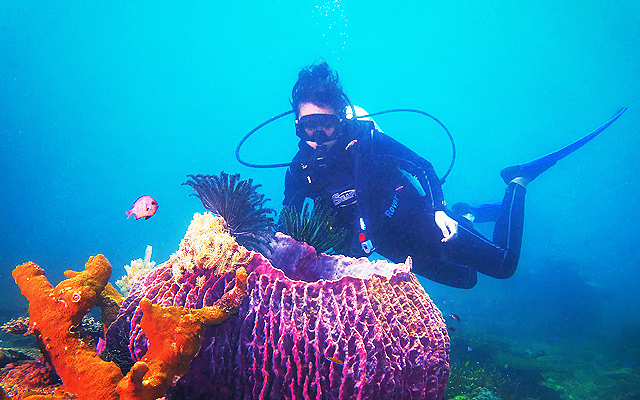
The Singapore Oceanarium, with its 12-million-gallon Open Ocean Habitat, is a marquee draw. But beyond the spectacle of manta rays and hammerhead sharks gliding past acrylic panels lies a suite of conservation programmes designed to engage the public in marine stewardship. Ocean Advocates and Citizen Science initiatives invite participants to join coastal clean-ups, biodiversity monitoring, and habitat restoration projects. The PADI Discover Snorkelling programme, a 90-minute beginner experience conducted at the surface of the Open Ocean Habitat, allows guests aged ten and above to observe marine life whilst learning about reef ecology and the pressures facing ocean ecosystems.
These programmes represent a shift from passive observation to active participation, a model that positions the oceanarium not merely as an attraction but as a platform for environmental education. The daily feeding sessions at the Open Ocean Habitat, where animal care specialists dive to feed moray eels, rays, and sharks, function similarly, offering transparency into the labour of husbandry and the complexity of maintaining closed marine systems.
Garden to Glass, Garden to Table
At The Laurus, the resort's fine-dining restaurant, the Laurus Kitchen Sessions begin not in the kitchen but in the herb garden adjacent to it. Guests tour the garden, identifying basil, lemongrass, kaffir lime, and other aromatics before moving inside to prepare a meal that incorporates what they have just seen growing. It is a compressed version of the farm-to-table ethos, one that collapses the distance between source and plate to a matter of metres.
The same garden supplies The Collector's Bar, where the "garden to glass" concept informs the cocktail menu. The Zest of Eden combines vodka, fresh ginger, lime, lemongrass cordial, and ginger beer, all drawn from ingredients grown on-site or sourced locally. The Spiced Solstice offers a non-alcoholic alternative with similar provenance. The approach is not without precedent - hyperlocal sourcing has become a hallmark of contemporary hospitality - but it remains uncommon in large-scale resort settings, where supply chains typically prioritise consistency and volume over proximity.
According to Resorts World Sentosa, more than half of the seafood served across the property is responsibly sourced, and the resort works with local suppliers to reduce food miles and support regional agriculture. The initiatives are part of a broader food sustainability strategy that includes waste reduction, composting, and menu design informed by seasonality.
The Infrastructure of Reduction
Sustainability at scale often hinges on the unglamorous: procurement decisions, material specifications, waste streams. At Hotel Ora, the resort's boutique property, guest rooms feature refillable water carafes and bulk bathroom amenities in place of single-use bottles. Paper products throughout the hotel are sourced from FSC-certified suppliers, ensuring that the pulp originates from responsibly managed forests.
These measures are incremental, and they are replicable. They do not transform the guest experience in any overt way, but they alter the material footprint of a stay, reducing plastic waste and deforestation pressure by degrees. Across thousands of room nights, the cumulative effect is substantial. It is the kind of infrastructure that operates quietly, noticed primarily in its absence.
What Responsibility Looks Like in Practice
The question that accompanies any sustainability initiative in hospitality is whether it is substantive or performative, whether it represents a genuine recalibration of operations or a gesture toward market expectations. At Resorts World Sentosa, the evidence suggests the former. The integration of passive cooling, renewable energy, forest conservation, marine education, hyperlocal sourcing, and waste reduction across multiple properties and touchpoints indicates a systemic approach rather than a series of isolated projects.
The resort has also developed a self-guided sustainability tour, a map that directs guests to the solar arrays, the coastal forest, the herb garden, and other sites where environmental strategy is made visible. It is an invitation to see the resort differently, to recognise that the architecture of leisure can also be an architecture of responsibility.
Whether such initiatives will become standard across the industry remains uncertain. But at a moment when travel and hospitality face mounting scrutiny over their environmental and social impacts, Resorts World Sentosa offers a case study in how a large-scale integrated resort can embed sustainability into its operational logic without sacrificing the experience it was built to deliver. The work is ongoing, imperfect, and evolving. But it is also tangible, legible, and increasingly necessary.
The Forest and the Theme Park
There is a peculiar juxtaposition in walking from the Heritage Trees of the coastal forest to the solar-panelled rooftops of Universal Studios Singapore, from the quiet of native canopy to the orchestrated exuberance of a theme park. The two environments represent different values, different temporalities, different ideas of what an island like Sentosa might be. Yet they coexist, and in that coexistence lies a tension worth examining: whether a place built for leisure can also be a place of stewardship, whether entertainment and ecology can share the same ground.
Resorts World Sentosa has not resolved that tension, but it has made it productive. The result is a resort that functions simultaneously as destination and as experiment, testing the proposition that sustainability need not be a separate attraction but a quality woven into the experience itself. For guests willing to look beyond the marquee draws, the evidence is there, waiting to be discovered.