At The Apurva Kempinski Bali, a New Teppanyaki Counter Trades Showmanship for Precision
NAMI Teppanyaki, which opened in September 2026, reimagines the grill-side ritual as a study in restraint, plating each course with the care of kaiseki.
A Grill Without the Circus
The teppanyaki counter has long occupied a curious place in the hierarchy of Japanese dining. In many resort towns, it defaults to spectacle: spatulas clanging, onion volcanoes erupting, prawns launched across the room. At NAMI Teppanyaki, which opened in September 2026 within The Apurva Kempinski Bali, the format is stripped back to something quieter and, arguably, more compelling. Here, the chef works the hot steel with the deliberation of a calligrapher, plating each element in front of you and narrating the provenance of every ingredient. The theatrics are replaced by a different kind of performance: one rooted in technique, timing and the kind of restraint that Japanese culinary philosophy prizes above all else.
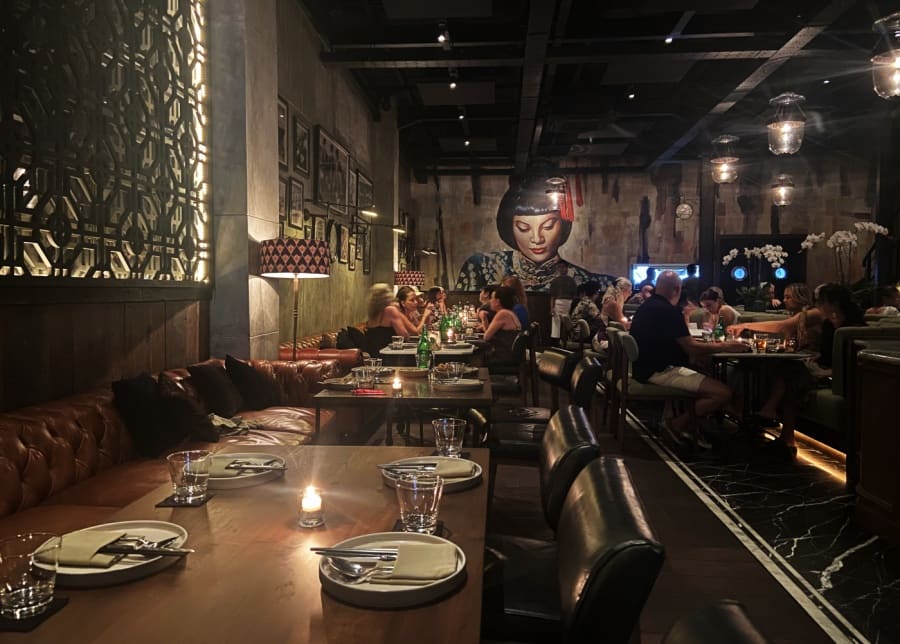
The restaurant sits adjacent to Bai Yun, the resort's established Chinese dining room, and shares the same design language. Rudy Dodo, the architect behind much of the property's interiors, has divided NAMI into a series of small teppan rooms rather than a single sprawling hall. Each room centres on its own grill, surrounded by seven or eight seats arranged in a loose arc. Pale timber slats line the walls; a wooden frame hangs above the cooking surface like a torii gate rendered in blonde oak. Floor-to-ceiling windows frame a pocket garden of bamboo, and the effect is one of openness without exposure. Seating is communal, though the scale remains intimate. You may share the counter with another couple or a small party, but the arrangement never feels crowded.
For those who prefer distance from the grill, NAMI offers tables without a shared teppan, paired with a shorter five-course menu. But to sit at the counter is to accept an invitation into the kitchen's logic, to watch the chef's hands as they move between flame and plate, to smell the sear before you taste it.
The Namikase Menu: Structure with Room for Improvisation
The centrepiece of the NAMI experience is Namikase, a set menu available in eight, nine or ten courses. The name suggests omakase, but the structure is more transparent: diners know the broad strokes of what will arrive, though the kitchen retains latitude for adjustment. Dietary restrictions are accommodated without fuss. When a foie gras course was declined, Chef Robbi substituted a special preparation of salmon, grilled and plated with the same care as the rest of the progression.
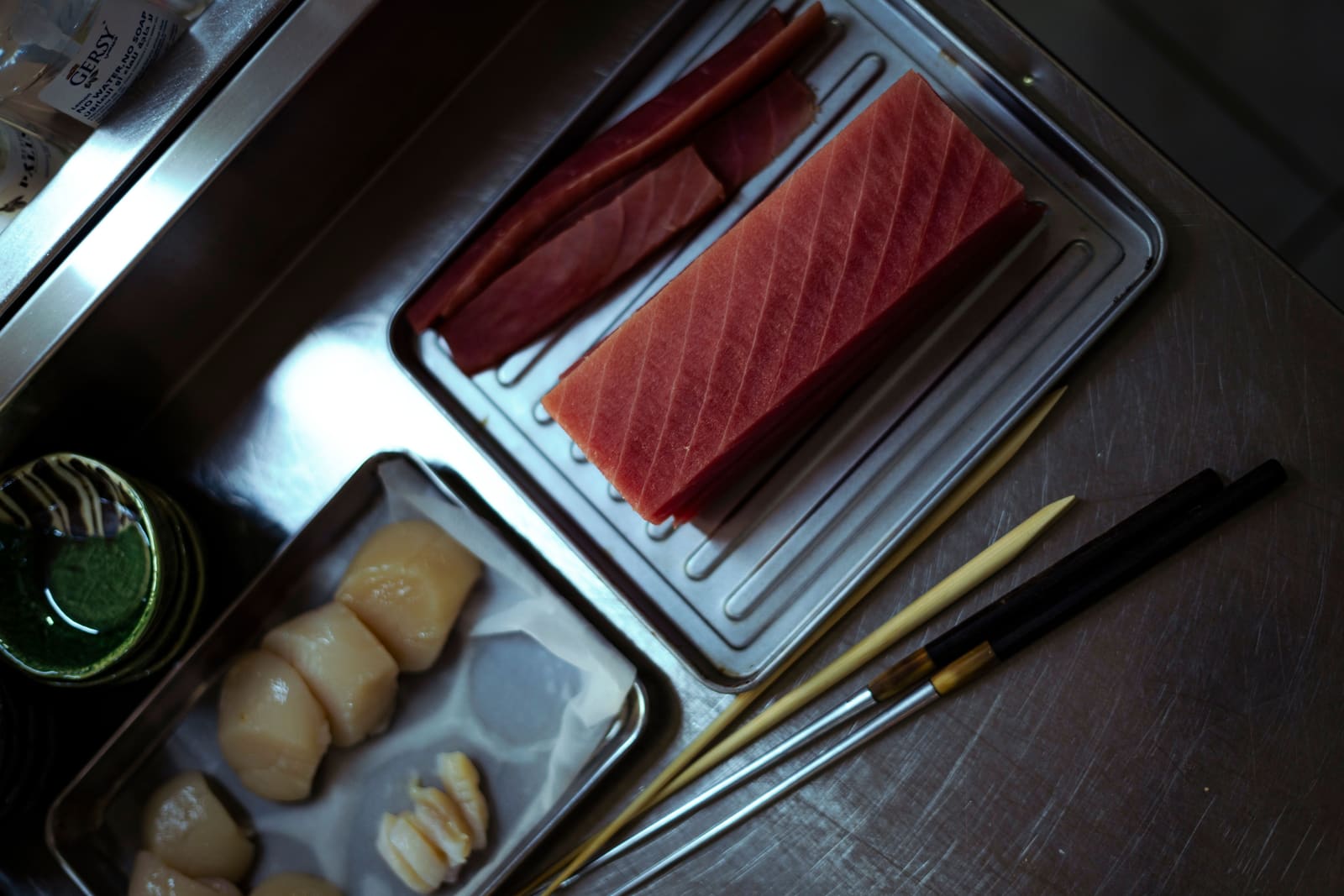
Before cooking begins, the chef presents a platter of the evening's raw materials: scallops flown in from Hokkaido, strips of marbled beef, a wasabi root still damp from its packaging. The gesture is part transparency, part promise. You are shown what you will eat, and the quality becomes its own argument.
The nine-course iteration, called Godai, unfolds with the pacing of a well-edited film. An early course of hamachi arrives with yuzu kosho pearls that burst on the tongue, releasing citrus and a low, warming heat. The chawanmushi, a savoury egg custard that in other kitchens might be steamed off-stage, is prepared directly on the teppan, the chef adjusting the heat with the attentiveness of a potter at a kiln. A wasabi root is grated at the counter, its green flesh releasing a sharp, vegetal aroma that bears little resemblance to the reconstituted paste served in most restaurants. Diners are invited to taste a small amount on its own, a gesture that underscores the kitchen's confidence in its ingredients.
The Wagyu course, served with freshly grated wasabi and a Japanese broth that deepens the beef's umami while adding a whisper of sweetness, is a study in balance. For an additional 398,000 Indonesian rupiah (approximately 25 US dollars), diners can upgrade to Japanese A5 Wagyu, with 80 grams of Miyazaki striploin replacing the standard cut. The marbling is extravagant, the fat rendering into a gloss that coats the meat as it cooks. It is the sort of ingredient that requires little intervention, and the chef obliges, seasoning lightly and letting the beef speak for itself.
Yakimeshi and the Art of the Finish
One of the evening's surprises arrives near the end: garlic fried rice with sakura ebi, tiny dried shrimp that lend a saline crunch to each spoonful. The dish, called Yakimeshi, is served with miso soup, and Chef Robbi offers a suggestion: take a mouthful of rice, then immediately sip the soup. The combination is greater than the sum of its parts, the soup's fermented depth amplifying the rice's toasted, garlicky warmth. It is the kind of pairing that feels intuitive once experienced, yet rarely appears on a tasting menu.
The decision to close a multi-course progression with fried rice is itself a statement. In many fine-dining contexts, rice is relegated to a supporting role, a vessel for more expensive ingredients. Here, it is given centre stage, prepared with the same attention as the Wagyu or the Hokkaido scallops. The choice reflects a broader philosophy at NAMI: that technique and care matter more than hierarchy, that a bowl of rice can be as memorable as a cut of A5 beef if both are executed with precision.
Sake as Narrative
The beverage programme at NAMI is overseen by Amel, a sake sommelier who approaches her work with the seriousness of a museum docent. She arrives at the table with a cart bearing sake and Champagne, and walks diners through two sake flights, each comprising three selections. The pours are generous, and the range is broad: some sakes are served warm, others chilled; some are bright and effervescent, others aged and contemplative.
One standout is Fukumitsuya Momotose, a ten-year aged junmai with a golden hue and notes of sherry, dried fruit and honey. It is a sake that defies expectation, its profile closer to a fine sherry or a well-aged whisky than to the crisp, clean sakes that dominate the category. Paired with the Yakimeshi, it becomes something else entirely, the sake's sweetness and oxidative complexity playing against the rice's savoury char.
Another highlight is the Nabeshima Yamadanishiki Junmai Ginjo, a brighter, more playful expression. It is lightly fizzy, with fruit notes that suggest pineapple and wild strawberry, and it cuts through the richness of the Wagyu with ease. The flight structure allows diners to experience sake as a progression, each bottle building on the last, the sequence designed to mirror the rhythm of the meal.
For those less inclined towards sake, The Tea Master, NAMI's beverage counterpart, offers a menu of tea-based cocktails and mocktails. The options are inventive without veering into novelty, and they provide a thoughtful alternative for diners who prefer to avoid alcohol.
The Matcha Ceremony: A Ritual to Close
At the meal's conclusion, Amel leads a matcha ceremony using the highest grade of ceremonial matcha sourced from Japan. The preparation is conducted at the table: water is heated, powder is whisked, the bowl is presented with a bow. Diners are instructed to bow in return, then rotate the bowl three times before drinking. The matcha is light, grassy and faintly bitter, with a warmth that settles in the chest. A few sips are sufficient; the ritual is as much about the gesture as the beverage itself.
The ceremony is a deliberate choice, a way to frame the meal within a broader cultural context. Teppanyaki, for all its Japanese origins, has been diluted and reinterpreted in countless resort settings, often stripped of the nuance that defines the country's culinary traditions. By closing with a matcha ceremony, NAMI signals its allegiance to a different set of values: to ritual, to precision, to the belief that dining can be an act of mindfulness rather than mere consumption.
Why This Approach Matters in Bali's Dining Landscape
Bali's luxury dining scene has, in recent years, become increasingly sophisticated. The island's top resorts have invested in serious culinary talent, and the arrival of the Michelin Guide in 2024 has only accelerated that trend. The Apurva Kempinski Bali itself holds two Michelin Keys, a recognition of its overall hospitality rather than a specific restaurant, but the distinction has raised expectations across the property.
NAMI Teppanyaki arrives in this context as both a continuation and a departure. It shares the resort's commitment to design and service, but it also challenges the prevailing model of teppanyaki as entertainment. In doing so, it aligns itself with a broader shift in high-end dining, one that privileges intimacy and craftsmanship over scale and spectacle. The decision to divide the restaurant into small rooms, each with its own grill, is emblematic of this philosophy. It sacrifices efficiency for experience, ensuring that each table receives the chef's full attention.
The focus on provenance, too, reflects a growing expectation among luxury travellers. Diners increasingly want to know where their food comes from, and they are willing to pay a premium for ingredients that can be traced to a specific region or producer. By flying in scallops from Hokkaido and offering Japanese A5 Wagyu as an upgrade, NAMI positions itself within a global network of ingredient sourcing, one that privileges quality and authenticity over convenience.
Practical Considerations and the Question of Pace
A meal at NAMI Teppanyaki is not a quick affair. The nine-course Godai menu, paired with a sake flight and a matcha ceremony, can easily stretch past two hours. This is by design: the pacing is deliberate, the intervals between courses calibrated to allow for conversation and digestion. For diners accustomed to faster service, the rhythm may feel languid. But for those willing to surrender to the meal's tempo, the experience becomes something closer to meditation than dining.
Set menus begin at 1,298,000 Indonesian rupiah per person (approximately 82 US dollars), with sake flights starting at 660,000 rupiah (roughly 42 US dollars). The A5 Wagyu upgrade adds 398,000 rupiah for 80 grams of Miyazaki striploin. For groups seeking privacy, it is possible to book an entire teppan room with a minimum spend of 10,000,000 rupiah (approximately 630 US dollars), a viable option for small celebrations or milestone dinners.
The restaurant operates daily from 5.30pm to 10.30pm, and reservations are strongly advised. Walk-ins are accommodated when space permits, but the intimate scale of the dining rooms means that availability is often limited.
A Teppanyaki Counter That Asks You to Slow Down
NAMI Teppanyaki is not interested in the usual bargain struck at a teppanyaki counter: entertainment in exchange for your attention. Instead, it offers something quieter and, in its own way, more demanding. It asks you to watch closely, to notice the way the chef adjusts the flame beneath the chawanmushi, to appreciate the difference between wasabi grated fresh and wasabi reconstituted from powder. It asks you to slow down, to let the meal unfold at its own pace, to accept that two hours at a grill can be as restorative as a day at the beach.
In a dining landscape crowded with spectacle, that restraint is its own form of luxury.