Where Flame Meets Tradition: The Asian Dining Revival Reshaping Bali
From yakitori embers in Uluwatu to Pan-Asian tapas in Canggu, the island's culinary landscape is being rewritten by chefs who understand that authenticity and invention need not be adversaries.
The Scent of Charcoal and Intention
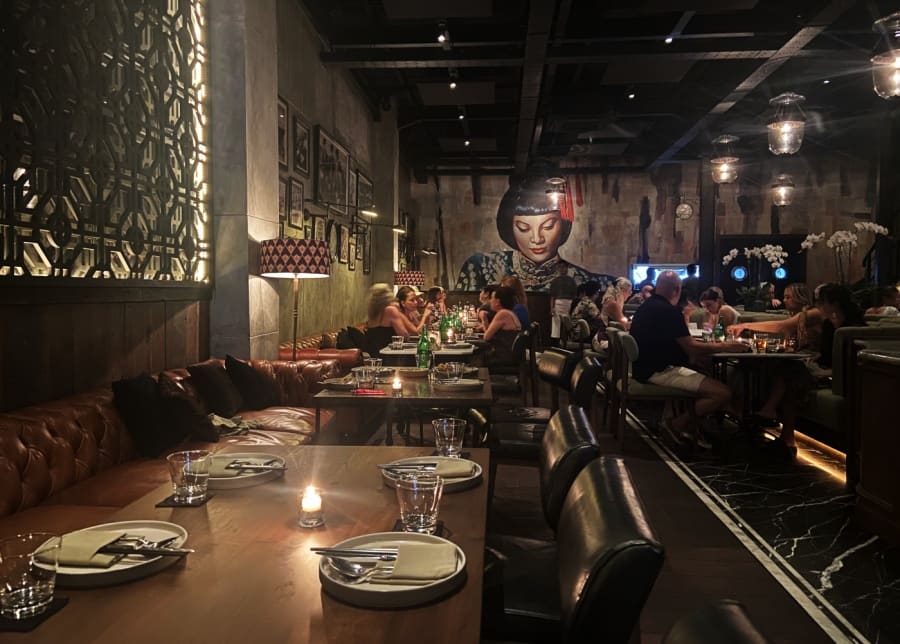
There is a particular moment, just before dusk settles over the Bukit Peninsula, when the air shifts. Smoke rises from open kitchens, carrying with it the scent of caramelized miso, charred chicken skin, and wood that has been burning low and steady since afternoon. It is the hour when Bali's dining rooms begin to fill, when the day's beach salt is rinsed away and replaced by linen and laughter, and when the island's most compelling culinary story unfolds: the renaissance of Asian cooking, told through flame, fermentation, and a deepening respect for the archipelago's own pantry.
At Global Chic Voyage, we have watched this evolution with quiet fascination. What began as a scattering of expatriate-driven ventures serving homesick nostalgia has matured into something far more layered. Today, Bali's Asian dining landscape is shaped by chefs who move fluidly between tradition and innovation, who understand that a perfect yakitori skewer and a deconstructed opor can coexist on the same menu without contradiction. These are not fusion restaurants in the old, confused sense of the word. They are spaces where culinary languages overlap, where technique is borrowed and reinterpreted, and where the diner is invited into a conversation rather than handed a manifesto.
Fire as Philosophy
The most compelling shift in recent years has been the return to elemental cooking methods. Wood-fired grills and charcoal braziers are no longer mere aesthetic choices; they are central to how flavor is built. In Uluwatu, restaurants have embraced yakitori traditions while sourcing proteins from across the Indonesian archipelago. The result is a style of cooking that is at once deeply respectful of Japanese technique and unmistakably rooted in place.
What makes this approach significant is not simply the equipment or the smoke. It is the discipline required. Cooking over live fire demands constant attention, an understanding of heat gradients, and the ability to read doneness through sight and intuition rather than timers. The best kitchens on the island have learned this language, and it shows in dishes where char is never bitter, where fat renders cleanly, and where every skewer or steak emerges with a crust that shatters and a center that yields.
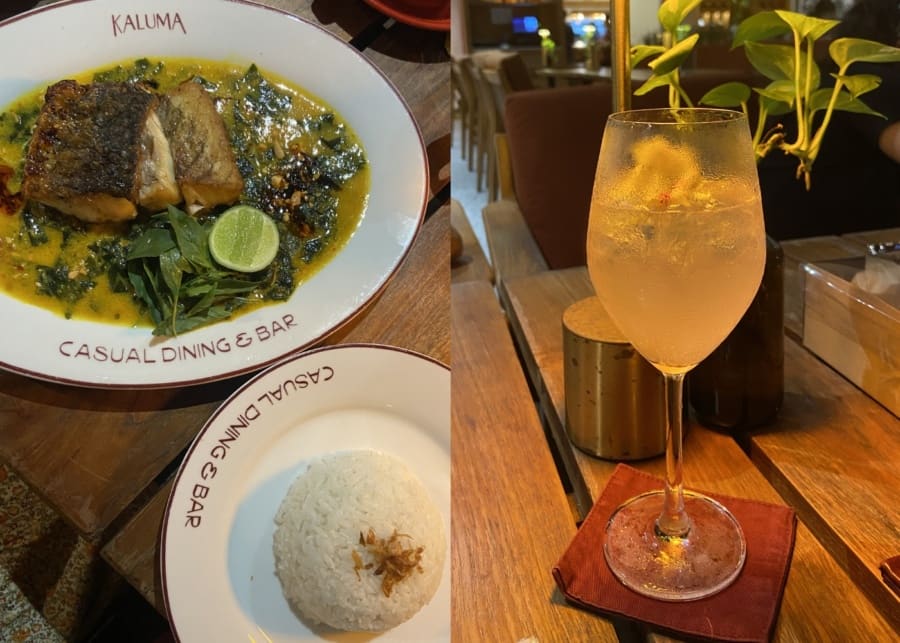
We have noticed, too, how these kitchens are using fire to reimagine local ingredients. Grouper, often relegated to steaming or frying, takes on new complexity when blackened over coals and paired with the bright acidity of green papaya. Pork chops glazed in Sichuan spice blends become a study in contrasts: sweet, smoky, numbing, all at once. Even vegetables, flatbreads, and dumplings benefit from the kiss of flame, their textures deepened, their sugars coaxed into caramelization.
The Tapas Sensibility
Elsewhere on the island, particularly in Canggu and Seminyak, a different kind of transformation is taking place. Here, the influence is less about fire and more about structure: the small-plate, share-everything ethos borrowed from Spanish tapas culture but refracted through an Asian lens. This is dining as conversation, where the table becomes a rotating gallery of flavors and no single dish dominates.
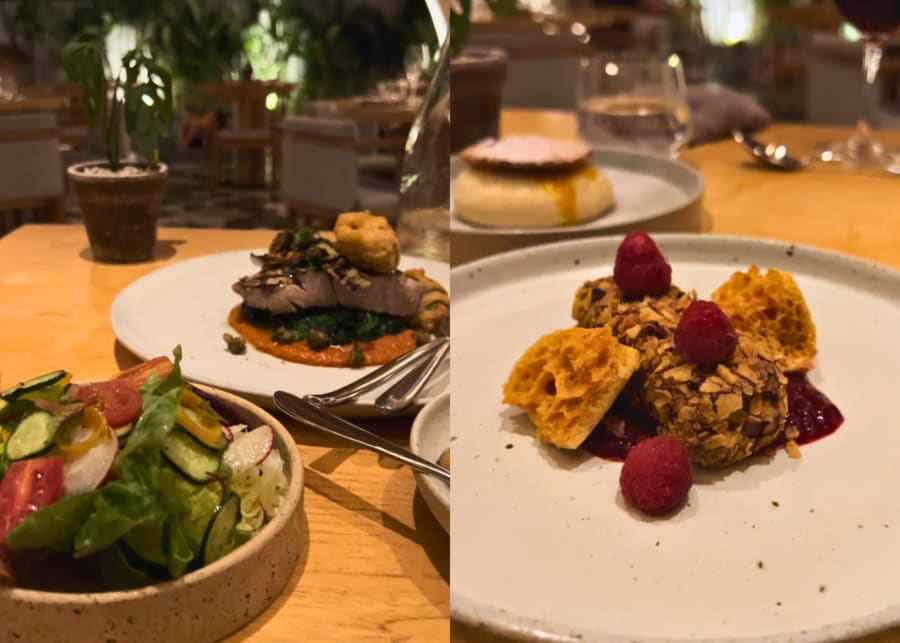
The format suits Bali's social dining culture perfectly. Groups gather, order widely, and spend hours working their way through platters of handmade dumplings, smoked eggplant katsu, flame-torched salmon, and skewers glazed in sticky, umami-rich sauces. The pacing is leisurely; the atmosphere, convivial. Cocktails are not an afterthought but an integral part of the experience, often crafted with the same attention to balance and provenance as the food itself.
What distinguishes the best of these restaurants is their refusal to flatten complexity in service of accessibility. A shiitake potsticker might arrive with truffle mirin, a pairing that sounds audacious on paper but works because the kitchen understands restraint. A burrata, spiced and served with house-made roti, becomes a bridge between continents without losing its identity. These are not gimmicks. They are thoughtful recombinations, the work of cooks who have spent years mastering fundamentals before allowing themselves to improvise.
Tradition Without Nostalgia
There is a quieter subset of Bali's Asian dining scene that deserves attention: the restaurants that prize authenticity not as museum curation but as living practice. These are the kitchens where recipes are passed down, where fermentation timelines are measured in weeks, and where the goal is not to surprise but to satisfy in the deepest, most elemental way.
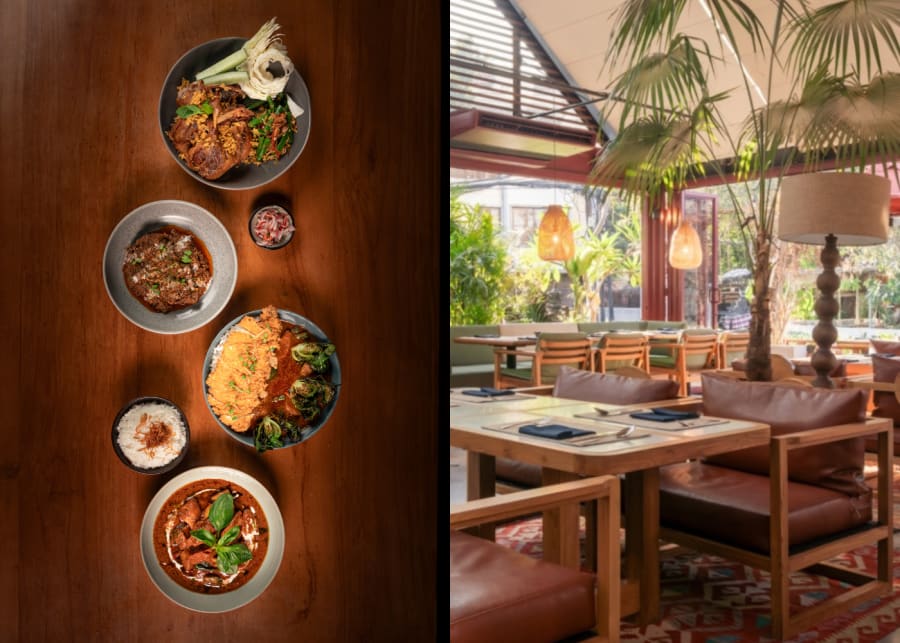
In these spaces, you will find curries that simmer for hours, their spice pastes ground by hand. You will find dumplings folded to order, their wrappers thin enough to see through. You will find noodle dishes dressed in sauces that balance salt, acid, heat, and funk with the kind of precision that only comes from repetition. The interiors may be modest, the plating unfussy, but the cooking is rigorous.
What we appreciate most about these establishments is their confidence. They do not chase trends or attempt to translate their offerings into a globalized culinary Esperanto. They trust that good cooking, done honestly, will find its audience. And it does. These are the restaurants where expats return weekly, where Indonesian families celebrate milestones, and where travelers stumble upon something that feels less like discovery and more like homecoming.
The Role of Place
Bali's geography has always shaped its food culture, but the current generation of chefs is engaging with the island's terroir more deliberately than ever before. Local seafood, much of it caught within hours of service, appears on menus with increasing frequency. Vegetables from highland farms in Bedugul and Munduk are treated with the same reverence as imported Japanese scallops. Indigenous spices, long overshadowed by imported equivalents, are being rediscovered and reintroduced.
This is not locavorism as marketing strategy. It is a practical acknowledgment that proximity matters, that the sweetness of a just-caught snapper or the mineral snap of highland greens cannot be replicated through supply chains. It is also a form of cultural respect, a recognition that Indonesian ingredients deserve the same spotlight afforded to Wagyu, Hokkaido scallops, and Italian truffles.
The interplay between local and imported is where much of the excitement lies. A Papuan crab, abundant in eastern Indonesia but rarely seen on Bali menus, is transformed into a dish that nods to opor, the Javanese coconut stew, but arrives on toast, a format borrowed from European bistros. Tiger prawns are bathed in a sauce made from their own heads, a technique common in Chinese and Southeast Asian kitchens but elevated here through precision and presentation. These are dishes that could only exist in Bali, in this moment, shaped by chefs who have trained abroad but chosen to cook here.
The Cocktail Companion
It would be incomplete to discuss Bali's Asian dining renaissance without acknowledging the bar programs that have risen alongside it. The island's best restaurants now employ mixologists who approach their craft with the same seriousness as the kitchen. Menus are built around Asian botanicals, house-made syrups, and spirits that complement rather than compete with the food.
We have tasted mezcal drinks tempered with smoke and citrus, martinis spiked with green mango, and margaritas that carry the gentle heat of Sichuan pepper. There are negronis reimagined with pho spices, and sake served at temperatures that reveal its full spectrum of flavor. These are not novelties. They are considered pairings, designed to heighten the dining experience, to cleanse the palate between courses, to extend the evening.
The bar has become a destination in its own right. At several establishments, the upstairs lounge or adjacent cocktail space draws its own crowd, independent of the dining room. Live jazz, late-night small plates, and a rotating cast of signature drinks create an atmosphere that feels less like an afterthought and more like a second act.
What This Means for Travelers
For those of us who travel not just to see but to taste, Bali's Asian dining scene represents a compelling reason to return. The island has moved beyond the binary of tourist-friendly and local-only. The best restaurants now occupy a third space: places where quality is non-negotiable, where menus are ambitious but legible, and where the experience is designed for anyone willing to engage with it on its own terms.
This is dining that rewards curiosity. It invites you to order unfamiliar dishes, to trust the kitchen's judgment, to linger over a second cocktail and a third shared plate. It asks you to pay attention, to notice how a dish is balanced, how textures are layered, how a single ingredient can be transformed by fire or fermentation or the simple act of careful seasoning.
What we are witnessing in Bali is not a trend but a maturation. The island's chefs have absorbed influences from across Asia and beyond, have honed their skills in kitchens from Tokyo to London to Singapore, and have returned to build something new. They are cooking with confidence, with intention, and with a deep respect for both the traditions they draw from and the diners they serve. The result is a dining landscape that feels alive, evolving, and entirely worth the journey.