Where the Fire Meets the Table in Seminyak
From wood-fired Javanese heirlooms to izakaya crossovers and beachfront rituals, Bali's dining capital has learned to balance hype with substance.
The Geography of Appetite
Seminyak has always been a study in contrasts. Jalan Kayu Aya pulses with foot traffic and motorbike exhaust, its pavements crowded with couples debating which izakaya or bistro deserves their evening. A few blocks away, Jalan Petitenget unfurls with quieter confidence, its high gates concealing dining rooms that feel more like stage sets than restaurants. And then there is the beach itself, where the Indian Ocean provides a backdrop so reliable that some establishments have barely changed their menu in a decade, relying instead on the alchemy of salt air and sunset to do the work.
The area has matured without losing its appetite for novelty. Over the past few years, a new generation of chefs has arrived, many trained abroad but drawn back by the pull of regional spices and family recipes. They are opening smaller, more idiosyncratic spaces, places that reject the beach-club formula in favour of something quieter and more deliberate. The result is a dining landscape where tradition and experimentation sit side by side, sometimes on the same menu.
Fire as Philosophy
At Sangsaka, tucked down Jalan Pangkung Sari, the wood-fired oven is not an accessory but the engine of the kitchen. Chef Kieran Morland, who co-founded Merah Putih before striking out on his own, has built his reputation on resurrecting Javanese home cooking, dishes that might otherwise disappear into the margins of culinary memory. The space is intimate, almost ascetic, with exposed brick and minimal adornment. What arrives at the table, however, is anything but spare: ikan pesmol glazed with turmeric and tamarind, sate kelapa threaded with coconut and smoke, tasting menus that unfold like a slow conversation about place and ancestry.
Morland's approach has earned the kind of quiet reverence that accolades cannot manufacture. Several chefs working elsewhere in Bali name Sangsaka as the island's most compelling restaurant, a designation that speaks less to spectacle than to integrity. The menu changes with the seasons and the market, and the tasting format allows the kitchen to showcase ingredients that rarely make it onto a la carte lists: rare regional spices, heirloom vegetables, cuts of fish that require a certain fluency to prepare.
A similar reverence for flame defines Bara Bistro, a newer arrival on Jalan Kayu Aya. Head chef Cliff Benardo Wijaya, trained at Le Cordon Bleu, has returned to Indonesia with a clear mission: to elevate the comfort food of his childhood without stripping it of its soul. The grilled chicken Maryland arrives with soto spices and coconut crema, a dish that manages to feel both familiar and unexpected. The pork cutlet, glazed in West Javanese maranggi spices, is tender and faintly sweet, the kind of thing that lingers in memory long after the meal ends.
Wijaya has also introduced Makan Tengah, a chef's selection of sharing plates that nods to Indonesia's communal dining traditions. It is a format that works particularly well in Seminyak, where group dinners are as much about the choreography of passing plates as they are about the food itself.
The Crossover Experiment
Buzo, another recent addition to Jalan Kayu Aya, operates on a different premise altogether. Billed as an izakaya e birra, it fuses Japanese and Italian cuisines with Indonesian ingredients and Bali-crafted beer. The concept sounds precarious on paper, the kind of fusion that can collapse under its own ambition. But chef Will Meyrick, who also runs Mama San, has a knack for making unlikely pairings feel inevitable.
The menu is designed for grazing: salmon rice cakes, seared scallops, miso mozzarella arancini. The larger mains, such as the heritage black pig katsu and tempura fritto misto, arrive with enough substance to anchor the evening. The cocktail programme is equally playful, with a Buzo Negroni and tea daiquiri that feel calibrated for the kind of night that stretches past midnight.
What makes Buzo work is its refusal to take itself too seriously. The space is lively, the service brisk, and the portions generous enough to encourage sharing. It is the kind of restaurant that thrives on energy rather than reverence, a useful counterpoint to the more austere temples of Indonesian fine dining.
The Garden and the Paddies
On the outskirts of Seminyak, where the streets give way to rice paddies, Uma Garden offers a different kind of theatre. The restaurant is built around an open kitchen and a series of communal tables, all set within a lush, open-air garden. The focus here is on fire-based cooking: slow-cooked pork belly, Wagyu beef, jumbo prawns ember-grilled to the point of caramelisation.
The setting is romantic in the most unforced way, particularly at dusk when the sky softens and the kitchen fires begin to glow. There is an aperitivo lounge for pre-dinner drinks, but most guests migrate quickly to the communal tables, drawn by the smell of wood smoke and the promise of flame-kissed flavours. The menu is straightforward, built on honest ingredients and techniques that require patience rather than pyrotechnics.
Uma Garden also benefits from its location. Removed from the main strip, it attracts diners willing to make the trip, which lends the evening a sense of occasion. It is the kind of place that rewards arrival before sunset, when the light is still good and the garden has not yet disappeared into shadow.
The Cathedral of Indonesian Cuisine
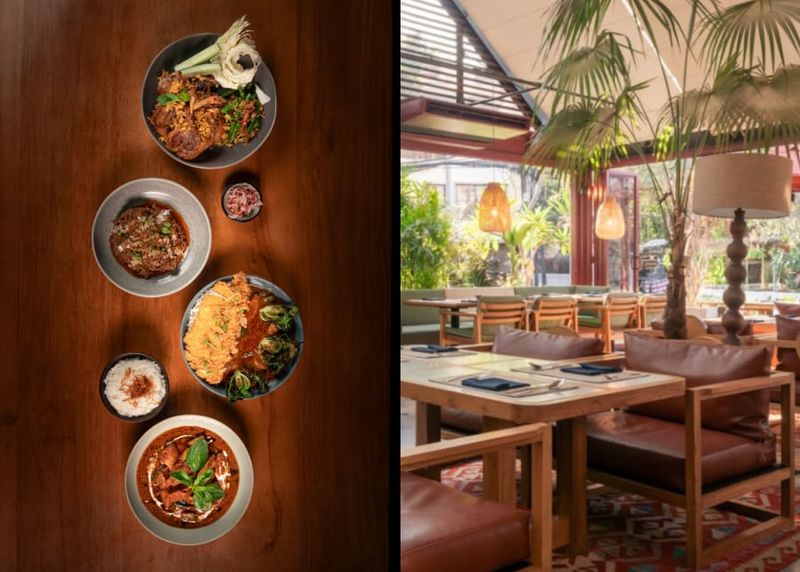
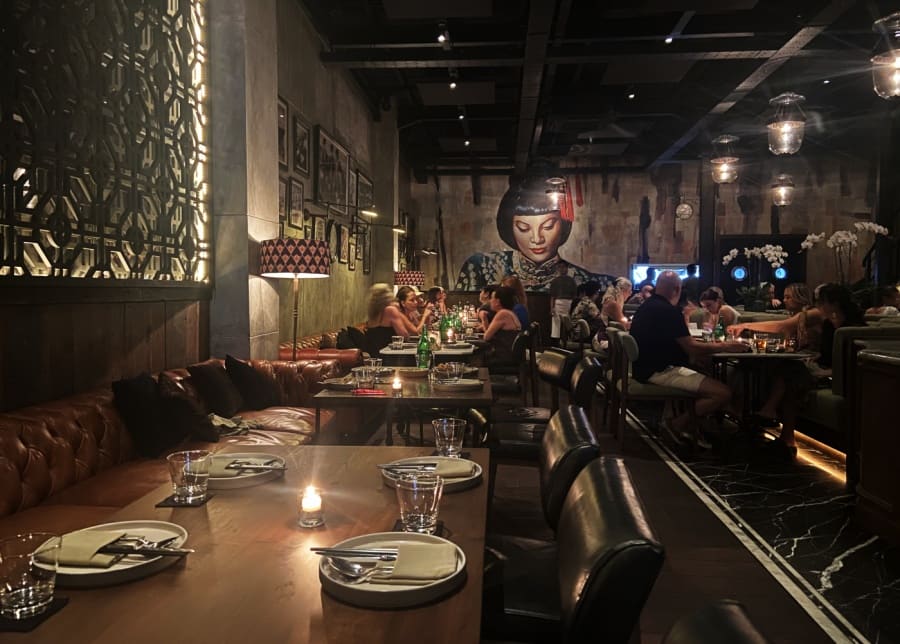
Merah Putih remains the most architecturally audacious restaurant in Seminyak, perhaps in all of Bali. The dining room is a soaring, cathedral-like space, with towering ceilings, rain-catching pillars, and rows of indoor palms that give the impression of dining inside a greenhouse designed by a modernist with a sense of humour. The menu is high-end Indonesian, built on time-honoured recipes executed to gourmet standards.
The bak pao steamed buns arrive stuffed with Sumatran beef, the bebek goreng is slow-cooked until the skin shatters, and the ikan bakar is chargrilled with enough restraint to let the fish speak for itself. The cocktail list leans on local ingredients, with drinks that feel more like liquid accompaniments than afterthoughts.
Merah Putih is the kind of restaurant that announces itself, both in its architecture and its ambition. It is also one of the few places in Seminyak that manages to feel grand without tipping into ostentation. The tasting menu, designed for couples or groups, offers a multi-course journey through the archipelago's culinary traditions, a format that works particularly well in a space this theatrical.
The Pan-Asian Institution
Mama San has been a fixture of the Seminyak dining scene long enough to have earned cult status. Chef Will Meyrick's approach to Pan-Asian cuisine is rooted in street food traditions, but the execution is anything but casual. The lunch menu pays homage to dim sum, stir fries, and small plates, while the evening service shifts towards more refined preparations: wood-smoked salmon, Thai-style clay pot, Vietnamese pho bo, Burmese lamb curry.
The interiors are upscale without being stuffy, and the space is flexible enough to accommodate both lively group dinners downstairs and more intimate meals upstairs. The menu changes regularly, which gives returning diners a reason to keep coming back. Mama San also took gold at the Bali's Best Awards in 2026, a recognition that speaks to its staying power in an increasingly crowded field.
What sets Mama San apart is its ability to balance familiarity with surprise. The scallop and coconut pancakes, the Malaysian lamb shoulder, the prawn drunken noodles all feel like dishes you have tasted before, but the execution is precise enough to make them feel new again.
The Beachfront Rituals
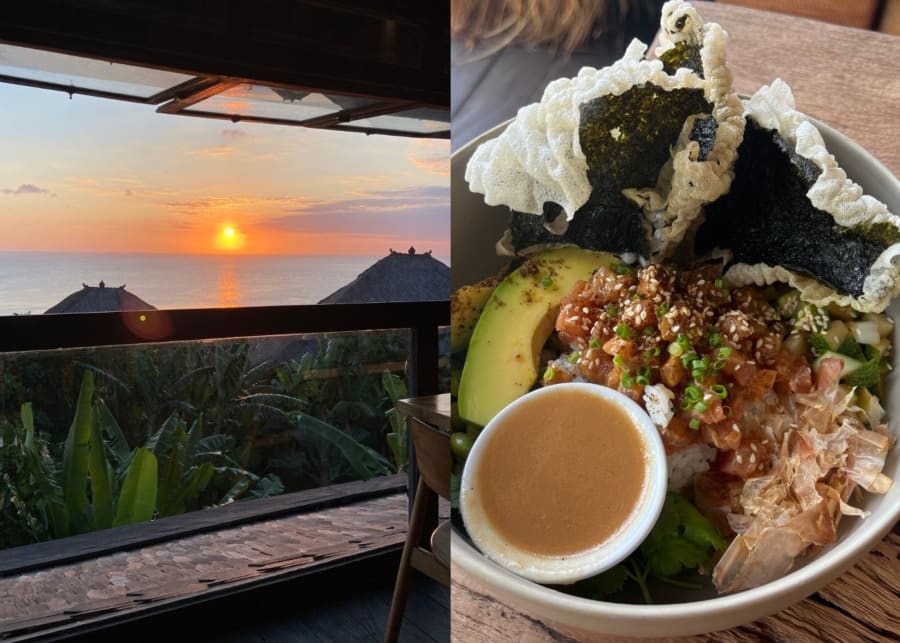
La Lucciola, perched on Petitenget Beach, has barely changed in over a decade. The menu is Italian, the views are unobstructed, and the ritual of arriving at sunset remains as reliable as the tide. It is the kind of place that thrives on repetition, where regulars return not for novelty but for the comfort of knowing exactly what to expect.
Other beachfront establishments have followed a similar logic. Ijen at Potato Head and Saltlick at KU DE TA offer variations on the same theme: ocean views, cocktails at golden hour, menus designed to complement rather than compete with the setting. These are not restaurants that demand close attention to technique or provenance. They are, instead, stages for a particular kind of evening, one where the location does most of the work.
The Long Table and the Social Contract
The Long Table, located on Jalan Petitenget, operates on the principle that dining is a communal act. The format is straightforward: long tables, shared plates, a menu designed for passing and conversation. It is a model that works particularly well for groups, where the logistics of ordering and sharing become part of the experience.
Other restaurants have leaned into the social dining format with varying degrees of success. Motel Mexicola embraces maximalism, with Day of the Dead murals and a soundtrack loud enough to drown out most conversation. Boy'N'Cow, on Jalan Raya Kerobokan, takes a more restrained approach, with a menu built around beef and a space that feels more neighbourhood bistro than destination restaurant.
What the Hype Obscures
Seminyak's dining scene is often reduced to lists and rankings, a shorthand that flattens the nuances of place and occasion. The best restaurant for a sunset dinner is not the best restaurant for a date night, and neither is the best restaurant for a group celebration. Context matters, as does timing, budget, and appetite.
What the area has managed to preserve, despite the influx of new openings and the churn of trends, is a certain flexibility. You can eat Indonesian family recipes at a warung table, or you can eat them in a cathedral-ceilinged dining room with a sommelier. You can spend an evening grazing on izakaya small plates, or you can commit to a multi-course tasting menu that unfolds over three hours. The choice is not between authenticity and spectacle, but between different modes of attention, different ways of engaging with the act of eating.
The fire-based kitchens, the wood-fired ovens, the ember-grilled prawns arriving under starlight, these are not gimmicks but gestures towards something older and more fundamental. They remind you that cooking, at its best, is a form of alchemy, a way of transforming raw ingredients into something that lingers in memory long after the meal ends.