The Wood-Fired Romance of Mediterranean Dining in Bali
From smoky Josper grills to candlelit courtyards, a new generation of coastal-accented kitchens is rewriting the island's culinary map.
The Scent of Charred Olive Wood
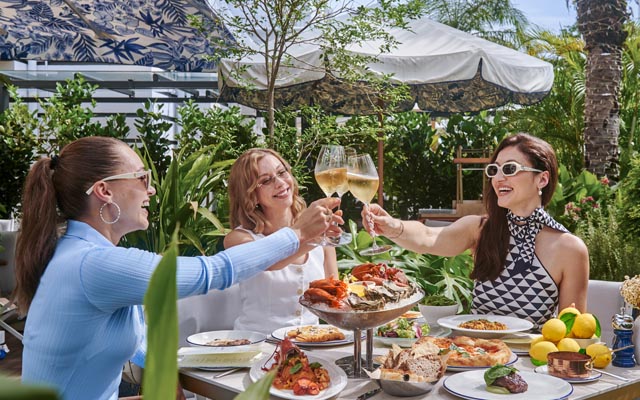
There is a particular moment, just after sunset in Pecatu, when the air fills with the scent of charred olive wood and the first flicker of candles appears on long communal tables. It happens in courtyards where fig trees grow improbably from volcanic soil, in dining rooms where Josper grills glow like small furnaces, in garden restaurants where the architecture borrows as much from Athens as it does from Ubud. Bali's Mediterranean dining scene has quietly matured into something far more layered than the sum of its influences - a constellation of kitchens where Beirut family recipes meet Latin street-food instincts, where Spanish paella shares menu space with Lebanese mezze, and where the island's own abundance of seafood, spice, and sun-ripened produce finds expression through a distinctly coastal lens.
The through-line in nearly all of these establishments is fire. Not the delicate blue flame of French cuisine, but the primal, smoky heat of wood and charcoal - the kind that caramelises lamb shoulder over 48 hours, that blisters pita until it puffs with air, that turns local snapper into something revelatory with nothing more than lime zest and good olive oil.
Beirut in Pererenan
Zali, with locations in both Canggu and Uluwatu, anchors its entire philosophy in the kitchen of a Lebanese grandmother. The recipes, passed down through generations and given what the kitchen calls a "modern twist", are designed for the kind of meal where boundaries between courses dissolve and the table becomes a shared landscape of small plates. Creamy labneh, crispy halloumi, roasted cauliflower wrapped in saj bread - the menu reads like a love letter to Beirut's colour and warmth, translated for an island that understands both.
The Canggu venue unfolds roadside in Pererenan, bright and open to the street, a place for watching the parade of motorbikes and bronzed surfers. The Uluwatu iteration leans quieter, more intimate, the kind of space that rewards a slow evening with friends and no particular agenda. Both locations start serving at eight in the morning and stay open until midnight, a hospality rhythm that feels less like restaurant hours and more like the door to a well-loved home.
The Greek Grill and the Baklava Cheesecake
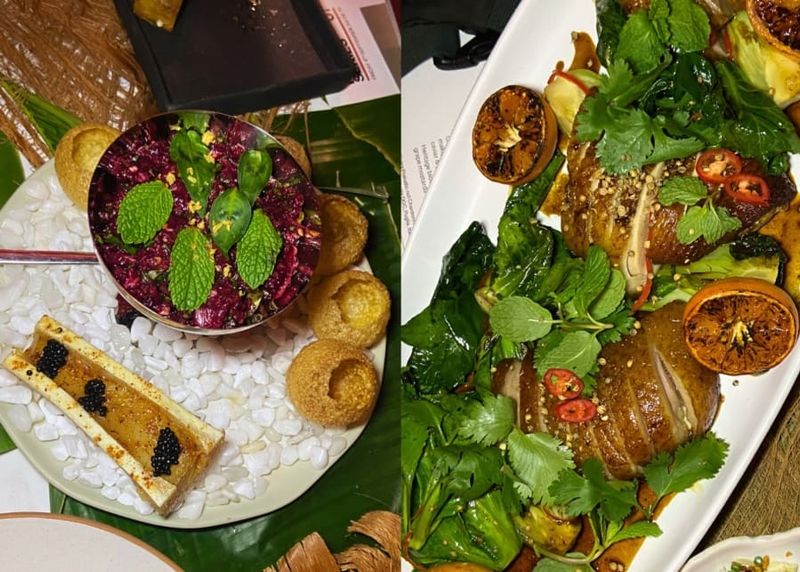
In Uluwatu, KALA has become something of a neighbourhood institution - the sort of restaurant where locals return weekly, where big bowls of lemons sit on every table, and where the cocktail programme rivals anything you might find in a dedicated bar. The kitchen is overseen by a Michelin-trained chef, and the menu skews modern Greek with an emphasis on sharing. Oven-fresh flatbread arrives first, a vehicle for hummus, harissa, and muhammara. Then come the smaller bites: spanakopita with its shatteringly crisp phyllo, grilled octopus, local sardines, honey-glazed halloumi that borders on indecent.
For those inclined towards pasta, the paccheri pumpkin offers a sweeter, more autumnal register, best balanced with charred broccoli and a simple green salad. But the dish that lingers longest in memory is the baklava cheesecake - a hybrid dessert that manages to honour both traditions without collapsing into gimmick.
AVLI, a few kilometres down the same coastal road, takes its name from the Greek word for courtyard. The restaurant is built around that concept: olive trees, low lighting, a wood-fired Josper grill that does most of the heavy lifting. Chef Angelos Lantos, who spent seventeen years at Spondi in Athens (a two-Michelin-star establishment), constructs a menu that privileges simplicity and technique in equal measure. Sea bream carpaccio arrives dressed only in lime zest, chive oil, and olive oil - a preparation that assumes the fish itself is worth listening to. The open-fire aubergine, served with cheese croquettes in slow-cooked tomato sauce, is smoky and rich, designed for mopping up with more of that wood-fired pita.
Thursday nights at AVLI transform into "Opa Night", a weekly ritual involving plate-smashing, table-dancing, and the kind of uninhibited joy that feels increasingly rare in polished dining spaces. It is theatre, certainly, but theatre rooted in genuine tradition rather than manufactured spectacle.
Latin Inflection, Coastal Accent
At Ina Ré, tucked inside Canggu's Desa Kitsuné lifestyle village, Mediterranean flavours receive a Latin inflection. Chef Cristian Encina, known for his work at Salvaje, brings a street-food sensibility to a menu that includes beef tartare, Milanese-style crispy aubergine, and a seafood paella that justifies the restaurant's wine cave. The presentation is meticulous, the plating precise, yet there remains an underlying exuberance that prevents the food from feeling overly composed.
Pasir, meanwhile, has managed the unlikely feat of importing beach culture into the heart of Ubud's Monkey Forest Road. Sandy tones, potted palms, and sunlight-drenched interiors create a coastal atmosphere in a town better known for rice terraces and yoga studios. The menu leans into Bali's own maritime resources: seafood from local shores, sea salt from Kusamba, vegetables from nearby plantations. Octopus carpaccio and snapper crudo arrive citrus-bright and nearly translucent. The beef cheek, slow-cooked for 48 hours, offers a deeper, more patient kind of satisfaction. Each dish comes with a suggested cocktail pairing, a detail that speaks to the restaurant's commitment to a certain kind of midday decadence.
The Primacy of Flame
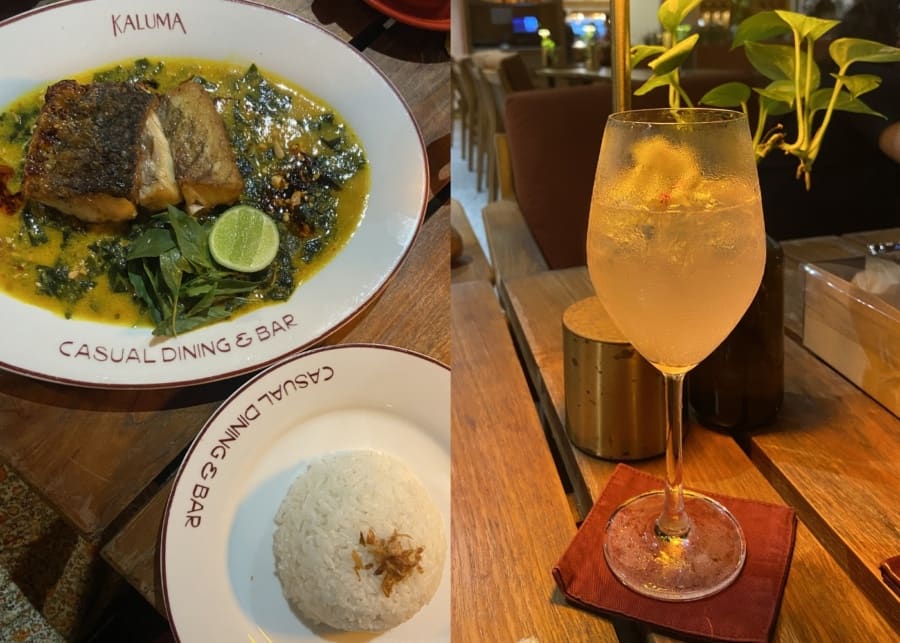
Luma, in Canggu, is the collaboration of two award-winning chefs whose shared obsession is fire. Nearly everything that leaves the kitchen has passed through either the open wood-fire oven or the charcoal grill. The menu shifts weekly, dictated by what local producers are harvesting at peak ripeness, which means the experience of dining here in September will differ meaningfully from a visit in December. Herb-crusted barramundi, lobster tagliatelle, duck confit - the offerings read classic, but the execution is calibrated to the island's particular abundance.
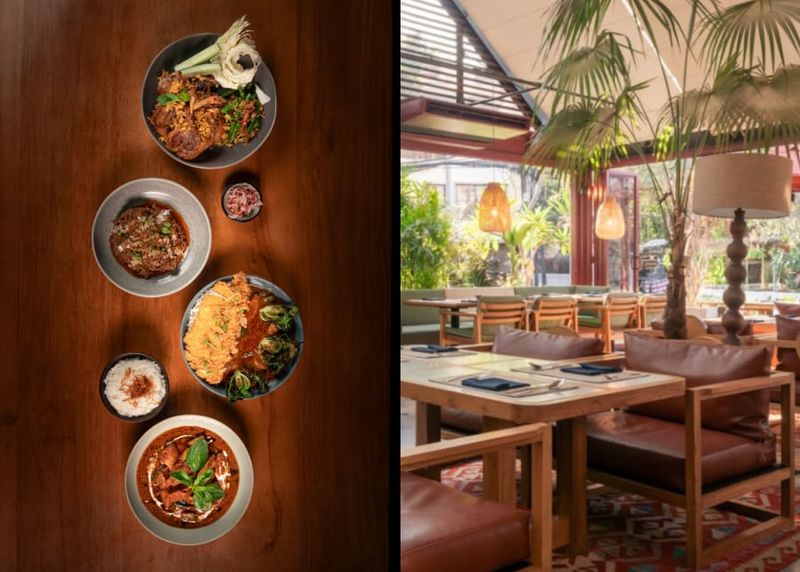
The interiors reward attention: giant arched walkways, low-lit terraces, booth seating that manages to feel both cosy and grand. The cocktail menu reworks familiar templates with local ingredients, and the wine list reflects the kind of careful curation that suggests someone on staff genuinely cares about what you drink.
Masonry, with outposts in both Canggu and Uluwatu, has built its reputation almost entirely on wood-fire technique. The Canggu location embraces an industrial minimalism - concrete, stone, steel, wood, a hand-chiselled bar, a string-lit courtyard. The Uluwatu venue softens that aesthetic with greenery and an open kitchen that keeps the energy high throughout service. House-made halloumi arrives salty and squeaky, paired with fig preserve and a textural crunch. Wood-roasted lamb shoulder is smoky and warmly spiced, balanced by cool yoghurt and herby salsa verde. The signature 48-hour short rib, slow-cooked until it verges on collapse, is finished with chimichurri to cut through the richness.
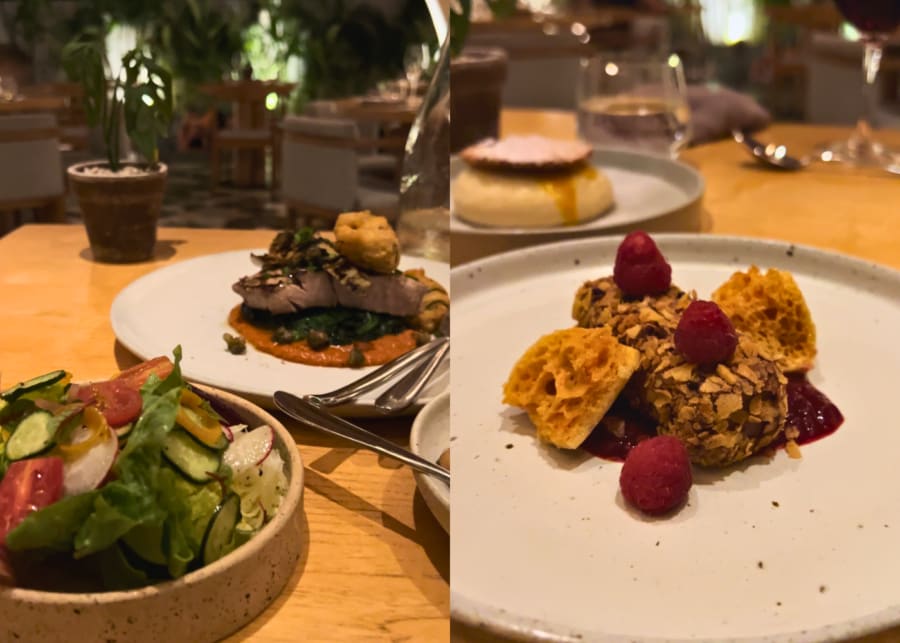
Shelter, set in a romantic garden in Pererenan, fuses Mediterranean and Middle Eastern traditions with a similar devotion to flame. Flatbread emerges from the oven pillowy and hot, ideal for scooping whipped chickpeas and smoky babaghanoush. Moon scallops, wood-roasted and plated with care, are followed by BBQ octopus and grilled lamb kofte that manage to be both perfectly spiced and impossibly tender. The wood-roasted chocolate dessert - a towering construction involving salted caramel gelato and sumac honeycomb crumble - has become something of a signature, the kind of dish that inspires return visits on its own merit.
The Island's Own Abundance
What distinguishes Bali's Mediterranean dining landscape from mere imitation is the way these kitchens engage with the island's own agricultural and maritime wealth. The seafood is not flown in from European markets but pulled from Indonesian waters. The spices come from local plantations. The vegetables are harvested within a few kilometres of the restaurant. This is not fusion in the tired sense of the word, nor is it authenticity fetishised to the point of rigidity. It is, instead, a kind of culinary fluency - the ability to speak multiple gastronomic languages while remaining rooted in a specific place.
The result is a dining culture that feels both familiar and distinctly of Bali. You might begin your evening with Lebanese mezze in Pererenan, move on to Greek-style grilled octopus in Pecatu, and end with Spanish-inflected seafood paella in Canggu, all without ever feeling as though you have left the island's particular gravitational pull. The olive oil is top-quality, the wine lists are considered, the cocktails are serious. But the air still smells faintly of frangipani, the staff still greet you with "selamat datang", and the rhythm of service still bends to the island's unhurried sense of time.
A Courtyard, a Candle, a Shared Table
What these restaurants share, beyond technique and sourcing, is an architecture of hospitality that privileges gathering over solitary dining. Long communal tables, courtyard seating, family-style portions designed for passing and sharing - the spatial grammar reinforces a particular social philosophy. This is food meant to be eaten in company, over the course of hours rather than minutes, with conversation that meanders as freely as the meal itself.
It is a model that suits Bali, where the boundaries between indoor and outdoor blur, where evenings stretch long and lazy, where the best meals are often the ones that begin with no particular plan and end only when the candles burn low. The Mediterranean, after all, is as much a state of mind as a geographic location - a commitment to pleasure, to abundance, to the idea that the table is where life's most important negotiations take place.
In Bali, that philosophy has found fertile ground. The island's own traditions of communal eating, of ritual and ceremony centred around food, align naturally with the Mediterranean ethos. The result is a dining scene that feels neither imported nor derivative, but rather like a conversation between two cultures that have more in common than their geography might suggest.
As the candles flicker low in Pecatu courtyards and Canggu gardens, as the last plates of halloumi and lamb shoulder make their way to tables, it becomes clear that Bali's Mediterranean moment is less about replicating a distant elsewhere and more about discovering what happens when fire, abundance, and a certain generosity of spirit converge in a single place.