Where the Salt Air Meets the Plate: Sanur's Dining Renaissance
Two decades of evolution have transformed this quiet Balinese coastal enclave into one of the island's most compelling culinary destinations.
The Promenade Awakens
There is a particular quality to twilight in Sanur that feels different from elsewhere on Bali. The light softens earlier here, filtering through frangipani and coconut palms as the tide recedes along the eastern shore. For years this quieter corner of the island resisted the breakneck development that defined Seminyak and Canggu, content to remain a place where retirees walked their dogs at dawn and families picnicked on black-sand beaches. But something shifted in the last half-decade. Between the small lanes and the famous beach promenade, a dining scene emerged that rivals anything in the island's more celebrated enclaves.
At Global Chic Voyage, we have watched Sanur's transformation with particular interest, because it represents a quieter model of culinary evolution. This is not the flashy, Instagram-driven expansion of beach clubs and celebrity-chef concepts. Instead, Sanur's restaurants have grown organically, rooted in neighbourhood rhythms and a clientele that values consistency over novelty. The result is a collection of establishments that feel lived-in, thoughtful, and surprisingly diverse.
Spice Routes and Borrowed Traditions
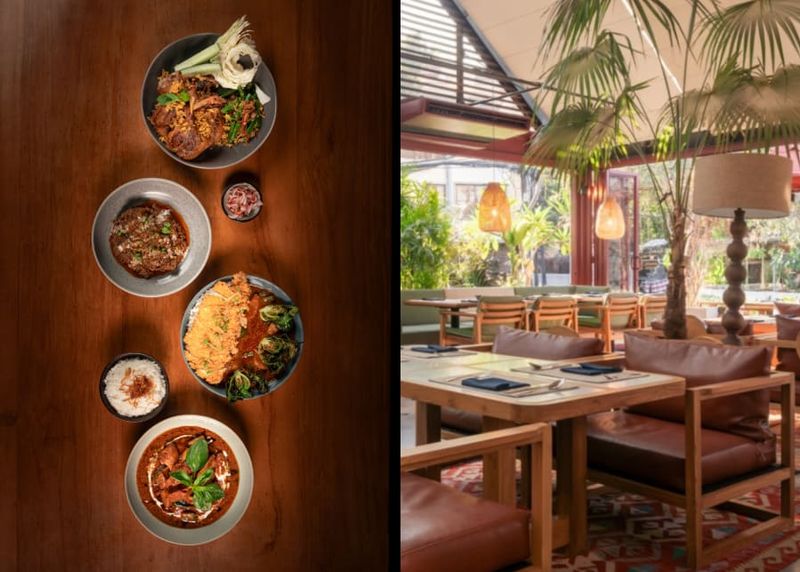
One evening, cycling through the narrow streets north of Danau Tamblingan, the scent of cardamom and coriander led us to a lane we had somehow overlooked. Curry Traders, which first made its name on the neighbouring island of Nusa Lembongan, has opened a second location here, tucked into a quiet corner that belies the boldness of its menu. The restaurant weaves together Indian, Sri Lankan, and Southeast Asian traditions in a way that feels less like fusion and more like conversation. Malai chicken tikka arrives with the char of a tandoor, while beef madras carries the deep, coconut-rich heat of South India. The open kitchen releases waves of aroma that draw diners in from the street, and the cocktails, crafted with premium spirits, are spiced with the same confidence as the food.
What makes Curry Traders compelling is not just the quality of its dishes but the way it sits within Sanur's broader culinary landscape. This is a neighbourhood where Italian trattorias share pavement with Japanese izakayas, where Tex-Mex tacos are served a few blocks from Cantonese dim sum. The diversity is not accidental. Sanur has long attracted expatriates and long-term visitors, and its dining scene reflects the tastes of a community that has travelled widely and settled here precisely because it resists monoculture.
Architecture as Appetite
Byrd House, perched on the beachfront at Segara Village Hotel, exemplifies the way Sanur's newer establishments integrate place and plate. The bamboo structure, open to sea breezes and framed by casuarina trees, was designed by an Italian architect who understood that dining on this coast should feel like an extension of the landscape rather than an imposition upon it. The menu, helmed by Chef Luca Masini, draws from Mediterranean traditions but bends toward the ingredients available in Bali's markets. Wild mushrooms are paired with truffle oil and stracciatella on wood-fired pizza; cheese arancini arrive golden and molten, a nod to Sicilian street food reimagined with Indonesian rice.
The restaurant includes a splash pool and treehouse for children, which might seem incongruous with the elegance of the dining room, but in Sanur this duality makes sense. Families come here not for a hurried meal but for an afternoon that stretches into evening, the kind of leisurely dining that has become rare elsewhere on the island. We have returned to Byrd House multiple times, and each visit reinforces the sense that this is a place designed for lingering, for watching the light change over the water while a second bottle of wine is opened.
The Rooftop and the Boat
At the northern edge of Sanur, near the harbour where fast boats depart for the Gili Islands and Nusa Penida, Tsune occupies the rooftop of Seascape Resort. The restaurant is home to Indonesia's first floating sushi boat, a detail that could easily veer into gimmick but instead serves as the centrepiece of a thoughtfully executed Japanese menu. Diners seated at the bar watch as plates of salmon belly foie gras and spicy beef tartare glide past on a miniature canal, a theatrical touch that nonetheless respects the integrity of the ingredients.
The miso-glazed cod, bathed in prawn curry bisque, is one of the finest fish dishes we have encountered in Sanur. It carries the umami depth of traditional Japanese cooking but is lightened by the bisque, which adds a layer of complexity without overwhelming the delicate flesh of the cod. Paired with the Yuzu Meet Shiso cocktail, sharp with citrus and herbaceous with perilla, the meal feels both rooted in tradition and open to reinterpretation.
Tsune is part of a broader trend in Sanur: restaurants that honour a single culinary tradition while allowing for the influence of place. This is not fusion in the pejorative sense, where disparate elements are thrown together without coherence. Instead, it is a recognition that Bali's proximity to Java, its history of trade with India and China, and its contemporary role as a crossroads for international travellers all shape the way food is prepared and consumed here.
Gathering Spaces and Garden Vibes
Jungle Tree, discovered on one of those aimless afternoon rides through Sanur's backstreets, occupies a surprisingly spacious plot with an open-air dining area and a lawn that feels almost rural despite being minutes from the beach. The menu is designed for sharing, which suits the long communal tables and the live music that plays every evening. Indonesian chicken satay skewers arrive still smoking on a mini grill, accompanied by lontong rice cakes and a generous bowl of peanut sauce. Banana fritters, served with coconut ice cream, offer a lighter finish than expected, and the red wine sangria, cold and fruit-forward, cuts through the richness of the grilled meats.
What strikes us about Jungle Tree is its unpretentious hospitality. The staff move with the ease of people who have worked together for years, and the crowd is a mix of families, couples, and solo diners who seem to know one another. This is the kind of place that becomes a regular haunt, where the menu is familiar enough to allow for experimentation but reliable enough that you know what to order when you want comfort.
Shotgun Social, part of the Soul Fam group that also operates Soul on the Beach, takes a different approach to the same ethos. This breezy brewhouse pours sixteen craft beers on tap and serves New York-style pizzas large enough to feed a table. The domed interior, painted with a sprawling mural, feels more like a Brooklyn beer garden than a Balinese beach town, but the crowd is decidedly local. Taco Tuesday and Sunday Funday draw regulars who come as much for the community as for the food, and the salted snapper croquettes, crisp and flaky, are worth ordering even if you are not staying for the full evening.
The Neighbourhood Effect
One of the questions we have been asking ourselves as we track the evolution of dining in Bali is whether the proliferation of high-quality restaurants dilutes or enhances the experience of a place. In Seminyak and Canggu, the sheer density of options can feel overwhelming, a kind of culinary white noise that makes it difficult to distinguish one establishment from another. Sanur, by contrast, has managed to maintain a sense of scale. There are enough restaurants to offer variety, but not so many that the neighbourhood loses coherence.
Jalapeño, a Tex-Mex restaurant on Danau Tamblingan, illustrates this balance. The baja fish tacos, made with homemade tortillas and fresh salsa, are as good as any we have had in California, and the jamu-rita, a margarita infused with turmeric and other traditional Indonesian medicinal ingredients, is both playful and seriously executed. The restaurant is busy without being frantic, and the Monday Margarita Night and Taco Tuesday promotions feel like neighbourhood traditions rather than marketing gimmicks.
Oliver's Place, which began as a seafood shack in Berawa before relocating to Sanur, offers a similarly grounded approach. The menu spans Western and Indonesian dishes, with an emphasis on fresh seafood and straightforward preparation. The salmon avocado bowl is light and satisfying, while the striploin black pepper delivers the kind of honest, charcoal-grilled flavour that needs no embellishment. The restaurant is large enough to accommodate families but arranged in a way that allows for intimate dinners, a flexibility that speaks to the needs of Sanur's diverse clientele.
What Endures
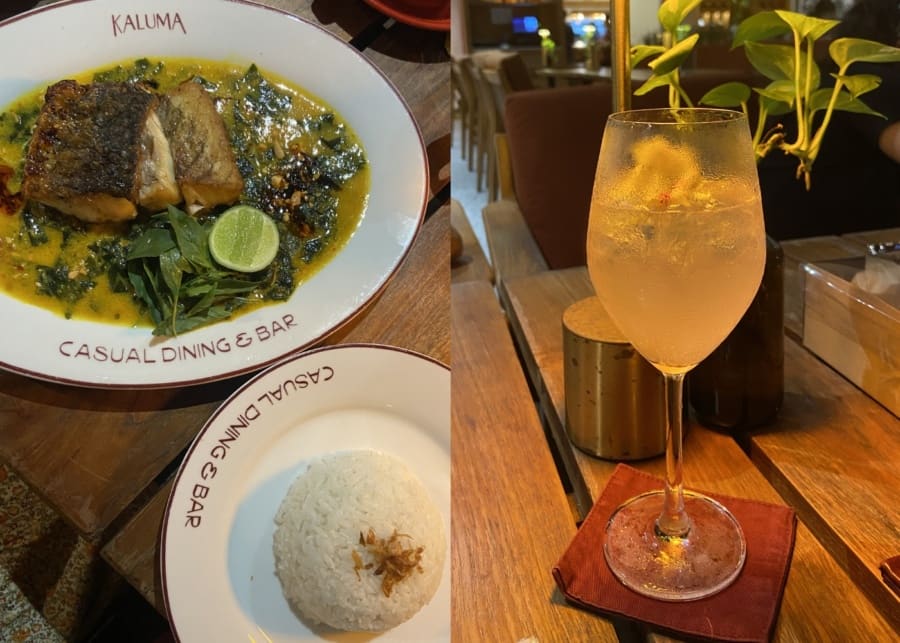
Kaluma, situated on a street-side lot that could easily feel too exposed, has instead cultivated a garden-like atmosphere with potted plants and semi-outdoor seating that creates pockets of privacy. The menu is crowd-pleasing in the best sense: steaks, pastas, burgers, and Indonesian dishes like beef rendang and Jimbaran-style seafood. Live music plays most evenings, but the acoustics are managed well enough that conversation remains possible. The truffle fries are indulgent without being heavy, and the barramundi woku, a North Sulawesi preparation with lemongrass and chilli, showcases the kind of regional Indonesian cooking that is too often overlooked in favour of more familiar Javanese and Balinese dishes.
What ties these restaurants together is not a shared aesthetic or culinary philosophy but a commitment to place. Sanur's dining scene has grown in response to the people who live here and the visitors who return year after year, seeking not the latest trend but the assurance that a meal will be prepared with care and served without pretension. The new openings in 2026, including Junsei, a Japanese izakaya specialising in binchotan yakitori and zero-waste cooking, and Luca Bali, the sister restaurant to Boy 'N Cow, one of Bali's most respected steakhouses, suggest that this trajectory will continue.
The Long View
We have spent enough time in Bali to know that change is the only constant. Beach towns transform into boutique hotel corridors, rice fields become villa developments, and the island's identity is perpetually negotiated between preservation and progress. Sanur's dining renaissance is part of this larger story, but it also represents a counterpoint to the more aggressive development patterns elsewhere on the island. The restaurants here are not trying to be the next big thing. They are trying to be good neighbours, to serve their community well, and to offer visitors a taste of what makes this particular stretch of coast worth returning to.
On our most recent evening in Sanur, we sat at a table overlooking the water, watching fishing boats return as the sky turned the colour of ripe mango. The meal was simple, well-prepared fish and a glass of wine, and the conversation ranged across the usual topics: where we had been, where we were going, what we had eaten along the way. It was the kind of evening that reminds you why you travel in the first place, not for the spectacle but for these quieter moments when place and plate and company align. Sanur has become very good at creating those moments, and we suspect it will continue to do so for years to come.