A Five-Month Voyage Through the World's Most Elusive Islands
Seabourn's 2029 expedition trades speed for depth, threading 32,000 nautical miles between UNESCO-inscribed peaks and palm-fringed atolls few cruise ships reach.
A Different Kind of Circumnavigation
There is a certain romance to slow travel by sea, the kind that resists the airline's tyranny of the clock. Seabourn's newly announced 2029 world cruise stretches across nearly five months, a deliberate counterpoint to the hurried itineraries that compress continents into weekends. Departing Miami in January, the 138-day voyage aboard Seabourn Quest threads together 58 ports across 31 countries, accumulating more than 32,000 nautical miles in the process. The route is less a checklist than a meditation on insularity itself, tracing archipelagos from the South Pacific to the Indian Ocean, the Americas to southern Africa, with extended pauses in cities that reward lingering.
The itinerary reads like a geography seminar cross-referenced with a wish list. Easter Island's enigmatic moai, Zanzibar's labyrinthine Stone Town, the glacial fjords of New Zealand's South Island, the gilt temples of Kandy in Sri Lanka. More than 25 UNESCO World Heritage sites anchor the journey, but it is the lesser-trafficked stops that reveal Seabourn's editorial hand. Praslin, in the Seychelles, offers white-sand bays beneath groves of Coco de Mer palms, their double-lobed nuts the largest seeds in the plant kingdom. Nuku Hiva, in the Marquesas, presents volcanic ridges and valleys Herman Melville once called the most beautiful on earth. Antsiranana, at Madagascar's northern tip, unfolds in a riot of colonial pastels and spice-market bustle, a port city that sees a fraction of the cruise traffic funneled into more famous harbors.
The Calculus of Scale
Seabourn Quest, at 650 feet, carries a maximum of 458 guests in oceanfront suites. That modest capacity is the voyage's quiet advantage. Where larger vessels must skip shallow bays and narrow channels, Quest can slip into harbors that remain inaccessible to ships carrying thousands. The trade-off between guest count and access is deliberate. Smaller ports mean fewer crowds, more nuanced shore programs, and the ability to anchor in places where the infrastructure for mass tourism has not yet, or never will, materialize.
Onboard programming mirrors the destinations themselves. Culinary events spotlight regional ingredients and techniques encountered in port. Cultural performances bring aboard musicians, dancers, and storytellers from the very communities the ship visits. The vessel becomes a floating salon, each leg of the journey informing the next evening's conversation. It is an old model, closer to the grand tours of the early 20th century than to the entertainment-driven mega-ships that dominate the contemporary cruise market.
The Architecture of Time
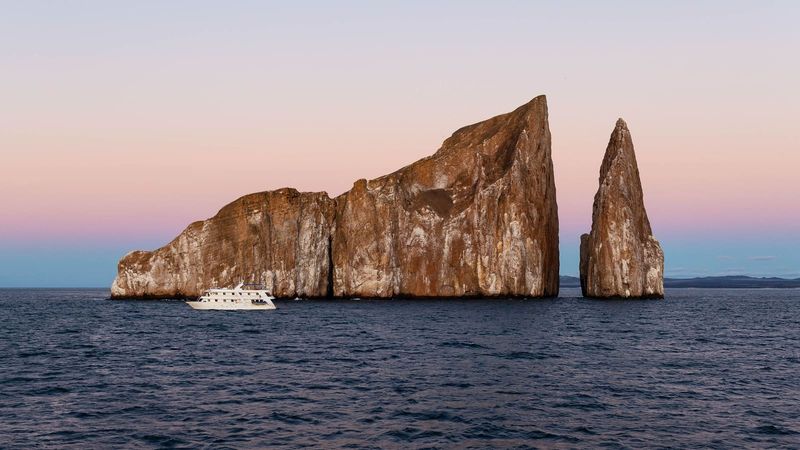
Extended stays distinguish this itinerary from shorter circumnavigations. Cartagena, Melbourne, Portland, and Victoria each receive multi-day calls, enough time to move beyond the waterfront and into the rhythms of daily life. Eight overnight stops, including Lima, Singapore, and Bali, allow for evening markets, late dinners, and the kind of unscripted encounters that daylight excursions rarely afford. These longer pauses also serve as launching points for deeper forays. The Galápagos archipelago, Machu Picchu's cloud-forest citadel, and East African game reserves all lie within reach of the scheduled ports, accessible via Seabourn's curated land extensions.
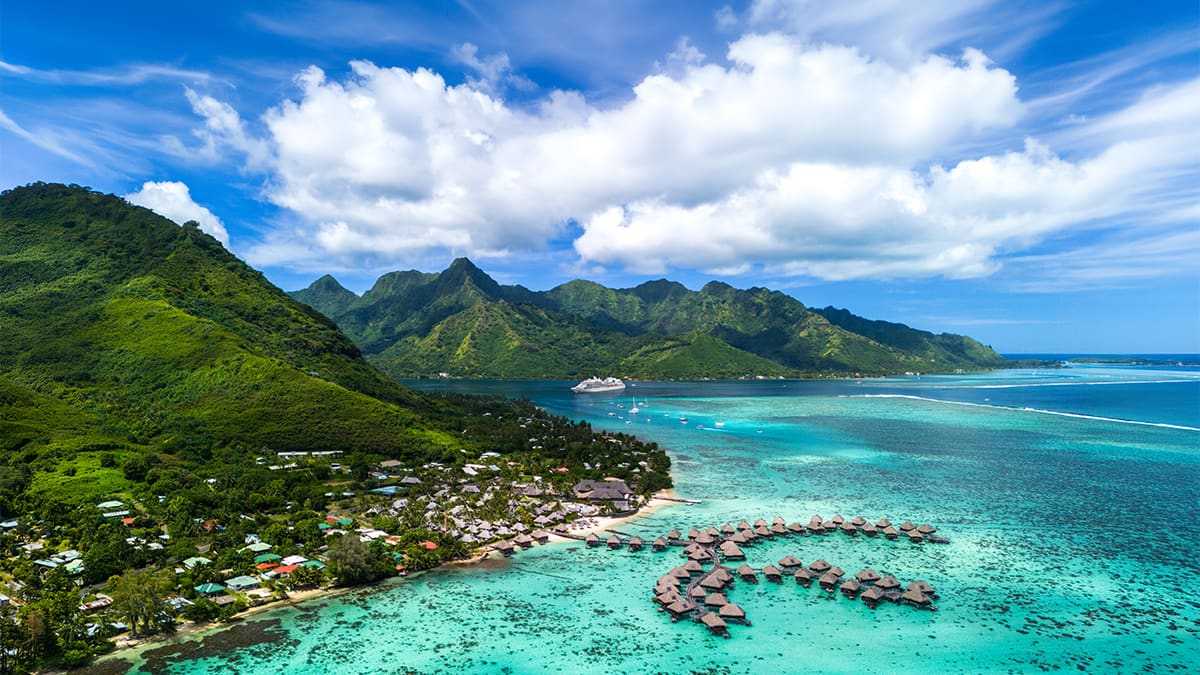
The route itself follows a westward arc. After departing Miami, the ship calls at ports along Central and South America before crossing the Pacific to French Polynesia and New Zealand. From there, it curves north through Australia and Southeast Asia, then west again across the Indian Ocean to Madagascar, the Seychelles, and South Africa. The final leg threads the Atlantic coast of Africa before arriving in Europe in late May. The sequence is less about efficiency than about seasonal alignment, positioning the ship in each region during favorable weather and cultural calendar windows.
The Question of Commitment
Not everyone can, or will, devote nearly half a year to a single voyage. Seabourn acknowledges this with segmented itineraries that allow travelers to join for portions of the route. Yet the full voyage carries privileges unavailable to segment guests, a nod to the logistical and experiential coherence of the complete journey. Those who embark in Miami and disembark five months later will have traced a narrative arc that shorter passages cannot replicate, accumulating not just passport stamps but a layered understanding of how islands, however distant, echo one another in geology, culture, and the human impulse to settle at the edge of the sea.
Mark Tamis, Seabourn's president, frames the voyage as an exercise in "deeper discovery and meaningful cultural connection," language that gestures toward the company's positioning within the luxury cruise sector. The emphasis on remote destinations and smaller-scale operations distinguishes Seabourn from mass-market competitors, appealing to travelers for whom the ship is a means rather than an end, a base camp rather than a destination unto itself.
The Allure of the Periphery
What draws travelers to spend months at sea, docking at islands most could not locate on a map? Part of the answer lies in the growing appetite for destinations that resist easy categorization, places where tourism remains incidental rather than foundational to the local economy. Praslin and Nuku Hiva do not depend on cruise passengers for survival; their appeal is precisely that they have not been reshaped to accommodate them. The same logic applies to Antsiranana, to the outer Seychelles, to the smaller ports along Madagascar's eastern coast. These are places that reward patience and curiosity over checklist efficiency, where the experience is less about what you see than how you see it.
The 2029 world cruise also arrives at a moment when the very concept of global travel is being renegotiated. Climate considerations, over-tourism in marquee destinations, and a desire for experiences that feel less transactional all push travelers toward longer, slower, more intentional journeys. A five-month voyage is not a vacation; it is a temporary relocation, a chance to inhabit the in-between spaces that air travel collapses into hours. For those with the time and inclination, it offers a way to see the world not as a series of isolated highlights but as a continuous, interconnected whole.
Bookings for the January 9 to May 26, 2029, voyage are now open. Pricing and suite availability vary, as does the degree to which one is prepared to spend nearly half a year watching the horizon shift, one island at a time.