The Island Where Stillness and Science Meet
Two decades after a single book turned Bali into shorthand for self-discovery, the Indonesian island has grown into something more textured, more layered, and far more interesting than any memoir could contain.
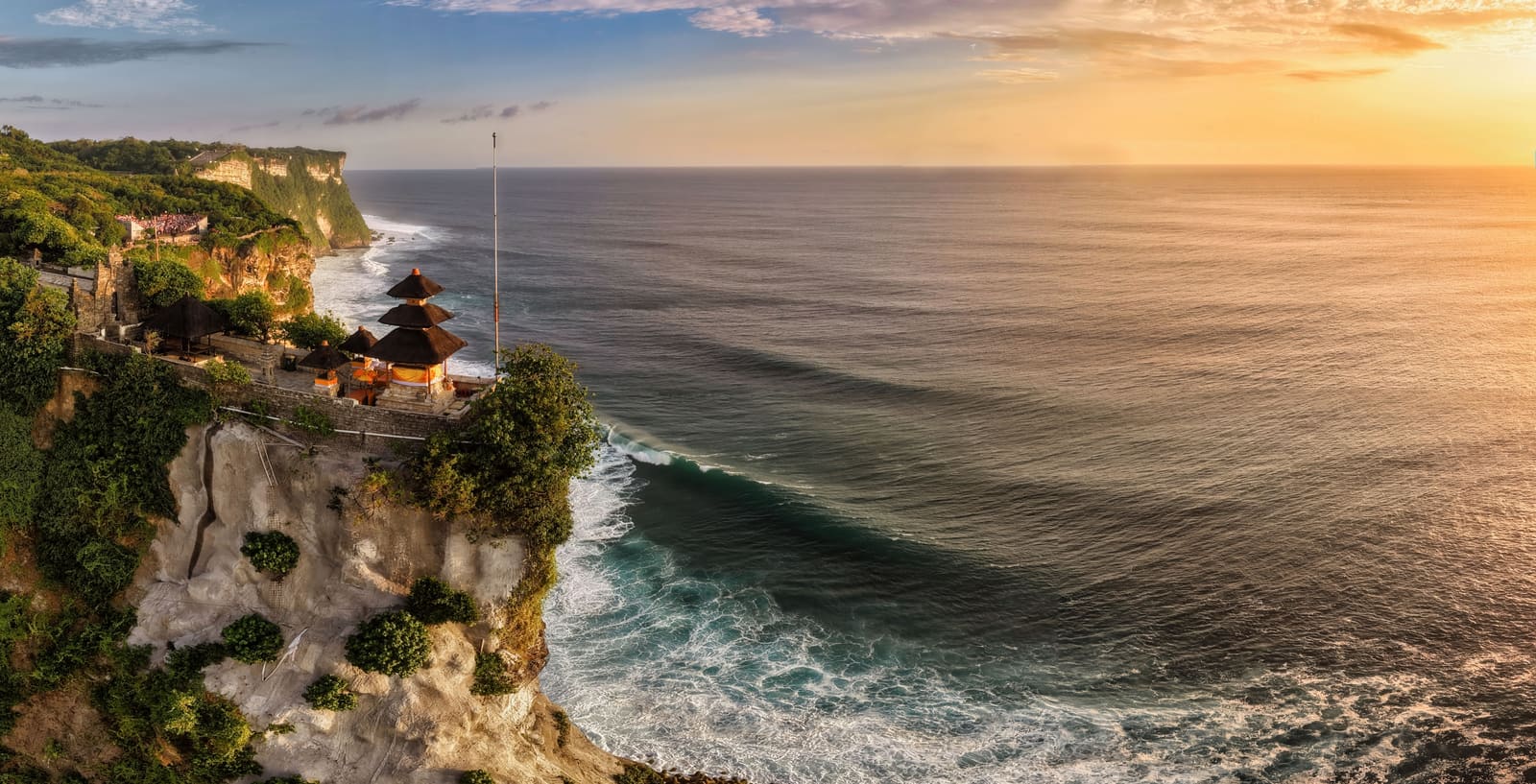
The Shift No One Noticed Until It Was Everywhere
There is a moment, somewhere between the third chakra ceremony and the first ice bath beside the Indian Ocean, when you realise Bali is no longer the place people imagine when they hear its name. The backpacker trails have been paved. The bohemian guesthouses now share postcodes with reformer Pilates studios. The island that once drew seekers with little more than intuitive massage and the whispered promise of balian healers has become a laboratory for human wellbeing in all its forms, mystical and clinical, ancient and experimental.
This transformation did not happen overnight. It accumulated slowly, one yoga shala at a time, one luxury spa menu at a time, one silent retreat at a time. By the time Elizabeth Gilbert's 2006 memoir planted Bali firmly in the global imagination as a place to find oneself, the island was already midway through its metamorphosis. What followed was not a sudden rush but a steady deepening, a broadening of what wellness could mean. Today, the Indonesian island offers everything from hyperbaric oxygen chambers to Balinese Hindu purification rituals, from breathwork sessions led by practitioners who have coached professional surfers to treatments involving ancient coins placed on the chest to capture temple bell vibrations.
The evolution is most visible in the resorts themselves, which have moved beyond standard spa fare into territory that feels closer to pilgrimage.
Where Folklore Becomes Therapy
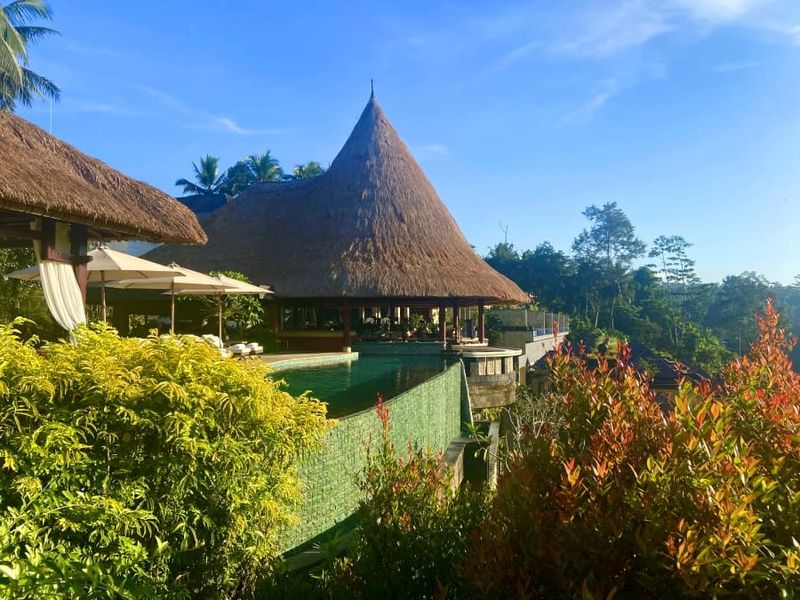
At Four Seasons Resort Bali at Sayan, tucked into the jungle folds near Ubud, the Sacred River Spa has turned Balinese ritual into something between art installation and healing practice. Treatments here do not follow the predictable arc of massage, scrub, wrap. Instead, they draw from folklore, from sacred geometry, from the island's deep well of spiritual instrumentation.
One signature therapy involves pis bolong coins, ancient and ceremonial, draped across the heart whilst a Balinese ghanta temple bell and gong are struck nearby. The vibrations move through metal, through skin, through bone. Massage follows, alternating ice-cold and fire-hot stones etched with symbols, moss agate worked in swirling patterns across the body. The sensation is difficult to describe: a warm tingle that begins at the sternum and radiates outward, as though something knotted has been gently, persistently loosened.
Chakra ceremonies here are designed to open specific energy centres: throat, heart, root. They feel less like spa treatments and more like unlocking mechanisms, small keys turned in small locks. The resort's silent retreats are led by Ibu Heny Ferawati, a former Buddhist nun whose presence alone seems to lower ambient anxiety. Her Sacred Nap, a guided rest in a silk hammock gently rocked to lullabies, has been described by those who have experienced it as the closest thing to nirvana achievable in ninety minutes.
The Creative Village That Practises What It Preaches
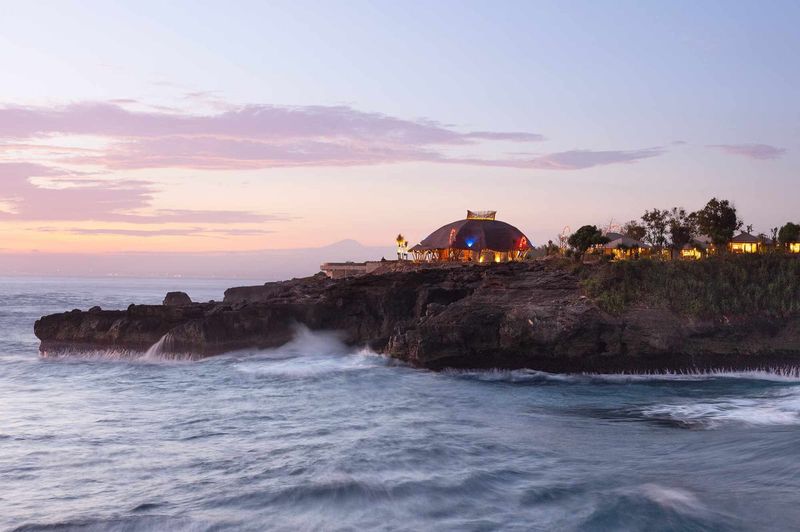
Desa Potato Head in Seminyak began as an oceanfront beach club and has since evolved into a zero-waste creative village with two hotels and a philosophy that gives equal weight to detox and retox. The resort offers ice baths beside the beach, Balinese astrological readings, pura raga healing dance rituals, and workshops where guests blend their own jamu, the Indonesian herbal elixir that has been consumed for centuries.
But perhaps the most striking offering is a 90-minute breathwork session held inside Klymax, the resort's state-of-the-art nightclub. Practitioner Justus Jonathan plays a swelling, symphonic soundscape on multiple instruments whilst participants lie on the floor, regulating their nervous systems in a space designed for the opposite of stillness. Full moon sound meditations and communal plant-based feasts occur monthly. An immersive wellbeing series rooted in ancestral healing and spirituality across India, Java, and Bali draws participants seeking continuity between ancient practice and contemporary life.
The resort's founder, Ronald Akili, offers five complimentary yoga classes daily to staff, believing that the benefits will radiate outward to guests. It is a rare example of wellness philosophy applied internally before being marketed externally.
The Estate Where Every Stay Is Bespoke
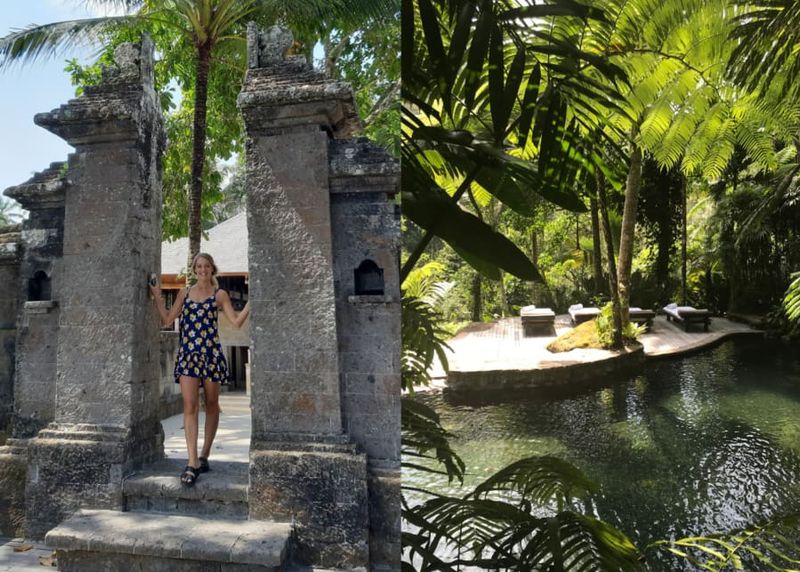
COMO Shambhala Estate has spent 21 years focused on wellbeing with the single-mindedness of a monastic order. Perched on 22 jungle acres that spill down a steep ridge to a convergence of rivers outside Ubud, the resort treats wellness not as an amenity but as the entire reason for being.
The redesigned Ojas wellness centre now includes hyperbaric oxygen therapy and infrared sauna alongside an extensive hydrotherapy circuit fed by a natural spring that villagers have used for centuries. Guests follow Wellness Programmes or multi-night Wellness Paths, each one tailored after a one-hour consultation with the resident Ayurvedic doctor. Nutrition-forward menus are prescribed accordingly. Massages target specific knots, private Pilates sessions address posture, and Balinese Hindu melukat ceremonies clarify priorities in ways that feel both practical and profound.
The natural rock pools by the rushing river offer a kind of idleness that feels restorative rather than lazy. Time here bends differently.
The Resort Where Silence Lowers Cortisol
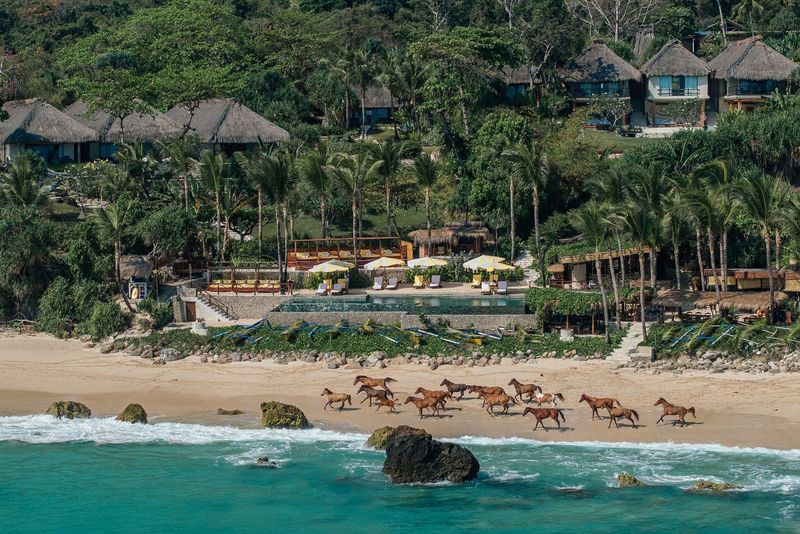
Raffles Bali sprawls across 57 beachfront acres that feel more like a nature reserve than a hotel. Wellness here is as much about environment as practice. Oversized daybeds outside pool villas face the Indian Ocean. Guided butterfly and bird watching walks move slowly through the grounds. Sunrise qi gong happens on sand so private it feels stolen.
Wellbeing Butlers arrange reiki, open-air massage, cleansing ceremonies at the resort temple. But they also read the room, quietly providing tools for serenity without being asked: hot herbal tea in a thermos, a crystal eye mask, aromatherapy oils at turndown. The luxury is not loud. It accumulates in small gestures, in the absence of noise, in the way the resort seems to anticipate need before it is voiced.
The Retreat Built From Survival
The Asa Maia in Uluwatu is a boutique wellness retreat of ten antique handmade Javanese wooden houses, each one a testament to owner Martha Brooke's belief in holistic healing. She designed the property as a place to share the methods and tools that helped her overcome cancer. The result is luxurious, eco-conscious, and free of pretence.
Yoga practices range from Kundalini to yin. Personal training happens in a well-equipped gym. Guided subterranean contrast therapy circuits include an infrared sauna and open-air campfire. The spa draws from Balinese history, traditional Chinese medicine, and modern practices such as the Signature Bioenergetic Facial Alchemy. The aromatic Mandi Rempah bath is steeped in ritual.
Breathwork is central to the retreat's ethos. A single session of ancient Tibetan Tummo breathing can produce a dizzying range of sensations: ecstasy, cold, tension, release. The guide who leads these sessions has also coached Kelly Slater, the surfing legend, in the same techniques. By the end, the overwhelming feeling is a desire to do it again.
The Wall-Less Village Where Nature Leads
Buahan, a Banyan Tree Escape, sits in the remote, un-touristed village of Buahan, and its approach is organic, holistic, and rooted in the landscape. This is a wall-less, adults-only retreat where spa practitioners open treatments with sincere gratitude rather than scripted pleasantries.
Open-air bales tucked into the forest serve as treatment spaces. The loud hum of insects and birds backdrops Raindrop Therapy, a combination of Tibetan singing bowls, feather-light massage, and therapeutic essential oils along the spine. An Art of Loloh session allows guests to blend tonics from foraged herbs and spices. A guided moonlit Sandikala Walk reveals the rhythm of the rainforest. A Balinese spiritual offering occurs at the onsite waterfall.
A new two-person wellbeing journey designed for reconnection includes moon meditation, a fire ritual, a tie-dye workshop, and a bonding massage. The intimacy is intentional.
The Marriage of Science and Wisdom
Four Seasons Resort Bali at Jimbaran Bay houses the Healing Village Spa, a sprawling complex where cutting-edge technology and ancient Balinese wisdom sit side by side without contradiction. The menu is vast enough to justify a stay devoted entirely to treatments, each one wholly original, each one designed to rejuvenate in ways that feel both immediate and cumulative.
The resort has managed to marry high-tech science with ritual in a way that honours both. Treatments here do not choose between modernity and tradition. They synthesise.
What Remains
Bali has become something more complicated than the island of a single story. It is no longer the place where backpackers whispered about balian in dim warungs, nor is it the place where Julia Roberts filmed scenes of self-discovery. It is a place where injectables and ice baths coexist with temple ceremonies, where silence is as carefully curated as sound, where wellness has become both art and science.
The island still calls to people seeking emotional clarity, stress relief, physical renewal, spiritual healing. But it no longer promises a single path. It offers a landscape of possibilities, each one as legitimate as the next, each one shaped by the island's long memory and its willingness to evolve. What began as a reputation has become an infrastructure. What was once intuitive is now also intentional. And the result is an island that rewards not just seeking, but returning.