The Shifting Geography of Luxury Along Nusa Dua's Shoreline
Where Indonesia's most manicured resort enclave meets clifftop seclusion and the casual rhythms of Tanjung Benoa.
A Landscape Built for Retreat
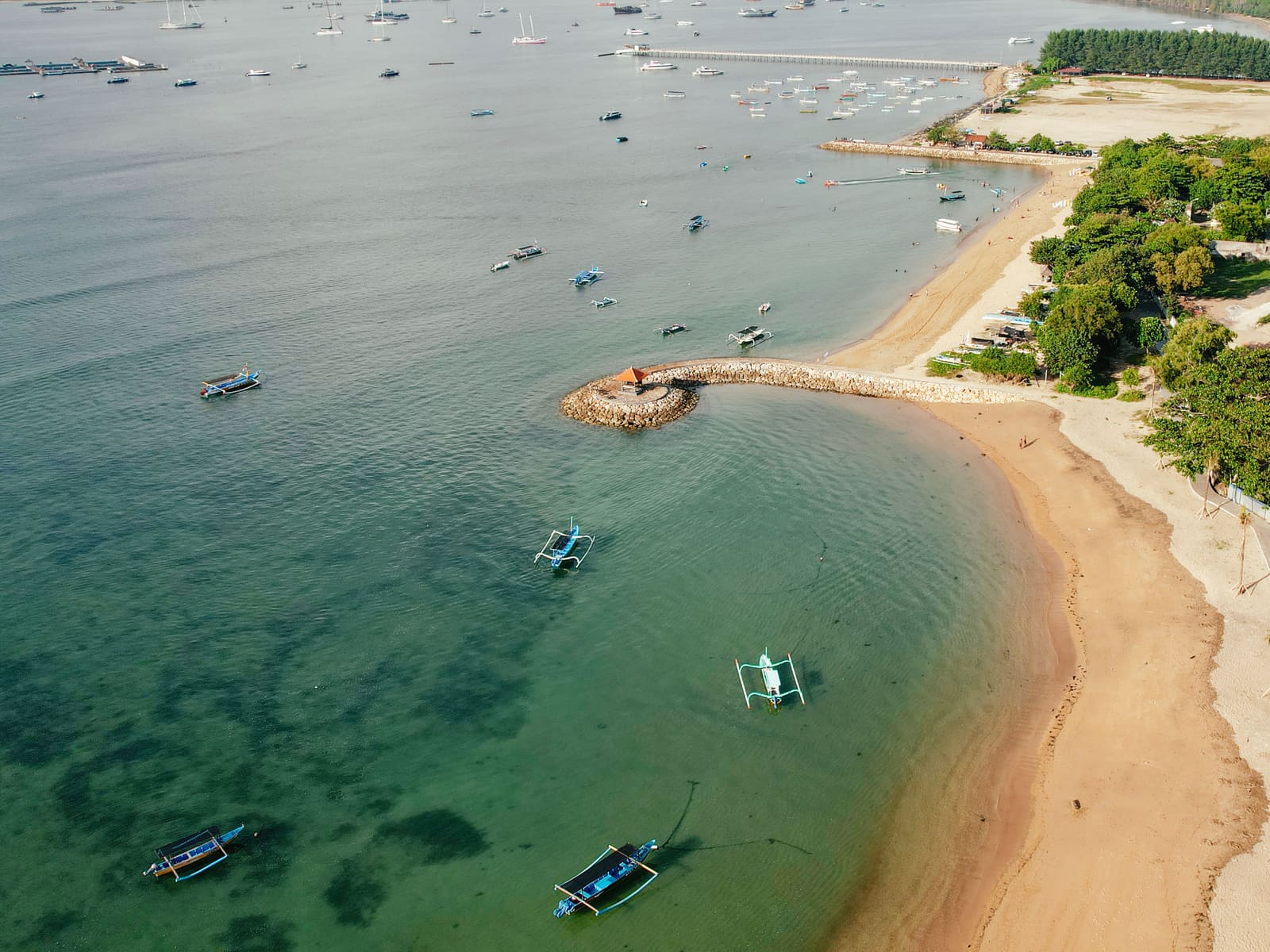
The coastline south of Bali's international airport unfolds in three distinct gestures. There is the manicured heart of the Indonesia Tourism Development Corporation zone, a purpose-built tourism complex where landscaped gardens meet white-sand beaches and security-controlled gates frame a pedestrian-friendly network of paths. Then comes Sawangan, where clifftop properties claim dramatic ocean views and a quieter remove from the central action. Finally, to the north, Tanjung Benoa offers a more casual atmosphere, its beachfront dotted with water-sports operators and local dining alongside international hotel brands.
Each zone attracts a different traveller. The ITDC enclave appeals to those who value walkability and immediate access to museums, shopping centres and cultural performances. Sawangan's secluded properties draw honeymooners and guests seeking privacy over convenience. Tanjung Benoa, with its accessible price points and abundance of activities, has become the natural choice for families.
The Enclave and Its Appeal
Inside the ITDC complex, resorts share a common aesthetic: wide lawns, interconnected pools, and architecture that nods to Indonesia's royal heritage without straying into pastiche. The Laguna, a Luxury Collection Resort & Spa, threads seven lagoon pools through its grounds, creating a waterscape that feels both expansive and intimate. Guests can walk to Museum Pasifika or the Bali Collection shopping centre without leaving the gated precinct.
The Westin Resort Nusa Dua and Sofitel Bali Nusa Dua Beach Resort occupy similar ground, offering beachfront access and large-scale amenities designed for extended stays. Grand Hyatt Bali anchors the southern edge of the enclave, its terraced pools descending towards the ocean in a series of cascading levels.
What these properties share is a sense of order. The roads are smooth, the gardens meticulously maintained, the beach free of vendors. For some, this controlled environment is precisely the point; for others, it can feel insulated from the island's wider rhythms.
Sawangan's Clifftop Privacy
South of the ITDC gates, the coastline rises. Here, resorts claim elevated positions, their infinity pools seemingly suspended above the Indian Ocean. The Apurva Kempinski Bali occupies one such site, its design inspired by the Majapahit Kingdom. Local artisans carved much of the interior woodwork; indigenous motifs appear in the textiles and wall panels. Ocean-view suites feature deep soaking tubs and private terraces, the architecture framing the sea as a living element of the room.
The St. Regis Bali Resort, a short distance away, centres on a 3,668-square-metre saltwater lagoon and offers 24-hour butler service, a signature of the brand. The resort's Kayuputi restaurant has earned recognition for its fine dining, while the Iridium Spa draws guests seeking treatments that extend beyond the standard massage menu.
The Ritz-Carlton Bali and The Mulia, Mulia Resort & Villas complete the Sawangan roster. The Mulia's infinity pool, flanked by statues of Balinese women, has become an iconic image in its own right. The property offers a collection of gourmet restaurants and private villas, each with butler service and hydrotherapy pools. The Ritz-Carlton Bali, meanwhile, appeals to couples planning destination weddings, its clifftop chapel a popular choice for ceremonies framed by ocean views.
Sawangan's resorts share a common trait: they are self-contained worlds. Guests can spend days without leaving the property, sustained by on-site dining, spa facilities and curated cultural programming. The trade-off is distance from Nusa Dua's central attractions and a reliance on hotel transport for any excursion beyond the gates.
Tanjung Benoa's Family-Friendly Shoreline
North of the ITDC enclave, the landscape shifts. Tanjung Benoa's beachfront is narrower, the waves calmer, the atmosphere less formal. Water-sports operators line the shore, offering parasailing, jet skiing and banana-boat rides. Local warungs sit alongside international hotel chains, and the street life feels more immediate.
Conrad Bali occupies a prime stretch of this coastline, its lagoon pool winding through the property like a slow-moving river. Interconnecting suites accommodate multi-generational families, while the Kura Kura Kids Club provides structured activities for younger guests. The resort's design emphasises horizontal space over vertical drama, with low-rise buildings and pathways that meander through gardens rather than corridors that march in straight lines.
The Royal Santrian, an all-villa property, offers a different model. Each villa includes a private pool and an open-air gazebo for dining, with staff available for in-villa spa treatments and personalised service. The resort organises traditional Balinese cooking classes and daily yoga sessions, activities designed to appeal to couples seeking a balance between privacy and cultural engagement.
Tanjung Benoa's appeal lies in its accessibility. Prices tend to be lower than those in Sawangan or the ITDC enclave, and the neighbourhood's mix of local and international offerings provides more options for spontaneous exploration. Families appreciate the ease of arranging water sports directly from the beach, while couples find the area's less polished edges a welcome contrast to the controlled environments further south.
The Question of Distance
Nusa Dua's geography creates natural trade-offs. The ITDC enclave offers walkability and immediate access to cultural sites, but its manicured uniformity can feel limiting. Sawangan's clifftop resorts provide dramatic settings and exceptional service, yet their isolation means guests must plan every departure. Tanjung Benoa's casual energy and affordability come at the cost of the polish and refinement that define the island's luxury tier.
The journey from I Gusti Ngurah Rai International Airport takes roughly 30 minutes by car, placing all three zones within easy reach of the island's main gateway. Once settled, however, movement between zones requires intention. The resorts are designed to retain guests, not release them. Pools, restaurants, spas and cultural programming all conspire to make departure feel unnecessary.
What the Landscape Reveals
Nusa Dua's resort geography is a study in segmentation. The ITDC enclave caters to those who value order and convenience. Sawangan serves honeymooners and guests willing to pay a premium for privacy and elevated design. Tanjung Benoa welcomes families and travellers seeking a more accessible entry point to Bali's luxury hospitality.
The choice is less about which zone is best and more about which trade-offs align with a given traveller's priorities. Those who crave spontaneity may chafe at Sawangan's remove. Guests seeking absolute refinement may find Tanjung Benoa's casual atmosphere at odds with their expectations. And travellers who want to explore beyond the resort gates may discover that the ITDC enclave, for all its walkability, still feels bounded by its own design.
What remains consistent across all three zones is the quality of the physical setting: long stretches of beach, calm waters suitable for swimming and resort activities, and a climate that favours year-round travel. The infrastructure is reliable, the service standards high, and the properties themselves represent some of Indonesia's most ambitious hospitality projects. The question is not whether Nusa Dua can deliver a luxury retreat, but which version of that retreat best matches the traveller's vision.