Where Travellers Are Actually Staying in China Right Now
A new wave of reader favourites reveals a country moving beyond the gateway cities, with Shenzhen, Chengdu, and a handful of unexpected provincial capitals claiming the spotlight.
A Quiet Redistribution
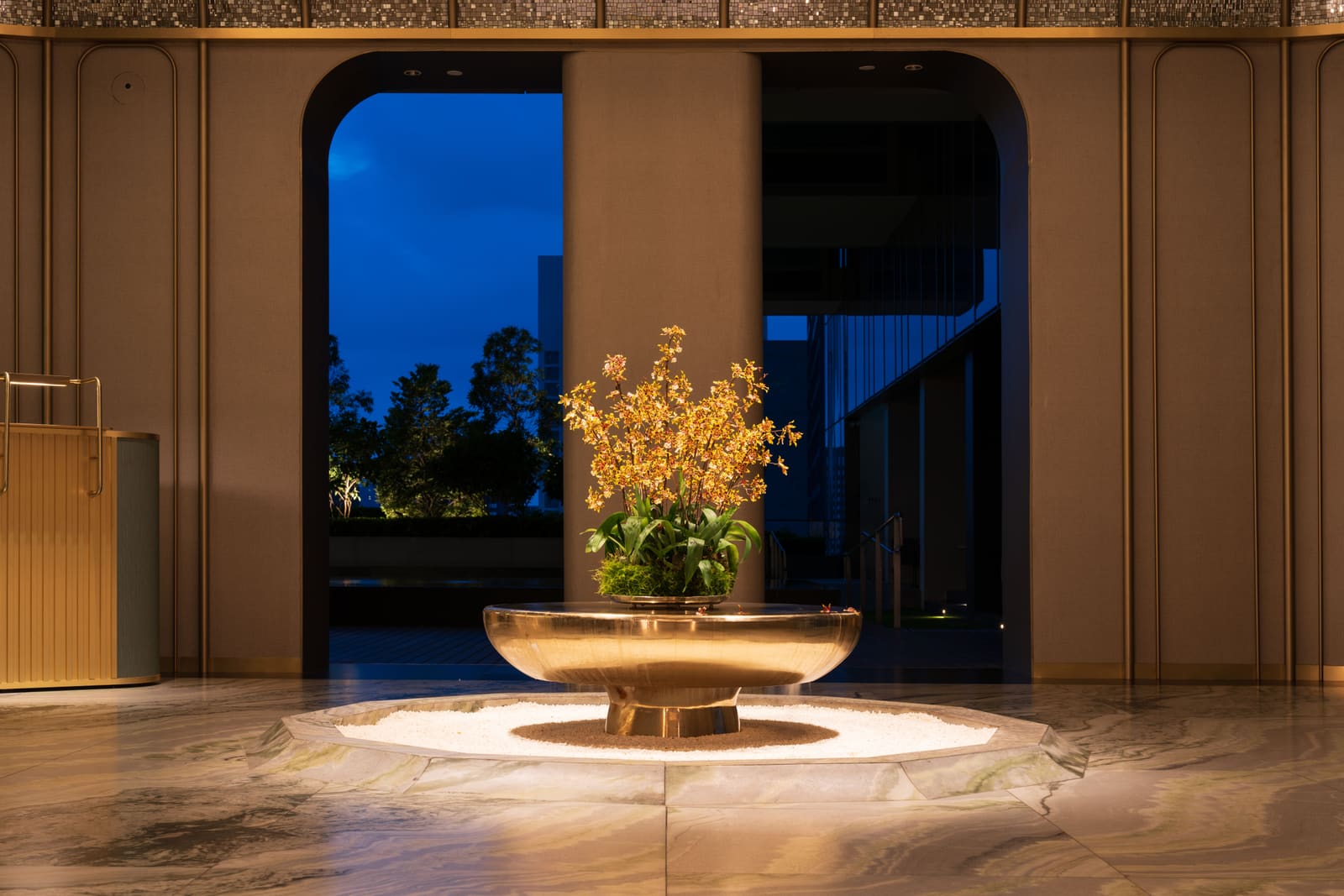
The lobby of The Langham in Shenzhen sits above the thirty-second floor, a vantage that frames the Pearl River Delta in bands of haze and glass. It is a city built vertically, and the hotel follows suit: guest rooms begin where most towers end, suspended in the architecture of ambition. This is not the China of temple gardens and hutong alleyways, nor the Shanghai of art deco nostalgia. It is something newer, faster, and increasingly, it is where travellers are choosing to sleep.
Reader-voted hotel rankings for 2026 tell a story of geographic redistribution. Shenzhen claims three of the top ten positions. Chengdu takes two. Guangzhou appears twice. Beijing and Shanghai, the traditional anchors of luxury travel in China, are absent from the list entirely. The shift is not a rejection of the old gateway cities but a recognition that the country's centre of gravity has moved, or perhaps multiplied.
The Shenzhen Phenomenon
Shenzhen's rise in hospitality mirrors its economic trajectory. The Langham scored 98.97 out of 100, the highest mark in the country, followed by Conrad Shenzhen at 97.96 and The Ritz-Carlton at 96.75. Three properties, three distinct approaches, all within a city that did not exist as anything more than a fishing village four decades ago.
What draws guests is less about heritage and more about infrastructure. The metro is clean, the airport efficient, the restaurants open late. Business travellers come for the tech conferences and stay for the food. Leisure visitors use Shenzhen as a base for Hong Kong day trips, or increasingly, as a destination in its own right. The hotels reflect this duality: meeting rooms on one floor, rooftop pools on another, and lobbies designed to function as co-working spaces before sunset and cocktail lounges after dark.
The Langham in particular has perfected a kind of vertical luxury. Rooms are generous by urban Chinese standards, averaging forty-five square metres, with floor-to-ceiling windows that make the cityscape feel like wallpaper. Service is polished without being obsequious, a balance that appeals to both Mandarin-speaking returnees and first-time visitors navigating language gaps. The hotel does not try to be a resort; it leans into the city's relentless energy and offers refuge from it in equal measure.
Chengdu's Dual Appeal
Chengdu's inclusion, with the Waldorf Astoria at 98.77 and InterContinental Century City at 97.28, reflects a different kind of travel logic. The city is simultaneously laid-back and cosmopolitan, famous for its teahouse culture and its proximity to the panda research base, but also home to a burgeoning design scene and a culinary reputation that extends well beyond hot pot.
The Waldorf Astoria occupies a tower in the business district, but its interiors nod to Sichuan's craft traditions: lacquerwork panels, hand-knotted rugs in indigo and rust, tea service that arrives in porcelain rather than glass. It is a careful calibration, one that avoids theme-park pastiche while still anchoring guests in place. The InterContinental, meanwhile, sits within a mixed-use complex that includes shopping, office space, and a concert hall. The hotel's café spills into a multi-storey atrium, a space that feels more like a public square than a lobby.
What both properties share is an understanding that Chengdu draws two kinds of visitors: those passing through on their way to the mountains or the pandas, and those who come for the city itself. The former want efficiency and early breakfasts; the latter want late-night noodles and a bar that stays open past midnight. The hotels manage to serve both without diluting the experience for either.
The Provincial Dark Horses
The presence of Ningbo, Zhengzhou, and Xiamen on the list is the most revealing detail. These are not cities that appear on most international itineraries. Ningbo is an industrial port on the East China Sea, Zhengzhou a transport hub in Henan province, Xiamen a coastal city known primarily within China for its seafood and its university. Yet Langham Place Ningbo scored 96.39, Le Méridien Zhengzhou 96.35, and Lohkah Hotel & Spa in Xiamen 95.38.
Their inclusion suggests a traveller profile that is less interested in ticking off UNESCO sites and more engaged with the rhythms of contemporary Chinese urban life. These are cities where English is less commonly spoken, where hotel staff might need a translation app to explain breakfast hours, and where the primary clientele is overwhelmingly domestic. The hotels that succeed here are those that can bridge the gap without condescension, offering bilingual signage, attentive service, and a level of comfort that does not assume familiarity with local customs.
Lohkah Hotel & Spa in Xiamen, for instance, integrates traditional Chinese medicine into its wellness programming, with treatments based on meridian theory and herbal compresses. It is not a gimmick but a genuine articulation of local practice, delivered in an environment that feels contemporary rather than folkloric. The hotel sits on Gulangyu Island, a car-free zone accessible only by ferry, which means that getting there requires a degree of intentionality. The score it received suggests that intentionality is being rewarded.
What the Rankings Reveal
Hotel rankings are always, in part, a popularity contest, skewed by factors like promotional campaigns, loyalty programmes, and the demographic composition of the voter base. But they also function as a rough barometer of where people are actually going, and more importantly, where they feel well served.
The 2026 results point to a China that is less legible from the outside than it once was. The old binaries, coastal versus interior, ancient versus modern, have dissolved into something more granular. Shenzhen is not replacing Shanghai; it is simply offering a different proposition. Chengdu is not competing with Beijing for political symbolism; it is competing on livability and food. The provincial cities are not backup options; they are destinations in their own right, chosen by travellers who have already seen the Forbidden City and the Bund and are ready to move on.
The Mandarin Oriental Exception
Guangzhou appears twice, with Mandarin Oriental scoring 98.39 and Langham Place at 95.6. The Mandarin Oriental's position is the least surprising entry on the list. Guangzhou has always been a commercial powerhouse, the gateway to the Pearl River Delta and the historical heart of Cantonese culture. The Mandarin Oriental sits in Tianhe, the business district, within walking distance of the opera house and the main shopping thoroughfares.
The hotel's success lies in its refusal to chase novelty. Rooms are understated, service is consistent, the spa is quiet. It does not try to be a scene or a social media moment. In a city as frenetic as Guangzhou, that restraint reads as luxury. The property has been open for over a decade, long enough to have developed a loyal client base and to have ironed out the operational kinks that plague newer openings. It is a reminder that sometimes the best hotel is simply the one that does not get in the way.
The Absence of Beijing and Shanghai
The omission of Beijing and Shanghai from the top ten is not a statement of decline but of market saturation and shifting expectations. Both cities have dozens of five-star properties, many of which are excellent by any objective measure. But they also face challenges that smaller cities do not: traffic congestion, pollution spikes, higher prices, and a level of tourist density that can make even the most elegant hotel feel overrun during peak season.
There is also the matter of novelty. Beijing and Shanghai have been on the luxury hotel circuit for decades. Travellers who prioritise new experiences over established names are more likely to book a room in Chengdu or Xiamen, where the city itself still carries an element of discovery. The hotels in those places benefit from the halo effect of the destination: a good property in an unexpected city scores higher than a great property in a place everyone has already been.
What Comes Next
The rankings suggest that the next chapter of luxury travel in China will be written in cities that most outsiders cannot yet locate on a map. Tier-two and tier-three cities are investing heavily in infrastructure, culture, and hospitality. High-speed rail has collapsed travel times, making it feasible to visit Ningbo or Zhengzhou as part of a broader itinerary rather than as a detour.
The hotels that will thrive in this landscape are those that understand their role as interpreters, not just service providers. They need to offer more than thread counts and minibar selections; they need to help guests understand where they are and why it matters. That might mean a concierge who can recommend a local opera performance, or a restaurant that sources ingredients from the surrounding province, or simply a lobby design that reflects regional craft traditions without pastiche.
China's hotel landscape is no longer a story of international chains parachuting into gateway cities. It is a story of geographic diffusion, of properties that succeed because they are embedded in their context rather than floating above it. The 2026 reader rankings are a snapshot of that shift, a list compiled not by editors or critics but by the people who actually slept there, ate breakfast, and decided it was worth returning to. That kind of endorsement, earned rather than awarded, is the only metric that ultimately matters.