The Hotel Lobby Should Be a Threshold, Not a Theatre
In an era of co-working hubs and ambient noise, the case for restraint, silence, and the seven-second first impression.
The Misunderstood Threshold
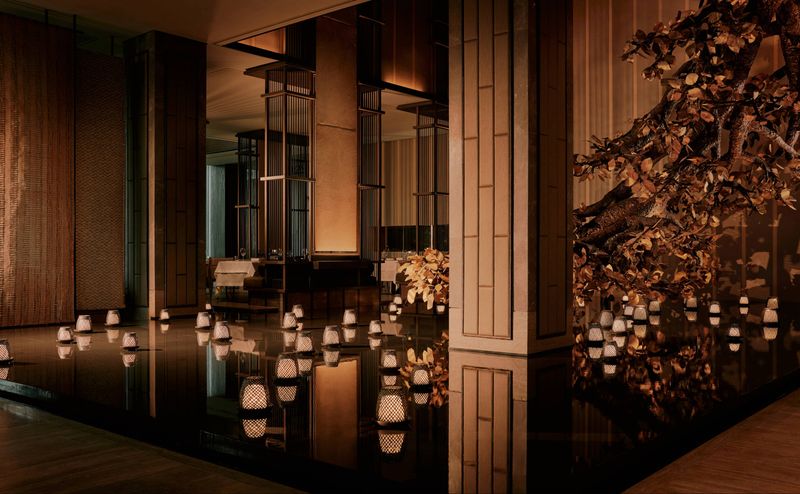
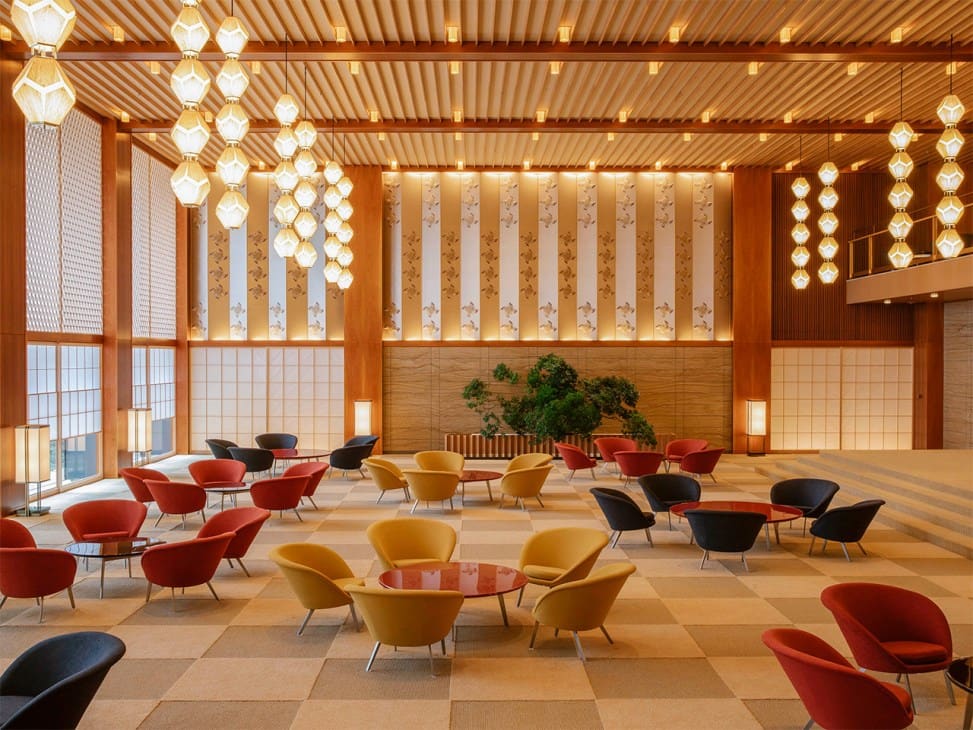
Stand in the lobby of Aman Tokyo and you will notice the absence of something. No clatter of espresso machines, no tangle of charging cables snaking across coffee tables, no ambient hum masquerading as energy. What you find instead is stone, timber, washi-paper lanterns, and a soaring ceiling that makes the low-slung sofas feel almost ceremonial. The space is monumental in scale yet hushed in execution, a study in contrasts that knows exactly what it is: a place of arrival, not occupation.
The hotel lobby has become one of the most contested spaces in contemporary hospitality. Over the past decade, it has been asked to function as reception desk, lounge, office, bar, retail outlet, and waiting room for video calls. The result is often a kind of spatial exhaustion, a room trying so hard to be everything that it ends up offering very little. The irony is that the brief for a successful lobby is not complicated. It requires clarity, confidence, and restraint. It requires an understanding that the first seven seconds matter more than the next seven hours.
The Case for Calm Authority
A lobby is not a living room, and it should not pretend to be one unless it has the proportions, the choreography, and the discipline to carry it off. The Manner in New York manages this through a kind of Italianate generosity. Check-in happens one level below, leaving the main lounge free from the constant churn of luggage and key cards. The atmosphere is spacious rather than busy, and that spaciousness is not accidental. It is the product of deliberate design choices that prioritise composure over activity.
The Okura Tokyo offers another lesson in restraint. Carpets absorb sound, lanterns hover beneath a timber ceiling, and seating is arranged with the precision of plum blossoms on a branch. When the original 1962 building was demolished in 2015, public outcry led to the lobby being reconstructed with forensic attention. Proportions were laser-scanned, light levels measured, acoustic properties replicated. The result is a space that remains serene even when full, a gold-toned room that understands the value of quietness.
The Fatigue of Perpetual Buzz
The contemporary obsession with turning lobbies into all-day social hubs has produced a particular form of low-grade fatigue. There is nothing inherently wrong with good coffee or comfortable seating, but there is something draining about the permanent hiss of milk steamers and the anxious hunt for power sockets. A lobby should offer refuge from the city, not replicate its most irritating qualities. It should provide a pause, an intake of breath, a moment of recalibration before the guest moves deeper into the building or out into the streets.
This is not an argument against liveliness. It is an argument for intentionality. A lobby can be animated, but that animation should come from the quality of the space itself rather than from the overlay of functions it is forced to perform. When laptops colonise every surface and ambient noise fills every corner, the room loses its ability to reassure. And reassurance is the primary task of any entrance: to tell the guest, quickly and quietly, that they are in the right place.
The Architecture of First Impressions
Designers estimate that it takes roughly seven seconds to form a first impression of a room. A successful lobby uses those seconds to establish tone, scale, and mood without resorting to theatrics. Clear sightlines help. So do confident proportions and a palette that does not shout. The best hotel lobbies share a certain disarming ease, a sense that they do not need to try too hard because they already know what they are.
This ease is not the same as blandness. Aman Tokyo's soaring ceilings and near-ceremonial symmetry are dramatic, but the drama is controlled. The Okura's gold tones and floating lanterns are striking, but they do not demand attention. The Manner's Italianate grandeur is generous, but it does not overwhelm. In each case, the lobby understands that it is a threshold, not a destination. It is not there to entertain, to distract, or to sell scented candles and subscriptions. It is there to mark the transition from outside to inside, from city to sanctuary.
Restraint as Luxury
In an age of perpetual stimulation, restraint has become a form of luxury. The lobby that does not ask you to linger, that does not fill every silence with music or every table with merchandise, is the lobby that offers something increasingly rare: composure. It gives you enough space to collect yourself, to take stock, to decide what comes next. It does not insist. It does not perform. It simply holds the room.
This is not a call for sterility or coldness. A lobby can be warm, textured, layered. But it should be those things in service of arrival, not in service of activating square metreage or maximising revenue per seat. The moment a lobby starts to feel like a co-working space or a café that happens to have a reception desk tucked in the corner, it has lost its purpose. The moment it prioritises buzz over clarity, it has failed the seven-second test.
The Value of the Pause
A threshold is a place of transition, and transitions require a certain kind of space. They require rooms that do not rush you, that do not overwhelm you, that do not ask too much of you in the first moments of arrival. The finest hotel lobbies understand this instinctively. They offer clear sightlines so you know where to go. They offer confident proportions so you feel grounded rather than adrift. They offer quietness so you can hear yourself think.
The lobby is not a stage. It is not a marketplace. It is not a theatre of hospitality where every gesture must be amplified and every surface must serve multiple functions. It is, at its best, a pause. And in a world that rarely allows for pauses, that might be the most convincing first impression a hotel can offer.