Where the Quarter Keeps Its Secrets: New Orleans Hotels That Remember
Beyond the tourist crush, a handful of addresses preserve what made this city magnetic in the first place - wrought iron, late-night jazz, and the kind of hospitality that feels like inheritance.
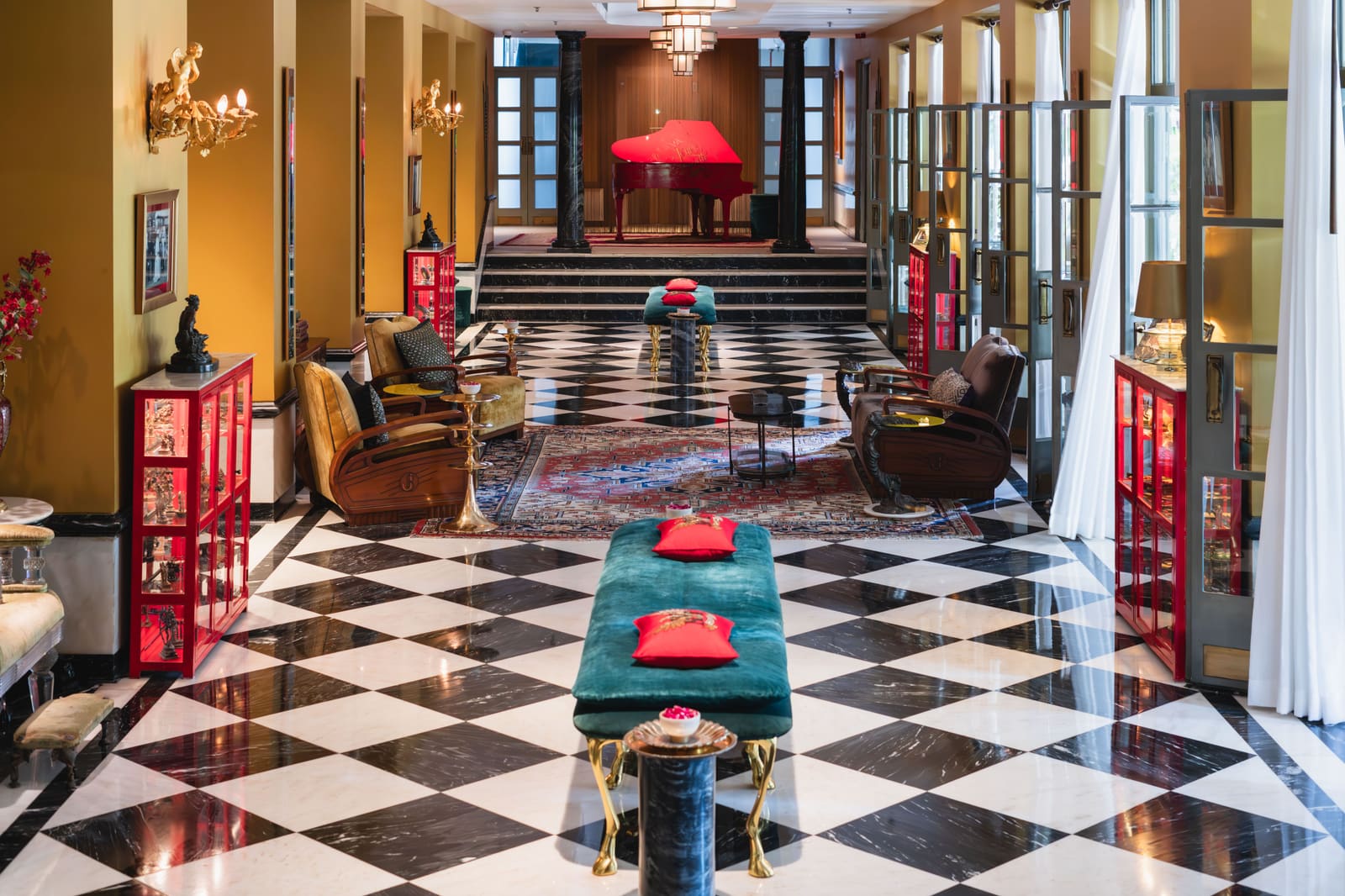
The City That Refuses to Forget
There is a courtyard off Chartres Street where bougainvillea climbs ironwork balconies in slow, deliberate spirals, and where, every evening around seven, a trumpet player sets up beneath a gas lamp that has burned since before the Civil War. The guests gathering on the gallery above do not applaud when he finishes his first number. They simply nod, as if acknowledging something they already knew - that in New Orleans, beauty does not announce itself. It waits to be recognised.
This is not a city that makes concessions to hurry. Its finest hotels understand this instinctively, occupying buildings that have weathered yellow fever epidemics, occupation, flood, and the slow, patient work of restoration. They are not museums, though many could claim the title. They are living structures, where the past is not preserved behind velvet ropes but woven into the daily rituals of hospitality - chicory coffee in the morning, Sazeracs at dusk, and the low murmur of conversation that carries across courtyards designed for eavesdropping.
Courtyards and Cast Iron
The architecture of New Orleans hotels is inseparable from the city's Creole inheritance. Courtyards serve as the lungs of these properties, drawing air and light into buildings that predate air conditioning by a century or more. The best examples retain their original cast-iron galleries, commissioned from foundries that operated in the Irish Channel and the Marigny, where craftsmen translated French baroque motifs into American idiom.
These galleries are not merely decorative. They create a vertical social space, a series of outdoor rooms stacked three or four storeys high, where guests can retreat from the heat without retreating from the life of the hotel. In the evenings, they become stages for a kind of ambient theatre - conversations overheard, glimpses of strangers dressing for dinner, the slow passage of waiters bearing trays of oysters Rockefeller toward private balconies.
Several properties have added rooftop pools in recent years, a gesture toward modernity that somehow does not betray the historic fabric below. The best of these are rimmed with salvaged brick and planted with palms, offering views across the Quarter's roofline - a jagged horizon of dormers, chimneys, and the occasional church spire. To swim at sunset, suspended above streets where Tennessee Williams once wandered drunk and inspired, is to experience the city from an angle it rarely reveals: weightless, luminous, briefly silent.
The Sound of the House
Live jazz is not an amenity in New Orleans. It is an atmospheric condition, as essential to the city's ecology as humidity or the smell of jasmine after rain. The hotels that matter here do not import musicians for set-piece performances. They host players who live in the neighbourhood, who learned their craft in second-line parades and brass band funerals, and who understand that jazz in this context is not entertainment but conversation - a way of marking time, of acknowledging the room, of saying good evening without words.
The music happens in lobbies, in courtyards, sometimes in dedicated listening rooms where the acoustics were designed with this purpose in mind. It is never amplified. The trumpet cuts through the chatter; the upright bass holds the floor together; the pianist fills the spaces in between. Guests who arrive expecting background music often find themselves setting down their phones, leaning forward, listening.
This is not nostalgia. The city's jazz tradition is a living practice, sustained by institutions that train young musicians and by venues - some of them hotel bars - that pay players fairly and give them space to experiment. The hotels that participate in this ecosystem do so not as patrons but as partners, understanding that their reputation is bound up with the city's cultural continuity.
Design That Earned Its Creases
Historic design, in the context of New Orleans hospitality, does not mean reproduction furniture and sepia-toned photographs. It means buildings that have been inhabited continuously for a century and a half, that bear the marks of that habitation, and that have been restored with an eye toward legibility rather than perfection.
The best properties retain their heart-pine floors, worn smooth in the pathways guests have always taken. They keep their cypress shutters, their plaster mouldings, their tile work imported from France or Mexico or Cuba. They do not sand away the irregularities. A door frame that settles a quarter-inch out of true over a hundred years is not a flaw - it is evidence of a building's conversation with the ground beneath it, with the water table that rises and falls, with the slow subsidence that is part of living in a delta.
Furnishings tend toward the substantial: four-poster beds in mahogany or walnut, armoires deep enough to swallow a steamer trunk, writing desks positioned to catch the morning light. Chandeliers are often original, their crystals cloudy with age, their brass fittings patinated to a soft gold. The effect is not of a stage set but of a house that has been cared for by people who understood its value.
The Rituals That Define a Stay
Hospitality in New Orleans operates according to a different clock. Check-in is not a transaction but a negotiation, conducted over a welcome cocktail and a discussion of the evening's possibilities. Concierges do not simply book reservations - they call in favours, secure tables at restaurants that do not officially take reservations, arrange for a car to collect you after the second set at Preservation Hall.
Breakfast is a serious affair, served late and without apology. Grits arrive with butter pooling in the centre. Biscuits are made to order. The coffee is strong enough to correct the previous night's indulgences, and the staff understands that silence, at this hour, is a form of kindness.
Turndown service includes not only the expected chocolates but also a printed card listing the evening's live music across the Quarter, annotated with pencilled notes - "drummer is exceptional," "get there early" - in the concierge's hand. Rooms are stocked with umbrellas, because afternoon storms are a certainty, and with bottles of filtered water, because tap water in New Orleans tastes of the river and the old pipes that carry it.
What the Best Properties Understand
The hotels that thrive in this city are those that recognise they are not competing with chain properties or global luxury brands. They are offering something those entities cannot replicate: a sense of place so specific that it cannot be franchised, a continuity of care that spans generations, and an understanding that luxury, here, is measured not in thread count but in the quality of attention paid to a guest's unspoken needs.
These are properties where the bartender remembers your drink from the night before, where the housekeeping staff knows to leave an extra blanket because the air conditioning runs cold, where the night manager can direct you to the best late-night oyster bar and will also warn you which streets to avoid on your walk back.
They are places that understand the city's contradictions - its gentility and its grit, its formality and its improvisation - and that reflect those contradictions in their own operations. A hotel can be both impeccably maintained and comfortably worn, both historically rigorous and utterly contemporary, both deeply rooted and open to change.
The Address That Chooses You
In the end, the best hotel in New Orleans is not the one with the most accolades or the highest nightly rate. It is the one that feels, from the moment you step through its doors, like a place you have been before - not in this life, perhaps, but in some earlier version of yourself that understood how to move through the world more slowly, more attentively, with greater appreciation for the textures of daily life.
It is the hotel where the courtyard fountain sounds like a clock that has learned to keep time in water rather than minutes. Where the jazz trio playing in the lobby seems to be performing not for the room but for the building itself, coaxing music from its bones. Where the rooftop pool, at dusk, becomes a mirror for the sky, and you float there, suspended between the city's past and its improbable future, feeling - just for a moment - like you have finally arrived somewhere worth the journey.