The Forge and the Farm: An Afternoon Among Ireland's Artisan Keepers
At Ashford Castle's invitation, guests step beyond the estate gates to meet the blacksmiths and cheesemakers whose hands have shaped the Irish countryside for generations.
The Question of What to Wear
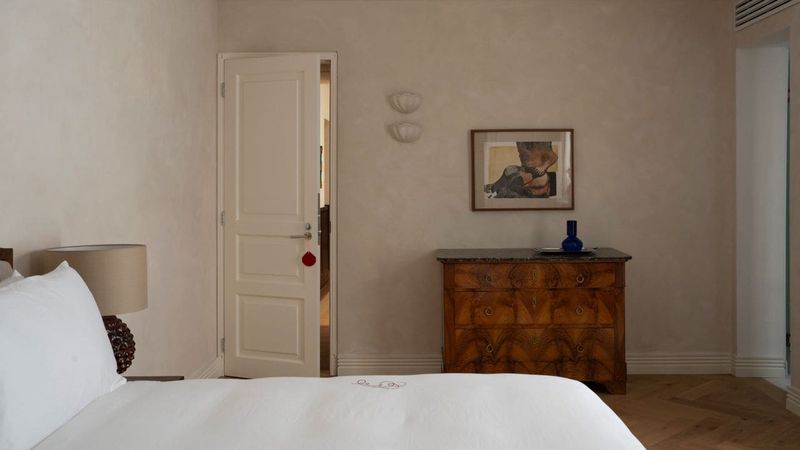
The morning begins with a practical puzzle. In a canopy bed at Ashford Castle, the historic Guinness estate turned five-star hotel in County Mayo, one wakes to the realisation that a blacksmith's forge was never part of the packing calculus. Steel-toe boots won't fit in cabin luggage. Favourite knitwear seems suddenly precious. But the hotel's Irish experiences ambassador, Eoin Warner, arrives with Wellies and protective jackets, and the question resolves itself. By mid-morning, the car is heading south towards Kilreekil in County Galway, where the farmland opens wide and a workshop waits among the fields.
This is not the Ireland of castle turrets and afternoon tea, though Ashford offers both in abundance. The property has collected awards season after season, its guest rooms and grounds polished to the gleam expected of a property in its class. But the Meet the Makers programme, launched to connect visitors with local craft traditions, points in a different direction. It asks guests to leave the estate and follow Warner down narrow roads to places where iron is still bent by hand and cheese wheels ripen in cool stone rooms.
A Workshop in Kilreekil
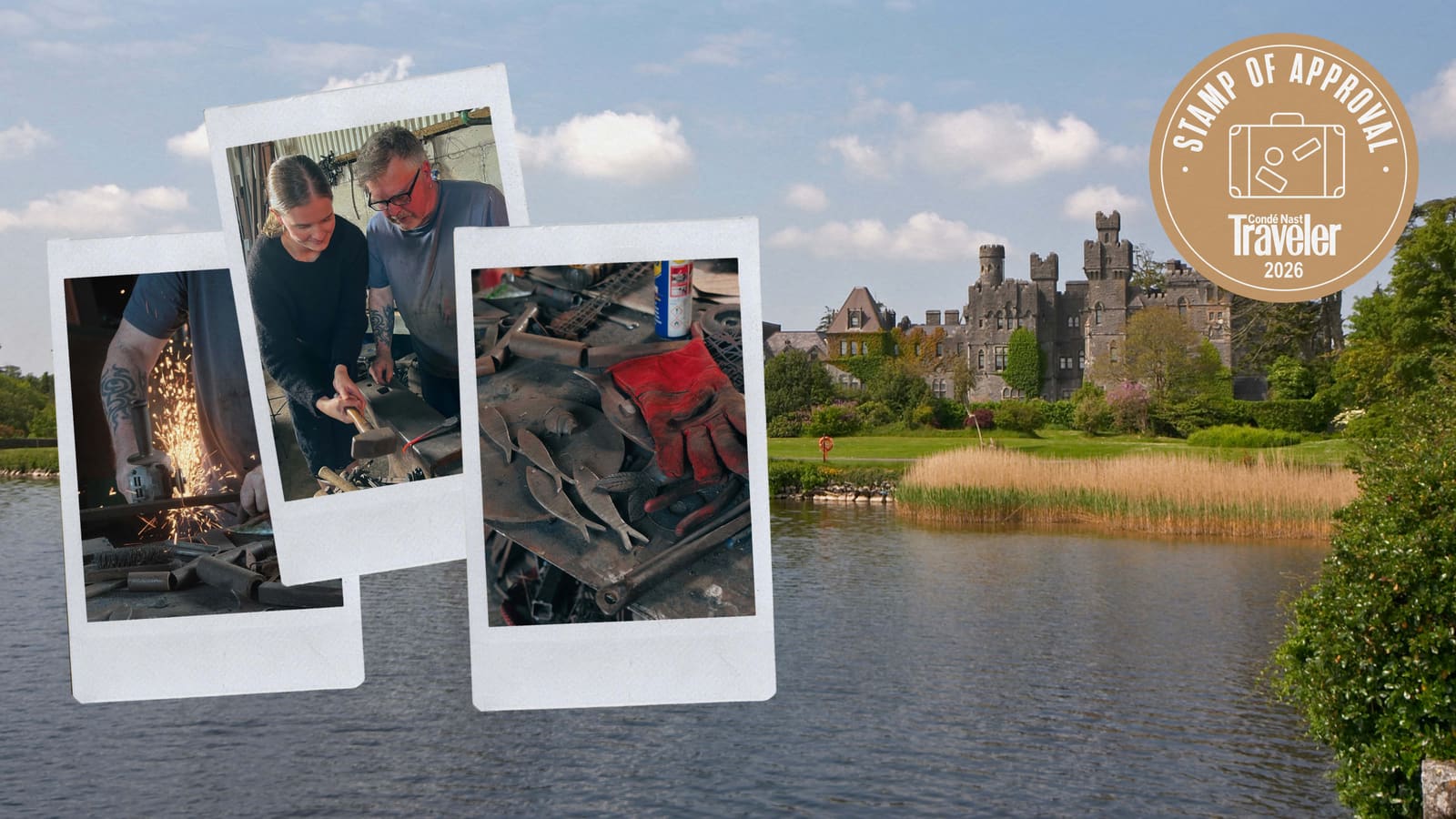
Stephen Quinn's forge sits tucked among the farms, wrought-iron gates and balconies in various stages of completion lining the path to the door. The space feels alive with half-finished work: oversized ladybugs rejected from a garden commission, hand-forged fish, tools in configurations that suggest years of improvisation. Quinn himself greets visitors with the ease of someone who has spent decades in conversation over open flame.
He shovels coal into the forge and the fire climbs. Within moments an iron bar glows white in the heat, and the choice is offered: a keychain or a coat hook. The hooks win, a leaf shape for one guest, a horse head for another. Quinn pulls the iron at the exact moment it reaches working temperature and brings it to the anvil, where hammer strikes fold the metal like cloth.
The leaf design demands multiple trips back to the forge and the assistance of a power hammer to achieve the curve Quinn wants. Five hard strikes with a chisel create the eye of the horse. The anvil's curved edge bends the iron backward into a hook that will eventually hang in a Brooklyn apartment. Both pieces are plunged into cold water, then painted with a mixture of linseed oil, beeswax and something Quinn declines to name.
The work is punctuated by laughter. Quinn moves between instruction and anecdote with the timing of someone who could have made a living on stage if iron had not claimed him first. Two hours pass in what feels like twenty minutes, the only evidence of effort a smarting right arm and the lingering smell of coal smoke.
The Role Blacksmiths Once Held
Before the morning's forge work, Ashford Castle's historian, Fintan Gorman, had offered context. The Guinness family, during their tenure at the estate, employed a family of blacksmiths named Hickey who shod horses, forged fencing and gates, and crafted tools and weapons. The forge was not only a site of labour but a social anchor. In an era before central heating, it was one of the few places guaranteed to hold a fire, and people gathered there. Blacksmiths occupied a place of regard in Irish history, Gorman explained, their skill woven into the fabric of rural life.
Quinn's workshop carries that lineage forward. He works on commissions for private homes and public spaces, bending iron into balconies and garden features that will outlast their owners. The craft has remained largely unchanged for centuries: heat, hammer, repetition. What has shifted is the context. Blacksmithing is no longer essential to daily survival, but it persists as a form of cultural memory, a way of making that resists the flattening logic of industrial production.
Lunch at Kylemore Farmhouse Cheese
After the forge, the itinerary moves to Kylemore, where Teresa Roche runs a dairy farm that has been in her family for four generations. She walks visitors through the cow barn and the curing room, where wheels of cheese age on wooden shelves. At one point she pours whey straight from the production line, still warm, into cups. It tastes faintly sweet and grassy, nothing like the pale liquid that separates from yoghurt.
Lunch is served at Roche's house. The table holds a sprawling cheese plate, each variety made on the farm, and an apple tart baked by her mother. The meal is generous in the way that farm meals often are, portions sized for people who work outdoors. It becomes clear that blacksmithing builds an appetite in ways that other activities do not.
Roche speaks about the farm with the same quiet authority that Quinn brought to the forge. She knows her cows individually, can trace the lineage of her herd, understands the microbial life that turns milk into cheese. The work is physical and relentless, subject to the rhythms of animals and seasons. Yet she speaks of it without complaint, as something chosen and continually recommitted to.
What the Programme Offers That the Castle Cannot
Ashford Castle does not lack for amenities. The grounds are vast, the service attentive, the rooms furnished with the kind of detail that rewards close inspection. Guests can take falconry lessons, fish for salmon, play golf on a championship course. The property functions as a self-contained world, one in which it is easy to imagine oneself as a Guinness descendant, moving through rooms that were built to impress.
The Meet the Makers programme operates in deliberate contrast to this. There is nothing polished about Quinn's forge or Roche's farmhouse. Both are working spaces, shaped by decades of use, cluttered in the way that functional places tend to be. The experiences are not designed to flatter the guest but to reveal something true about the region: that Ireland's craft traditions are still alive, still practised by people who learned them young and have spent their lives refining them.
This is the programme's quiet argument. Luxury can be purchased, but access to a living tradition requires something else. It requires the willingness to drive forty minutes into the countryside, to put on borrowed Wellies, to stand in the heat of a forge and hammer iron until your arm aches. It requires the humility to recognise that the people you are visiting are not performing for you but allowing you to observe work that would continue whether you were there or not.
The Broader Exceptional Irish Experiences Initiative
The blacksmithing and cheesemaking visits sit within Ashford Castle's Exceptional Irish Experiences programme, which the property organises as bespoke itineraries. Guests submit an enquiry through the hotel's website, and the team builds a custom schedule based on interests and available time. The Fire & Wood itinerary, which includes the blacksmith and the farm lunch, also offers a stop at a furniture maker's workshop, though time constraints sometimes require choosing two experiences instead of three.
Pricing for a full-day itinerary begins at 3,400 US dollars for two people, according to Ashford Castle. The cost reflects not only the time spent with artisans but the logistical coordination required to arrange private access to working studios and farms. These are not standing tours but one-off visits, negotiated individually.
Other itineraries within the programme focus on different aspects of Irish craft and culture. Some emphasise food and drink, visiting distilleries or oyster farms. Others centre on design, with stops at textile studios or pottery workshops. The structure is flexible, built around the premise that meaningful engagement with a place requires more than sightseeing. It requires meeting the people whose labour sustains the traditions that tourists come to admire.
Why Craft Matters Now
There is a particular appeal to handwork in an era when so much of daily life is mediated by screens. The forge and the dairy farm offer a counterpoint to abstraction. The iron is hot or it is not. The cheese ripens or it spoils. Outcomes are tangible, governed by physics and microbiology rather than algorithms.
This is not to romanticise the work. Both Quinn and Roche operate small businesses in a global economy that does not always reward craft at its true value. Machine-made goods are cheaper and more consistent. Industrial cheese production is more efficient than farmhouse methods. Yet both have chosen to continue, and visitors who spend time in their workshops leave with a sharper sense of what is at stake when traditional skills disappear.
The afternoon at the forge and the farm does not pretend to make anyone an expert. Two hours of hammering iron does not a blacksmith make. But it offers something rarer: a glimpse into the rhythm of a craft, the way knowledge is held in the hands as much as the head, the satisfaction of shaping raw material into something useful.
What Guests Take Home
The coat hook forged in Kilreekil will eventually hang in a Brooklyn apartment, a small piece of iron that travelled from a Galway forge to a New York entryway. It will hold jackets and bags, serve its function quietly, and occasionally prompt the story of its making. The cheese from Kylemore will be long gone, consumed at lunch or perhaps purchased to take home, where it will be sliced and shared and remembered.
But the more durable souvenir is the memory of the people met. Quinn's laughter over the anvil. Roche's patient explanations in the curing room. Warner's careful orchestration of the day, ensuring that every element unfolded at the right pace. These are the details that resist fading, the ones that resurface in conversation months later when someone asks about Ireland.
Ashford Castle offers the comfort and beauty that define luxury hospitality. The Meet the Makers programme offers something adjacent but distinct: a chance to see the country not as a backdrop but as a living place, shaped by people whose work connects them to centuries of practice. Both experiences are valuable, but only one tends to dominate the stories guests tell when they return home.
A New Idea of the Destination
To visit Ireland and stay only within the gates of a grand estate is to see one version of the country, and not an inaccurate one. The castles are real, the landscapes are genuinely dramatic, the hospitality is warm. But it is a version that can feel static, preserved in the way that museums preserve things: carefully, at a distance.
The forge and the farm introduce a different Ireland, one defined less by heritage sites than by the people who continue traditions because they find meaning in them. This Ireland is not frozen in the past but actively engaged with it, adapting old methods to contemporary needs while maintaining the core of the craft. It is an Ireland that exists beyond the tourism industry's preferred narratives, though it welcomes visitors who approach with genuine curiosity.
The afternoon spent with Quinn and Roche reframes the destination. It suggests that the most memorable encounters are often unpolished, that the best stories come from moments of participation rather than observation, and that luxury is not diminished by proximity to labour but enriched by it. The castle remains beautiful, its rooms still sumptuous, but the day in Kilreekil and Kylemore becomes the centre of the trip, the part that feels irreplaceable.
This is what the programme achieves. It takes guests who have come for one experience and offers them another, quieter and more durable. The iron cools. The cheese ripens. The work continues, whether anyone is watching or not. And for a few hours, visitors are invited to stand close enough to feel the heat.