When the Blue Train Returns to the Place It Was Reborn
The Venice Simplon-Orient-Express will trace a new route to Monte Carlo in 2027, closing a circle that began with two forgotten carriages at auction fifty years ago.
A Route Half a Century in the Making
In 1977, an American-British entrepreneur named James Sherwood stood in Monte Carlo watching two midnight-blue railway carriages from the 1920s go under the hammer. He bought them both. Over the next five years, he acquired more than twenty others, restored the entire collection, and in 1982 relaunched what would become the Venice Simplon-Orient-Express. Now, forty-five years after those first two carriages changed hands in Monaco, the train is finally going back.
Beginning in May 2027, the Venice Simplon-Orient-Express will offer an annual route from Paris to Monte Carlo, marking the first time the legendary sleeper has included the Monegasque district as a dedicated terminus, according to Belmond. The train will also pause at Monte Carlo on select European itineraries bound for Venice, weaving the principality into a broader network that already connects London, Paris, Florence, and the Adriatic.
The addition feels less like expansion and more like homecoming. Pascal Deyrolle, general manager of the Venice Simplon-Orient-Express, framed the move as a return to origins, noting that Monte Carlo played a pivotal role in the train's resurrection. What began as two forgotten carriages at auction became the seed of an entire fleet.
The Anatomy of an Overnight Journey
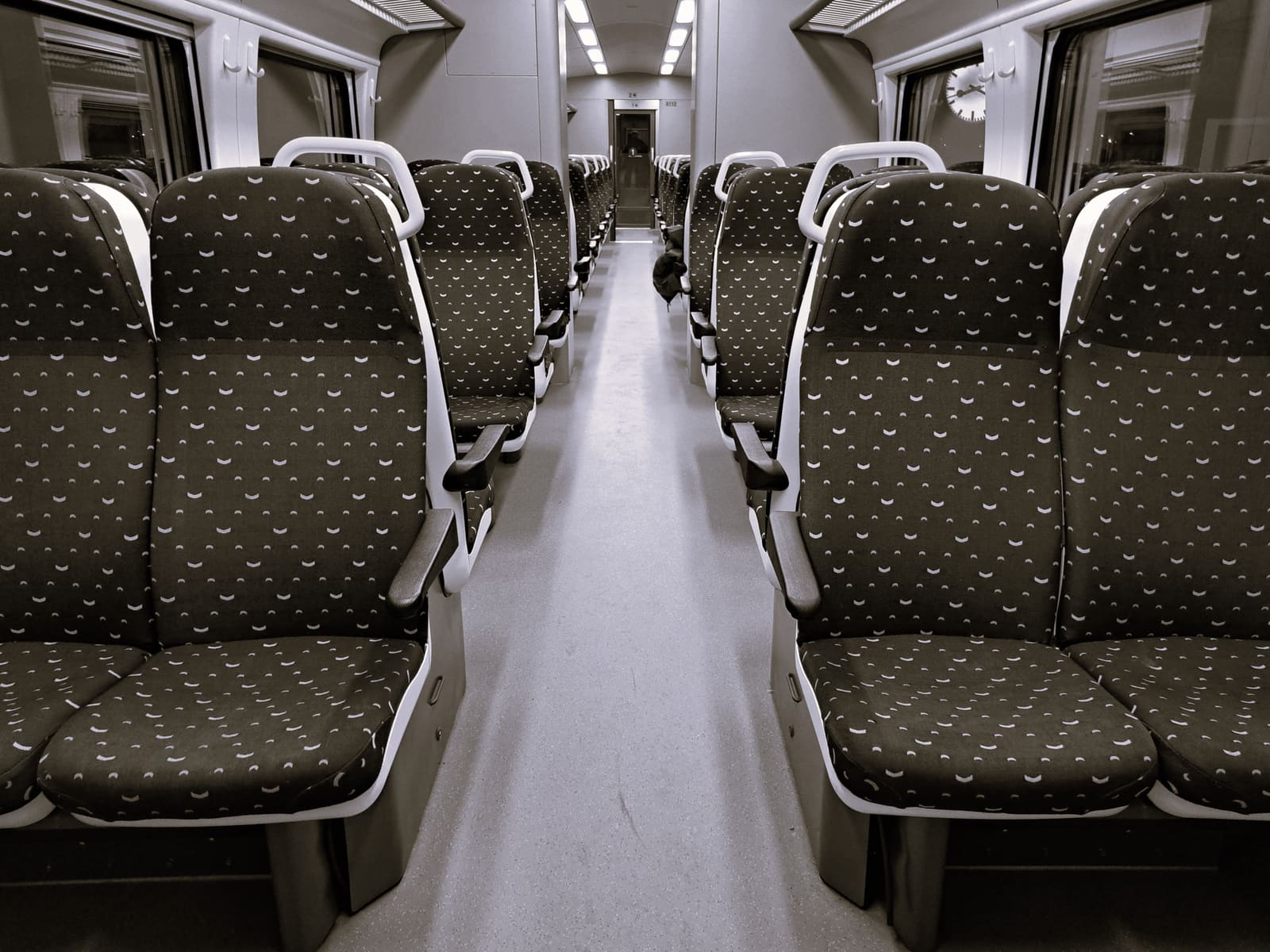
Departure is from Paris Gare d'Austerlitz, where passengers board carriages dating to the interwar years. Accommodation spans a range: Historic Cabins retain the original proportions and marquetry of the 1920s and '30s; Grand Suites add space and en suite facilities; and at the apex sits L'Observatoire, a private carriage outfitted with bedroom, living area, library, and a concealed tea room accessible through a hidden door.
Once under way, guests move between two restaurant cars. Étoile du Nord and L'Oriental serve multi-course dinners paired with wines selected by the on-board sommelier. After the meal, Bar Car 3674 becomes the evening's focal point, with live piano, cocktails mixed to order, and upholstered banquettes that encourage conversation among strangers who will likely never meet again.
Morning brings breakfast in the cabin. By then, the train has traded the pale stone and slate roofs of Île-de-France for the coastal drama of the Côte d'Azur. The route threads through the Massif de l'Estérel, where rust-red cliffs plunge into the Mediterranean, then skirts Saint-Raphaël, Cannes, and Nice before cutting inland through a mountainside corridor that delivers passengers directly to Monaco-Monte-Carlo station.
What Awaits at the End of the Line
The station sits within walking distance of the Monte Carlo Casino, a Belle Époque confection that has appeared in two James Bond films and remains a fixture of the principality's identity. A few streets over lies the Circuit de Monaco, the urban Formula 1 track that winds through tunnels and hairpin turns each May, drawing a different kind of traveller altogether.
Monaco has long understood the theatre of arrival. The principality built its reputation on a particular blend of ceremony, architecture, and coastal light that has attracted generations of visitors seeking a specific atmosphere, one that prizes restraint as much as spectacle. The Venice Simplon-Orient-Express operates within a similar tradition, one where the journey itself is the destination and where slowness becomes a form of luxury.
Deyrolle's observation that Monaco "has always understood the art of arrival" speaks to this alignment. The train and the principality share a vocabulary: both trade in nostalgia without becoming museums, both cultivate exclusivity without descending into ostentation, and both depend on a clientele that values ritual over speed.
The Economics of Nostalgia
The first departure from Paris to Monte Carlo is scheduled for 10 May 2027. Pricing begins at 5,461 USD per person, based on double occupancy in a Historic Cabin, according to Belmond. That figure includes the overnight journey, 24-hour steward service, all meals with paired wines and unlimited soft beverages, and transfers upon arrival.
For context, the cost places the experience in line with other high-end rail journeys in Europe, though the Venice Simplon-Orient-Express commands a premium for its rolling stock, which remains among the most meticulously preserved examples of interwar railway design still in active service. The carriages are not replicas. They are the actual vehicles that once connected European capitals before air travel rendered them obsolete, now maintained by a team of craftspeople who specialise in Art Deco marquetry, brass fittings, and the peculiar engineering challenges of keeping eighty-year-old rolling stock compliant with modern safety standards.
The business model hinges on scarcity. Each carriage holds a limited number of passengers, and departures are infrequent enough to maintain demand. The Monte Carlo route will be offered annually, not weekly, reinforcing the sense that securing a berth is itself an achievement.
Why This Route, Why Now
The decision to formalise a Monte Carlo route arrives amid a broader resurgence of interest in slow travel, particularly among travellers who view flying as a logistical necessity rather than an experience worth savouring. European rail travel has benefited from this shift, with overnight sleeper services expanding across the continent in recent years.
But the Venice Simplon-Orient-Express occupies a different category. It is not positioned as a practical alternative to budget airlines or high-speed rail. It is theatre, a carefully choreographed performance in which passengers pay to inhabit a narrative that predates them by a century. The train does not compete with EasyJet; it competes with five-star hotels, Michelin-starred restaurants, and other forms of experiential luxury where the cost is justified not by utility but by the quality of the memory produced.
Monte Carlo fits neatly into this framework. The principality has spent decades cultivating an image that aligns with the train's brand: European, elegant, and rooted in a specific mid-century vision of sophistication. Adding it to the itinerary is less about opening a new market and more about deepening the train's connection to the mythology it already sells.
The fact that the route circles back to the city where James Sherwood first acquired those two carriages adds narrative weight. It transforms the journey into something more than transport. It becomes a pilgrimage, a return to the place where the dream was born, now accessible to anyone willing to pay the fare and surrender a day to the rhythm of steel wheels on track.
Bookings for the inaugural May 2027 departure are open through the Venice Simplon-Orient-Express reservation system, managed by Belmond.