Where the World Still Breathes Green
From cloud forests to volcanic valleys, the planet's most verdant corners invite slow travel and deep immersion.
The Colour That Restores
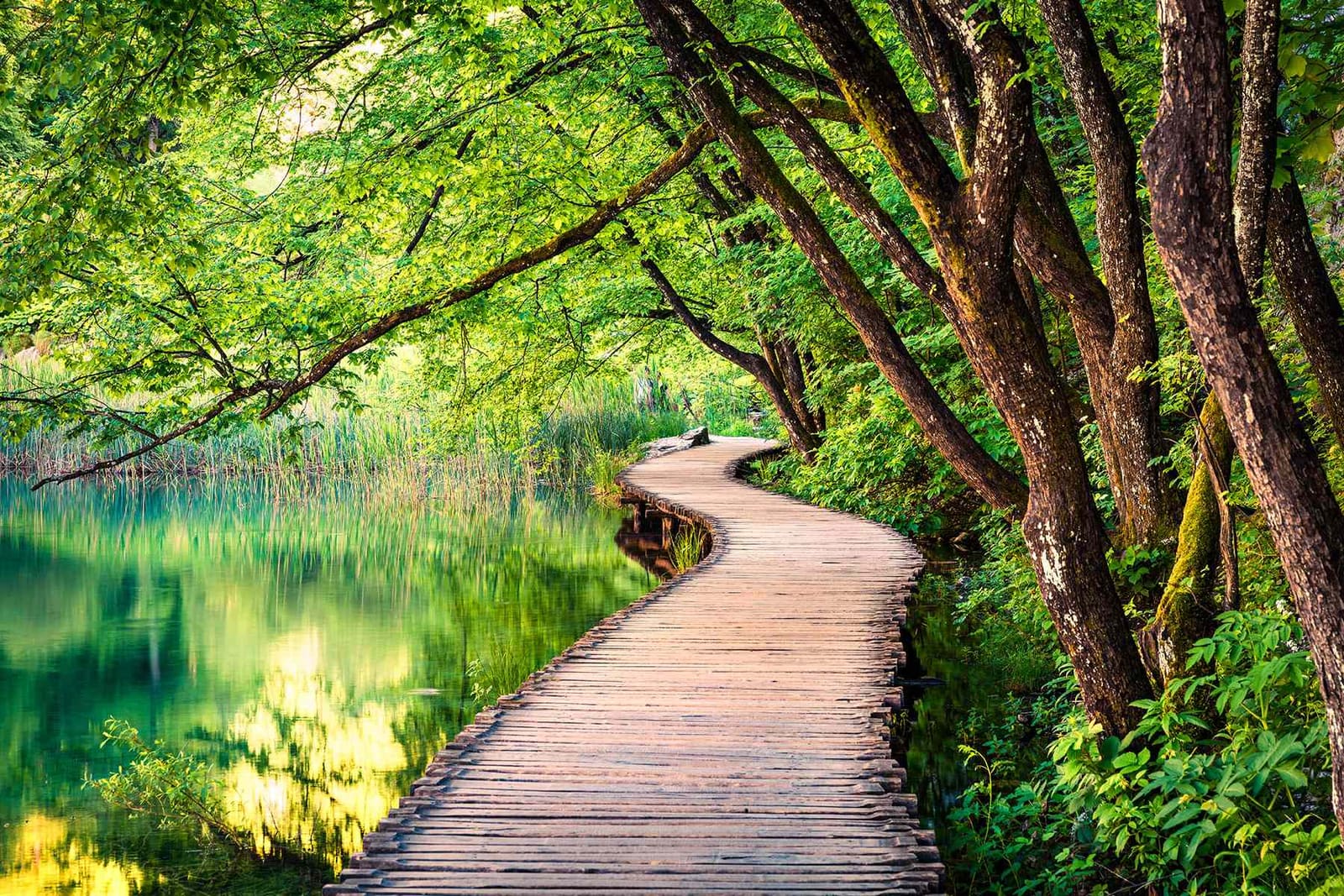
Stand long enough in a place where green is the dominant wavelength and something shifts. The eye relaxes. The breath deepens. It is not romanticism but biology: our visual cortex evolved in landscapes dense with foliage, and returning to them triggers a cascade of parasympathetic responses. The world's most intensely verdant destinations understand this implicitly. They are not merely pretty. They are restorative in the oldest, most literal sense.
These are not the manicured parks of capital cities or the ornamental gardens of resort properties. They are the cloud forests that drink from fog, the moss-draped valleys carved by glaciers, the jungle canopies so thick that noon feels like dusk. They demand different modes of travel: slower, quieter, with an attention span longer than a photo stop. And they reward that patience with encounters that no amount of curation can replicate.
Volcanic Soil and Perpetual Mist
Costa Rica's Monteverde Cloud Forest exists in a permanent state of atmospheric suspension. Here, moisture does not fall so much as hang, wrapping the canopy in a gauze of humidity that sustains over 2,500 plant species. The result is a landscape that feels less like a forest and more like a living tapestry, every surface colonized by epiphytes, bromeliads, and orchids that bloom without touching soil.
Walking the suspension bridges at dawn, when the mist is thickest, offers a peculiar intimacy with scale. Trees emerge from fog in fragments: a branch here, a trunk there, the whole never quite resolved. It is disorienting in the best way, a reminder that not every landscape needs to be legible at a glance. The quetzal, Central America's most iconic bird, thrives here precisely because the forest remains dense enough to hide in.
New Zealand's Fiordland takes a different approach to green. The valleys of Milford Sound and Doubtful Sound are draped in temperate rainforest that owes its intensity to one of the highest rainfall totals on the planet. The effect is less jungle, more emerald cascade: beech trees festooned with hanging mosses, ferns the size of small palms, and a ground layer so thick with humus that footsteps land without sound.
What makes Fiordland compelling is not just abundance but architecture. The forests here grow vertically, stacking themselves in layers that shift with altitude and exposure. At sea level, the palette is nearly black-green; higher up, where the tree line breaks, alpine herbs introduce silver and rust. The interplay between rock and vegetation creates a rhythm that feels almost composed, as if the landscape were designed for dramatic effect.
Jungle as Infrastructure
The Amazon Basin remains the most biodiverse terrestrial ecosystem on Earth, a fact so often repeated it risks becoming abstraction. To grasp what that means requires presence: a night in the Peruvian rainforest near Iquitos, for instance, where the density of sound rivals the density of foliage. Every frequency is occupied. Frogs, insects, birds, and mammals layer their calls into a polyphony so complex it borders on overwhelming.
What strikes many visitors is not the size of individual trees, though the kapok and ceiba can reach 60 meters, but the sheer verticality of competition. Lianas loop and tangle. Canopy species send roots down from above. Fungi glow faintly on decaying logs. It is a system of relentless turnover, where death fuels growth at a pace temperate forests cannot match. The green here is not restful; it is insistent, almost aggressive in its fecundity.
Indonesia's Raja Ampat, though better known for its reefs, offers a counterpoint: green that meets blue without transition. The limestone karst islands rise abruptly from turquoise water, their slopes blanketed in primary rainforest that has never been logged. From the water, the effect is surreal, as if someone had planted jungles on pedestals. The interior valleys, accessible only by kayak or on foot, harbor endemic palms and orchids found nowhere else.
The Green of High Altitude
Scotland's Isle of Skye trades tropical exuberance for a quieter, more austere palette. The green here is tempered by latitude and wind: low grasses, hardy mosses, and the occasional rowan tree clinging to a ravine. Yet the cumulative effect, especially in the Quiraing or along the Trotternish Ridge, is no less saturated. Rainfall and cloud cover see to that.
What Skye offers is legibility. The landscape does not hide its bones. You can read the geology in every ridge, trace the path of ancient ice in every U-shaped valley. The vegetation, sparse by tropical standards, becomes a kind of annotation, highlighting rather than obscuring the landforms beneath. It is green as punctuation, not green as blanket.
Slovenia's Triglav National Park occupies a similar ecological niche but with alpine drama turned up. The Julian Alps are steep enough to create microclimates every few hundred meters, and the result is a telescoped gradient: deciduous forest giving way to conifer, conifer to meadow, meadow to rock. The valleys, fed by snowmelt, stay green well into summer, their floors quilted with wildflowers that shift weekly.
Hiking the Soča Trail in late June, when the river runs milky with glacial silt, is to move through a landscape that feels both ancient and provisional. The green here is seasonal, hard-won, a brief flourishing between snow and snow. That impermanence lends it weight.
The Colour We Return To
There is a reason green appears in nearly every culture's iconography of paradise. It signals water, growth, the possibility of sustenance. To seek out the world's greenest places is not escapism but a kind of calibration, a return to the chromatic baseline our species evolved around. These destinations do not ask to be conquered or checked off. They ask to be inhabited, even briefly, with the attention they have earned over millennia.
The best of them resist summary. They are too layered, too alive, to be reduced to a single impression. What they offer instead is duration: the slow accretion of detail that comes only from staying put, from watching light change and weather move through. In an era of frictionless travel, they remain stubbornly, gloriously resistant to haste.