Why Athens Belongs to Autumn
The Greek capital sheds its summer crowds and reveals a softer, slower rhythm - one measured in jacaranda blooms and long afternoons in neighbourhood tavernas.
A City That Transforms With the Seasons
There is a particular quality to Athens when the summer heat breaks and the first October light slants through the jacaranda trees. The blooms have faded, but the air carries a memory of them - lilac petals underfoot, the faint scent of bitter orange still clinging to certain streets in the older quarters. This is not the Greece of postcards, the blinding white light and cerulean seas. This is something quieter, more intimate. A city preparing for winter, still warm enough for an evening swim, already buzzing with the energy of people returning from the islands.
Agapi Sbokou, who co-owns and leads Phāea, a collection of boutique properties across Greece, grew up on Crete but has spent most of her adult life in Athens. She moved to the capital at eighteen and never looked back. "There was never really a debate," she says. The city, for her, is less a destination than a living organism - constantly transforming, endlessly explorable. And nowhere is that transformation more visible than in autumn, when the tourist tide recedes and the rhythm of local life reasserts itself.
The Light Changes Everything
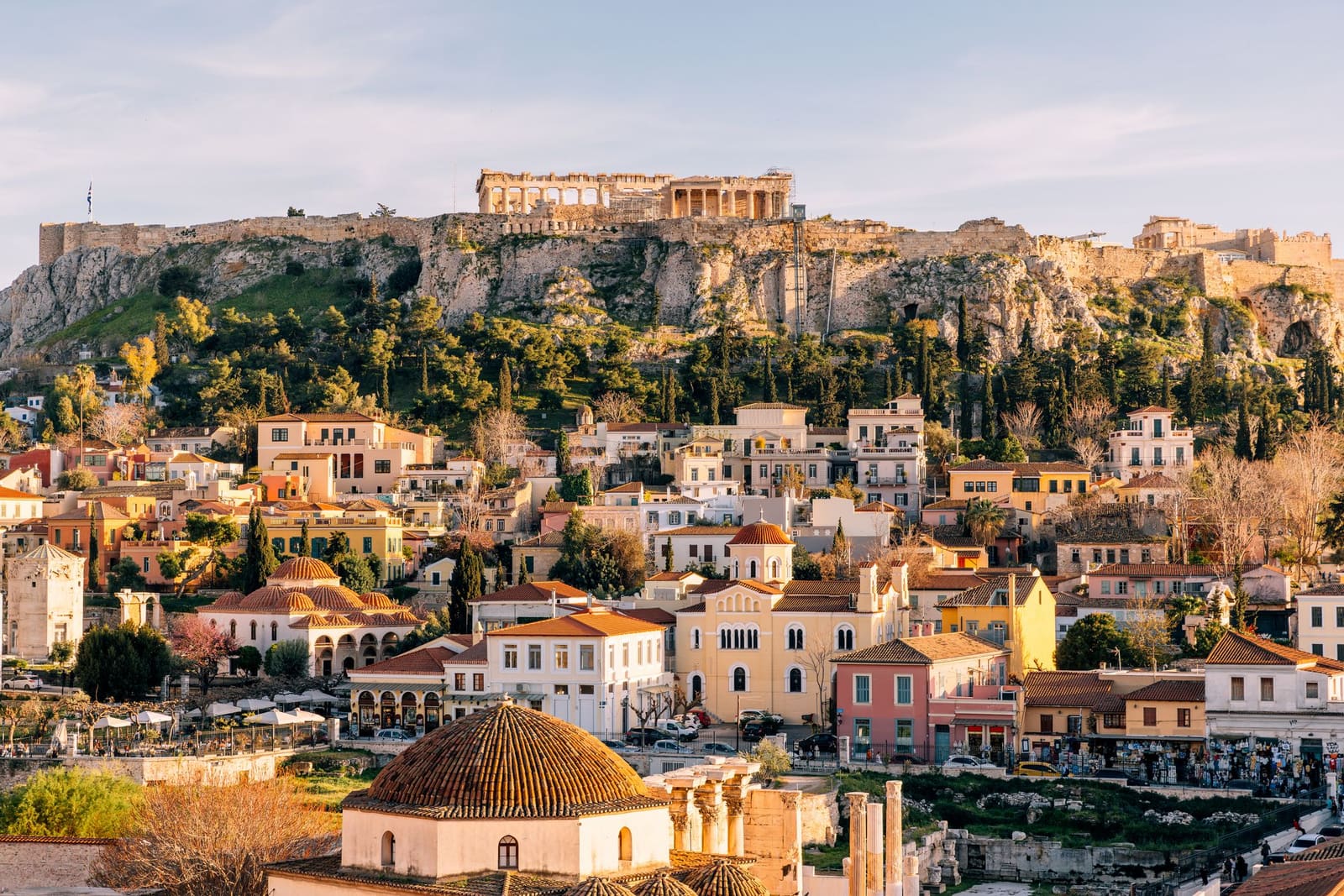
What makes October and November so compelling in Athens is not simply the absence of crowds, though that helps. It is the shift in atmosphere, the way the city recalibrates. The light, Sbokou notes, is no longer that sharp, canonical Greek glare. Instead, it turns golden, mellower, casting long shadows across the marble steps of the Acropolis and softening the edges of the neoclassical facades that line the older neighbourhoods. The jacarandas, which bloom earlier in the year, give way to the russet tones of autumn, and the city feels less like a stage set and more like a place where people actually live.
The weather remains temperate - warm enough for long walks, cool enough to sit outside a taverna without wilting. Rain is rare. The sea, still heated from months of summer sun, draws locals back to the coast on weekends. There is a sense of abundance without excess, of a city that has shaken off its performative summer self and settled back into its own skin.
A Different Kind of Traveller
The visitors who arrive in autumn tend to be different, too. They are not in a hurry. They do not tick off landmarks in a single breathless afternoon. Instead, they linger. They spend two hours in a coffee shop, strike up conversations with strangers at the next table, wander through the smaller museums - the Benizelos Mansion, the oldest house in Athens, or the Benaki Museum's Nema Collection - without feeling the pressure to move on to the next thing. This, Sbokou argues, is what tourism should be: a slow appreciation, an attempt to understand a place's rhythm rather than simply consume its highlights.
Athens rewards this kind of attention. It is a city of neighbourhoods, each with its own character, its own network of relationships. You start your day at the same coffee shop, exchange a few words with the barber, pick up groceries from the corner store where they write your purchases in a notebook and settle up at the end of the month. It is a village masquerading as a metropolis, intimate in ways that a city of four million people has no right to be.
Where to Eat When the Crowds Thin
Autumn dining in Athens is less about chasing the new and more about returning to the familiar. Sbokou favours the places that have been around for decades, the ones that serve traditional Greek cuisine without apology or reinvention. Manári Taverna, tucked beside a Byzantine church in the city centre, offers Cretan-influenced dishes - skioufichta, a thick, hand-rolled pasta simmered in broth and finished with cheese, is particularly suited to cooler evenings. Pharaoh, where everything is slow-cooked over a wood-fired grill, draws a younger crowd with its music and cocktails, but the food remains rooted in tradition. Dourambeis, a fish taverna Sbokou has visited with her father since childhood, continues to serve the kind of seafood that tastes of the Aegean, not the menu.
These are not places you stumble upon by accident. They are the kind of restaurants you hear about from a friend, or from someone who has lived in the neighbourhood long enough to know which corners of the city hold their secrets close.
What to Eat in October
Greek cuisine in autumn exists in a curious liminal space, suspended between the abundance of summer and the heartier fare of winter. The weather remains warm enough that dishes like gemista - hollowed-out tomatoes, courgettes, aubergines, or peppers stuffed with rice, minced meat, herbs, and sometimes nuts - still appear on tables. At the same time, the season calls for something more substantial. Spanakopita, the cheese-and-spinach pie that is a cornerstone of Greek home cooking, becomes more common. Pastries and savoury pies in general proliferate, their flaky layers a comfort as the days shorten.
Athens, as a culinary melting pot, pulls from the entire Greek archipelago. Cretan, Macedonian, and island traditions all find their way onto menus, layered and recombined in ways that reflect the city's role as a crossroads. The result is a food culture that is both deeply traditional and constantly evolving, where a single taverna might serve dishes that span generations and geographies.
The Secret Streets of Kolonaki
Sbokou has spent much of her life in and around Kolonaki, a neighbourhood that climbs the lower slopes of Lycabettus Hill. It is well-known, often crowded, but there are streets within it that remain purely residential, quiet enclaves where the views open up unexpectedly. From certain vantage points, the Acropolis appears framed between buildings, a sudden revelation of ancient stone against the autumn sky. The light at this time of year - soft, golden, forgiving - makes the view feel almost private, as though the city is offering up a secret.
This sense of discovery, of stumbling upon something that feels both monumental and intimate, is central to the experience of Athens in autumn. The city becomes more accessible, more spontaneous. Museums and galleries are easier to visit without the summer queues. Restaurants have tables. Conversations happen more naturally. The Greeks, Sbokou says, are inherently welcoming - they want to share the best of what they have. Autumn is when they have the space to do so.
A City That Rewards Patience
Athens in October is not for those who measure travel in landmarks conquered or photographs taken. It is for those who understand that a city reveals itself slowly, in fragments - a particular slant of light, the way a neighbourhood smells after rain, the taste of skioufichta eaten at a corner table while the evening stretches out. It is for those willing to return to the same place twice, three times, until it stops being a destination and starts being a part of their own story.
The jacarandas will bloom again in spring. The summer crowds will return. But for now, in the soft light of autumn, Athens belongs to those who know how to wait.