The New Luxury Is Getting Your Hands Dirty
From Sussex estates to Long Island shores, hospitality is trading polish for participation - and travellers are lining up to gut fish at dawn.
The Appetite for Effort
There is a moment, somewhere between lifting a rabbit carcass and reaching for the machete, when a certain type of traveller discovers what they came for. Not comfort. Not pampering. Something older.
Nick Weston has watched this realisation arrive thousands of times since 2011, when he began inviting strangers to Shepherd's Barn on his Firle Estate in Sussex. The founder of Hunt Gather Cook runs butchering courses and live-fire feasts that sell out months ahead. Participants fly in from London, Los Angeles, places where meat arrives on polystyrene trays. Here, they learn to break down whole animals over open flame. The only consistent hesitation, Weston notes, comes when it is time to sever a rabbit's head with a blade. Everything else - the blood, the sinew, the frank intimacy of the process - people take to with surprising ease.
This is not adventure tourism in the traditional sense. No one abseils down cliffs or crosses glaciers. The thrill lies elsewhere: in recovering a competence most of us have never possessed, in tasting food whose provenance is measured in metres rather than supply chains. It is a hunger less for novelty than for a kind of literacy we have lost.
Foraging as Folk Knowledge
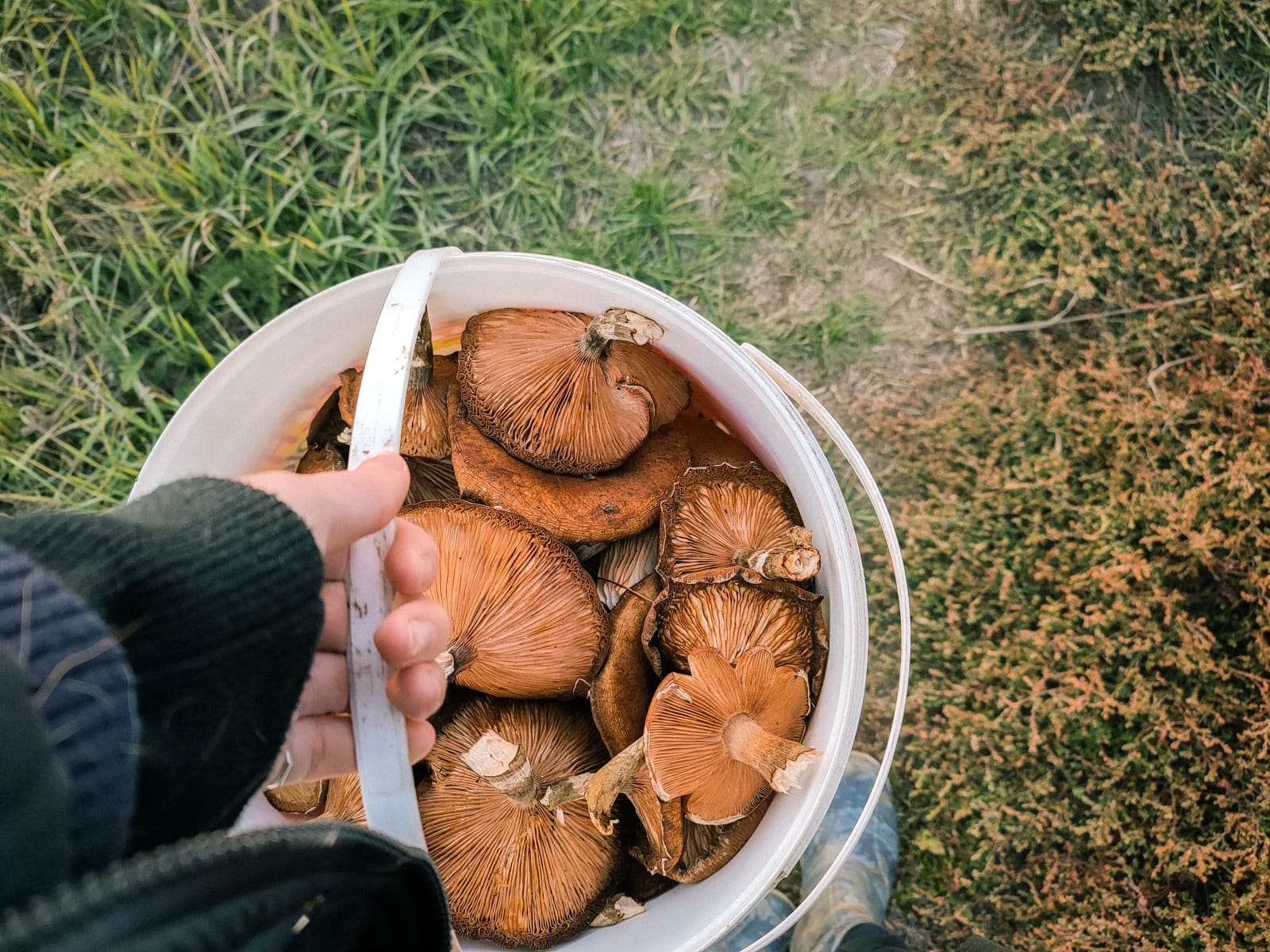
Not every wild food experience requires an estate in the English countryside or a strong stomach for butchery. Alexis Nikole Nelson, who teaches nearly three million social media followers how to identify and prepare foraged ingredients, has built her platform on accessibility. Her first cookbook carries the pragmatic title "Happy Snacking, Don't Die!" and offers recipes for pine shortbread biscuits and pickled milkweed buds - dishes that sound fanciful until you realise the ingredients grow in vacant lots and suburban woodlands.
Nelson's work, like Weston's, rests on an implicit argument: that knowing what grows around you, and how to eat it, is a form of citizenship. Sam Shepherd, a biology professor and director of agriculture and environmental stewardship at Ava Maria University in the Scottish Highlands, frames it in ecological terms. Connecting with an environment through its edible landscape sparks a sense of place that can deepen into environmental stewardship, he explains. It contrasts sharply with tourism built on curated visits where local food becomes backdrop rather than text.
The difference is one of agency. A tasting menu is a performance; foraging is a conversation.
Fishing at a Civilised Hour
On the North Fork of Long Island, Lin Beach House takes a more relaxed approach to the same principle. The six-room Victorian, run by Brian Kwasnieski and Leslie Merinoff Kwasnieski of Matchbook Distillery, invites guests to pull the fish, cut the herbs, blend the gin, and return for dinner. The promise is simple: participate in the day's catch and you will eat better that evening.
Brian, a commercial fisherman, practices pound trap fishing, a method that avoids bycatch by using stationary nets. He typically leaves the dock at four in the morning, returning with pufferfish, porgy, and mackerel. Guests, Leslie clarifies with a laugh, are not expected to join him at that hour. They sleep until ten, then help process the morning's haul - scooping, gutting, filleting - before the kitchen takes over.
The couple has noticed an uptick in interest from a particular demographic: financial analysts, people whose working lives involve spreadsheets and conference calls. They arrive eager to handle something with scales. Leslie suspects the appeal lies in the tangibility of it all. You can see what you have done. The fish does not require a quarterly report.
The Taste of Proximity
What unites these experiences, from Sussex to Scotland to Long Island, is not rusticity for its own sake. It is proximity. The distance between effort and reward collapses. You pick the berry; you taste it an hour later. You catch the fish; it appears on your plate that evening, recognisable. This is not farm-to-table as marketing language. It is farm-to-table as temporal fact.
There is a reason this model appeals now, in an era when most of us cannot name the origin of our last meal. Industrialised food systems are efficient, but they are also opaque. We have gained convenience and lost legibility. Foraging, fishing, butchering - these acts restore a kind of transparency. You know what you are eating because you were there when it was alive, or growing, or swimming.
The effect is not purely intellectual. It is sensory. Wild foods taste different. Berries foraged from hedgerows carry notes absent from their cultivated cousins. Fish pulled from cold water and cooked within hours have a texture supermarket fillets cannot match. The difference is not subtle. It is the difference between a fact and a memory.
Discomfort as Threshold
Still, there is the matter of the machete. And the rabbit. And the recognition that food, before it is food, is life. Not everyone crosses that threshold comfortably. Weston's observation about hesitation is telling. We are willing to eat animals; we are less willing to acknowledge the transformation required. The squeamishness is not about cruelty - these are often the most humane methods available - but about proximity. We prefer our meat to arrive pre-severed, its origins safely abstract.
Yet those who do cross the threshold often describe it as clarifying. There is honesty in the act. You cannot eat meat and pretend it was never alive. You cannot forage without recognising that the landscape is not inert, but productive. The discomfort, in this sense, is the point. It marks the distance we have travelled from the sources of our sustenance, and the effort required to return.
The Deeper Appetite
What is being sold, then, is not really adventure. It is competence. The ability to identify an edible plant. To prepare a fish. To build a fire and cook over it. These are not extreme skills. For most of human history, they were ordinary. Their rarity now is what makes them feel radical.
This is why financial analysts pay to gut mackerel on a Saturday morning. Why Londoners book butchering courses a year in advance. Why foraging guides have become minor celebrities. The hunger is not for wilderness, exactly. It is for a kind of fluency we have outsourced so completely that reclaiming even a fragment of it feels like revelation.
Hospitality, in this context, is no longer about insulation from the world but immersion in it. The luxury is not in being served but in being taught. In leaving with knowledge rather than photographs. In tasting something you helped make real.
The estates and guesthouses offering these experiences are not rejecting comfort - Lin Beach House still lets you sleep until ten - but they are redefining it. Comfort, it turns out, is not only softness. Sometimes it is competence. The satisfaction of knowing, even briefly, how to feed yourself from what is around you.
And perhaps that is the real taste travellers are after: not wild boar or foraged greens, but the feeling of being, for a weekend, a little less dependent. A little more capable. A little closer to the ground.