A Vintage Train in the Swiss Alps Pairs High-Altitude Romance with Gourmet Dining
In under an hour, a meticulously restored carriage climbs past glaciers and mountain peaks, serving lunch at elevations that redefine alpine travel.
A Journey That Bends Time
There is something about vintage train travel that collapses decades. Not in the abstract way we talk about nostalgia, but in the literal sense: wood-paneled compartments, brass fixtures worn smooth by a century of hands, the rhythmic clatter of steel wheels on old track. In Switzerland, where precision and tradition are not opposing forces but complementary ones, a particular alpine railway has begun offering an experience that merges these elements with an altitude most commercial flights have yet to leave behind.
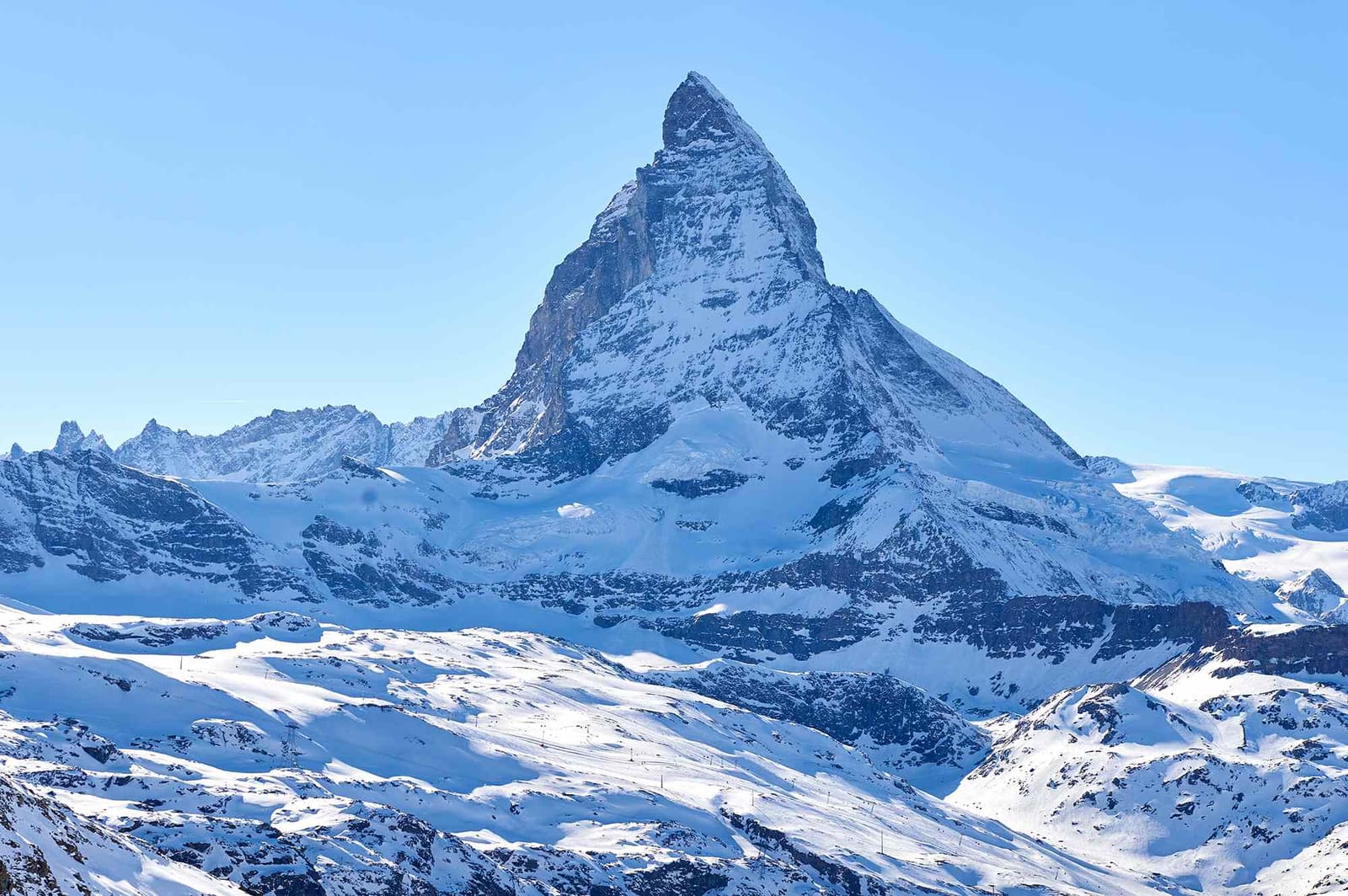
The train in question climbs beyond 10,000 feet, threading through passes where glaciers hang like frozen curtains and peaks serrate the sky. The journey unfolds in less than sixty minutes, yet the experience stretches far longer in memory. At Global Chic Voyage, we've watched alpine rail tourism oscillate between heritage preservation and modern comfort; this service tips the balance back toward the former while refusing to compromise on the latter.
Elevation and Elegance in Equal Measure
Alpine railways have always been feats of engineering, but few manage to pair that technical prowess with culinary ambition. Here, gourmet lunch service begins shortly after departure, unfolding across courses as the landscape outside shifts from green valley floors to bare rock and ice. The menu leans on regional ingredients, preparations that honor Swiss terroir without descending into kitsch. Think charcuterie sourced from alpine farms, cheese aged in mountain caves, bread baked that morning in valley ovens.
What distinguishes this offering is not novelty but coherence. The vintage carriages, some dating back to the early twentieth century, have been restored with an eye toward authenticity rather than theme-park reproduction. Upholstery in muted wool, windows that open to let in the thin, cold air, fixtures that reflect an era when travel was slower and more deliberate. The dining service matches this ethos: courses are timed to the ascent, with wine poured as the train rounds bends that reveal new vistas.
The Architecture of Ascent
The route itself is a study in topography. From the valley station, the gradient steepens almost immediately, and the train begins its climb through forests of larch and pine. Within twenty minutes, the treeline falls away, replaced by alpine meadows dotted with wildflowers in summer or blanketed in snow during colder months. By the halfway point, the train has crossed into a landscape that feels less inhabited than borrowed, a place where human presence is tolerated but not permanent.
Glaciers come into view as the train nears its highest elevation, their blue-white faces scarred by crevasses and melt channels. These are not the pristine ice sheets of postcards but working glaciers, retreating year by year, their moraines littered with the debris of geological time. The dining car windows frame these vistas with an intimacy that no helicopter tour or cable car can replicate. You are moving through the landscape, not over it, and that distinction matters.
A Philosophy of Slow Luxury
The brevity of the journey is part of its appeal. In an era when multi-day rail odysseys compete on distance and amenity, a sub-hour experience feels almost radical in its restraint. There is no time for boredom, no lull in which attention drifts to phones or small talk. The train demands presence, and the service is calibrated to reinforce that.
Staff move through the carriages with the quiet efficiency of people who understand that luxury, at this altitude, is not about excess but about precision. Courses arrive as the train slows for particularly dramatic views, allowing passengers to eat and observe without distraction. Wine selections are explained in terms of the landscape outside: minerality that echoes the granite peaks, acidity that cuts through rich alpine butter, tannins that mirror the austerity of high-altitude air.
This is not performative luxury. It is functional, considered, and deeply attuned to place. The vintage carriages are not museum pieces but working vehicles, their interiors worn in the way that only genuine use can achieve. The food is excellent without being fussy, the service attentive without being intrusive. The entire experience feels less like a tourist attraction and more like an invitation into a particular way of seeing the Alps.
The Weight of Heritage
Swiss alpine railways have always occupied a strange cultural space, caught between transportation infrastructure and tourist spectacle. This train leans into that tension rather than resolving it. The vintage rolling stock is a deliberate nod to the golden age of rail travel, when the journey itself was the destination and speed was less important than comfort and view. Yet the service is thoroughly contemporary, informed by modern culinary standards and hospitality practices.
What emerges is a kind of temporal layering. You are riding a train that might have carried travelers a century ago, eating food that reflects current thinking about seasonality and sourcing, passing through a landscape that has been shaped by millennia of ice and erosion. The experience does not flatten these timelines into a single nostalgic blur but holds them in productive tension, allowing each to inform the others.
Why High Altitude Matters
Dining above 10,000 feet changes the experience in ways both physiological and perceptual. The air is thinner, which affects everything from how wine tastes to how quickly fatigue sets in. Colors appear sharper, contrasts more pronounced. The cold seeps through the vintage windows, making each sip of hot coffee or bite of warm bread feel more necessary, more earned.
At Global Chic Voyage, we've long argued that luxury travel is not about insulation from place but deeper engagement with it. This train exemplifies that philosophy. The elevation is not a selling point to be checked off but a condition that shapes every element of the journey. The menu is designed around altitude, the pacing of service calibrated to the climb, the interior warmth of the carriage set against the inhospitable cold outside.
The Alps as Dining Room
By the time the train reaches its apex and begins the descent, the landscape has cycled through multiple ecosystems. Passengers have eaten through courses that mirror that progression: starters as light as the valley air, mains as substantial as the mountain itself, desserts that offer a kind of sweetness the high peaks lack. The vintage carriages, which felt quaint at departure, now seem like the only appropriate vessel for such a journey, their age and craftsmanship matching the ancient geology outside.
This is not a gimmick or a one-off novelty. It is a carefully constructed experience that understands what makes alpine rail travel compelling: the combination of movement and stillness, the way a train allows you to inhabit a landscape without disturbing it, the pleasure of being fed well in a place where survival, not comfort, used to be the primary concern.
The journey ends where it began, back at the valley station, but the descent feels different. You have been higher than most roads reach, eaten better than most alpine huts serve, and done it all in a carriage that has been making this climb for decades. The brevity of the experience only sharpens its impact. Less than an hour, and yet it lingers like a full day spent in the mountains, the memory of cold air and warm bread and glaciers seen through vintage glass.