When Silence Becomes the Most Nourishing Course
A meditative dinner without conversation reveals what stillness can teach us about connection and the art of listening inward.
The Weight of Unspoken Words
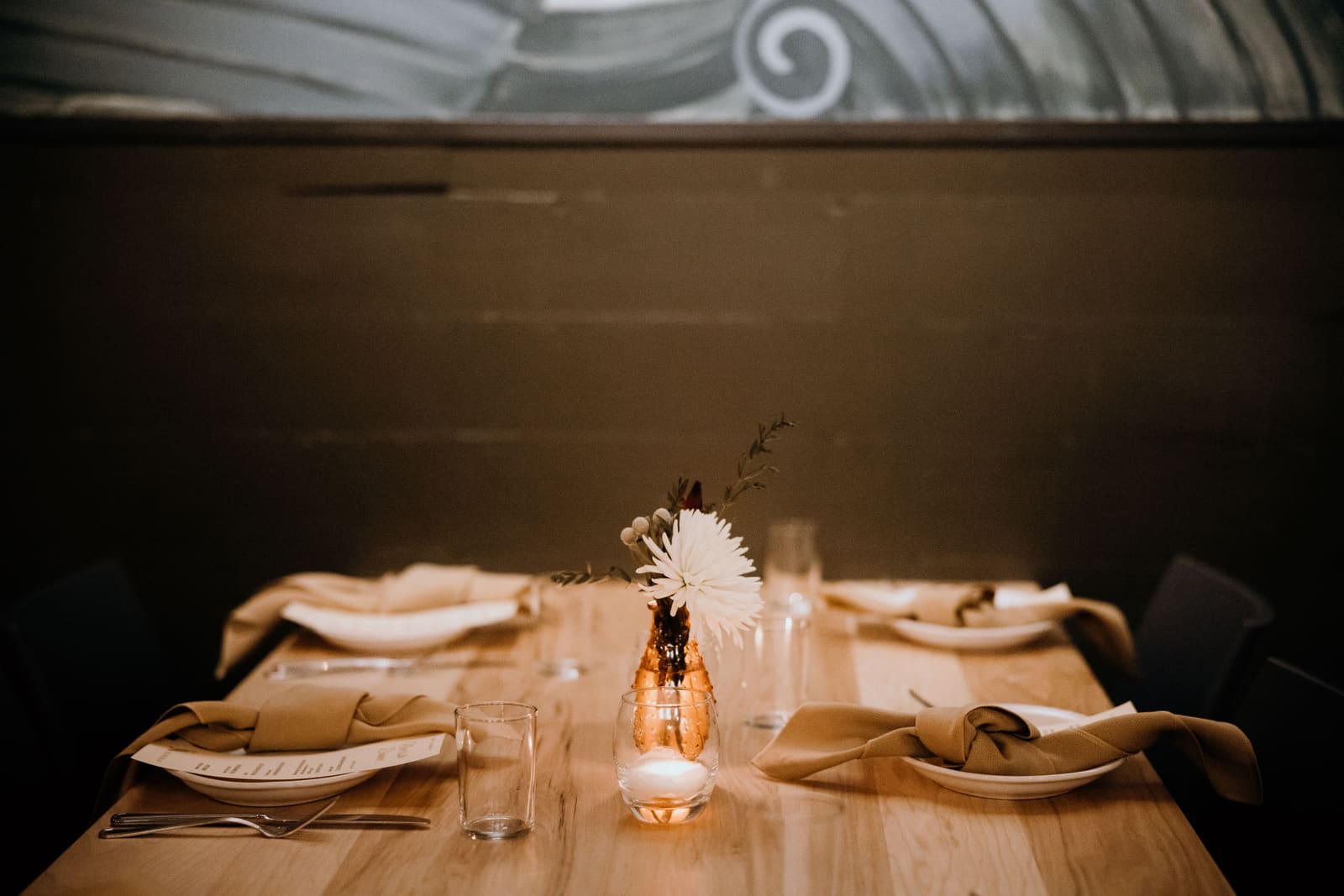
The rectangular table stretched before her like something borrowed from a medieval banquet hall, lined with strangers who had collectively agreed to the strangest of social experiments. Sixteen people, five courses, ninety minutes. Not a single word exchanged. At Rancho La Puerta in Tecate, Baja California, the ritual known simply as the Silent Dinner has been unfolding for over fifteen years, transforming the act of eating from social performance into something closer to meditation.
The awkwardness arrives first, before the food. It settles over the room like a fog, suppressing nervous smiles and magnifying the scrape of fork against porcelain, the clearing of throats, the relentless tick of the wall clock. This is the sound of people confronting what they've voluntarily chosen: a meal stripped of the one thing that usually makes communal dining bearable.
Yet travellers are increasingly drawn to precisely this kind of experience. The wellness resort, situated on 1,600 hectares of mountainous countryside mere kilometres from the US border, has woven quietude into its philosophy since 1940. Labyrinths invite contemplation. Mountain hikes at sunrise unfold without manufactured sound. Meditation sessions require no speech. The Silent Dinner simply takes that ethos to the table, making absence the centrepiece.
The Language of Gesture
Communication doesn't disappear when words do; it transforms. A raised arm, a miming motion of slicing bread across an open palm. The waiter nods, understands, delivers. One guest closes her eyes through entire courses. Another eats with his hands, returning to some primal relationship with food that cutlery has made us forget. The ceramic creatures scattered across the table - small sculptures, tchotchkes, decorative oddities - become companions, their painted eyes witnesses to this peculiar theatre.
The phones that govern so much of contemporary existence are already discouraged throughout the property, but here they're explicitly forbidden. Without screens to fill the gaps, without conversation to paper over discomfort, guests are left with only the vantage point of their own thoughts. For some, this is precisely the point. For others, it takes three courses to stop resisting.
What Stillness Reveals
Somewhere between the black bean soup and the fourth course, something shifts. The self-consciousness that makes you hyper-aware of every slurp, every breath, begins to dissolve. Shoulders drop. Breathing deepens. The mind, no longer required to perform the constant work of social engagement, begins to wander in unexpected directions.
For a mother whose days in New York rarely include stillness, the silence becomes a kind of excavation. Fragments surface: a line from a book read months ago and immediately forgotten, now retrieved whole. Images of a daughter's childhood drift past, unhurried. The solution to a creative problem that had resisted all direct assault simply appears, anticlimactic in its ease. This is the paradox of enforced quiet - in ceasing to try, things arrive.
The phenomenon extends beyond individual revelation. Without conversation to mediate connection, guests become more attuned to one another through different channels. Eye contact lingers. Small gestures of help - interpreting a request for salt, passing bread unprompted - take on weight. One man imagines he's dining with his late wife; his neighbour, witnessing his expression, offers a wordless embrace. One woman remarks afterward that she'd never smiled at so many strangers in a single evening.
The Broader Turn Towards Quiet
The appetite for such experiences reflects a wider shift in how people approach travel. What some hospitality analysts have termed "hushpitality" speaks to a growing desire for destinations that offer respite from the relentless noise of daily life. It's not simply about spa treatments or nature walks, though those remain popular. It's about designing experiences that require travellers to slow down, to disengage from the constant stimulation that defines contemporary existence.
Other properties have begun experimenting with similar offerings. At Fairmont Chateau Lake Louise in Alberta, Canada, guided silent hikes around the glacial lake allow walkers to absorb the landscape without narration. The resort's Basin thermal facility includes an Aufguss experience - a multisensory sauna ritual centred on heat, scent, breath and silence. In the Italian Dolomites, Olympic Spa Hotel markets its Sleep Retreat around the absence of noise and light pollution, recalibrating guests' circadian rhythms through enforced darkness and mountain air. Eremito, a contemporary hermitage in Umbria, removes Wi-Fi, television and mobile signal from guest rooms entirely, leaving only books, nature and the radical prospect of doing nothing in particular.
These aren't gimmicks. They're responses to a genuine hunger for experiences that don't demand constant engagement, that allow travellers to step out of the performance of being present and simply be.
After the Bell
When the bell signals the end of the ninety minutes, several diners jolt involuntarily, pulled from whatever private world they'd inhabited. But no one rushes to leave. Instead, they linger, trading observations with the same strangers they'd shared silence with moments before. Phone numbers are exchanged. One woman thanks the person who helped interpret her request for salt, their improvised sign language having forged an unexpected alliance.
The paradox becomes clear: silence didn't isolate them. It offered a different grammar for connection, one that bypassed small talk and polite deflection. During the meal, each person had retreated into solitude. Afterward, they discovered they'd somehow shared something more substantial than conversation typically allows.
It's a lesson that extends beyond the dining room. In a culture that equates connection with constant communication, that mistakes noise for engagement, the Silent Dinner suggests an alternative. Sometimes the most nourishing course isn't what's served on the plate. It's what happens when you stop filling the space between yourself and others with words, and start listening to what emerges in the quiet.