The Supplement Stack in the Ship's Galley
On a sailing trip through the Dalmatian coast, wellness routines followed the travellers aboard - and raised a question worth asking.
The Inventory
The galley shelf told its own story. Collagen powders stood in formation beside the coffee maker, each traveller's preferred brand accounted for. Electrolyte packets occupied an entire shelf, the foil sachets catching Mediterranean light through the porthole. A wicker basket held NAD+ liposomal supplements and sheet masks, packed with the same care one might reserve for passport and phone charger.
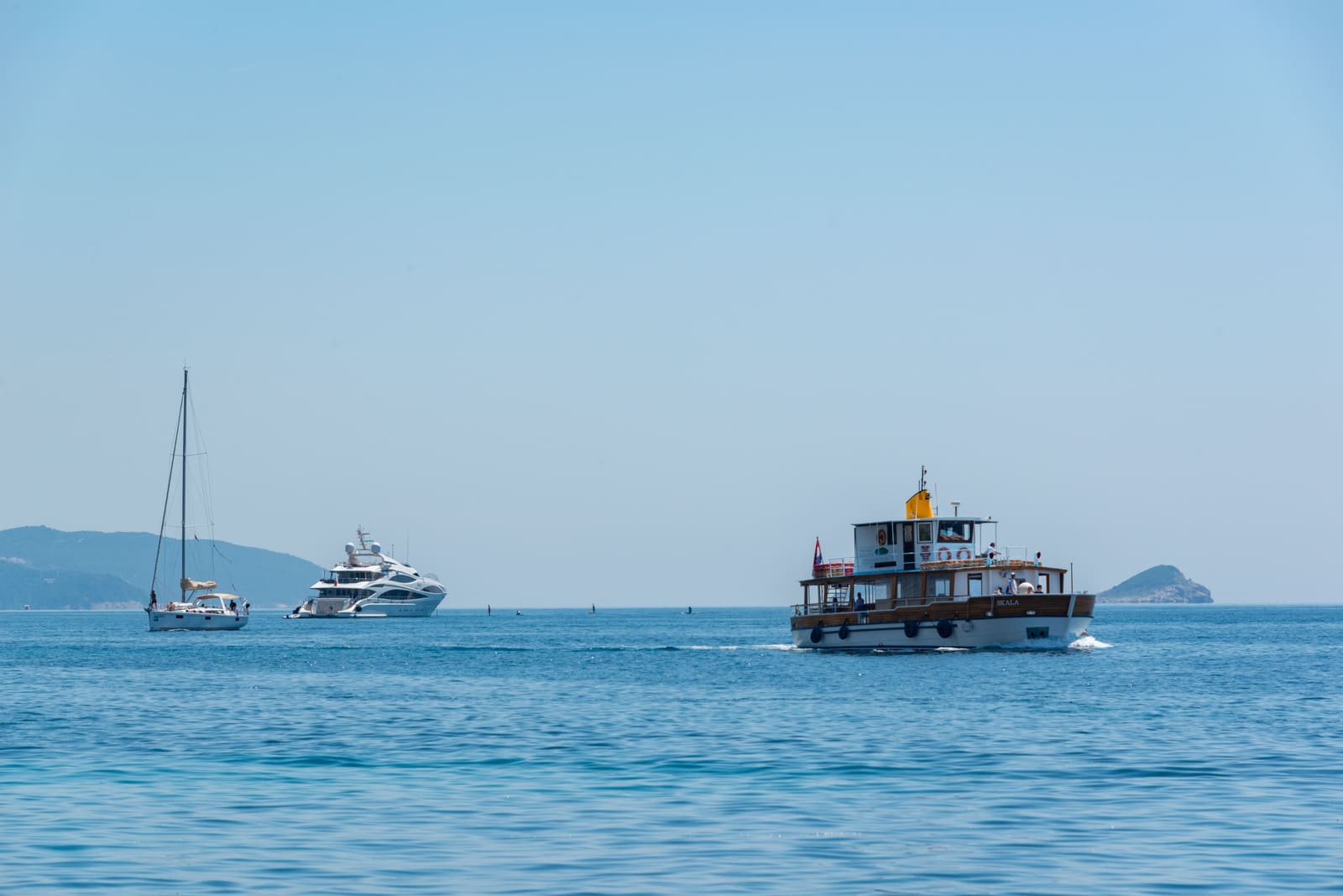
This was a sailing trip through the Dalmatian archipelago, the kind of journey that promises escape. Limestone cliffs rose from turquoise water. Ancient walled towns perched on promontories. The itinerary had been deliberately loose - anchor where the wind takes you, eat what the sea provides, let the rhythm of tides replace the tyranny of the calendar.
Yet the galley inventory suggested a different story. The protocols had boarded the yacht alongside the passengers.
What Followed Us
The observations accumulated slowly, then all at once. Over a lunch of just-caught seafood pasta on the bow - prepared by Matea, the boat's cook, with olive oil and herbs from Korčula - one passenger mentioned she would kill for her usual protein smoothie. The comment landed lightly, almost a joke, but it lingered.
Walking the limestone lanes of Korčula's old town, another traveller announced an urgent need for a collagen sheet mask. On Mljet, returning from the island's famous saltwater lakes with hair still dripping, someone asked if anyone had brought a hair treatment. The sea salt, she explained, was wrecking her extensions.
These were not complaints, exactly. They were the ambient hum of a particular kind of modern consciousness - one that tracks, measures, and intervenes. One that has internalised the idea that the body, left to its own devices, will fail to optimise.
The Promise We Carry
The women on this trip were sharp, intuitive, accomplished. They ran businesses, managed teams, navigated complexity with grace. Yet all of them - myself included - had absorbed the same underlying proposition: that we can no longer trust our own sense of well-being without external validation. That with the right supplement stack, the right tracking device, the right intervention, we might outwit aging, fatigue, the fundamental disorder of being alive.
It is a seductive idea. Wellness culture packages it beautifully - clean labels, clinical language, the aesthetics of self-care. Tracking technology amplifies it. Heart-rate variability scores. Sleep stages. Macronutrient ratios. Every metric promises mastery, and every notification implies that without constant vigilance, the body will betray you.
The irony, of course, is that travel was supposed to be the antidote. The reason we book the sailing trip, the remote island, the off-grid cabin is to step outside the systems that govern daily life. To eat when hungry, sleep when tired, move when the impulse strikes. To rediscover the body as something other than a project requiring management.
But if the supplements and the protocols and the tracking apps come along, what has actually been left behind?
The Question the Galley Raised
There is nothing inherently wrong with collagen powder or electrolyte supplements. Plenty of people benefit from them. Tracking technology can be useful, even revelatory, for those managing chronic conditions or training for specific goals. The issue is not the tools themselves.
The issue is the underlying belief system - the one that insists we are perpetually on the edge of deficiency, decay, suboptimality. The one that reframes rest as recovery, hunger as a macronutrient puzzle, and a week on a boat as an opportunity to maintain protocols rather than suspend them.
This mindset does not stay at home when you board a flight. It does not respect the boundary between work life and holiday. It travels as hand luggage, as carry-on, as the mental habit of turning every experience into data.
What the Adriatic Offered
The Adriatic, for its part, was indifferent. The water remained the same shade of impossible blue whether or not anyone had taken their morning collagen. The sun set over Hvar with no regard for heart-rate variability scores. The octopus salad in a harbourside konoba on Vis tasted exactly as it should - briny, tender, dressed simply with lemon and oil - regardless of whether it fit anyone's macro targets.
The islands themselves have a long memory. They have seen Illyrians, Romans, Venetians, Ottomans, Austrians. They have weathered wars and plagues and the slow grind of centuries. They do not optimise. They simply persist.
There is something instructive in that. Not as a rebuke, but as an alternative model. The body, too, has its own ancient intelligence. It knows how to heal a cut, fight off infection, regulate temperature, signal hunger and fullness. It has been doing this for millennia, long before the advent of wearable devices and liposomal delivery systems.
Trusting that intelligence does not mean rejecting all intervention. It means recalibrating the relationship - recognising when the tools serve you and when you have begun to serve the tools.
The Limit Worth Finding
On the last night of the trip, anchored in a quiet bay off Lastovo, someone asked the question aloud: what would it feel like to leave the supplements at home next time? Not as deprivation, but as experiment. To see what the body knows without being told.
No one answered immediately. The question hung in the salt air, somewhere between the rigging and the stars.
It is not an easy question. Wellness culture is persuasive precisely because it taps into real anxieties - about health, about aging, about control in an uncontrollable world. Letting go of the protocols can feel like letting go of the only leverage you have.
But perhaps the more interesting question is this: what if the body does not need to be optimised? What if it simply needs to be inhabited - fed when hungry, rested when tired, moved when restless, trusted to signal what it requires?
Travel, at its best, creates the conditions for that kind of listening. It removes you from the systems and routines that usually mediate your experience of yourself. It places you in environments - a sailboat, a mountain trail, a foreign city - where the usual metrics lose their relevance and the body's own feedback becomes, once again, the primary source of information.
The galley shelf will probably look much the same on the next trip. Habits are stubborn, and routines provide comfort. But the question it raised remains worth asking: where is the limit, and what might lie beyond it?