Public West Hollywood Rewrites the Rules on Sunset Strip
Ian Schrager brings Studio 54 energy to a corner of Los Angeles where quiet good taste has reigned for decades.
A Return to Theatre
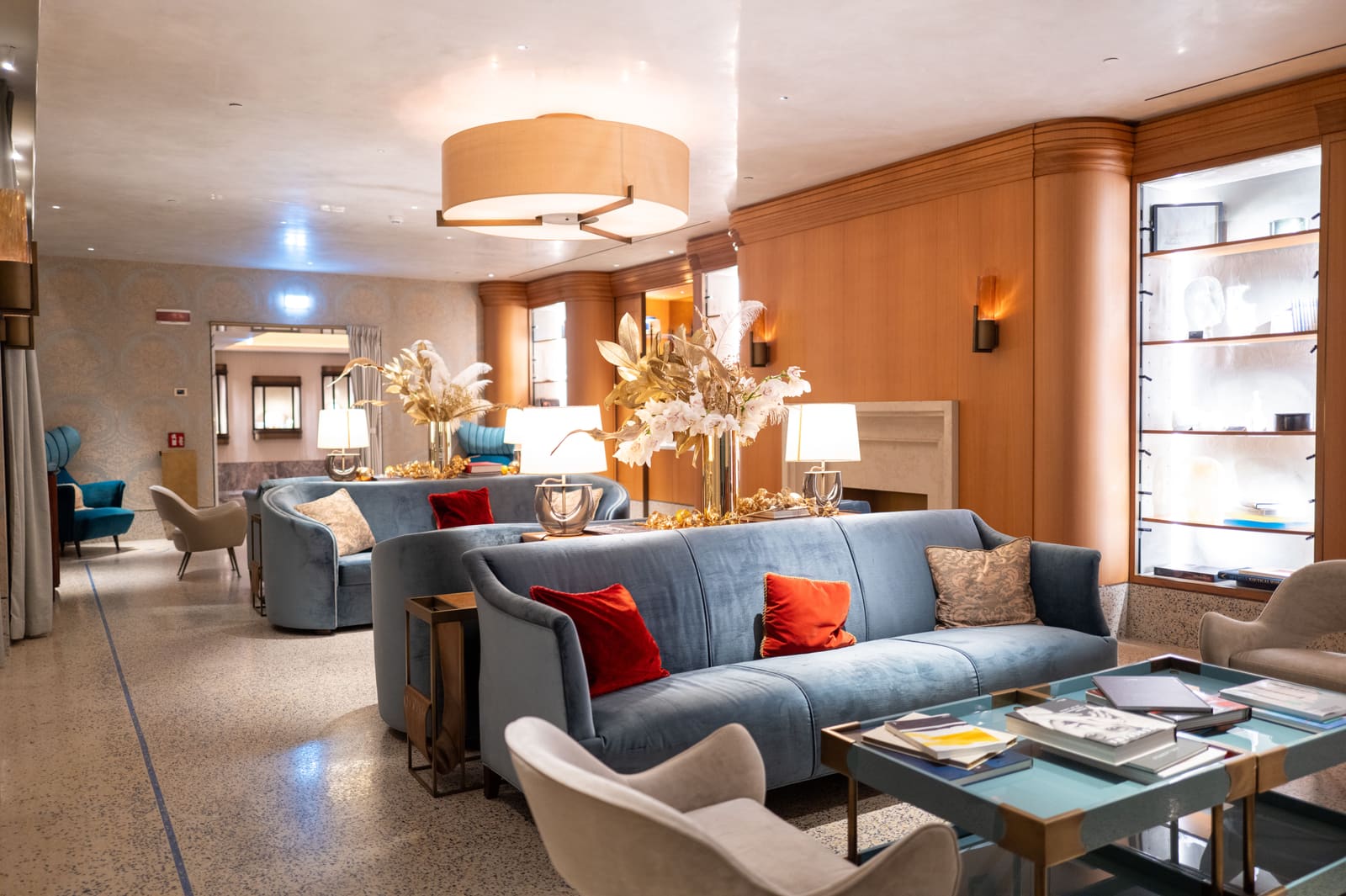
The lobby holds no desk. In its place, three metallic magenta sculptures by Anselm Reyle catch the light, unapologetic and strange. A 19th-century mahogany grandfather clock, lacquered white and hung with an Yves Klein blue tassel, stands beside a custom billiard table carved from Bianco Neve marble. Salvador Dalí floor lamps cast their glow across polished surfaces. This is Public West Hollywood, and it announces itself without asking permission.
Ian Schrager has built a career on spaces that refuse to fade into the background. Studio 54, Delano Miami Beach, the EDITION portfolio: each one rewrote expectations for what hospitality could be. His newest property, set on a stretch of Sunset Strip long dominated by the Chateau Marmont and The Tower Bar, brings that same defiance to West Hollywood. Where Scandinavian minimalism has flattened hotel interiors into interchangeable beige, Public arrives in full colour, a deliberate provocation.
Location and Context
West Hollywood functions as its own municipality within Greater Los Angeles, a compact grid known for its nightlife, weekend brunches and annual Pride celebrations. The Strip itself carries decades of mythology: rock-and-roll excess, paparazzi stakeouts, the kind of glamour that curdles into tabloid fodder by morning. Public sits at 8300 Sunset Boulevard, within walking distance of Sushi Park, a discreet second-floor favourite among actors and agents. Rodeo Drive lies 15 minutes south by car; Melrose Avenue, with its vintage shops and street-art murals, is equally close.
For those interested in architecture, the Hollywood Hills offer two contrasts: Pierre Koenig's Stahl House, a glass-walled icon of mid-century modernism, and Frank Lloyd Wright's Storer House, a concrete exercise in Mayan Revival forms. Both are short drives from the hotel, though neither is open for casual drop-ins.
Design as Collaboration
The interiors are the work of multiple hands: John Pawson and Alan Bell on architecture, François Champsaur, Aurore Rouillay and ISC Design Studio on furnishings and finishes. Schrager himself orchestrated the whole, and the result feels cohesive despite its variety. The pool bar showcases bespoke sofas and lounge chairs by Champsaur, solid oiled teak upholstered in pink cotton imported from Italy. A 51-foot mural runs along one wall, inspired by Fernand Léger's "Les Danseuses" at La Colombe d'Or in Saint-Paul-de-Vence. Native California plantings soften the edges.
Studio, the in-house nightclub, leans darker. A custom John Pawson bar, scalloped and black, anchors the space. Black velvet curtains frame digital screens that display subtly animated operetta portraits. Even the corridors leading to guest rooms are lit in red, blue or green, depending on the floor. Every surface, every sightline, has been considered.
Rooms as Refuge
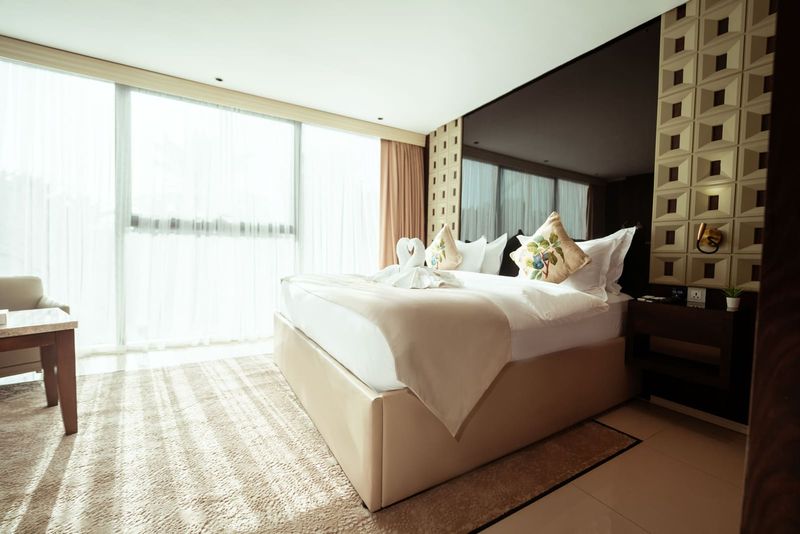
The guest accommodations pull back from the lobby's visual intensity. Walls are white, linens crisp. Plush beds, blackout drapery and a laser projector for film screenings equip each room for recovery after late nights. Pool-facing categories include private terraces with seating, useful for watching the nightly poolside programming or simply taking in daylight without leaving the room.
The minimalism here is not an aesthetic statement so much as a functional one. After hours spent in saturated colour and curated chaos, the rooms offer a place to exhale.
Food, Drink and Movement
Schrager is candid about what Public does not offer: there is no signature restaurant, no celebrity chef, no tasting menu. An all-day café serves pastries, salads, sandwiches and coffee, but the property is built around drinking and dancing, not dining. The pool bar provides seasonal options such as little gem salads and mezze plates, paired with margaritas and martinis. The open-air rooftop terrace draws well-dressed crowds for wine and cocktails against panoramic views of the city. Studio runs a DJ programme most nights, a nod to Schrager's New York nightlife origins.
This is not a place designed for those seeking a quiet meal in a hushed dining room. It is designed for people who want to stay out.
Wellness Without the Spa
Public West Hollywood has no dedicated spa facility. Instead, the hotel offers a full menu of in-room treatments: deep tissue, lymphatic drainage, sports and prenatal massage, facials, manicures, pedicures, hair and makeup services, and intravenous drips. The rooftop hosts complimentary daily wellness and fitness classes, a shaded outdoor gym, sun beds, picnic tables, ping-pong, swings and seesaws.
The pool itself is not a sanctuary. A moveable DJ booth ensures that. But daybeds beneath white fringe umbrellas, tall hedges and native greenery create pockets of relative calm. The space is less about silence than about options: you can be alone in a crowd if you choose your spot carefully.
What It Signals
At a moment when many new hotels feel interchangeable, Public West Hollywood takes a different position. It is loud where others are quiet, theatrical where others are tasteful, committed to joy where others default to restraint. Schrager has spent decades proving that hospitality can be entertainment, that a hotel lobby can function as a stage. This property extends that argument.
Whether the Sunset Strip needs another nightlife destination is debatable. Whether the Strip needed this particular destination, with its magenta sculptures and Yves Klein tassels and Fernand Léger murals, is less clear. But Public West Hollywood does not wait for permission. It simply arrives, fully formed, and dares you to look away.