Inside the Waldorf Astoria Kuala Lumpur: An All-Suite Arrival in Malaysia's Golden Triangle
The brand's first Malaysian address pairs Malay craftsmanship with Jean-Georges Vongerichten's culinary vision across 268 suites in the capital's cultural heartbeat.
A Suite-Only Philosophy in the Capital's Pulse
The lobby of the Waldorf Astoria Kuala Lumpur holds a 19th-century painting of Qajar princes, its gilt frame catching afternoon light through floor-to-ceiling glass. Beyond it, the Golden Triangle District hums with the particular energy of a neighbourhood that has always known how to balance heritage and ambition. This is where Waldorf Astoria has chosen to plant its first flag in Malaysia: not on a beach, not in a resort enclave, but in the thick of Kuala Lumpur's cultural and commercial gravity.
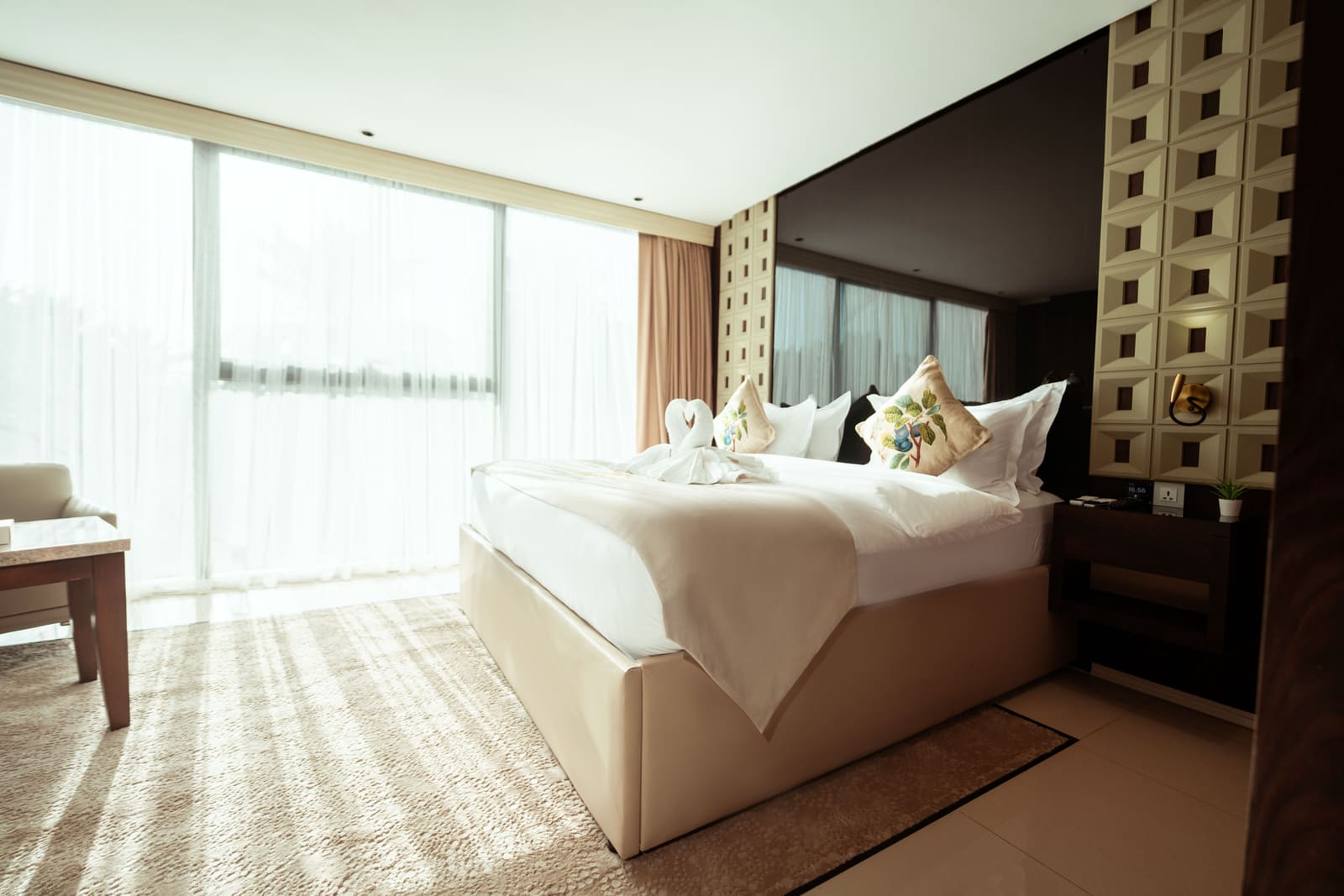
The decision to offer only suites, 268 of them, signals a commitment to a certain kind of guest. There are no standard rooms here, no compact city boxes for overnight stopovers. The smallest suite begins at roughly 80 square metres, and the largest, the Waldorf Astoria Suite, unfolds across more than 743 square metres with views that sweep the city's layered skyline. It is a residential sensibility imported into the transient world of hotels, a wager that travellers to this corner of Southeast Asia are looking for space as much as service.
Craftsmanship Rooted in Place
Deboss Collective, the design firm behind the interiors, has woven traditional Malay marquetry into the visual language of each suite. Warm timber panels meet natural stone surfaces, and pops of green, drawn from the surrounding landscape, punctuate the palette. The effect is neither overtly traditional nor aggressively modern; instead, it occupies a middle ground where handcrafted details anchor contemporary forms.
Malaysian artists feature prominently throughout the property. Their works hang in corridors and suites, a curatorial choice that roots the hotel in its immediate context rather than relying on imported art-world names. In Peacock Alley, the social hub that borrows its name from the original Waldorf Astoria in New York, a striking clock commands attention, a piece that functions as both timekeeper and sculpture.
This emphasis on local craft and artistry is not incidental. It reflects a broader shift within luxury hospitality, one that privileges specificity over universality. Guests can encounter a version of Malaysia that is neither folkloric nor diluted, but rather filtered through the lens of contemporary design and curation.
A Culinary Constellation Led by Jean-Georges Vongerichten
Jean-Georges Vongerichten returns to collaborate with Waldorf Astoria, bringing three new dining concepts to Kuala Lumpur. JG KL marries French technique with Asian ingredients and sensibilities, a formula the chef has refined across decades and continents. abc kitchens KL extends the farm-to-table ethos established in New York, sourcing from Malaysian producers and growers to build a menu that shifts with seasons and harvests. The Bar by JG offers lighter fare, cocktails engineered with precision, and a setting designed for lingering.
Chef Garima Arora, whose two-Michelin-star Gaa in Bangkok has earned attention for its inventive approach to Indian cuisine, helms Yaari. The menu explores India's coastal regions and street food traditions, elevating both through technique and presentation. It is a pairing that makes sense within the hotel's broader culinary strategy: bring in chefs with strong points of view, give them the resources to execute, and let regional flavours speak without apology.
Coda, wrapped in emerald-green tones inspired by vinyl records, functions as another bar option, while Istana centres Malaysian cuisine, offering a counterpoint to the international voices elsewhere in the property. Together, these venues form a dining landscape varied enough to hold a guest's interest across multiple nights, yet cohesive in their shared commitment to ingredient quality and craft.
Wellness as Architecture, Not Afterthought
The spa at Waldorf Astoria Kuala Lumpur occupies nearly 2,280 square metres and frames wellness through the dual lenses of longevity and recovery. La Prairie treatments anchor the menu, supplemented by private consultations, Traditional Chinese Medicine practitioners, and nutritional guidance. It is a model that treats wellness as a system rather than a series of isolated services, one that asks guests to consider their time at the hotel as part of a longer arc of self-care.
Each suite includes a yoga mat, a small gesture that extends the wellness ethos beyond the spa's walls. The message is clear: the space itself is designed to support practices of stillness and movement, not merely to accommodate them. Whether guests choose to use the mat or not, its presence reframes the suite as a site of potential practice, not just rest.
The Golden Triangle as Stage
The Golden Triangle District has long served as Kuala Lumpur's commercial and cultural nucleus, a district where skyscrapers share streets with hawker centres, where luxury retail sits alongside older shophouses. Waldorf Astoria's arrival here positions the hotel within a neighbourhood that already attracts both business travellers and leisure visitors, a dual demographic that the all-suite format is designed to serve.
Alan Watts, president of Hilton's Asia Pacific operations, noted in a statement that Waldorf Astoria has historically anchored itself in "legendary addresses" from Park Avenue to The Bund in Shanghai. Kuala Lumpur now joins that roster, a recognition of the city's growing stature within the region's luxury travel circuits. The Golden Triangle offers proximity to cultural institutions, dining, and shopping, but also a density of energy that some travellers seek out and others avoid. The Waldorf Astoria Kuala Lumpur is betting on the former.
What the Arrival Signals
The opening of Waldorf Astoria Kuala Lumpur marks the brand's first entry into Malaysia, a market that has seen considerable investment from international hotel groups over the past decade. The all-suite model differentiates the property from competitors, as does the partnership with Vongerichten and Arora, both chefs with established reputations and distinct culinary identities.
Yet the hotel's success will depend less on its amenities, however thoughtfully assembled, and more on its ability to articulate a version of luxury that feels specific to Kuala Lumpur. The design nods to Malay craftsmanship, the art programme highlights Malaysian voices, and the dining venues span regional cuisines. These are the building blocks of place-making, the elements that transform a well-appointed hotel into a destination that reflects and amplifies its surroundings.
For travellers who have watched Kuala Lumpur evolve over the past two decades, the Waldorf Astoria arrival is less surprising than inevitable. The city has the infrastructure, the cultural offerings, and the demand to support luxury hospitality at this scale. What remains to be seen is whether the hotel can hold the attention of guests who have options across the region, who can choose between Bangkok, Singapore, Hong Kong, and a dozen other cities with established luxury properties. The answer will unfold in the coming months, as the property settles into its rhythm and guests begin to shape its reputation through their visits and their stories.