The Waldorf Astoria Arrives in Kuala Lumpur with Peacock Alley and Three Jean-Georges Restaurants
Hilton's storied luxury brand plants its first Malaysian flag in the capital, bringing Art Deco flourishes and a trio of dining concepts by one of the world's most prolific chefs.

A Grand Staircase and an Old Name in a New City
There is a moment, just after you step through the doors, when the noise of Kuala Lumpur's traffic fades and the air shifts. The Waldorf Astoria Kuala Lumpur has opened with the sort of grand staircase that belongs to another century, all sweeping lines and polished stone, the kind of architectural gesture that insists you slow down and look up. It is the brand's first property in Malaysia, and it carries with it the weight of a name forged in New York nearly a century ago, now attempting to speak a language that makes sense here, in a city that has always moved faster than its colonial past.
The lobby unfolds in layers. Peacock Alley, that signature lounge space borrowed from the original Waldorf-Astoria on Park Avenue, reappears here not as a corridor but as a destination in itself. The name once referred to the promenade where New York society paraded between the old Waldorf and Astoria hotels before they merged. In Kuala Lumpur, it is reimagined as a light-filled salon where afternoon tea and evening cocktails unfold beneath chandeliers that nod to Art Deco without succumbing entirely to nostalgia. The design walks a fine line: it wants you to remember the Waldorf's history without feeling trapped by it.
Jean-Georges Vongerichten, Three Times Over
The dining programme is ambitious in the way only a major hotel opening can afford to be. Jean-Georges Vongerichten, whose restaurants span continents and Michelin stars, has contributed three concepts to the property. JG KL is the flagship, a contemporary space where French technique meets Southeast Asian ingredients in ways that have become the chef's signature move over the past three decades. Istana, the second venue, leans into Malay and regional flavours with a menu that draws from the Peninsula's culinary traditions without the usual resort-hotel timidity. The third concept remains more discreet, a private dining room designed for the sort of guest who prefers their luxury without an audience.
It is a significant culinary bet for a city that already has no shortage of high-end dining. Kuala Lumpur's restaurant scene has matured considerably over the past decade, with local chefs and international imports vying for attention in a market that is both discerning and willing to spend. The Waldorf Astoria's strategy appears to be volume and pedigree: bring in a name that carries weight, then deploy it across multiple venues to maximise reach. Whether that translates to staying power will depend on execution, consistency, and the willingness of the city's diners to return after the novelty fades.
Suites That Nod to the Brand's DNA
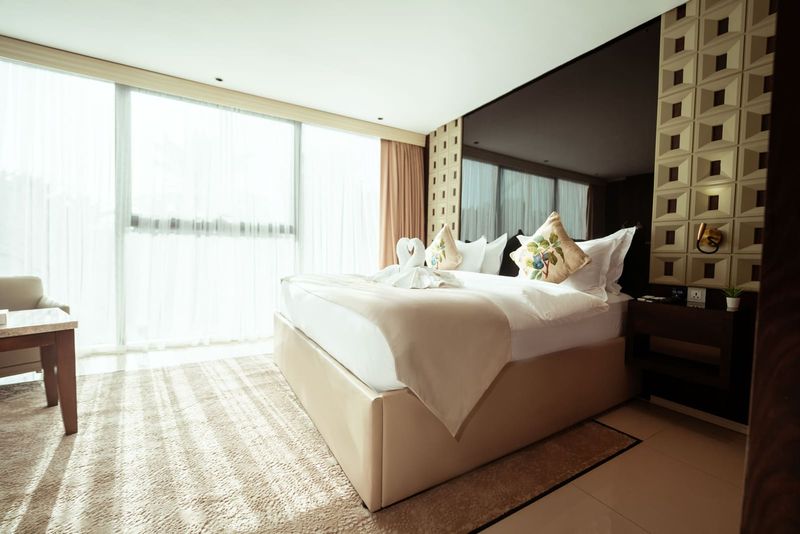
The Prestige Suite, one of the property's showcase accommodations, is dressed in muted tones and materials that favour texture over colour. The bedroom is spacious without feeling cavernous, with floor-to-ceiling windows that frame the city skyline. The living room is designed for hosting, with seating arranged around low tables and a sense of formality that stops just short of stiffness. It is the sort of space that expects you to arrive with luggage from a long-haul flight and a schedule that includes meetings, dinners, and very little time by the pool.
The design language throughout the hotel leans heavily on the Waldorf Astoria's Art Deco heritage, that interwar aesthetic of geometric patterns, rich materials, and a certain optimism about modernity. But translating that vocabulary to a contemporary Southeast Asian context requires careful editing. Too much, and it feels like a theme park. Too little, and the brand identity dissolves. The Kuala Lumpur property seems to have aimed for the middle ground, layering local materials and craftwork into spaces that still read as unmistakably Waldorf.
The Spa, the Boardroom, and the Business of Luxury Hospitality
The spa is predictably serene, with treatment rooms designed to insulate guests from the world outside. It follows the formula that has become standard in luxury hotels: dim lighting, natural materials, a menu of treatments that blend local ingredients with international wellness trends. There is nothing revolutionary here, but revolution is not the point. The point is consistency, the reassurance that a guest checking into a Waldorf Astoria in Kuala Lumpur will receive the same level of service and attention as they would in New York, Beverly Hills, or Amsterdam.
The boardroom and meeting spaces are similarly calibrated for the business traveller, the executive who needs a private space to close a deal or host a presentation. These are the rooms that generate revenue on weekdays, filling the gaps between leisure bookings and keeping occupancy rates steady. Luxury hospitality is as much about these functional spaces as it is about the grand staircase or the three-restaurant dining programme. The glamour sells the property; the infrastructure sustains it.
What the Debut Signals for Malaysia's Luxury Market
The arrival of the Waldorf Astoria in Kuala Lumpur is less about one hotel and more about what it represents. Malaysia has long been a stopover market, a place travellers pass through on their way to Bali, Thailand, or Singapore. But the country's capital has been working to reposition itself as a destination in its own right, investing in infrastructure, cultural institutions, and the sort of high-end hospitality that attracts a different kind of visitor.
The Waldorf Astoria is a flag planted by Hilton, a signal that the company believes there is demand here for its top-tier brand. It is also a test. If the property succeeds, it will likely encourage other international luxury brands to follow. If it struggles, it will confirm the suspicions of those who argue that Kuala Lumpur's luxury market remains too small, too competitive, or too dependent on regional travellers to support the kind of premium pricing that brands like Waldorf Astoria require.
The Weight of a Name
Names matter in luxury hospitality. The Waldorf Astoria carries with it a century of associations: old money, Hollywood glamour, the kind of service that once included knowing a guest's preferred newspaper and martini ratio. Translating that legacy to a new market is a delicate exercise. The brand cannot simply replicate what it did in New York; the context is different, the clientele is different, the city is different. But it also cannot abandon the core identity that makes the name valuable in the first place.
In Kuala Lumpur, the Waldorf Astoria is attempting to be both familiar and fresh, a property that honours its heritage while speaking to a contemporary, international audience. The grand staircase and Peacock Alley are gestures toward the past. The Jean-Georges restaurants and the sleek suite design are gestures toward the future. Whether the two can coexist comfortably within the same building is a question that will be answered not in the first month but in the first year, as the property settles into its rhythm and the city decides whether this is a hotel it wants to return to or simply admire from a distance.