Thailand's Luxury Hotels Rewrite the Rules of Tropical Hospitality
From riverside enclaves in Bangkok to jungle-ringed wellness sanctuaries in the north, the kingdom's finest addresses blend artisanal craft, regional storytelling, and a quiet defiance of convention.
A Garden Estate on the Chao Phraya
The morning light reaches the Chao Phraya River in layers. First the water itself, then the garden terraces that climb gently from its banks, and finally the blonde wood and cream marble of a low-rise structure that opened in 2020 with travertine soaking tubs set into private balconies. Capella Bangkok arrived with a Mediterranean-inflected dining room helmed by an Argentine chef; within twelve months, it held a Michelin star. After dark, a boudoir-like bar draws regulars who order cocktails named for the capital's storied neighbourhoods.
The design vocabulary here favours restraint. Villas positioned along the waterfront avoid the vertical ambitions common to urban luxury properties. Instead, the estate extends horizontally, embedding itself into its garden plot rather than rising above it. The effect is less a hotel than a riverside compound, one that privileges intimacy over grandeur.
The Monochrome Masterpiece in Dusit
Further upriver, in the hushed Dusit district, a property that opened more than a decade ago continues to operate on its own terms. The Siam occupies a plot that requires boat transfers and taxi rides to reach the city's postcard landmarks. For its devotees, this inconvenience is precisely the point.
The interiors read like a curated archive. Vintage airline posters, battered steamer trunks, and ceramics with hairline cracks line marble hallways. The aesthetic conjures mid-century Bangkok, the era of movers and power brokers whose heirlooms now furnish the public spaces. Designer Bill Bensley orchestrated the monochrome palette, layering black lacquer and white marble with antique curiosities. The result feels less like a contemporary hotel than a portal into the capital's quieter, more aristocratic past.
While Bangkok's five-star landscape grows increasingly plush each year, this riverside address maintains a distinct register. It refuses to compete on convenience or proximity. Instead, it offers something slower: the sense of stepping sideways into a version of the city that exists only within its gates.
An Urban Resort Built Around a Sampong Tree
On nine landscaped acres in central Bangkok, another property anchors itself to a single family's history. Aman Nai Lert Bangkok occupies land that once served as the early twentieth-century teak retreat of Phraya Bhakdinorasreth, a Thai entrepreneur known as Nai Lert. His descendants transformed the estate into a hotel and private members' club, threading the original narrative into every design decision.
A massive sampong tree shades the ninth-floor infinity pool. Breakfast includes moo ping pork skewers, a street-food staple elevated through meticulous sourcing. The spa offers Nud Tok Sen massage, a Northern Thai technique that uses hand-carved teak tools to release muscular tension through rhythmic tapping. Each element ties back to the site's layered past, creating an experience that feels less like a stay and more like temporary membership in a deeply rooted place.
The intimacy here is architectural as much as experiential. Rooms look onto the canopy rather than the skyline. Public spaces curve around gardens rather than lobbies. The design language prioritises enclosure, crafting a seven-acre bubble of greenery that holds the city at arm's length.
A Riverside Grande Dame
For decades, one Bangkok address has drawn diplomats, authors, and a clientele that arrives with monogrammed luggage. Mandarin Oriental, Bangkok sits along the river in a building that balances old-world ceremony with tropical ease. The lobby layers lattice woodwork, cascading florals, and birdcage-style chandeliers. A fleet of BMW sedans waits outside. The emerald swimming pool overlooks the water.
The atmosphere here leans formal without tipping into stiffness. Service standards remain exacting. The crowd dresses with intention. It is the sort of place where international agreements might be negotiated over breakfast, where the bar serves as a stage for a particular kind of cosmopolitan theatre. The property's longevity speaks not to nostalgia but to its ability to maintain relevance across generations, adapting without abandoning the protocols that define it.
A Teak Retreat in Chiang Mai
In Northern Thailand, where teak pillars and Lanna roof trims form the architectural vernacular, Raya Heritage takes a different approach. Designer Vichada Sitakalin, known as Dao, built this riverside property in Chiang Mai as a showcase for village craftsmanship. Ceramics, basketry, and hand-dyed indigo textiles sourced from regional artisans fill every cream-toned suite. A boutique sells the same pieces. A tea lounge serves local brews.
The restaurant, Khu Khao, draws on influences from across the region's trade routes. Burmese mohinga appears alongside Yunnanese rice salad, dishes that reflect the cultural crosscurrents that have shaped Northern Thailand for centuries. The riverfront pool and herb-heavy spa treatments complete the picture: a property rooted not in generic luxury but in the particularities of its location and the hands that craft its materials.
Antique Dwellings in the Umong District
In Chiang Mai's leafy Umong neighbourhood, a retreat that opened in 2023 centres itself around four antique Thai dwellings. The hand-carved gabled roofs and teakwood frameworks remain intact, now housing a four-bedroom villa, a boutique stocked with local crafts, and the main facilities of Aleenta Retreat Chiang Mai.
The wellness centre sits between a bamboo-fringed communal pool and a stilted meditation lounge. Week-long mindfulness retreats run alongside shorter reflexology sessions. The restaurant occupies one of the heritage villas, serving ginger-turmeric elixirs and superfood bowls at breakfast, then pivoting to Northern Thai noodles and Lanna-style reinterpretations of comfort food later in the day. Tacos arrive filled with pulled wild boar belly. Fish and chips use snakehead fish, dressed with a spicy khao soi-inflected ranch.
The forty-four rooms and duplex suites balance local textiles and wickerwork with contemporary comfort. The property's small-town atmosphere stems from its scale and its commitment to embedding local craft traditions into daily rhythms, from the architecture to the table.
Rice Paddies in the Mae Rim Valley
Outside Chiang Mai, in the Mae Rim Valley, the Four Seasons Resort spreads across thirty-one acres of manicured gardens and working rice paddies. Treetop pavilions, private residences, and pool villas overlook fields where farmers parade through at sundown, singing to mark the day's end. Two water buffalo bathe daily in the lake.
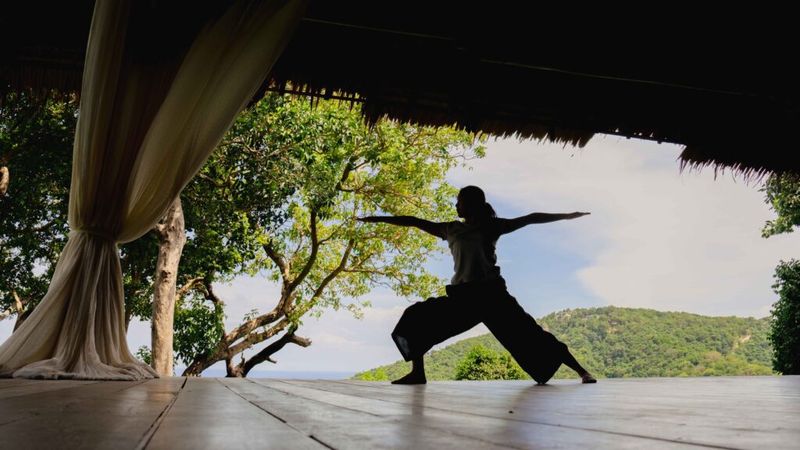
Activities range from sunrise yoga to pottery making, Thai boxing, tennis, and textile dyeing. Two infinity pools stretch toward the paddies. Private residences offer gated seclusion, with individual pools, kitchen spaces for private catering, and wraparound terraces designed for alfresco entertaining.
Breakfast draws on a global palette: Chinese dumplings, English fry-ups, espresso drinks delivered by staff trained in the particular choreography of Four Seasons service. The lushness here is deliberate, maintained through constant attention. Every angle offers a composed view, a carefully tended landscape that frames the valley beyond.
The Original Wellness Sanctuary
Twenty-seven years ago, Chiva-Som opened in Hua Hin when spa breaks in Thailand were not yet a recognised category. It has since become the benchmark against which other wellness properties measure themselves. The offerings combine cutting-edge fitness technology, including Vision Bodysuits that track biometric data, with medical diagnostics such as blood work and gene testing, traditional Asian healing therapies, and a staff trained to anticipate needs before they are articulated.
Sixteen different retreat programmes address stress management, pain relief, fitness enhancement, immune resilience, and senior health. Each is personalised through consultations that assess mental, physical, and emotional baselines. The property's longevity stems not from resting on early acclaim but from continuous evolution, integrating new modalities while maintaining the foundational philosophy that wellness requires more than a weekend.
The Broader Landscape
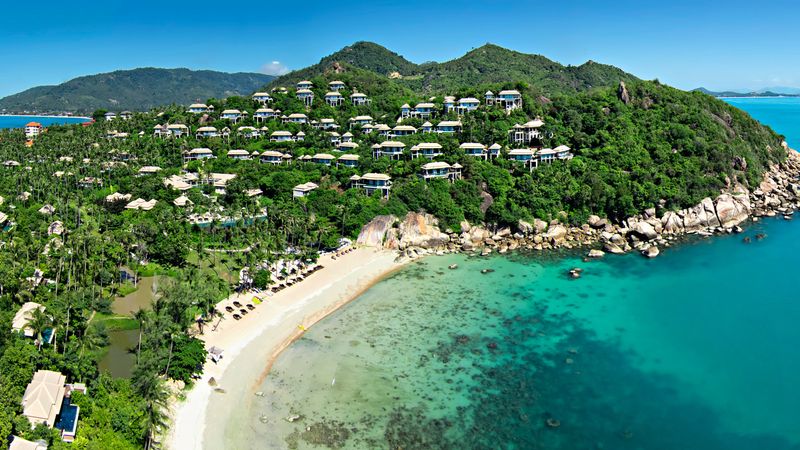
Thailand's luxury hotel sector operates across a wide register. In Bangkok, properties cluster along the river, each staking a claim to a particular vision of urban refuge. In the north, around Chiang Mai, hotels anchor themselves to craft traditions and agricultural rhythms. On the islands, international brands share coastline with boutique retreats that prioritise intimacy over scale.
What unites the strongest addresses is a refusal to rely solely on imported luxury codes. Instead, they draw from the particularities of Thai craft, regional cuisine, and design vernacularies that predate the global hotel industry. Teak carvings, indigo textiles, and village ceramics become not decorative gestures but structural elements. Menus reference Burmese, Yunnanese, and Lanna influences, acknowledging the trade routes and cultural exchanges that have shaped the region.
The result is a hotel landscape that resists homogenisation. A stay in Bangkok's Dusit district offers a different kind of luxury than a week in a Mae Rim valley rice paddy or a riverside retreat in Chiang Mai. Each property operates according to its own logic, shaped by site, history, and the specific vision of its designers and operators.
Why Craft Matters
The emphasis on local craft and regional storytelling in Thailand's luxury hotels reflects a broader shift in how high-end hospitality defines itself. Generic luxury, the kind that could exist anywhere, holds less appeal than experiences rooted in the specificity of place. Guests increasingly seek properties that offer not just comfort but context, not just service but a sense of connection to the surrounding culture.
In Thailand, this translates into hotels that commission work from village artisans, source ingredients from local farmers, and design spaces that reference vernacular architecture. The approach benefits both guests, who gain access to traditions they might otherwise overlook, and the communities that supply the materials and knowledge. It also creates a more durable model, one less vulnerable to the cycles of trend and counter-trend that plague hospitality.
The most successful properties achieve this without slipping into ethnographic display. The craft is integrated, not spotlighted. The indigo textiles on the bed, the ceramic vessels in the bathroom, the teak tools used in the spa treatment become part of the experience rather than objects to be admired from a distance. The line between luxury and locality blurs, creating something that belongs fully to neither category and entirely to both.
A Kingdom of Particularity
Thailand's hotel landscape defies the impulse toward uniformity. A low-rise garden estate on the Chao Phraya operates according to different principles than a monochrome riverside masterpiece in Dusit. A teak retreat in Chiang Mai that showcases village basketry has little in common with a wellness sanctuary in Hua Hin built around medical diagnostics and biometric tracking. Yet all share a commitment to depth over breadth, to embedding themselves in the textures and rhythms of their locations rather than floating above them.
This particularity extends beyond design to the daily rituals that shape a stay. Breakfast might include street-food staples elevated through careful sourcing. A spa treatment might employ hand-carved teak tools used in Northern Thai massage traditions. A bar might serve cocktails named for the city's historic neighbourhoods. Each detail roots the experience in a specific place and time, resisting the placelessness that defines so much contemporary luxury.
For travellers seeking more than polished surfaces, Thailand's finest hotels offer something rarer: the sense that a place has been shaped by forces deeper than brand strategy or market research. History, craft, and the particularities of landscape converge, creating addresses that feel less like accommodations and more like invitations into a layered, ongoing story.