When Paradise Comes With a Postcode No One Else Can Find
The world's most remote private island resorts offer more than seclusion. They redefine what it means to disappear.
The Geography of Forgetting
There is a particular kind of silence that only arrives after the last boat has left. It settles over lagoons like sediment, fills the spaces between palm fronds, and transforms the horizon into something vast and indifferent. On Tetiaroa Atoll in French Polynesia, this silence once belonged to Marlon Brando. Today it belongs to anyone willing to travel far enough to claim it.
The Brando, which occupies the late actor's former private retreat, offers 35 palm-thatched villas where indoor and outdoor space blur into one another. Solar panels power the property; innovative seawater systems cool it. Guests cycle along coral-sand paths, submerge themselves in the spa's woven cocoons, and dine on French-inflected Polynesian cuisine shaped by chef Jean Imbert. Nature tours led by resident researchers reveal the atoll's ecological intricacies, whilst daily cultural sessions in Polynesian dance, ukulele, and traditional weaving anchor the experience in something older than tourism. The all-inclusive rate sweeps in meals, champagne, spa treatments, and the rare luxury of not counting.
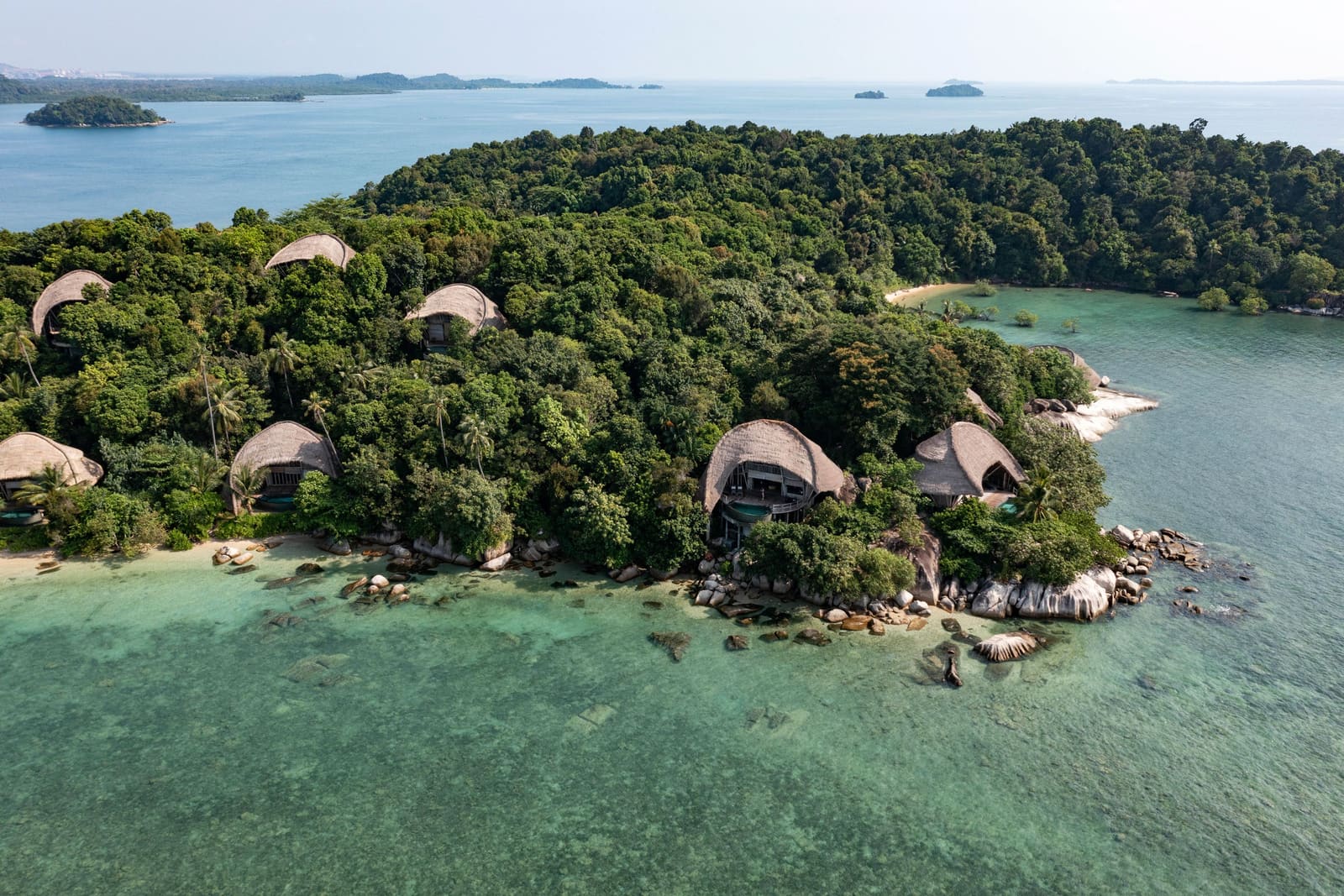
Elsewhere in the constellation of vanishing places, Bawah Reserve sprawls across six islands, three lagoons, and 13 beaches in Indonesia's Anambas Archipelago. The entire resort was built by hand using sustainable bamboo and locally sourced materials, its aesthetic hovering somewhere between rustic and reverent. Guests stay in tented suites, overwater bungalows, or pool villas, each designed to frame rather than compete with the view. Transparent kayaks glide over coral gardens. Dinners unfold in treetops. The reserve is reached via a 75-minute seaplane from Singapore, the final leg a vertical descent into turquoise stillness.
The Architecture of Absence
Private islands have always promised escape, but the best among them understand that true seclusion is architectural as well as geographic. Little Palm Island Resort & Spa, perched on a four-acre island off Little Torch Key in Florida, operates as an adults-only retreat where clever landscaping ensures that 60 guests rarely cross paths. Thirty thatched-roof bungalow suites scatter across the property, many with four-poster beds, outdoor copper bathtubs, and private slivers of white-sand beach. Hammocks swing between palms. Firepits glow after dark. The island requires no passport, yet feels impossibly distant from the mainland.
The resort's partnership with MOTE Marine Laboratory & Aquarium brings intention to the indulgence. Guests can join snorkelling excursions to Looe Key Reef, part of the third-largest living coral reef system in the world, where restoration efforts continue beneath the surface. The "Paradise with a Purpose" package bundles accommodation, breakfast, a half-day reef visit, and a donation to ongoing marine research, a gesture that acknowledges the fragility underpinning every postcard view.
Further south, Peter Island in the British Virgin Islands operates at a different scale but with similar discretion. With 52 rooms and two villas spread across the largest private island in the territory, the resort cultivates a familial atmosphere where service feels less transactional than intuitive. A reverse osmosis water purification plant and two wind turbines generate up to 75 per cent of the island's power, a quiet nod to sustainability that doesn't announce itself. Hurricane Irma swept through in 2017, devastating homes and infrastructure across the Virgin Islands; the rebuild here has leaned into resilience without sacrificing warmth.
Where the Reef Begins
Kokomo Private Island Resort in Fiji straddles the Great Astrolabe Reef, a 45-minute seaplane flight from Nadi International Airport. The waters here teem with manta rays, sea turtles, and coral gardens vivid enough to make snorkelling feel like trespass. Twenty-one beachfront villas range from one-bedroom retreats to larger configurations, each with a private plunge pool, walled garden, and outdoor shower. Five hilltop Grand Residences accommodate multigenerational groups, complete with private butler and nanny.
The resort's 5.5-acre farm and hydroponics garden supply much of the kitchen's produce, whilst seafood arrives through a sustainable, caught-to-order initiative. Marine biologist-led snorkel excursions track manta rays through the reef's corridors, translating movement into narrative. Here, the adventure is not performative but ecological, an immersion into systems that predate the resort by millennia.
Off the coast of Zanzibar, Mnemba Island occupies a casuarina-forested sanctuary within a private marine reserve. Home to just 12 shell-shaped, thatched bandas, the property was rebuilt in 2024 into curvaceous, nautilus-like structures blending natural materials with open-air design. Guests explore turquoise shallows on catamarans, dive vibrant reefs, or lounge in private beach bandas watching noddies and plovers wheel above the sandspit. A spa, yoga deck, and Oceans Without Borders education centre enrich the experience, whilst chefs curate custom menus that shift from sushi boxes to lobster ravioli beneath the stars. With a staff-to-guest ratio exceeding three-to-one, service becomes ambient rather than intrusive.
The Archipelago of Intention
Miavana by Time + Tide, set on remote Nosy Ankao in northern Madagascar, is reachable only by helicopter. Fourteen villas built from sun-bleached Malagasy wood and hand-hewn limestone sprawl across private gardens and powder-soft beaches. Interiors channel a beachy modernism, with sunken bathtubs, pastel appliances, and fully stocked kitchens that blur the line between hotel and residence. The property merges barefoot luxury with conservation and community support, a model that acknowledges the island's fragility and the lives interwoven with its ecology.
These resorts share more than remoteness. They operate at the intersection of privilege and preservation, where exclusivity becomes a tool for limiting impact rather than amplifying it. Solar panels, seawater cooling systems, wind turbines, and marine partnerships do not erase the carbon cost of a seaplane transfer or the resource intensity of ultra-luxury hospitality, but they signal a shift in how seclusion is conceived and marketed. The language has moved from conquest to stewardship, from "undiscovered" to "protected."
What Vanishes When You Arrive
The appeal of a private island has always rested on subtraction. No crowds, no schedules, no obligations beyond the next meal or the next swim. But the islands on this list subtract something else: the performance of travel itself. There are no queues, no jostling for sunbeds, no overheard conversations about flight delays. The world contracts to the size of a lagoon, a reef, a villa with an outdoor bathtub and a view that changes only with the light.
This contraction is deliberate. It is engineered through layout, landscaping, staff ratios, and guest caps. It is maintained by distance, by the seaplane flight or yacht transfer that transforms arrival into ceremony. And it is sold not as isolation but as intimacy, a chance to encounter the world at a scale where every detail registers.
Yet the paradox remains. These islands promise disappearance whilst depending on visibility, on being found by the right kind of traveller with the right kind of resources. They are mapped, marketed, and maintained by systems far more complex than the barefoot aesthetic suggests. The silence they offer is curated, the solitude choreographed. What they provide, in the end, is not escape from the world but a version of it refined to its most seductive elements: beauty without friction, luxury without guilt, and the illusion that paradise, once found, can be kept.
The question is not whether these places are worth the journey. Clearly, for those who can afford the passage, they are. The question is what gets left behind when paradise becomes a product, and whether the silence that settles over a lagoon at dusk is the same silence that existed before the first villa was built. The answer, like the islands themselves, is somewhere just beyond the horizon, visible only if you know where to look.