A Mediterranean Arrival in Edinburgh's Georgian Quarter
Yotam Ottolenghi's new restaurant on George Street brings colour, warmth and a celebration of Scottish provenance to the capital's New Town.
A Culinary Bridge Across Shared Waters
There is a moment in late September when Edinburgh's Georgian facades catch the last oblique light of afternoon, and the temperature begins its swift descent toward winter. It was in this precise season that a new restaurant opened on George Street, occupying one of those high-ceilinged rooms that define the New Town's architectural cadence. The space belongs to Yotam Ottolenghi, whose arrival in the Scottish capital represents more than a northward expansion of a London-based dining empire. It signals a confluence of two culinary sensibilities that, on the surface, might appear distant but share a common thread: the sea.
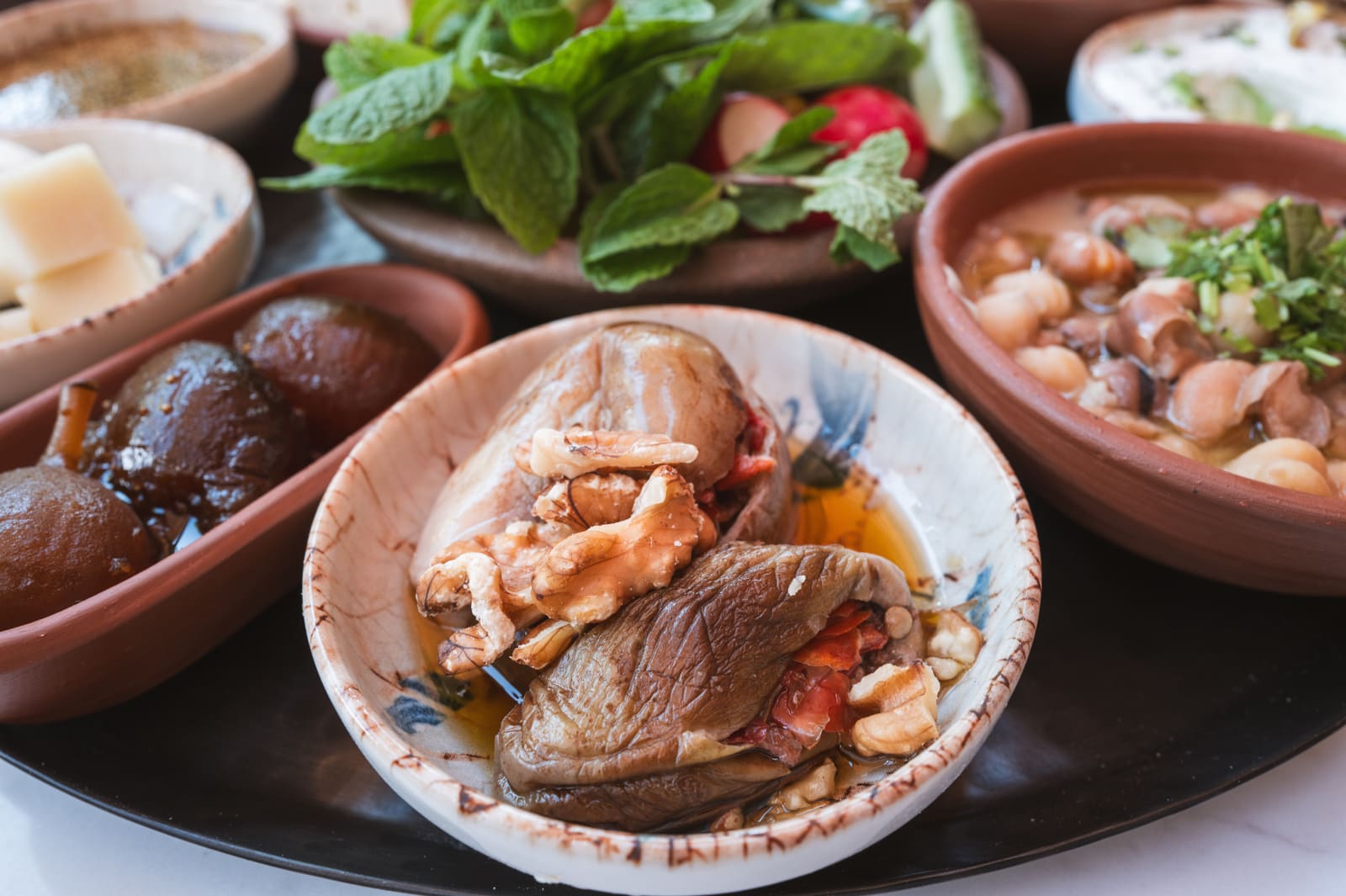
The concept animating the restaurant's interior comes from artists Gilles & Cecilie, long-time collaborators with Ottolenghi, who titled their work "We Share the Same Sea." The notion is simple yet evocative. The North Sea lapping at Scotland's eastern shores connects, through the Atlantic and Mediterranean currents, to the coasts of the Levant, North Africa and southern Europe where Ottolenghi's cooking philosophy was forged. Flavours, ingredients and traditions have always travelled these waters. The Edinburgh restaurant becomes a physical manifestation of that journey, a place where Scottish langoustines meet tahini, where locally foraged mushrooms encounter za'atar, where the rigour of provenance mingles with the exuberance of spice.
The Homecoming of a Skye-Born Chef
What distinguishes this opening from a straightforward franchise exercise is the presence of Neil Campbell, Ottolenghi's executive chef. Campbell was raised on the Isle of Skye and spent his formative years working in Scottish kitchens before joining the Ottolenghi operation a decade ago. His involvement lends the menu a dual identity: unmistakably rooted in the Ottolenghi lexicon of layered flavours, abundant vegetables and Middle Eastern technique, yet inflected with the ingredients and sensibility of his homeland.
Campbell has spoken of the privilege inherent in returning to the landscape that shaped his palate, now equipped with the culinary vocabulary he developed over ten years in London. The menu he has composed draws on suppliers within close proximity: Welch's fishmongers, Ochil for langoustines, The Free Company and Phantassie for vegetables, Katy Rodgers and Graham's for dairy, the Chocolate Tree in East Lothian, Rhyze for mushrooms. Pastries arrive daily from Company Bakery in Musselburgh. Even the aprons worn by the kitchen brigade are made by Kestin, a local menswear designer whose work emphasises craft and durability.
The commitment extends to a bespoke eau de vie created in collaboration with Woven Whisky, a Leith-based distillery. This "water of life" is not mere branding exercise but an attempt to anchor the restaurant within the city's broader artisan ecosystem, a network of producers and makers whose work is rarely visible to the casual diner but forms the infrastructure of contemporary Scottish food culture.
A Canvas for Gathering, Not Preciousness
Alex Meitlis, the designer responsible for the interiors of Ottolenghi's London sites for over two decades, approached the Edinburgh project with a philosophy he describes as "generosity and warmth." The Georgian bones of the George Street building offered proportion, symmetry and abundant natural light. Rather than impose a signature aesthetic that might override the architecture, Meitlis chose to work with it, allowing the room's inherent qualities to dictate the design language.
At the centre of the dining room sits a bar, conceived as the gravitational heart from which energy radiates. The materials lean into wood and warmth, with every piece of furniture and textile designed specifically for the space. Upstairs, a garret-style bar accommodates up to thirty guests for private celebrations, its walls adorned with hand-painted shapes that invite noise and festivity. The interiors deliberately reject the minimalist, Nordic-inflected aesthetic that has become prevalent in Edinburgh's dining scene over the past decade. Instead, they embrace texture, colour and a sense of lived-in comfort.
Gilles & Cecilie's paintings hang throughout, abstract reflections drawn from conversations with people connected to the location. The artwork does not simply decorate; it contributes to the narrative the restaurant seeks to tell, one of connection across geography, of shared seas and converging traditions.
Beyond the Stereotypes of Scottish Fare
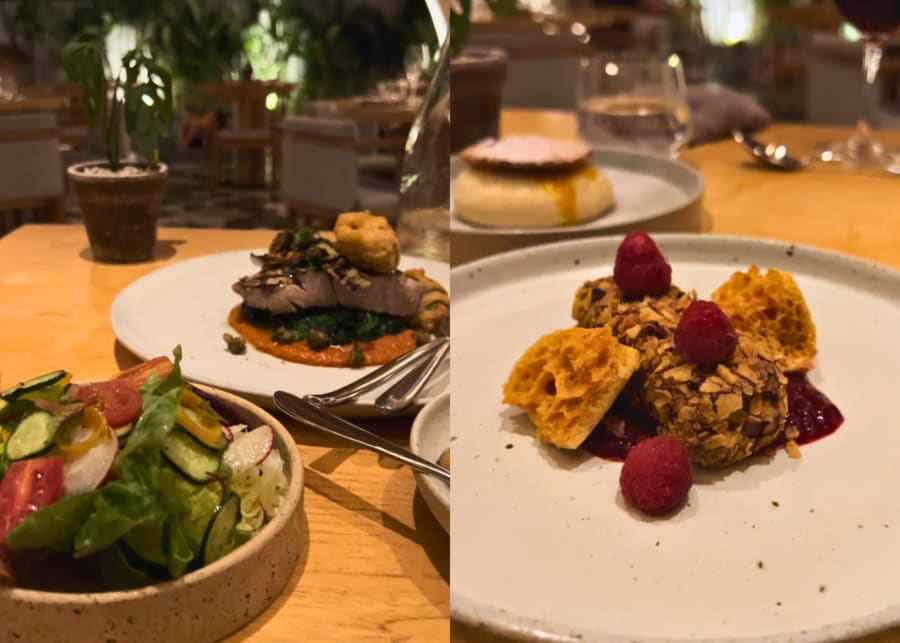
There is a lazy shorthand that surfaces whenever non-Scottish writers address Scottish cuisine, a reflexive reach for cliché: deep-fried confections, stodgy puddings, the supposed absence of sophistication. Campbell's menu dismantles that narrative without needing to argue against it. The food speaks for itself. The ingredients are Scottish, the techniques Mediterranean, the result a hybrid that feels neither forced nor overly conceptual.
Ottolenghi himself has expressed admiration for Scotland's food scene, citing the proximity of growers, producers and fishermen as a decisive factor in choosing Edinburgh for expansion. The city has, over the past fifteen years, cultivated a culinary culture that values provenance without fetishising it, that honours tradition while remaining open to influence. Campbell's menu fits comfortably within that culture, offering diners the pleasure of recognition alongside the thrill of the unfamiliar.
The breakfast-to-dinner format allows the restaurant to function as both neighbourhood fixture and destination. Morning pastries give way to lunch plates of roasted vegetables and grains, which in turn yield to evening dishes where fish and meat play more prominent roles. The rhythm mirrors the way people actually eat, rather than imposing a rigid dining structure.
A Vote of Confidence in a Northern Capital
Ottolenghi's decision to open in Edinburgh carries symbolic weight. London restaurateurs often treat expansion beyond the capital as a risky venture, a dilution of brand or a logistical burden. The choice of Edinburgh, over more obvious candidates such as Manchester or Bristol, reflects a recognition that the city possesses a dining public capable of sustaining ambitious projects. The presence of a robust local supply chain only reinforces that confidence.
The restaurant industry in Edinburgh has weathered considerable turbulence in recent years, navigating pandemic closures, rising costs and shifting consumer habits. New openings carry a degree of optimism, a wager that appetite and curiosity remain intact. Ottolenghi's arrival, with its emphasis on conviviality and its refusal of preciousness, suggests that the model for success lies not in austere refinement but in generosity of spirit, in spaces designed for gathering rather than performance.
The Warmth of Scottish Hospitality
Ottolenghi has remarked on the quality of Scottish hospitality, describing it as warm without fuss. It is a subtle observation, one that speaks to a cultural disposition rather than service protocol. The best Scottish hospitality does not announce itself; it simply makes space, offers welcome, assumes generosity as the default mode of interaction.
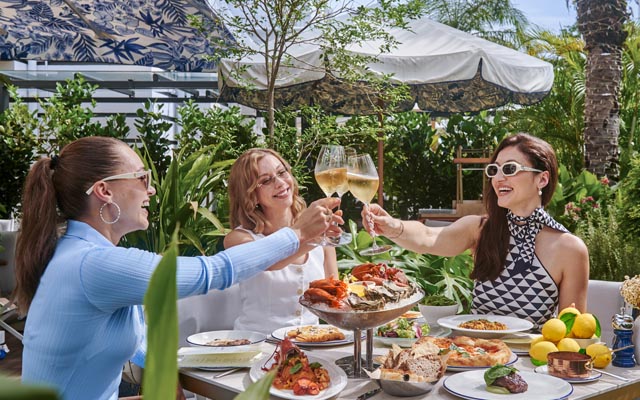
The restaurant on George Street attempts to embody that ethos, translating it into design, menu and atmosphere. The central bar, the hand-painted garret, the bespoke textiles, the paintings drawn from local conversations, all function as expressions of a philosophy that values connection over exclusivity, warmth over formality. It is an approach that feels particularly suited to Edinburgh, a city whose inhabitants are accustomed to gathering in rooms where conversation flows freely, where brunch extends into afternoon, where the line between public and private blurs in the best possible way.
A New Chapter in the Capital's Culinary Story
The opening of Ottolenghi Edinburgh does not represent a rupture with what has come before but an addition to an ongoing conversation about what dining can be in a northern European capital. It joins a constellation of restaurants, cafés and suppliers who have collectively redefined Scottish food culture over the past two decades, moving it away from defensiveness and toward confidence, from insularity toward exchange.
Neil Campbell's return to Scotland, equipped with a decade of experience in one of London's most influential kitchens, exemplifies the kind of circulation that enriches culinary scenes. Chefs leave, absorb new techniques and ideas, then return to apply them in their home contexts. The result is not imitation but synthesis, a menu that could only exist in this particular place, at this particular moment.
As autumn deepens and the days shorten, the restaurant on George Street offers a burst of light and colour, a reminder that warmth is not solely a function of climate but of intention, of the choices made in how we gather, what we eat and how we welcome one another across the table.