Florence Knight's Lunette Is a Study in Restraint and Light
On the eleventh floor of a London hotel, the chef has built a restaurant that treats design and cuisine as indivisible.
A Room Suspended Above the Thames
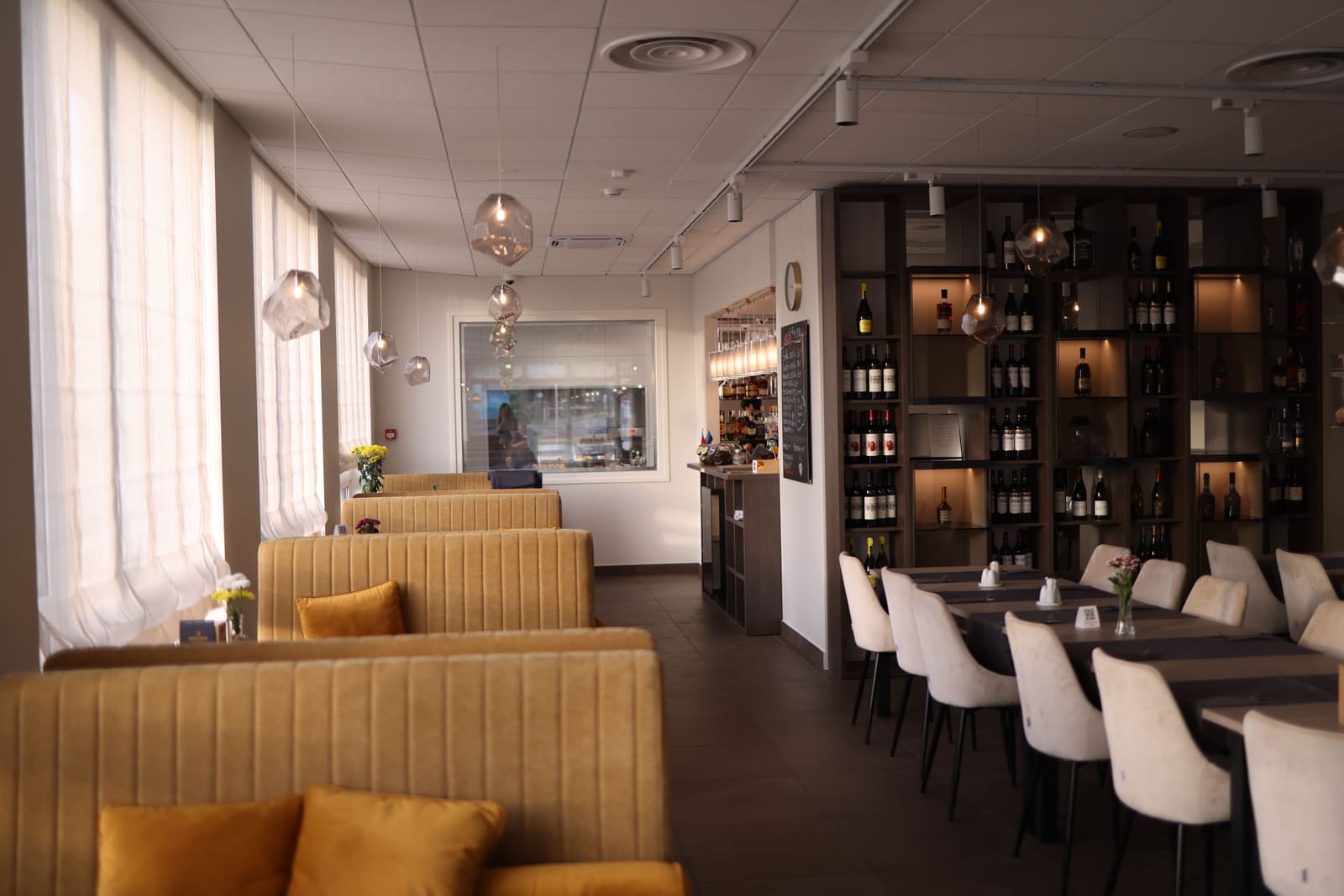
The light arrives first. Eleven storeys above Temple Gardens, the dining room at Lunette feels less like a restaurant than a private atelier opened briefly to the public. Off-white walls absorb the diffuse glow of late-autumn afternoons; pale wood runs in unbroken planes; steel tabletops reflect nothing. Jean Prouvé's modernist INSA panels line one wall, their geometric rigour softened by the translucent curtains Florence Knight insisted upon, thin as onion skin, filtering the view of the Thames below.
Knight, the chef behind this thirty-seat space within the St Clement hotel, studied fashion before she ever worked a line. That trajectory shows. Lunette, which opened in late 2024, is the work of someone who understands that a dining room is as much about texture and negative space as it is about what arrives on the plate. The name itself comes from the arched windows of the disused Aldwych underground station nearby, a word Knight chose because it "writes beautifully". Every decision here carries that same aesthetic weight.
From Sessions to Solitude
Knight's previous chapter unfolded at Sessions Arts Club in Clerkenwell, a sprawling palazzo of a restaurant she co-founded with artist Jonny Gent in 2021. Before that, she ran the kitchen at Polpetto, the intimate offshoot of Russell Norman's influential Soho bacaro Polpo. Both were collaborative ventures, noisy in their own ways. Sessions, she says now, was "a roaring beast". By 2024, she had begun to crave something smaller, more controlled. Lunette, developed alongside 180 Quarter's Mark Wadhwa, Soho House founder Nick Jones, and interiors studio Eagle + Hodges, is the result of that desire for intimacy.
The space was a concrete shell when Knight first saw it. She mapped it immediately: kitchen here, bar there. The potential was clear, she recalls, held in place by the light, the movement of the river, the way the room seemed to suspend itself above the city.
The Architecture of a Menu
Eagle + Hodges designed nearly all the furniture: sofas, dining surfaces, chairs, lighting. The exceptions are few but deliberate. A midcentury Pierre Chapo teardrop table anchors one corner. A wooden service station, fabricated by Calshot, the Southampton shipyard workshop, brings a maritime heft to the room. The staff uniforms, chic and utilitarian, were designed by Alex Eagle's fashion label.
But Knight commissioned the rest. Ceramics by Tetsuya Otani and Michel François. Blown glassware by Danish designer Alexander Kirkeby, sinuous and irregular. The menus themselves are objects, finely layered paper with an embossed double "t" that resembles a miniature table. The speaker system was created by artist and audio engineer Devon Turnbull, whose immersive listening room operates nearby at 180 Studios. The Prouvé panels came from the personal collection of Wadhwa and Eagle, who are partners in life as well as business.
Alex Eagle, who has known Knight for years, describes the collaboration as one of shared instincts rather than imposed vision. Knight, she says, cares about texture, light, feeling, space. The room functions as a blank canvas, but one that is anything but neutral.
Cooking as Material Practice
Knight describes her food as her material. The visual perspective comes first, she says, then the flavour. Her cooking is precise, seasonal, gentle in its intensity. It has evolved over the years, but certain through-lines persist for those who have followed her work. At Sessions, she became known for a confit potato and eel cake, layered and rich. At Lunette, that dish has been reconfigured into a pomme soufflé with smoked eel, roe, and nasturtium flowers. The evolution, she says, reflects both her technical ability and where she is as a person.
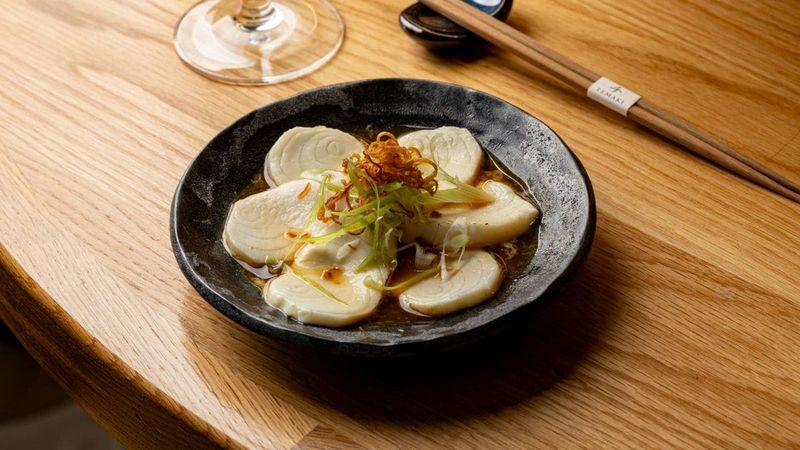
The menu reads like a series of small compositions. Raw runner beans and yellow French beans, late-summer specimens, are paired with slow-cooked squid and dressed with tomato water. Rice cooked in crab stock arrives with a sauce of long peppers and tomato juice, egg-yolk jam, and cock crab finished in crab-shell butter. French guinea fowl is served with hazelnut and celeriac sauce, beetroot purée, and a jus split with hazelnut and tarragon oils. An edgeless chocolate tart closes the meal, its pastry crisped with rice flour, its depth drawn from tea-soaked raisins. The full dinner service runs to eight courses, plus sundries.
The presentation is meticulous, but Knight is careful to distinguish precision from intimidation. Food, she insists, is about pleasure. It should be joyful, fun, shot through with nostalgia and the things we love.
The Mechanics of Control
Knight describes herself as a control freak. At Lunette, that tendency has found its fullest expression. Every facet of the restaurant reflects exactly where she is now, as both chef and aesthete. The care and attention she has always brought to her work is present here, but this time it extends beyond the kitchen. The room, the objects, the way light moves through the curtains at different hours are all part of the same project.
Lunette is not trying to be many things. It is not loud, not sprawling, not democratic in the way Sessions was. It is a distillation, a space where design and cuisine are treated as indivisible. Knight has built a restaurant that feels like an extension of her own sensibility, rigorous and restrained, where nothing is accidental and everything is in its place.
The Thames moves below, the city presses in from all sides, but inside Lunette the world narrows to thirty seats, a few carefully chosen objects, and the food that arrives on steel tabletops under filtered light.