A Restaurant Built Around the Invisible Architecture of Hospitality
In Hong Kong's Sheung Wan, Vicky Lau has designed a dining experience where the unseen rituals of service occupy more space than the tables themselves.
The Space Between Service and Spectacle
There is a brass ring set into the façade, and you press it to enter. No sensor, no automatic slide, no digital intermediary. The metal surface is printed to resemble marble, its vertical veining so fine that the building reveals almost nothing of what happens inside. This small gesture of pressing, of waiting, of being received rather than simply admitted, sets the tone for everything that follows.
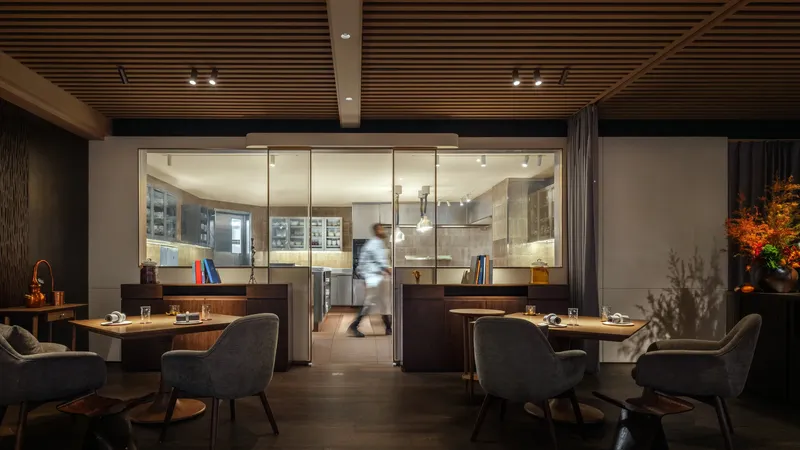
Inside, the newest iteration of Tate occupies two storeys and 5,500 square feet in Sheung Wan, a few doors down from where the original Tate Dining Room earned two Michelin stars before closing. But the numbers that matter most are not the accolades. They are the proportions. More than sixty percent of this space is devoted to what guests will never see: an expansive kitchen outfitted with both a Korean charcoal grill and a powerful gas wok, a wine cellar, an office, laundry facilities, and generous back-of-house areas where the team can eat, rest, and prepare without haste. Only twenty seats occupy the dining room.
For Vicky Lau, the chef and creative force behind Tate, this inversion of priorities is not an indulgence. It is the architecture of hospitality made literal. At Global Chic Voyage, we have long observed how the finest dining experiences are built not on spectacle but on the infrastructure that supports grace under pressure. Lau has designed a restaurant where that infrastructure is the primary program, and the dining room is what remains.
Rooms That Unfold Like Chapters
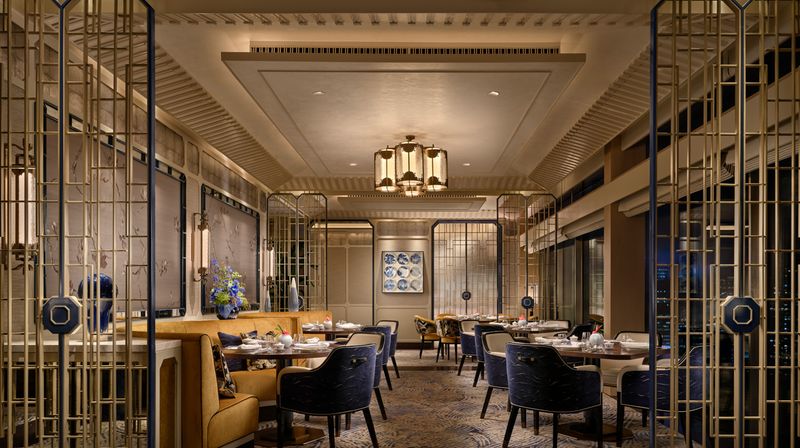
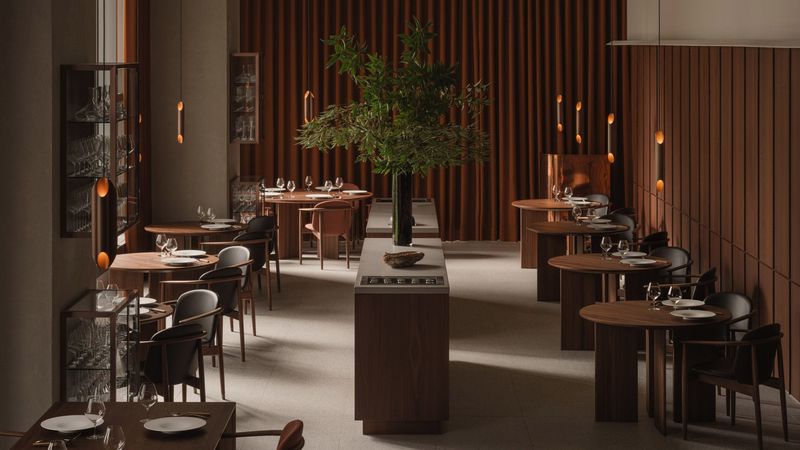
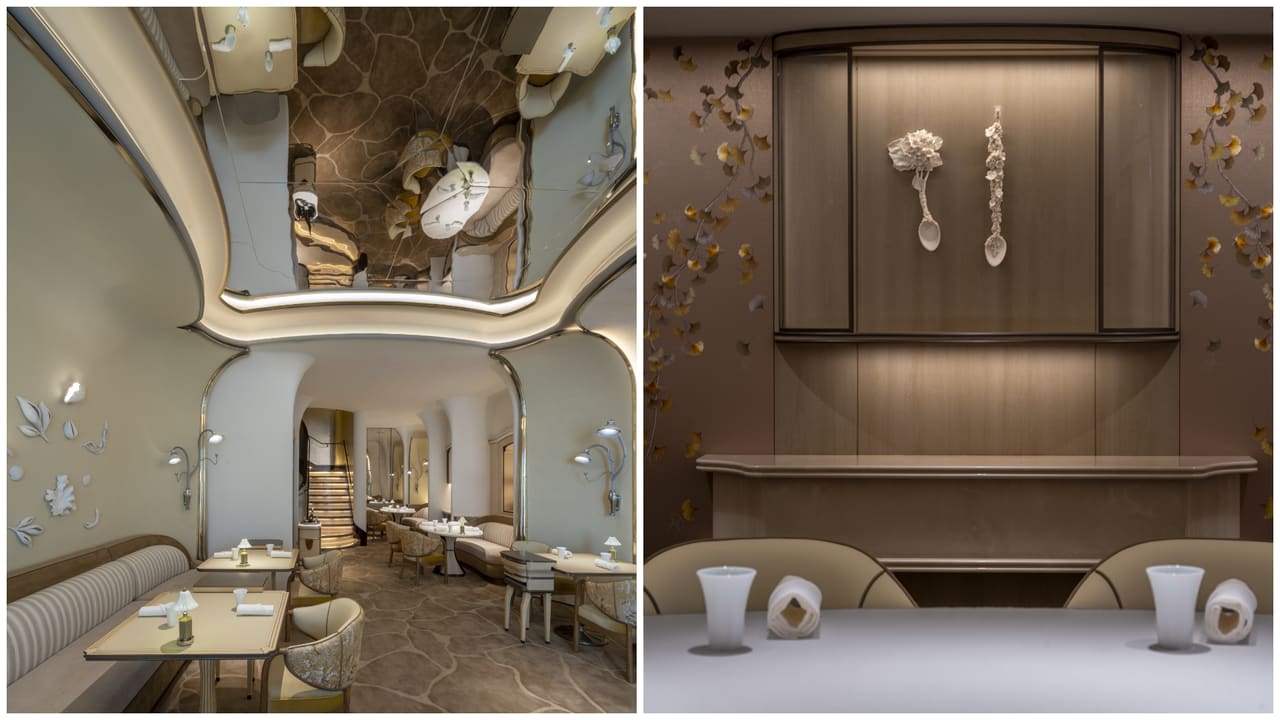
Designer Chris Shao, whose studio spans New York, Shanghai, and Dubai, has translated Lau's vision into interiors that feel less like a restaurant and more like a private residence opened to a select few. The palette moves through warm taupe, mushroom beige, ivory, mocha brown, soft pewter, and sage. These are not colours chosen for drama. They are chosen for the way they recede, allowing the rituals of a meal to take centre stage.
The craftsmanship is quiet but unmistakable. Eggshell lacquer and plaster finishes coat the walls. Handmade ceramics punctuate the tables. French textiles, embroidered in China, drape the windows. Much of the furniture and lighting has been custom designed, including dining chairs with a discreet drawer that slides out to form a shelf for a mobile phone. Adjustable sconces cast light not from above but through illuminated stems, so that each table is bathed in a gentle, directionless glow.
Shao credits Lau's clarity of vision for the refinement of the interiors. When presented with options for fine details, Lau knew immediately what she wanted. There was no hesitation, no second-guessing. This decisiveness is rare in collaborative design, and it shows in the coherence of the space.
The Private Dining Room as Ode
Upstairs, a spiral staircase introduces a subtle art nouveau note, its curve leading to a private dining room that seats twelve around a chef's table. Here, the palette deepens slightly. Embroidered dandelions and mushrooms shimmer across a curtain. A carpet traces the pattern of ginkgo leaves, their fan-shaped forms repeated in a rhythm that suggests both order and organic growth.
This is where Lau's training in graphic design becomes most legible. Before she was a chef, she studied design in the United States, and that education continues to inform her approach. She treats composition, negative space, and visual hierarchy not as metaphors but as tools. The dining room is not decorated. It is composed.
French Technique, Chinese Memory
Lau's cuisine has always occupied the territory between French technique and Chinese memory, but the kitchen at Tate allows her to refine that conversation further. A Korean charcoal grill sits alongside the gas wok. An artisan bread proofer and dedicated deck oven anchor one corner. Guéridon service, the tableside completion of dishes, preserves both temperature and aroma, ensuring that the final moments of preparation happen in the presence of the guest.
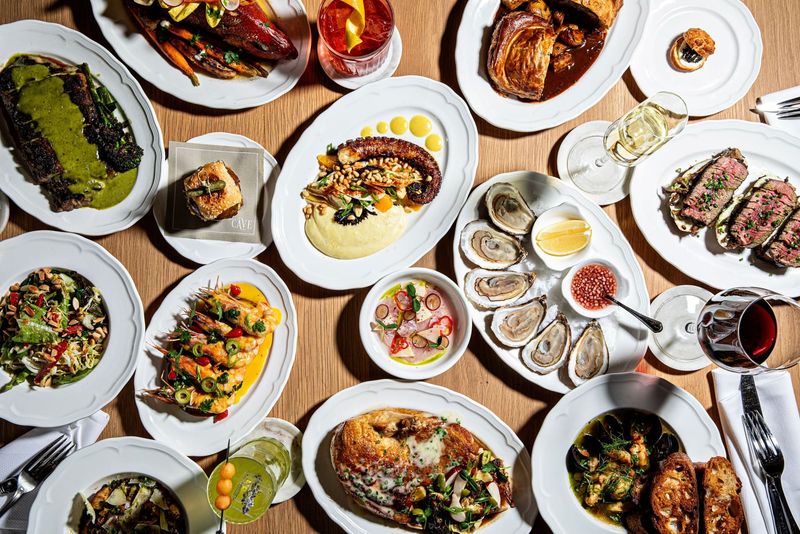
Among the inaugural dishes is a preparation Lau calls "Ode to Pigeon," inspired by the ancient craft of clay-baking. The breast is wrapped in red clay before being served alongside mui choy, spiced poultry jus, and a clear broth made from fig bark and pigeon bones. It is a dish that requires both technical precision and a deep familiarity with ingredient provenance. The clay must be sourced, prepared, and applied with care. The broth must be coaxed into transparency without sacrificing depth.
Lau describes her tasting menu as a form of kung fu, a discipline built on small, precise movements. Every plate is custom-designed for its dish. Every sauce carries meaning. The meal becomes not a sequence of courses but a celebration of what nature provides and what skill can coax from it.
Why the Back of House Matters
The decision to allocate so much square footage to the unseen operations of a restaurant is, in one sense, radical. In another, it is simply logical. A team that has space to breathe, to eat well, to rest between services, performs differently. They move with less friction. They anticipate needs rather than react to them. The kitchen becomes a place of preparation rather than panic.
This is not a new idea, but it is rarely executed with such commitment. Most restaurants, especially in cities where real estate commands a premium, maximize seating and minimize support space. Lau has inverted that calculus. The result is a restaurant that feels unhurried, where the pace of service is dictated not by the need to turn tables but by the rhythm of the meal itself.
At Global Chic Voyage, we have watched fine dining in Asia evolve over the past decade, as chefs trained in Europe return to reinterpret their own culinary heritage. Lau's work sits at the vanguard of that movement. She is not fusing cuisines. She is asking what happens when French discipline meets Chinese ingredients, Chinese techniques, and Chinese aesthetics. The answer, in her hands, is a cuisine that feels both rigorous and deeply personal.
A Home, Not a Stage
Lau has said that she dreams of time at Tate feeling like being welcomed into an elegant private home, where only a few guests are received and every detail unfolds with quiet grace. This is not the language of hospitality as performance. It is the language of hospitality as care, as attention, as the slow accumulation of gestures that make a guest feel seen.
The metaphor of the private home is instructive. A home is not designed to impress. It is designed to function, to comfort, to reflect the values of the people who live there. Lau has built a restaurant that operates on the same principles. The interiors do not announce themselves. The service does not perform. The food does not shout. Everything is calibrated to a quieter register, where refinement is expressed not through excess but through restraint.
This approach will not appeal to everyone. There is a certain kind of diner who seeks spectacle, who wants the fireworks of molecular gastronomy or the theatre of an open kitchen. Tate offers none of that. What it offers instead is the pleasure of being in a space where every decision, from the embroidered dandelions to the placement of the bread oven, has been made with intention.
The Discipline of Small Movements
Lau's reference to kung fu is worth lingering on. Kung fu, at its highest levels, is not about force. It is about economy of movement, about using the minimum effort required to achieve the desired result. The same philosophy governs her cooking. There is no garnish for garnish's sake. No sauce that does not contribute to the dish. No element that is merely decorative.
This discipline extends to the design of the space. The custom furniture, the adjustable sconces, the discreet phone drawer in each chair, all of these are solutions to specific problems, designed to remove friction from the experience of dining. The result is a space that feels effortless, even though the effort required to achieve that effortlessness is immense.
Tate opens its doors in Sheung Wan this August, a few steps from where the original Tate Dining Room once stood. The location is familiar, but the ambition is new. Lau is no longer simply running a restaurant. She is building a model for what fine dining can be when hospitality, not spectacle, is placed at the centre. The twenty guests who secure a reservation will be among the first to experience that vision. The rest of us will watch, and wait, and wonder if this quieter, more considered approach to luxury dining will take root beyond Hong Kong.