Cafe Charmant Brings French Coastal Elegance to West Village
A new brasserie from Catch Hospitality Group trades Italian oversaturation for champagne-hued interiors and inventive coastal French cuisine.
A Reprieve from Red Sauce
The brownstones along Bleecker Street wear their Italian restaurants like layers of paint, one atop another, until the original architecture of the neighbourhood becomes difficult to discern. So when Catch Hospitality Group announced plans for a coastal French brasserie in the former Saint Theo's space, the collective sigh of relief was audible. Cafe Charmant opened its doors barely a month ago, and the dining room has already hosted a curious mix of celebrities and locals who share an appetite for something beyond the familiar marinara-and-mozzarella circuit.
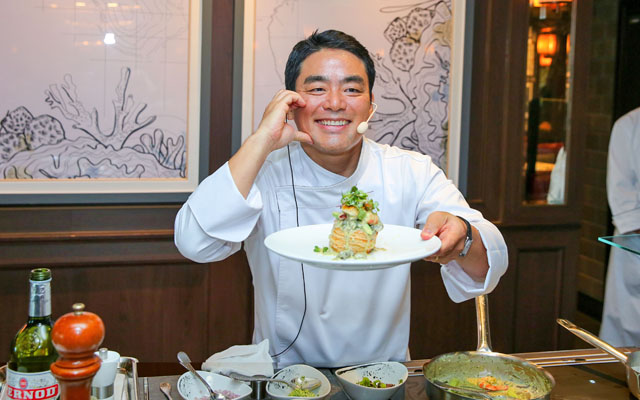
Chef Jake Tyler Brodsky, whose résumé includes time at Eleven Madison Park, helms the kitchen. The design comes courtesy of Rockwell Group, frequent collaborators with Catch on projects including The Corner Store, Or'esh and The Eighty Six. But where those venues lean into darker, club-like atmospheres, Cafe Charmant opts for a lighter touch, both literally and tonally.
Champagne Light and Velvet Curtains
The exterior glows with a neon sign above a yellow-painted facade and awning. Heavy red velvet curtains shroud the windows, a gesture towards privacy that feels almost theatrical. Step inside, past another curtain, and the space opens into a softly lit foyer that recalls a theatre lobby more than a restaurant entrance. Drama, it seems, is part of the service.
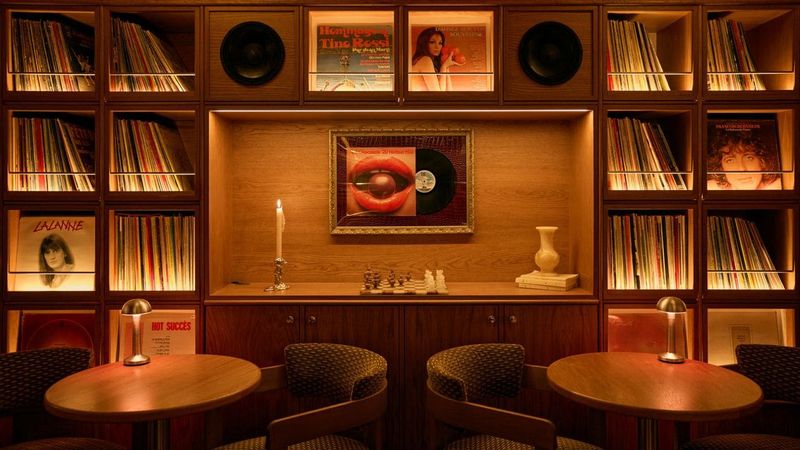
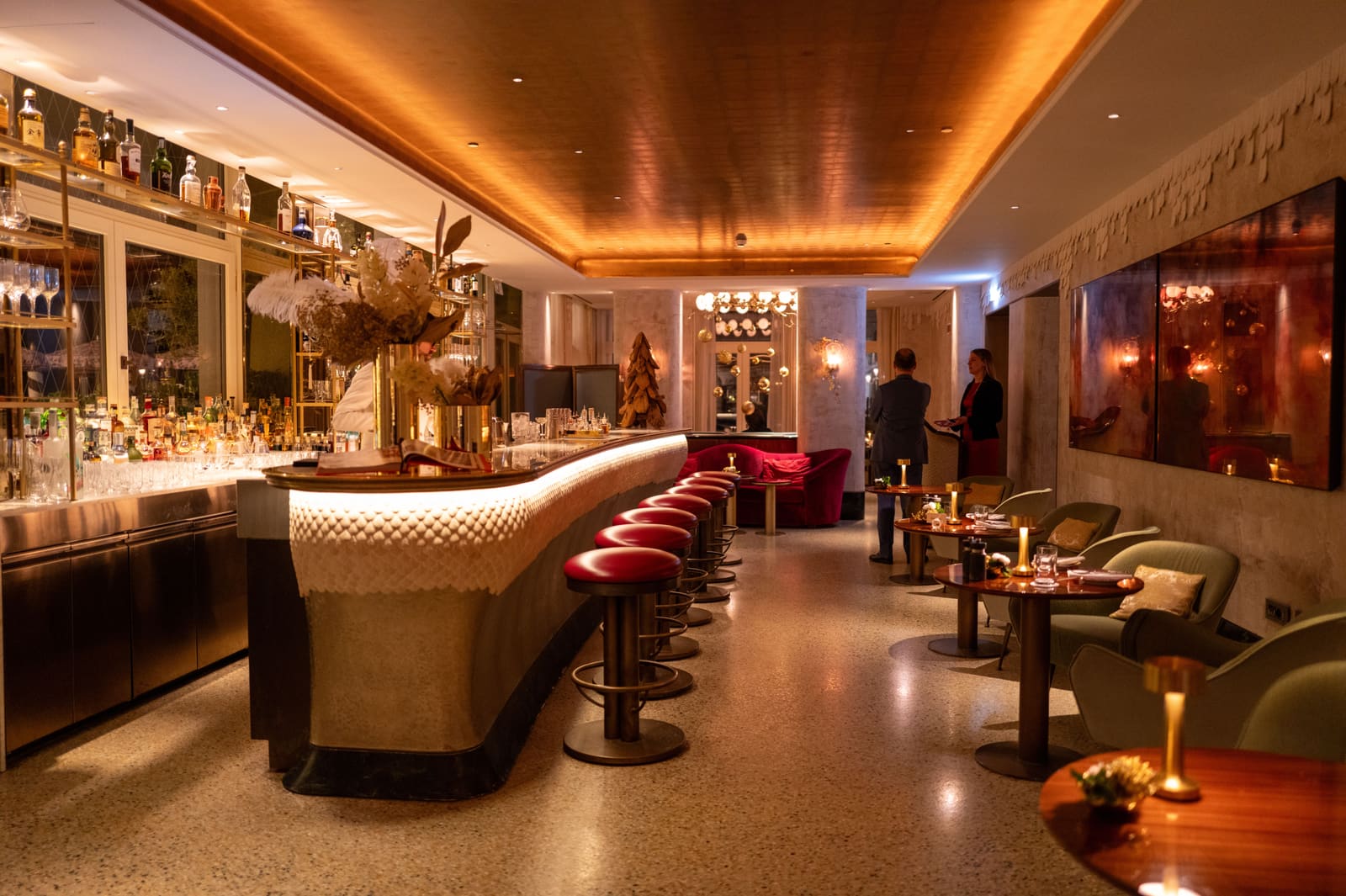
Beyond the second curtain, the main dining room unfolds in shades of champagne and oxblood red. Steam-bent wooden chairs, leather booths, coloured-glass table lamps and antique mirrors establish the Parisian brasserie vocabulary. Yet the space is unmistakably New York: dark wood panelling, Art Deco-influenced pendant lights above the bar, and a ceiling clad in decorative tin panels perforated with thousands of tiny holes. The perforations are not merely aesthetic; they conceal acoustic buffering that allows conversation to flow without bleeding into neighbouring tables.
The 70-seat layout strikes a balance between intimacy and breathing room. Tables are generously spaced, a rarity in the West Village, where diners often find themselves elbow-to-elbow with strangers. Here, there is room for servers to move unimpeded, and enough ambient energy to encourage spontaneous exchanges with the next table without feeling intrusive.
Caribbean Currents in a French Frame
Brodsky's menu is billed as a coastal take on the classic New York French brasserie, but that description undersells the inventiveness at play. Beverage director Lucas Robinson and wine director Emily Buse round out the team, and together they have constructed a menu that respects tradition while quietly subverting it.
The spicy moules gratin and razor clam pasta offer clever reinterpretations of brasserie standards. The 30-ounce côte de boeuf bone-in ribeye, meanwhile, requires no embellishment; the quality of the cut speaks for itself. But it is the subtle Caribbean inflections, likely absorbed during Brodsky's time in the Cayman Islands, that distinguish the cooking. The Curry Duck Pastel arrives as a samosa-style bite filled with spiced duck and house-made coconut milk, accompanied by a sweet-tangy chutney. The crispy shrimp Polynesian incorporates sansho, a Japanese numbing spice Brodsky brought back from Tokyo, into a tropical sauce that defies easy categorisation.
Seasonality governs the menu. The Heirloom Tomato salad, laced with anchovies and dusted with Mahón cheese, will not reappear until next summer, when the farmers' market offerings align. This commitment to what is available, rather than what is expected, lends the kitchen a sense of place that transcends the coastal French label.
Cocktails Worth the Detour
The cocktail menu demands attention. A vodka-based cucumber sour, garnished with cucumber slices arranged like fish scales along the glass, pairs beautifully with both the lime-drizzled diver scallop crudo and the citrusy maidai crudo mixed with marmalade. The pear and honey martini, served with a sidecar and a slice of honeycomb, complements the light glaze on the tuna 'Charmant' tartare. A Negroni variation, with peppery notes that elevate the sauce accompanying the steak frites, proves that thoughtful pairing need not be prescriptive to be effective.
Dessert offerings include a Chocolate Mousse Service, presented as a giant ellipsoid scoop with a trio of toppings for customisation, and a tangy lemon meringue posset served in a silver coupe. The pain au chocolat old fashioned and a hazelnutty espresso martini function as both conclusion to the meal and prelude to whatever follows. The crowd, it is worth noting, does not appear to be heading home after dinner.
The Geography of Appetite
What Cafe Charmant achieves is not merely a shift in cuisine but a recalibration of expectation. In a neighbourhood where Italian restaurants have become ambient noise, the arrival of a well-executed French brasserie feels less like novelty and more like necessity. The champagne-hued interiors and Caribbean-inflected dishes suggest a kitchen and design team uninterested in slavish adherence to either tradition or trend.
The space invites lingering without demanding it. The food rewards curiosity without punishing restraint. And in a city where dining out often feels like competitive sport, Cafe Charmant offers something increasingly rare: a meal that feels like an occasion without insisting on being an event.