The Architects of Atmosphere: Three Specialists Redefining Restaurant Excellence
From concept development to the warmth of a lightbulb, the invisible hands shaping where we eat and drink

The Soul Before the Menu
There's a particular alchemy to restaurants that lodge themselves in memory. It isn't the food alone, though that matters profoundly. Nor is it simply the room, however beautiful. It's the way a server remembers your name three visits in. The cut of a waiter's jacket that somehow belongs to the building's bones. The precise fall of light across a plate that makes you reach for your camera, then think better of it and simply eat.
At Global Chic Voyage, we've watched the hospitality industry mature beyond the celebrity-chef era into something more considered, more holistic. The restaurants we return to year after year share an invisible infrastructure of intentionality. They feel coherent in ways that are difficult to articulate but impossible to ignore. Behind many of them stand specialists whose work you'll never see on a menu but will feel in every moment you spend at the table.
We spoke with three firms whose disciplines - concept development, uniform design, and lighting - represent the often-overlooked foundations of great hospitality. Each approaches restaurants as living systems, not static stages. And each understands that the details guests barely notice consciously are precisely the ones they'll remember most.
Building Identity From the Ground Up
Martin Imschweiler spent twelve years behind the bar at Schumann's, the Munich institution credited with elevating the Bavarian capital beyond its mid-century reputation as a handsome but provincial city. When he founded his consultancy in 2021, it was with a bartender's understanding that hospitality is performance and engineering in equal measure.
Imschweilers, the firm he established with creative director Verena Glup, begins every project by reading the room, literally. They study the architecture, the neighborhood's rhythm, the way light moves through windows at different hours. For the Parkhotel Mondschein in Bolzano, commissioned in 2021, this meant letting the building's century of history guide the concept rather than imposing a template from outside. The restaurant became a showcase for South Tyrolean ingredients, the bar a gathering place for locals rather than hotel guests alone.
"Too many beautiful rooms lack a strong food concept," Imschweiler explains. "And too many excellent kitchens operate in spaces with weak identity." His consultancy refuses the either-or proposition, developing venues where every element, from the menu to the music to the visual language, speaks the same dialect.
The firm's recent projects include a bar system for Swiss furniture-maker Lehni that folds into a traveling trunk, a café concept for Munich design brand Orno, and the identity for Iza Noodle Bar, opening later this year in the Bavarian capital. The through-line is legibility. When staff greet you by name, when they notice your absence, when the room feels like it grew organically from its location rather than being dropped in - that's when a restaurant transcends transaction and becomes ritual.
Imschweilers calls operations "the perfume of a place." You don't notice them consciously, but their presence or absence shapes everything. The strongest concepts, Glup notes, emerge from the food itself, from the founders' vision, from the culture and location. "We're here to uncover those stories, not invent new ones."
The consultancy's philosophy distills into three principles: don't try too hard, design for real life, and resist the lure of trends. Train staff properly and refresh that training every six months. Let the space support daily operations rather than complicating them. Translate enduring principles into contemporary settings, and the result will remain relevant long after the Instagram aesthetic of the moment has faded.
The Uniform as Extension of Space
Tom Chudley moved from kitchens into fashion with the restless curiosity of someone who'd spent years noticing what didn't work. The stiff, airless uniforms he'd worn while cooking became the research for Service Works, a London-based brand he launched in 2020 to make organic cotton workwear that actually breathes in hundred-degree kitchens and survives industrial laundering.
The brand's checkered chef trousers nod to tradition while concealing the inevitable stains of service. The seersucker suit jacket recalls classic waitstaff tailoring but moves with the body rather than against it. Chudley's insight was simple: a uniform doesn't need to look severe to be taken seriously. Comfort, personality, and practicality can coexist.
Service Works has earned quiet endorsements from London restaurants including Impala, St John, and Wildflowers, establishments known for their uncompromising standards. But Chudley also weaves the brand's utilitarian aesthetic into everyday wear, blurring the line between professional and personal wardrobes. The best uniform, he argues, shouldn't just look good on opening night. It should work for its entire lifespan, maintaining structure and dignity through hundreds of shifts.
His advice to restaurateurs is pragmatic: think beyond the first week. Involve the people who will actually wear the clothing, because they'll tell you immediately what fails in practice. And don't force an identity. The most successful restaurant uniforms feel like natural extensions of the space, not costumes imposed from outside.
There's something democratic in Chudley's approach, a recognition that the people who make hospitality possible deserve clothing designed with as much care as the dining room itself. When front- and back-of-house staff move through their work with confidence and comfort, that ease transmits to guests in ways no amount of expensive tableware can replicate.
The Unnoticed Art of Light
Even a flawless meal can be undermined by lighting that renders diners ghoulish or plunges the room into such darkness that reading the menu becomes an ordeal. Kunlatida Suwintrakorn, founder and CEO of Bangkok-based Lundi, has devoted the past decade to solving this most overlooked element of restaurant design.
Suwintrakorn studied architecture in France, where she learned to custom-make lighting fixtures, and returned to Thailand with an understanding that architecture creates physical structure but light gives a space atmosphere, emotion, and human dimension. She founded Lundi to address what she saw as a persistent problem: restaurants designed for aesthetics at the expense of ambiance, with lighting treated as an afterthought rather than a foundational element.
The technical considerations are more complex than most interior designers realize. The Color Rendering Index, which measures how accurately a light source reveals true color, runs from zero to one hundred, with one hundred representing natural sunlight. According to Lundi, maintaining a CRI above ninety over food ensures that dishes arrive looking appetizing rather than gray or sallow. Fixed downlights, common in restaurant construction, become liabilities the moment a layout changes. Track systems and adjustable fixtures offer flexibility as table configurations evolve.
For Nusara, a Bangkok restaurant overlooking Wat Pho, Lundi analyzed how the temple views shifted with daylight and designed a lighting scheme that adapted accordingly, creating intimacy as evening descended. The firm is typically among the first teams on site and the last to leave, fine-tuning installations after fixtures are in place. Suwintrakorn and her team visit completed projects to adjust settings in real conditions, eliminating the guesswork that leads to costly rewiring.
She recommends automated dimming systems that shift seamlessly from daytime brightness to evening glow without relying on busy staff to remember settings or fumble with controls mid-service. When lighting is executed well, she notes, it becomes part of what guests remember after the meal ends, even if they can't articulate why the experience felt so enveloping.
The Invisible Made Essential
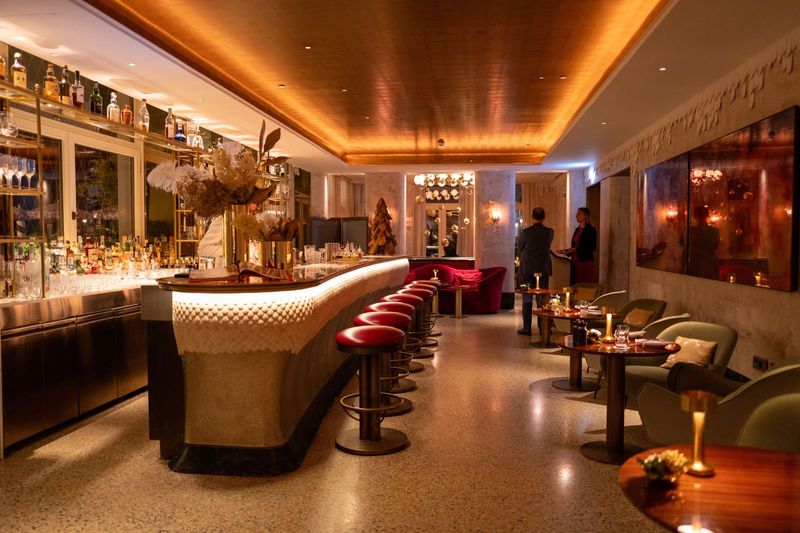
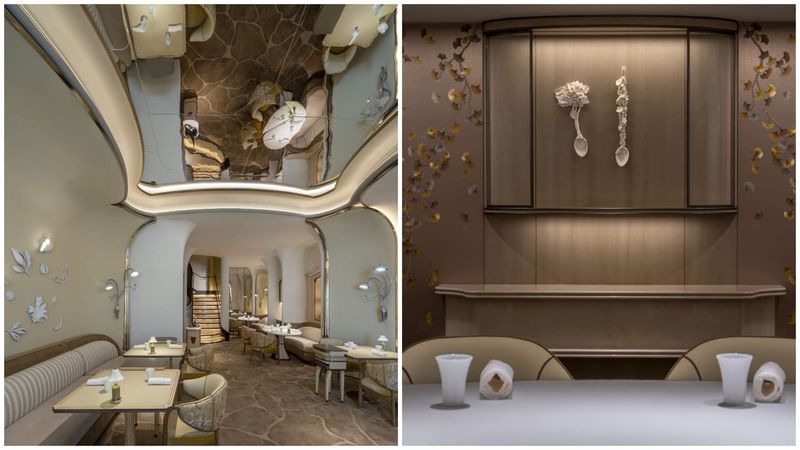
What unites these three practices is a shared philosophy: that restaurants succeed or fail on the strength of elements most guests will never consciously notice. The coherence of a concept. The comfort of a uniform. The precise temperature of light falling across a table. These are not luxuries or afterthoughts. They are the infrastructure of memory, the reason certain places become rituals rather than merely meals.
The maturation of global dining culture has meant a shift away from singular genius models - the chef as auteur, the designer as visionary - toward collaborative ecosystems where specialists contribute distinct expertise. Imschweilers doesn't cook the food; Service Works doesn't design the room; Lundi doesn't write the menu. But each makes the work of chefs, designers, and restaurateurs more legible, more felt, more likely to endure.
At Global Chic Voyage, we've always believed that the best travel experiences are built on invisible competence, the kind that allows you to surrender to a moment without friction or second-guessing. The same holds true for hospitality. When every detail speaks the same language, when operations hum beneath the surface, when light and cloth and concept align, dining becomes something larger than sustenance. It becomes a form of care, extended across a table, remembered long after the plates are cleared.