The Convent Garden on Giudecca That Opens Only to Those Who Arrive by Boat
Five centuries after its founding, a Venetian sanctuary of silence and greenery welcomes visitors who make the crossing to the Lagoon's quieter shore.
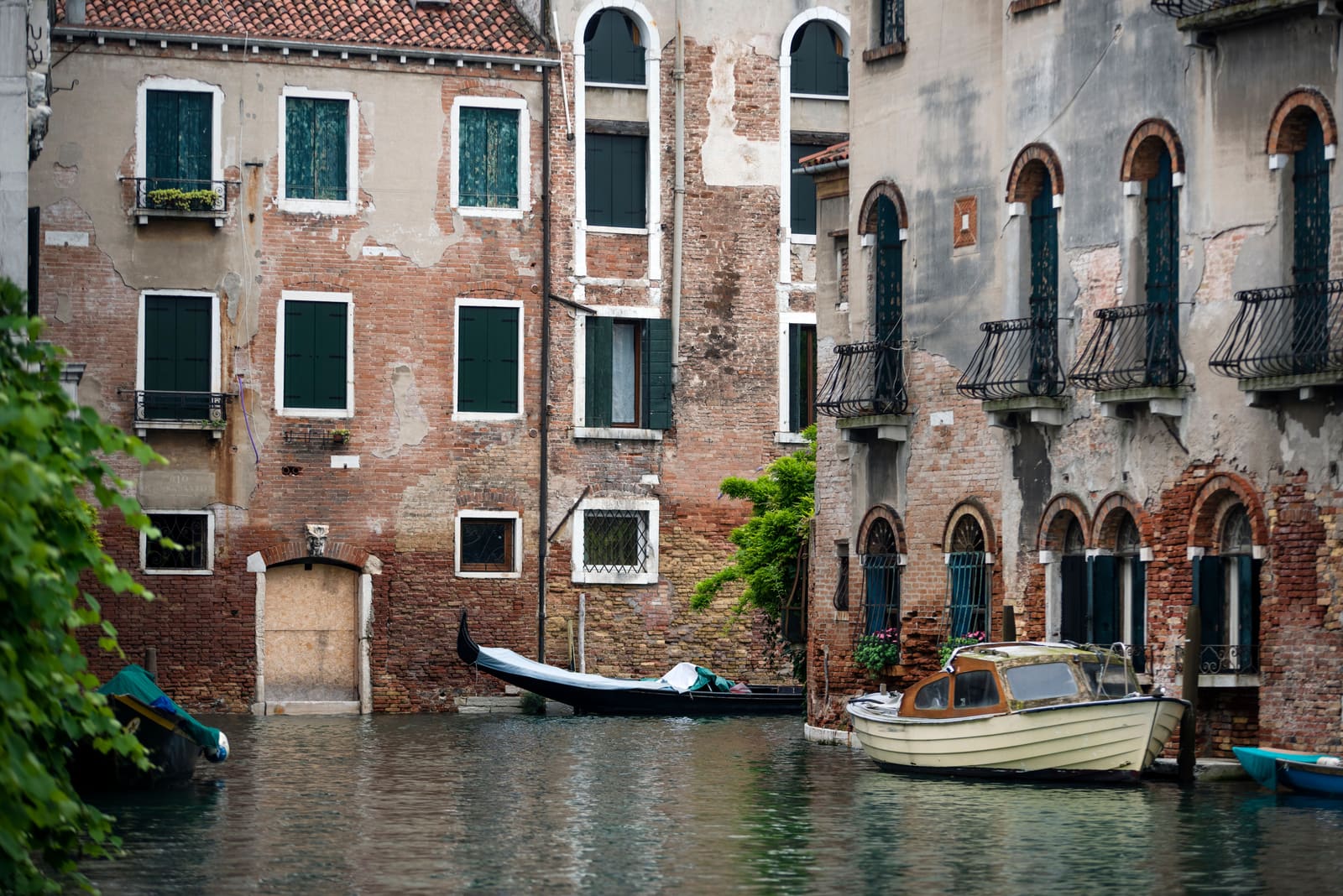
A Crossing That Changes Everything
The vaporetto pulls away from San Marco, and within minutes the density of the city begins to thin. Giudecca Island appears low and long across the water, its southern flank facing the open lagoon rather than the Grand Canal's theatre. Here, where convents and workshops once lined the waterfront, a walled garden has stood for half a millennium, tended by generations of nuns and hidden from the casual traveller by both geography and intention.
The Garden of the Redeemer, attached to a convent of the same name, has recently completed a restoration that returned its Renaissance layout and replanted its beds with species documented in sixteenth-century records. The work took four years. The garden is open now, but only to those willing to make the short journey by boat; there is no land bridge, no causeway, no pedestrian shortcut. The water is both moat and threshold.
The Architecture of Enclosure
Convent gardens in Venice were designed as microcosms, places where the enclosed life could still engage with creation. High brick walls, built in the 1520s, define the perimeter. Within them, gravel paths radiate from a central well, each quadrant planted with herbs, fruit trees, and flowering shrubs that served both liturgical and medicinal purposes. Roses for feast days. Lavender for the infirmary. Fig trees that required no explanation.
The restoration team worked from archival drawings held in the convent's own library, cross-referencing them with botanical treatises published in Venice during the same period. What emerged was not a fantasy of the past but a working reconstruction: the same proportion of shade to sun, the same relationship between planted bed and open sky. The layout privileges symmetry without rigidity, a quality that Renaissance garden theory prized and that the nuns, practical women managing a small plot, understood instinctively.
What Restoration Reveals
To restore a garden is to make a series of decisions about what belongs and what does not. The team removed species introduced in the nineteenth and twentieth centuries, plants that had thrived but were historically inaccurate. They rebuilt pergolas using chestnut wood, the same timber specified in the original plans. They re-pointed the wellhead, which had cracked, and re-levelled paths that centuries of subsidence had tilted.
What the work revealed, beyond the physical fabric, was the garden's original function as a place of both contemplation and labour. The nuns grew their own food here, harvested their own medicines, and walked these paths as a form of prayer. The restored garden does not ask visitors to imagine that life; it simply presents the architecture within which it unfolded, and leaves the rest to observation.
The Logistics of Arrival
Giudecca is served by several vaporetto lines, but the convent garden is not advertised on the standard tourist circuit. Visitors must book in advance through the convent office, a requirement that limits numbers and preserves the site's quietness. The water taxi landing is marked by a small wooden door in the perimeter wall, painted the same terracotta as the brickwork and easy to miss if you do not know where to look.
The crossing from central Venice takes eight minutes. The fare is included in a standard vaporetto ticket. The convent requests a donation upon entry, though the amount is not fixed. Hours are restricted: mornings only, and not every day. These constraints are not obstacles but part of the experience, a reminder that access to certain places has always been conditional, earned by effort or intention rather than proximity.
Why Gardens Matter in Cities Built on Water
Venice's relationship with green space is necessarily constrained. Land is scarce, and what exists above the waterline is largely paved or built upon. The city's gardens, when they appear, are almost always enclosed, glimpsed through gates or over walls, private worlds that exist in counterpoint to the public density of the calli and campi.
The Garden of the Redeemer offers something rare: a designed landscape that has remained largely unchanged in purpose and plan for five centuries, and that is now open to those who seek it out. It is not a museum. The plants grow, the seasons turn, the well still draws water from the same aquifer that supplied the convent in 1525. To visit is to step into a continuity that most urban spaces have lost, not because time stopped here, but because the essential structure has endured.
What Awaits Beyond the Wall
Inside, the garden is smaller than its reputation suggests, perhaps half a hectare in total. The scale is domestic, human. The paths are wide enough for two people to walk side by side, but not much wider. The beds are raised, edged in stone, planted with varieties that would have been familiar to the convent's founders: rosemary, sage, bay, quince, pomegranate. A grape arbour runs along the western wall, its vines trained on iron supports that replaced the original wooden framework in the 1950s but follow the same pattern.
There are benches, placed where the afternoon sun reaches through the fruit trees. There is a small chapel, open only during certain feast days, its interior visible through a grille. There is the sound of water, both the lagoon lapping against the island's edge and the drip of the well into its stone basin. And there is silence, or as close to silence as Venice permits: the distant hum of boat engines, the occasional bell, the rustle of leaves.
The convent itself remains a working religious house, and parts of the complex are not accessible to visitors. The garden, however, is offered as a shared space, a place where the contemplative life and the curious traveller can coexist without friction. The nuns who live here continue to tend the beds, and their work is visible in the careful pruning, the weeded paths, the espalier trained flat against the southern wall.
The Weight of Five Centuries
A garden that has existed for five hundred years has survived more than weather. It has survived war, occupation, plague, flood, and the slow economic decline that turned Venice from a republic into a museum. It has survived because it was useful, and because the women who tended it understood that beauty and utility are not opposed.
The restoration has not erased that history. The brickwork is patched, the wellhead shows its age, the paths are worn smooth in places where generations of feet have passed. These marks are not flaws but evidence, the visible record of continuous use. To restore such a place is not to return it to some imagined perfection but to ensure that it can continue, that the structure remains sound enough to hold the life that unfolds within it.
Visiting on Terms Not Your Own
The garden is open on Tuesday, Thursday, and Saturday mornings, from April through October. Bookings are made by email or telephone, and confirmation can take several days. The convent does not have a website optimised for tourism. There is no café, no gift shop, no guided tour in multiple languages. These absences are not oversights. They are choices, deliberate and consistent with the site's character.
To visit the Garden of the Redeemer is to accept a set of terms that are not your own, to adjust your schedule and your expectations to fit a rhythm that predates the tourist economy by several centuries. It is an increasingly rare transaction in a city where almost everything has been recalibrated to meet visitor demand. And it is, for precisely that reason, worth the effort required to make the crossing.