The Grassy Plains and Stone Giants of Rapa Nui
Beyond the iconic moai, Easter Island reveals a landscape closer to Celtic moorland than tropical paradise, where volcanic craters and ceremonial villages tell stories of human ambition at the edge of the Pacific.
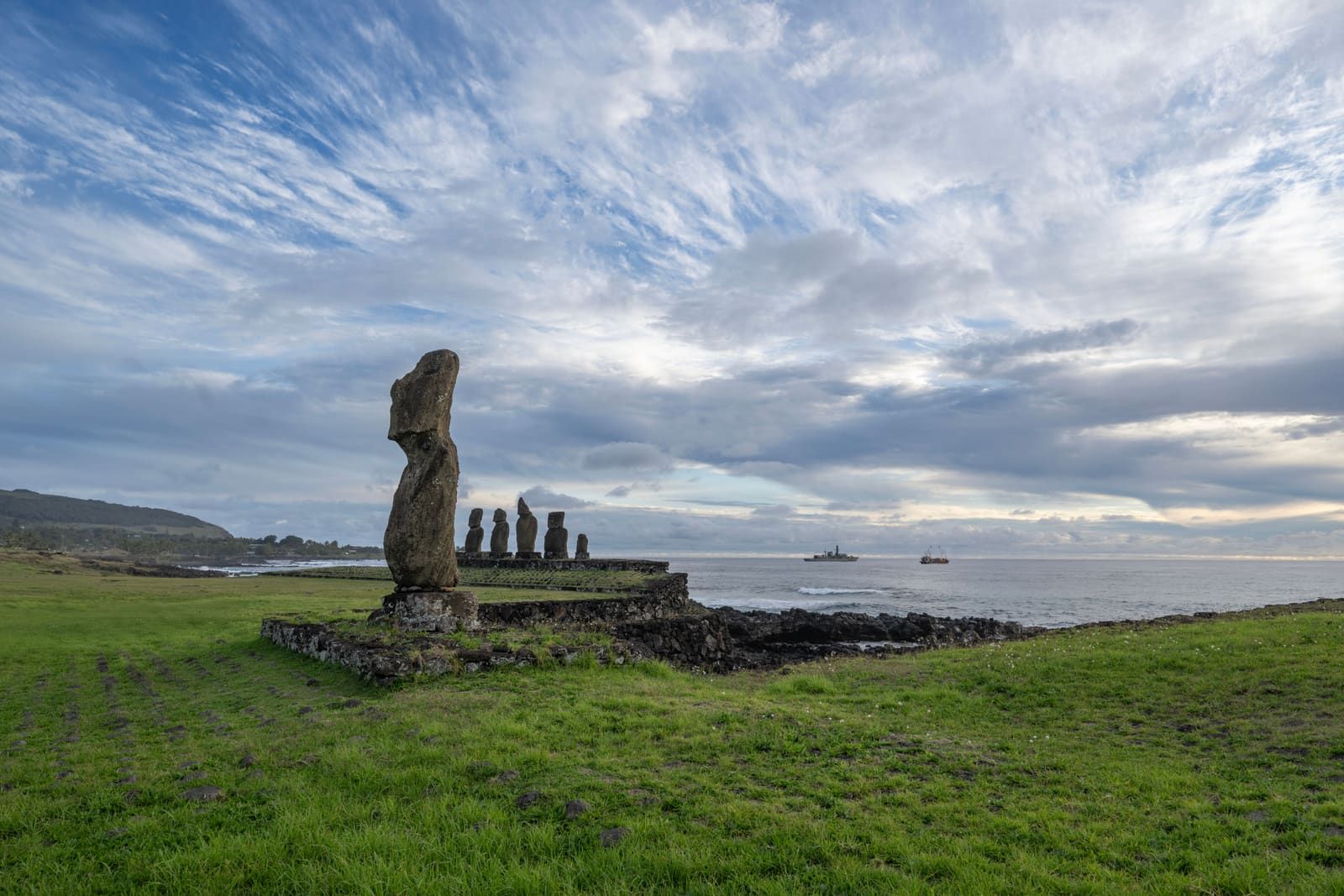
A Landscape That Defies Expectation
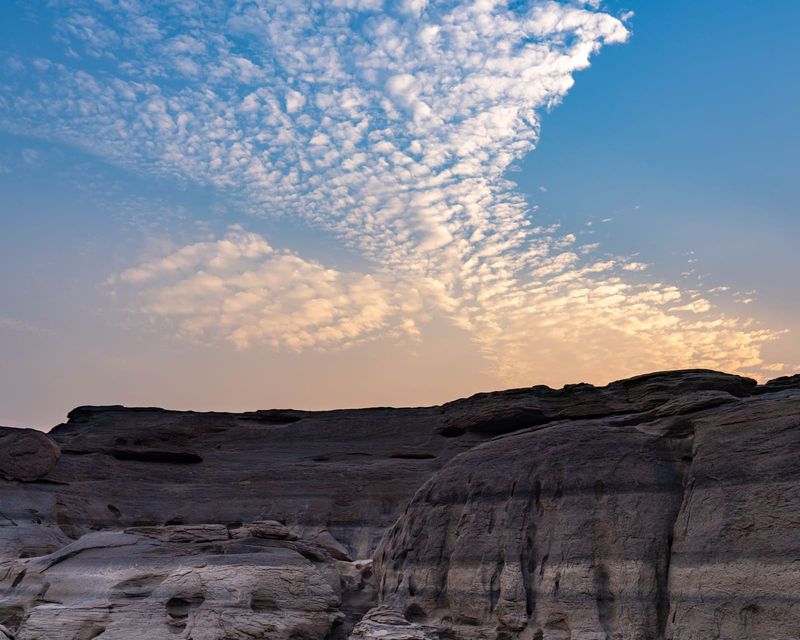
Stand at the rim of Rano Kau and the first surprise is not the crater lake below, nor the ceremonial stone village clinging to the caldera edge, but the colour of the island itself. Where most travellers arrive expecting the dense green canopy of Tahiti or the volcanic forests of Hawaii, Rapa Nui unfolds in muted ochres and wind-bent grasses that could belong to the Hebrides. The Pacific stretches in every direction, but the island itself feels almost Celtic in its austerity, a treeless expanse shaped as much by wind as by the ambitions of its ancient inhabitants.
This is not a place for resort langour. Two beaches punctuate the northern coast - Ovahe, small and sheltered, and Anakena, where the sand is fine enough for swimming and the palms offer rare shade - but sunbathing remains incidental to the real draw. The moai command attention here, and the island's geography bends around them.
The Quarry and the Platform
Rapa Nui National Park organises itself around two principal sites that anchor the moai narrative. Ahu Tongariki, the island's largest platform, holds fifteen statues in a single line, their backs to the volcano and their faces turned inland. At sunrise, they appear in silhouette, monumental and eerily uniform, a procession frozen mid-ceremony. The light at that hour is brief and precise, and the statues seem to absorb it before the day turns harsh.
A short distance away, Rano Raraku crater tells a different story. This volcanic quarry produced approximately 95 per cent of the island's sculptures, and roughly 400 remain embedded in the slopes, abandoned at various stages of completion. Some are torsos only, others nearly finished but still attached to the bedrock. Walking the crater feels like entering a workshop interrupted centuries ago, tools laid down and never retrieved. The moai here are not triumphs but processes, evidence of labour and intention that never reached their intended platforms.
Dozens of smaller ahu sites scatter across the island, many with restored statues, each marking a lineage or a boundary or a moment of consolidation. The distribution is not random; it follows the coastline and the ancient divisions of clan territory, a stone grammar of power and place.
The Birdman and the Islets
Orongo sits on the opposite rim of Rano Kau, a stone village of low-slung houses built into the slope, their walls fitted without mortar. This was the ceremonial centre for festivals dedicated to Makemake, the creator deity, and the site of the Tangata Manu competition that dominated island life from the 17th through the 19th centuries. The ritual was straightforward in concept, perilous in execution: competitors descended the sheer inner wall of the crater, swam across open ocean to the small islets known as Los Motu, scaled sea cliffs on the far side, and returned with the first unbroken egg of a sooty tern. The winner's clan gained a year of spiritual and political authority. Fatalities were common.
Today, Los Motu serves a quieter purpose. The waters around the islets are exceptionally clear, and snorkelling here reveals coral gardens and a concentration of marine species found nowhere else - 142 endemics, including the Easter Island butterflyfish, a small, laterally compressed fish marked by bold vertical stripes. Mike Rapu Diving Centre, one of the island's established operators, runs snorkelling and scuba excursions to the site, though conditions can shift quickly depending on swell and wind.
Hiking the Volcanic Spine
For those inclined toward walking rather than archaeology, Terevaka offers the island's highest vantage point at 1,675 feet. The summit is broad and grassy, the views unobstructed in all directions - ocean on every horizon, the island's three volcanic cones visible in their entirety. The ascent is gradual, the path unmarked in places, and the wind at the top can be relentless.
The Poike Peninsula, by contrast, is less visited and more austere. This is the island's eastern extremity, a plateau of barren grassland and scattered archaeological remnants that have seen limited restoration. Petroglyphs appear on certain boulders, abstract and weathered, and one enormous rock has been carved into the rough shape of a human face, its features softened by centuries of exposure. The peninsula requires more time and a tolerance for rough terrain, but it rewards with solitude and a sense of the island before the tour circuits were drawn.
What the Island Asks
Rapa Nui does not offer the ease of other Pacific destinations. The landscape is exposed, the weather changeable, and the history complex and often tragic. But it remains one of the few places where human ambition and isolation combined to produce something genuinely singular - a culture that carved its identity into stone and left those carvings standing, incomplete or toppled or restored, as a record of what was attempted here. The moai are not decorative; they are arguments, made in basalt, about lineage and mana and the limits of what a small population on a remote island could achieve. They still hold the argument, even now.